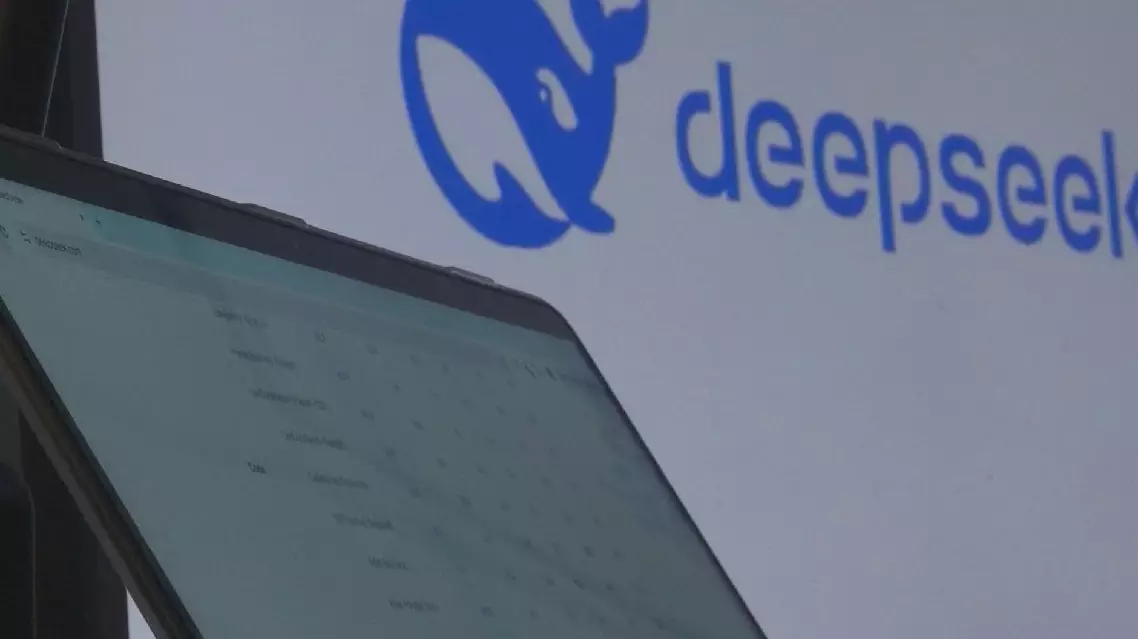
The emergence of Chinese artificial intelligence startup DeepSeek has instilled greater confidence in the development of China's AI research sector, while delivering transformative changes across various industries since it burst onto the scene last month, according to scholars.
DeepSeek has garnered global attention for its remarkably cost-effective approach to training AI models and the release of its R1 model on Jan 20 marked a major breakthrough in AI technology, propelling the company onto the international stage and solidifying its position as a key player in the global AI ecosystem.
As well as proving that cutting-edge AI technology doesn't have to come with a sky-high price tag, industry insiders have hailed the software's unique features which have gained it widespread recognition.
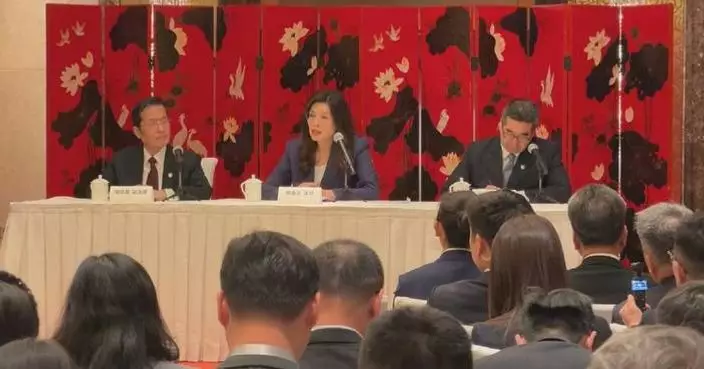
"When using DeepSeek-R1, we can see that it first displays the thought or reasoning process before outputting the final result. This chain of thought is something that many similar large language models, especially earlier ones, were reluctant to show," said Wang Chao, assistant professor at the School of AI and Data Science at the University of Science and Technology of China, in a recent interview with the China Global Television Network (CGTN). With its advanced reasoning capabilities, the application of DeepSeek is already having a profound influence across multiple fields and driving potentially transformative growth.
"Every industry faces problems that urgently require AI solutions. AI will have a profound impact on sectors like manufacturing, finance, and even in the legal field. In the past, we lacked such effective AI tools and technologies," said Zhang Yanyong, executive dean of the School of AI and Data Science at the University of Science and Technology of China.
In China's automotive industry, leading companies like BYD, Geely, and Great Wall Motor are integrating the Hangzhou-based company's AI models into their electric vehicles. BYD, for example, announced that it is using DeepSeek's technology to power its "God's Eye" self-driving system, making advanced features standard even in budget models.
Meanwhile, Chinese social media giant WeChat has begun testing an AI-powered search feature based on DeepSeek's R1 model which is designed to provide smarter, more accurate results without accessing users' private data, such as chat histories.
Another tech giant, Huawei, has been powering DeepSeek's models with its Ascend 910C chip and offering them on the Huawei Cloud.
As more companies tap into this innovative technology, China's AI revolution could soon reshape industries around the world, and given how DeepSeek made global shockwaves when it was first unveiled, many believe it has now put China's AI sector firmly on the map.
"The most important contribution that DeepSeek has made to China's AI ecosystem has been instilling confidence. For a while, we were overshadowed by OpenAI, which released a new model almost every week," said Zhang.
DeepSeek's impact extends far beyond the corporate world, with the tool also paving the way for more breakthroughs in academic circles.
"Original, groundbreaking research requires substantial computing power, and traditionally, this power has been concentrated in large enterprises. As a result, major technological breakthroughs were primarily carried out by these companies. However, with the rise of DeepSeek, we've realized that the computing power available in academia seems sufficient to support such original research," said Wang.
DeepSeek already having transformative impact on industries across China: scholars
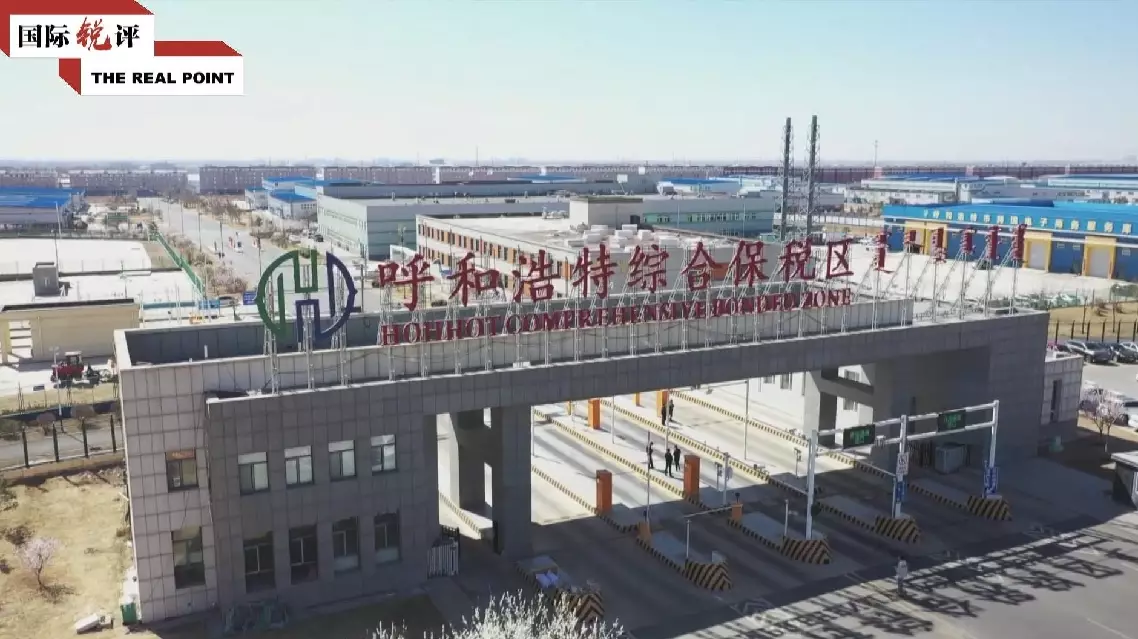
The newly established China (Inner Mongolia) Pilot Free Trade Zone (FTZ) in north China will help improve the country's opening-up landscape and support high-quality development, while injecting more certainty into a volatile world, says a China Media Group commentary published on Saturday.
An edited English version of the commentary is as follows:
In China's opening-up drive, a new chapter has started. With the release of a plan for the establishment of the China (Inner Mongolia) Pilot Free Trade Zone, the total number of China's pilot FTZs has risen to 23. International observers believe that in the first year of the 15th Five-Year Plan period (2026-2030), the addition of a new pilot FTZ will further improve China's opening-up framework featuring coordination between land and sea, and mutual reinforcement between eastern and western regions, which will not only help drive high-quality development, but also inject more certainty into a world marked by turbulence and change.
Why is the Inner Mongolia Autonomous Region selected for the new pilot FTZ? The first reason lies in its unique geographic advantages. Historically, Inner Mongolia served as a key hub along the "Grassland Silk Road" and the "Tea Road". Today, it is a key node in Belt and Road cooperation and the China-Mongolia-Russia Economic Corridor. With a border stretching over 4,200 kilometers and 20 ports, the autonomous region links eight provinces at home and serves as a gateway to Eurasia, giving it natural advantages for opening up to the north.
What's more, the Inner Mongolia Autonomous Region also has a solid foundation for opening up. It currently maintains trade ties with 201 countries and regions globally, with trade with Belt and Road Initiative partner countries accounting for 78.6 percent of its total foreign trade.
Data showed that in 2025, the region's total imports and exports reached 220.67 billion yuan, hitting a record high, with growth 2.6 percentage points higher than the national average.
The plan proposes to build the Inner Mongolia Pilot Free Trade Zone into a center for information exchanges, transport and logistics, allocation of factors and resources, sci-tech innovation and industrial cooperation in key fields, linking domestic and international markets and radiating to surrounding regions.
Specifically, the Inner Mongolia pilot FTZ comprises three subzones in Hohhot, Manzhouli and Erenhot — each tasked with differentiated functions based on their respective strengths.
The subzone in Hohhot, capital of the autonomous region, will serve as a central hub, focusing on developing distinctive industries and strategic emerging industries.
The subzone in Manzhouli, a northern border city, will develop distinctive industries such as cross-border tourism and port services, building itself into an important window to Northeast Asia and Europe.
The subzone in Erenhot, a land port on the China-Mongolia border, will focus on developing industries such as international trade and act as a key node of the China-Mongolia-Russia Economic Corridor.
The establishment of the Inner Mongolia pilot FTZ is the latest move in China's sustained push for reform and opening-up. Since the launch of the Shanghai pilot FTZ in September 2013, after more than a decade of exploration and development, China's pilot FTZ network has formed a new opening-up landscape covering the east, west, south, north and central regions, as well as coordinating coastal, inland and border areas.
The new pilot FTZ boasts abundant energy, agricultural, and livestock resources, as well as emerging growth drivers such as green computing power and the digital economy. These will provide more diversified investment options for global capital and offer broader market opportunities and a better business environment for companies worldwide.
Meanwhile, amid intensifying geopolitical tensions and rising global logistics risks, the Inner Mongolia Autonomous Region, as the only provincial-level region in China hosting both the eastern and central corridors of the China-Europe freight train network, is seeing its role as a "golden corridor" become increasingly prominent.
The region handled a total of 9,557 China-Europe freight train trips in 2025, up 16.9 percent year on year and accounting for nearly half of the national total.
Following its establishment, the Inner Mongolia pilot FTZ will deepen economic and trade cooperation with neighboring regions through institutional opening-up, to further facilitate the "golden corridor" connecting China, Mongolia, Russia and Europe, and provide a more resilient trade route for the world.
More importantly, as certain countries pursue unilateralism and protectionism, China continues to refine the layout of its pilot FTZs and deepen institutional opening-up, setting a strong example for others.
This also demonstrates that despite rising undercurrents of de-globalization, advancing trade and investment liberalization and facilitation remains the shared aspiration of people worldwide and a necessity for the world.
China's new Inner Mongolia pilot FTZ boosts opening-up, adds certainty: commentary