China successfully sent a test satellite for satellite internet technology into space on Saturday.
The satellite was launched at 19:32 Beijing Time (1132 GMT) atop a Smart Dragon-3 (SD-3) carrier rocket from waters off the coast of Yangjiang, a city in south China's Guangdong Province. The satellite has entered the planned orbit.
The offshore launch was conducted by the Taiyuan Satellite Launch Center. It marked the 11th mission of the SD-3 rocket.
With a total length of 31 meters and a weight of 140 tons, the SD-3 is part of China's Dragon rocket family. Unlike the Long March rockets, which form the backbone of the country's space-launch vehicles, the Dragon series has been developed specifically to meet the growing market demand for launches of small commercial low-orbit satellites and satellite networks.
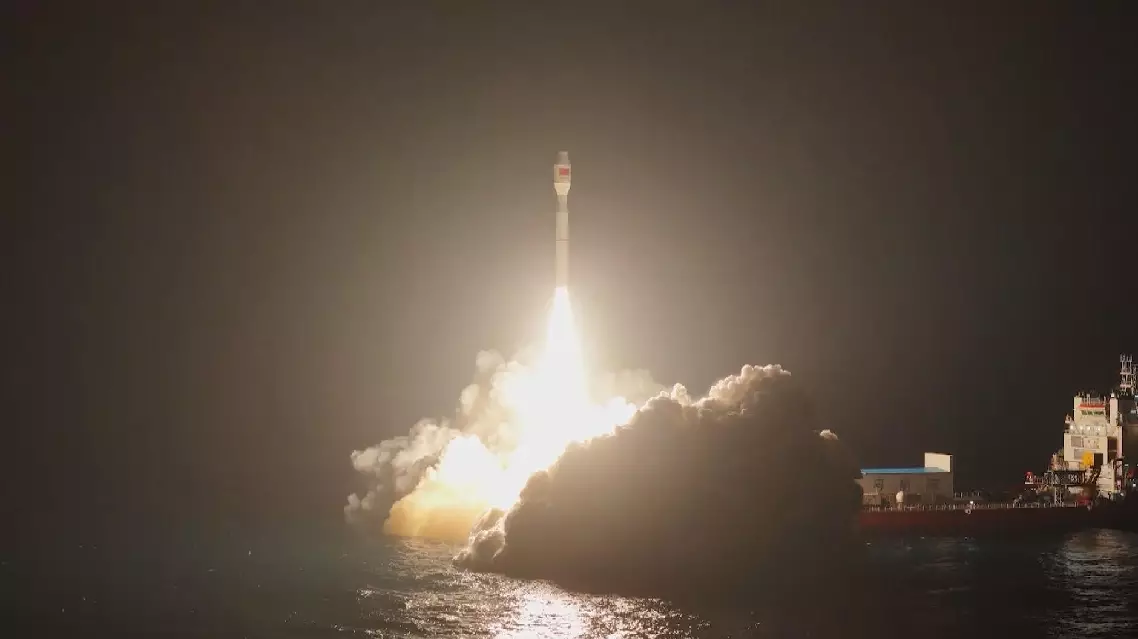
China successfully launches test satellite for satellite internet technology
An AI-powered robotic capsule is changing stomach examinations in China.
RC100, developed by Chongqing-based medical equipment supplier Jinshan Science and Technology, is the world's first fully automated magnetically controlled endoscopy capsule.
Unlike conventional products, the RC100 system offers patients a less invasive, more precise examination. By combining AI analysis with magnetically controlled imaging, it enables real-time visualization of the entire gastrointestinal system after the simple ingestion of a capsule.
"This permanent magnet can control our capsule and make it rotate 360 degrees inside the stomach, enabling it to capture images of all areas of the gastric lumen. As you can see on this screen, it shows the general anatomy of the stomach," said Huang Lu, a technician at the Health Management Center of the First Affiliated Hospital of Chongqing Medical University.
In addition to the doctor's screen, the patient can also follow the procedure on a monitor attached to their waist.
"We are the first health management center in southwest China to introduce this equipment. It has been over a year, and we have treated more than 200 patients, whose feedback has been quite positive," said Yang Yang, chief nursing officer of the health management center.
After the examination, physicians can use an AI software to efficiently and accurately interpret the images, accelerating the generation of examination reports.
The company has also launched an upgraded version of the product for small intestine endoscopy, which has two cameras to offer more comprehensive and accurate imaging.
"Because compared to other market players, including a large, well-known, and methodical one, coming with a capsule powered by artificial intelligence brings enormous added value in relation to the acceleration and popularization of this type of market, especially for patients' cancer prevention," said Christophe Lehain, CEO of Asept InMed, a French company specializing in innovative medical devices.
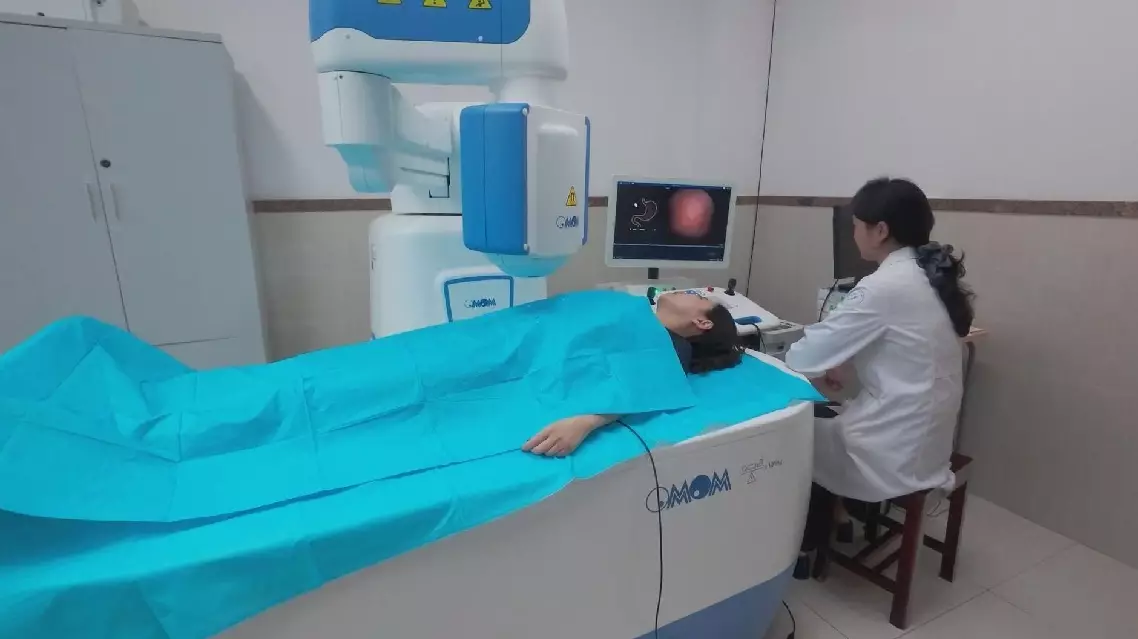
AI-powered capsule performs stomach exams in Chinese hospitals