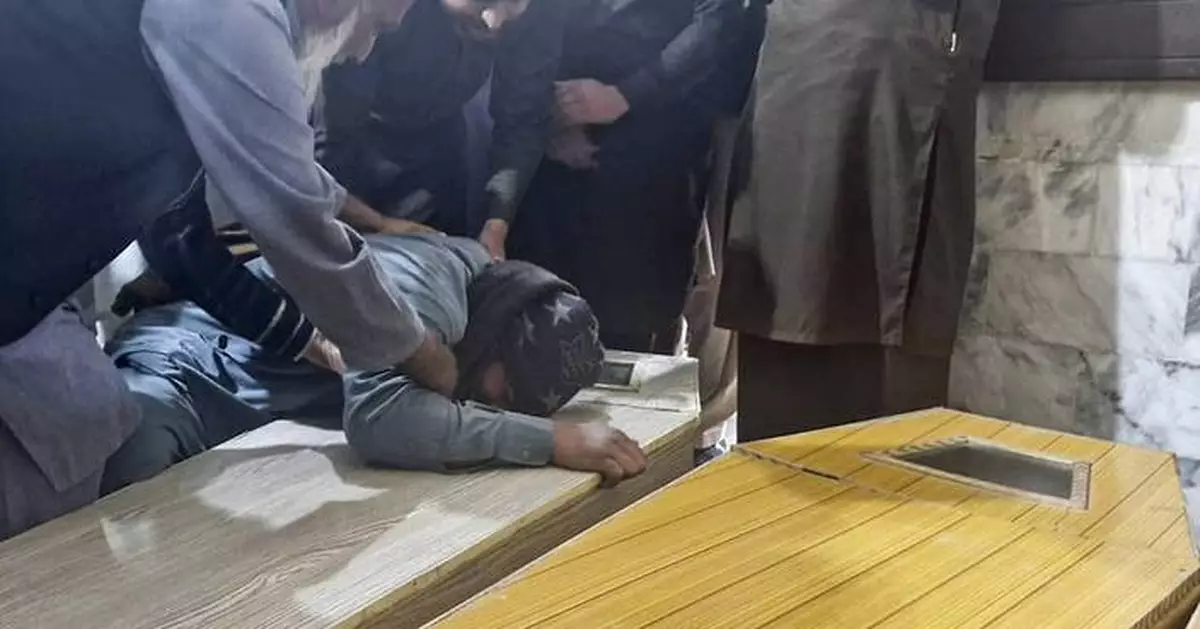
PESHAWAR, Pakistan (AP) — A senior cleric and five other worshippers were killed Friday in a suicide bomb attack at a pro-Taliban seminary in northwestern Pakistan ahead of the fasting month of Ramadan, police said.
It was one of at least four attacks throughout Pakistan, two of them at mosques, which were unusual both in their number and timing just before the holy period marked by daily fasting in the Muslim-majority country.
Click to Gallery
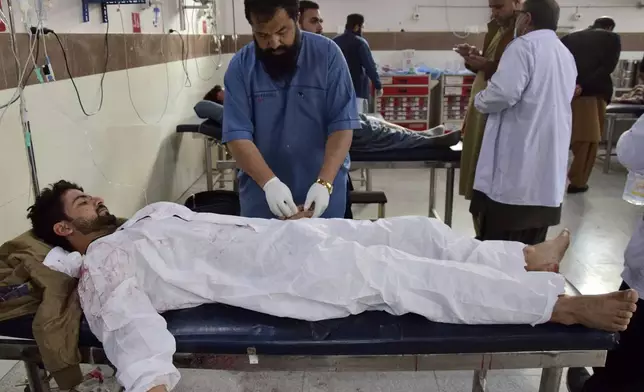
Injured victim of a roadside bomb explosion receives treatment at hospital in Quetta, Pakistan, Friday, Feb. 28, 2025. (AP Photo/Arshad Butt)
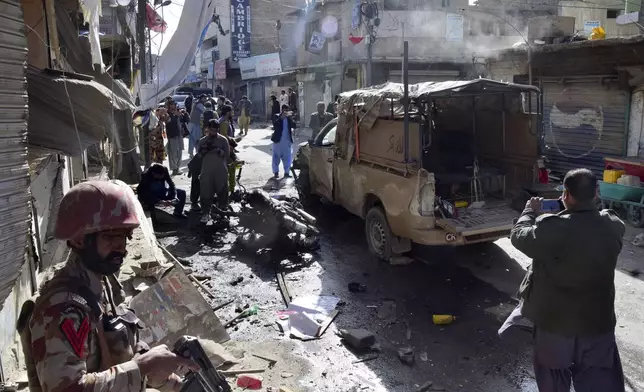
Security officials examine a damaged security forces' vehicle at the site of a bomb blast in Quetta, Pakistan, Friday, Feb. 28, 2025. (AP Photo/Arshad Butt)
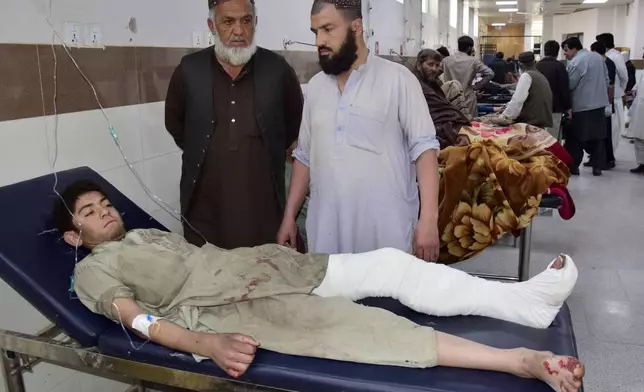
Injured victim of a roadside bomb explosion receives a treatment at hospital in Quetta, Pakistan, Friday, Feb. 28, 2025. (AP Photo/Arshad Butt)
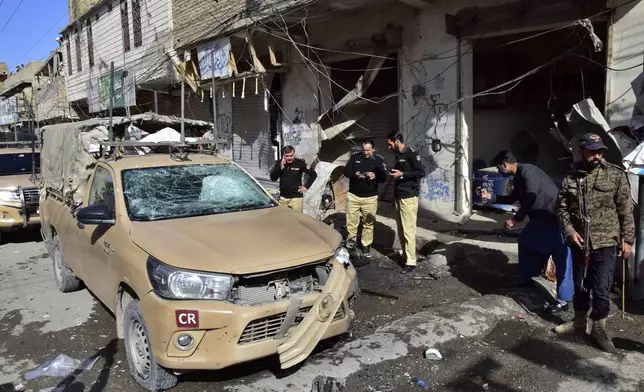
Security officials examine a damaged security forces' vehicle at the site of a bomb blast in Quetta, Pakistan, Friday, Feb. 28, 2025. (AP Photo/Arshad Butt)
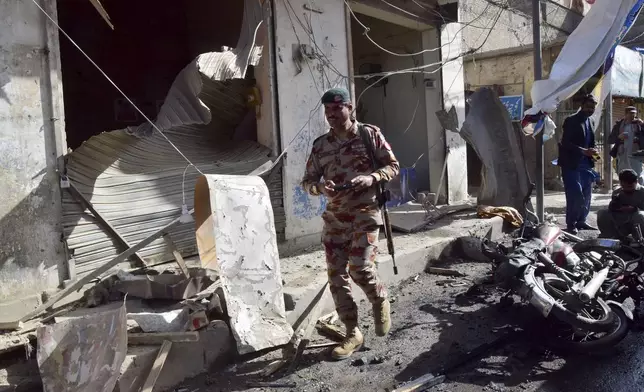
A security official checks the site of a bomb blast in Quetta, Pakistan, Friday, Feb. 28, 2025. (AP Photo/Arshad Butt)
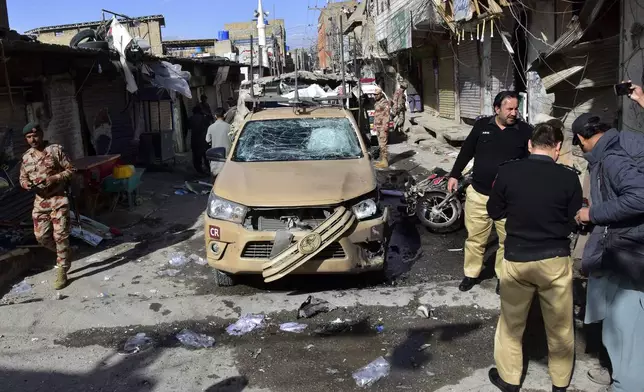
Security officials check a damaged security forces' vehicle at the site of a bomb blast in Quetta, Pakistan, Friday, Feb. 28, 2025. (AP Photo/Arshad Butt)
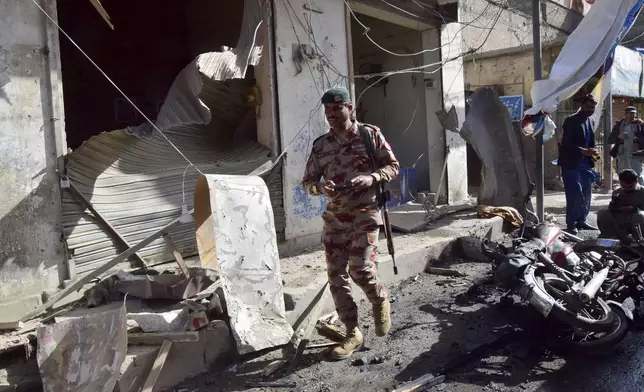
Security official checks at the site of a bomb blast in Quetta, Pakistan, Friday, Feb. 28, 2025. (AP Photo/Arshad Butt)
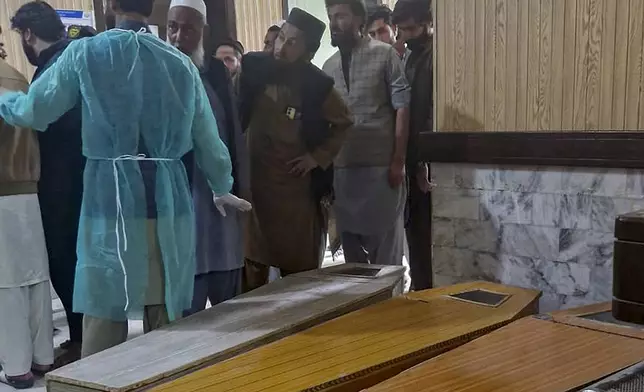
People stand next to the caskets of the victims of bomb explosion in a mosque within a pro-Taliban seminary, at a hospital in Nowshera, a town in the Pakistan's northwestern Khyber Pakhtunkhwa province, Friday, Feb. 28, 2025. (AP Photo/Riaz Khan)
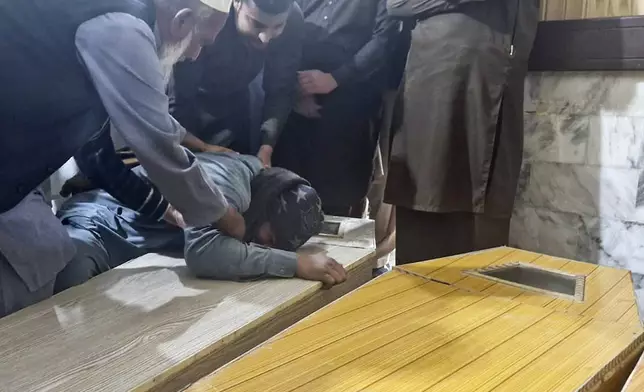
A Pakistani mourns next to the caskets of the victims of bomb explosion in a mosque within a pro-Taliban seminary, at a hospital in Nowshera, a town in the Pakistan's northwestern Khyber Pakhtunkhwa province, Friday, Feb. 28, 2025. (AP Photo/Riaz Khan)
Many people also were wounded during the attack at the mosque inside the Jamia Haqqania seminary, in the Akora Khattak district of Khyber Pakhtunkhwa province. No group immediately claimed responsibility for the suicide blast, which happened after an attacker gained entry despite tight security.
Hamidul Haq, the head the seminary and leader of a faction of the Jamiat-e-Ulema Islam (JUI) party, was among the dead, according to district police chief Abdul Rashid.
Haq was the son of the late Maulana Samiul Haq, who was considered a founding figure for both the Afghan and Pakistani branches of the Taliban. Many Afghan Taliban had studied at Haq's seminary over the past two decades.
His family confirmed his death and appealed to his followers to remain peaceful.
Pakistan’s President Asif Ali Zardari, Prime Minister Shehbaz Sharif and other leaders condemned the attack, which came ahead of the Muslim holy month of Ramadan, which is expected to start either on Saturday or Sunday depending on the sighting of the crescent moon.
The Afghan Embassy in Islamabad said the bombing was a cowardly act.
The Pakistani Taliban, also known as Tehreek-e-Taliban Pakistan, or TTP, denounced the attack and the killing of Haq, and offered condolences to families of the victims.
More than a dozen police officers and the seminary’s own security were guarding the mosque when the attack occurred, provincial police chief Zulfiqar Hameed said.
Yawar Zia said he was among the police officers on security duty when he was hit and wounded by splinters from the bomb. He was transported to the Qazi Hussain Ahmed Hospital by ambulance.
“After offering prayer, Hamidul Haq was leaving the mosque to go home and as he reached the main gate, a powerful explosion occurred, and I fell to the ground, losing consciousness,” Zia told The Associated Press from his hospital bed.
Zahir Shah, a worshipper, said that hundreds of people were leaving the mosque after offering prayers when he heard a powerful blast. He said Haq was returning to his home within the seminary accompanied by guards when the attack occurred.
Shah described a chaotic scene with blood and body parts scattered around, adding that the number of casualties could have been much higher had the bomber struck during the prayers.
Elsewhere in Khyber Pakhtunkhwa province on Friday, a gunman opened fire inside a mosque in the northwestern Swat Valley, killing at least two people, police said in a statement. The motive for the attack was not immediately clear. Police said a suspect was arrested and the investigation is ongoing.
Also, a roadside bomb exploded near a pharmacy in Orakzai district on Friday, killing two people and wounding six others, police officer Adnan Khan said, without providing further details.
The province has seen several attacks in recent years.
In February 2023, as many as 101 people, mostly police officers, were killed when a suicide attack targeted a mosque in Peshawar, the capital of Khyber Pakhtunkhwa province.
Separately, six militants were killed on Friday during a security operation in North Waziristan, a district in the restive northwest near the Afghan border, the military said in a statement.
Pakistani authorities have blamed previous attacks on the Pakistani Taliban, which is an ally of the Afghan Taliban, who seized power in neighboring Afghanistan in August 2021 as U.S. and NATO troops were in the final stages of their pullout from the country after 20 years of war.
Many TTP leaders and fighters have found sanctuary and have even been living openly in Afghanistan since the Taliban takeover, which also emboldened the Pakistani Taliban.
Pakistan also faces attacks blamed on separatists in the southwest.
On Friday, a roadside bomb exploded near a vehicle carrying security forces in the southwestern Pakistani city of Quetta, wounding 10 people, including two soldiers, police and officials said. No one immediately claimed responsibility for the bombing, but previous attacks have been blamed on separatists.
Quetta is the capital of Balochistan, which has for years been the scene of a long-running insurgency. Separatists want independence from the central government in Islamabad.
Associated Press writer Rasool Dawar and Abdul Sattar contributed to this story from Peshawar, Pakistan and Quetta, Pakistan.
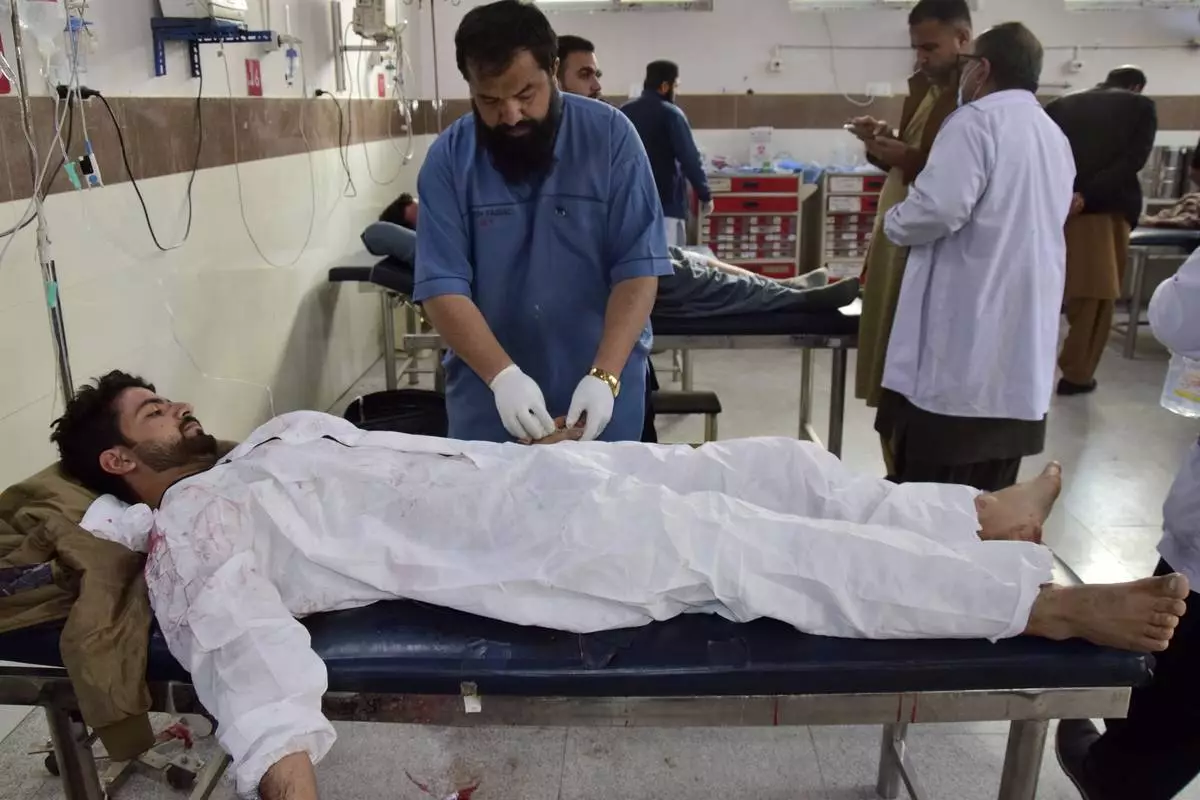
Injured victim of a roadside bomb explosion receives treatment at hospital in Quetta, Pakistan, Friday, Feb. 28, 2025. (AP Photo/Arshad Butt)
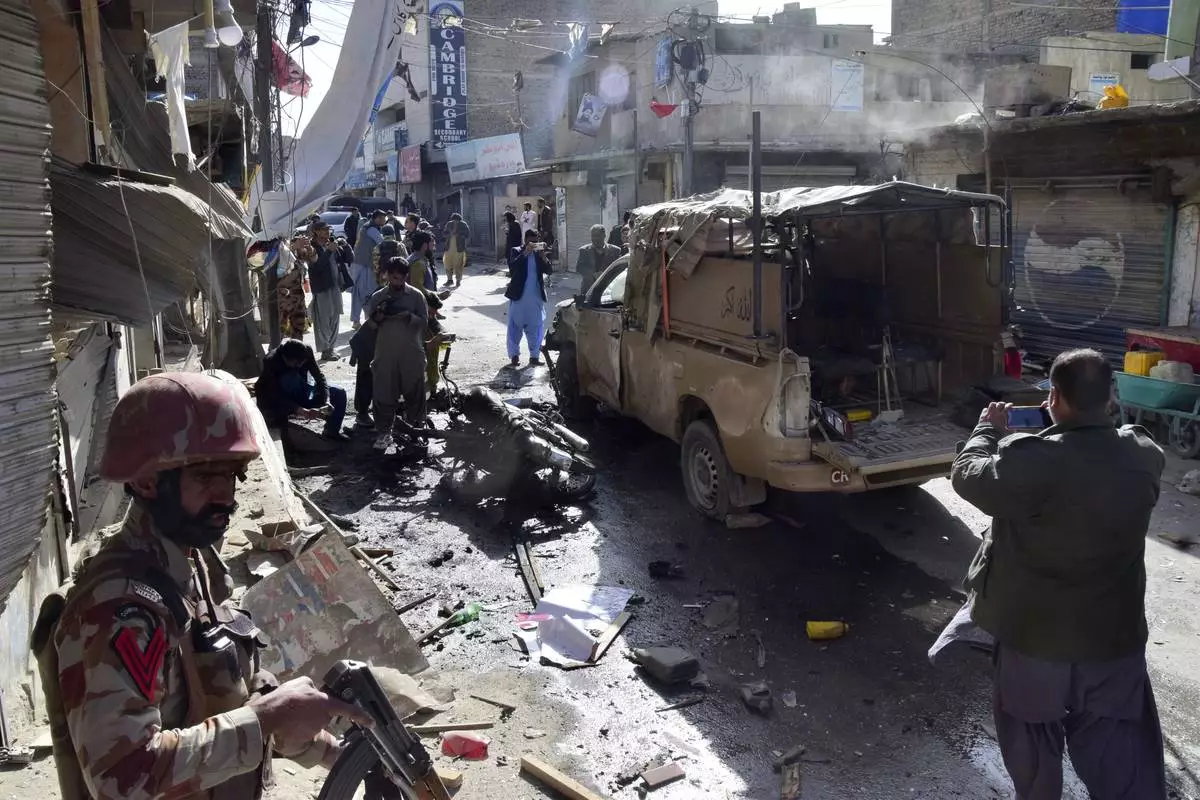
Security officials examine a damaged security forces' vehicle at the site of a bomb blast in Quetta, Pakistan, Friday, Feb. 28, 2025. (AP Photo/Arshad Butt)
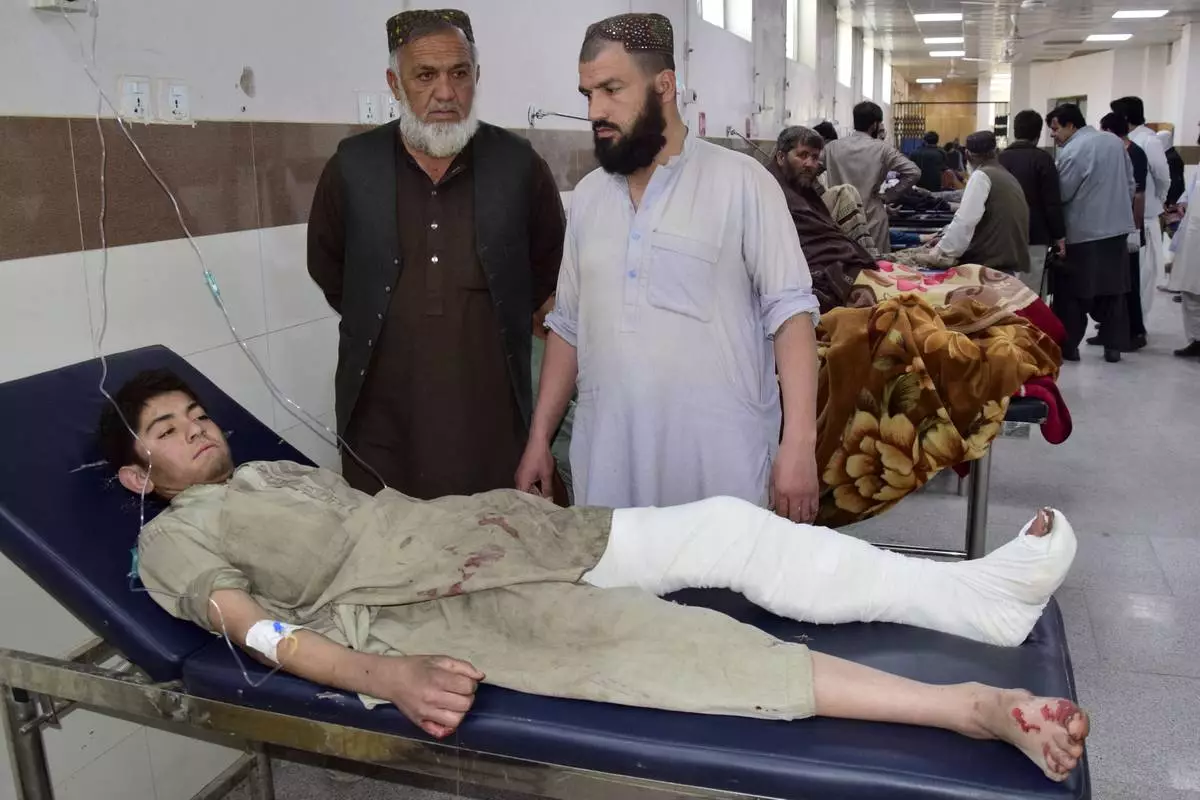
Injured victim of a roadside bomb explosion receives a treatment at hospital in Quetta, Pakistan, Friday, Feb. 28, 2025. (AP Photo/Arshad Butt)
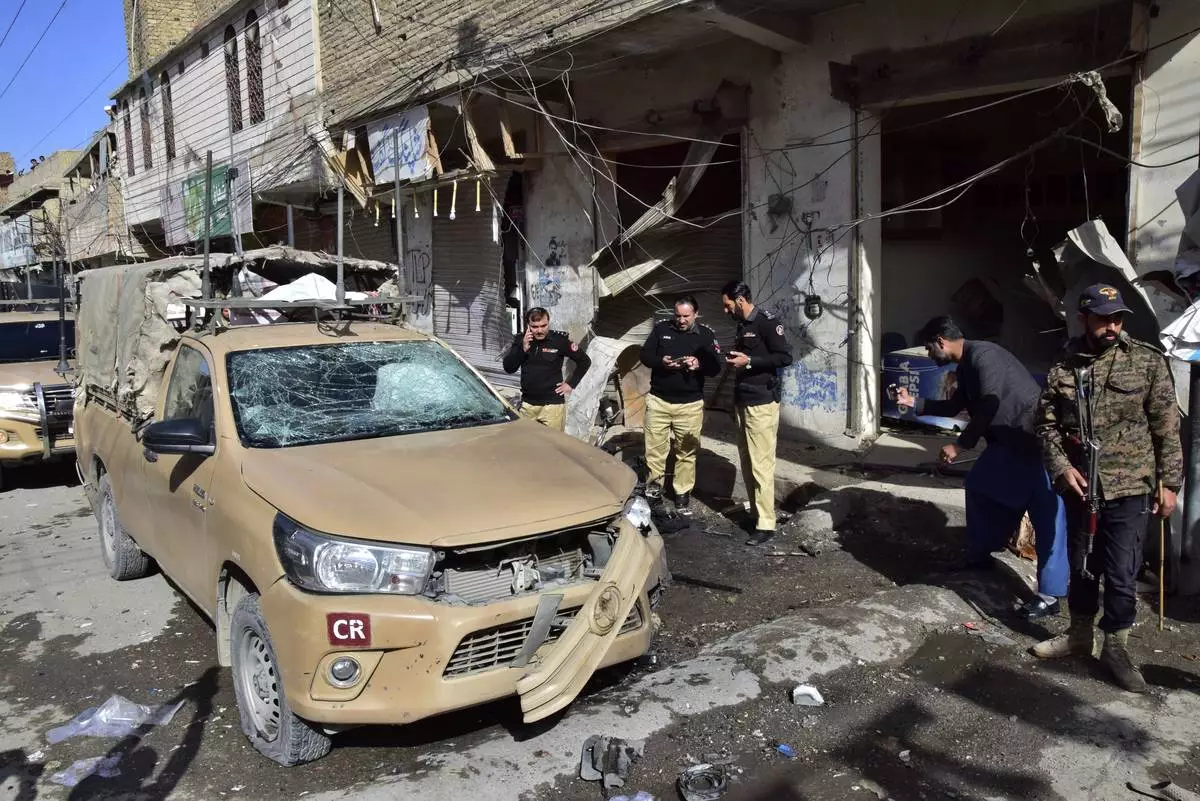
Security officials examine a damaged security forces' vehicle at the site of a bomb blast in Quetta, Pakistan, Friday, Feb. 28, 2025. (AP Photo/Arshad Butt)
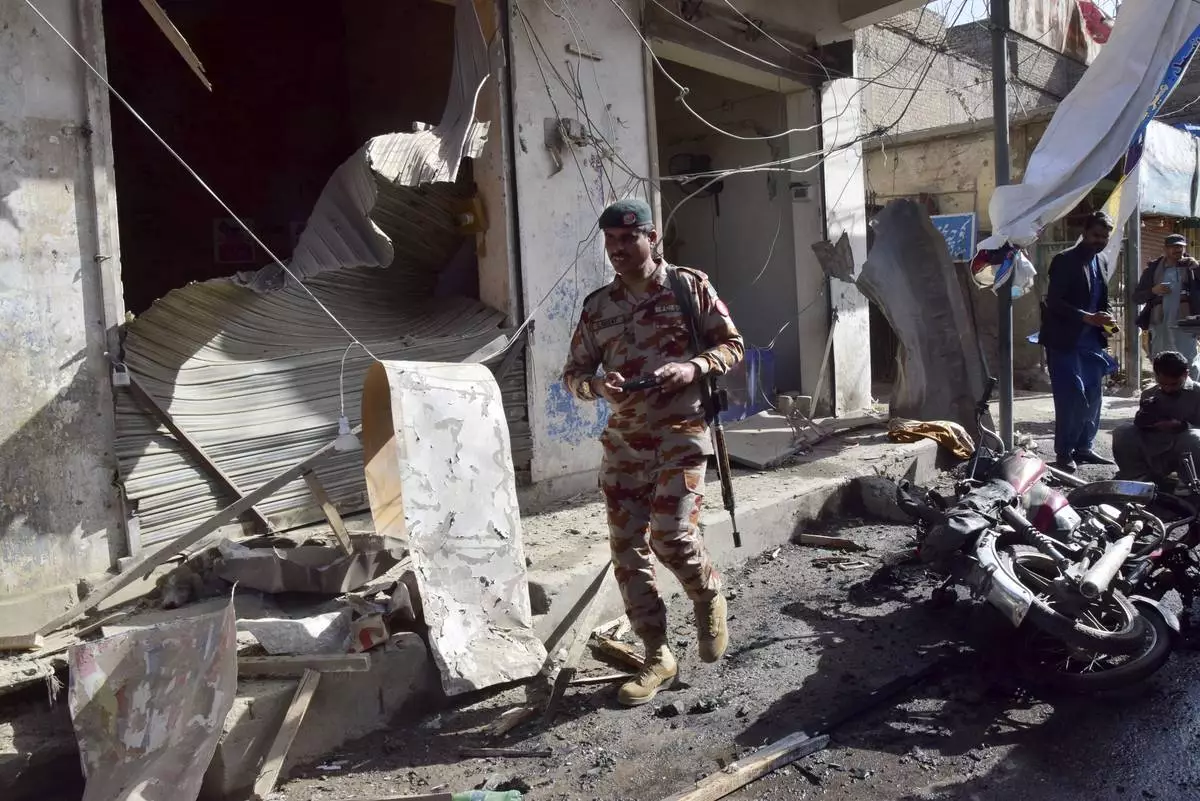
A security official checks the site of a bomb blast in Quetta, Pakistan, Friday, Feb. 28, 2025. (AP Photo/Arshad Butt)
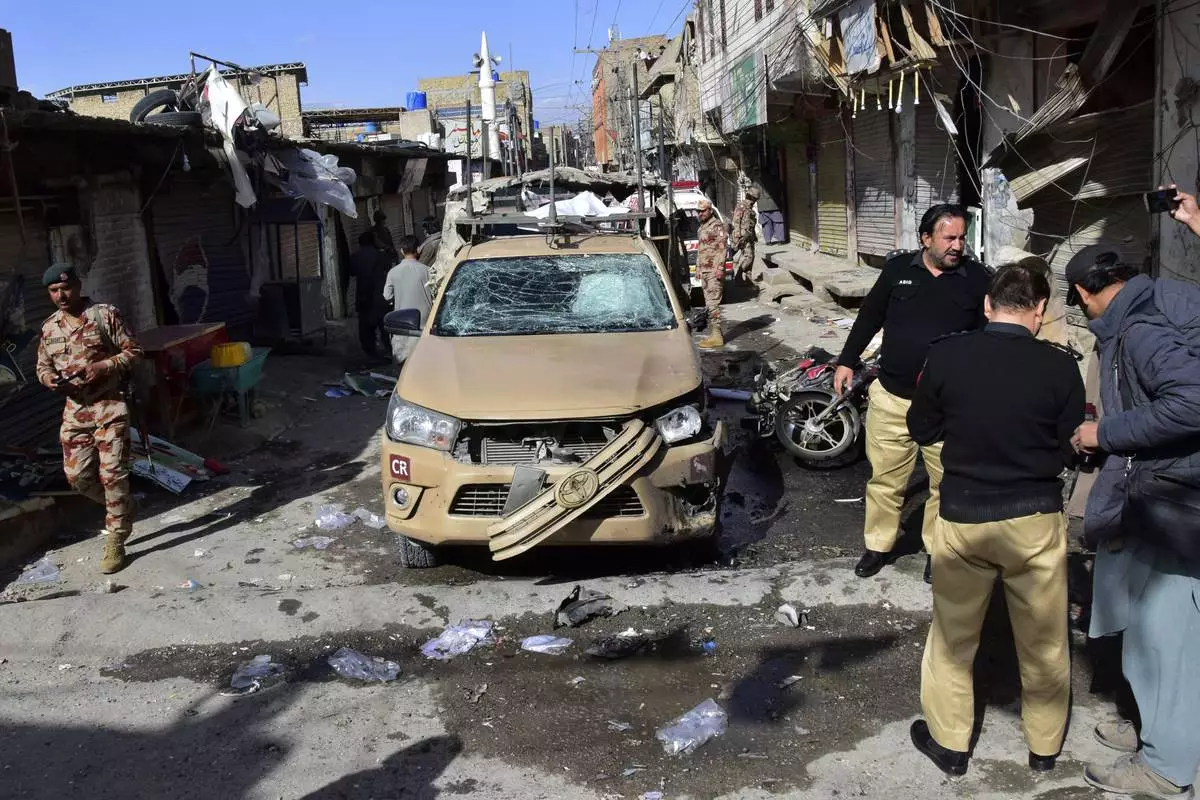
Security officials check a damaged security forces' vehicle at the site of a bomb blast in Quetta, Pakistan, Friday, Feb. 28, 2025. (AP Photo/Arshad Butt)
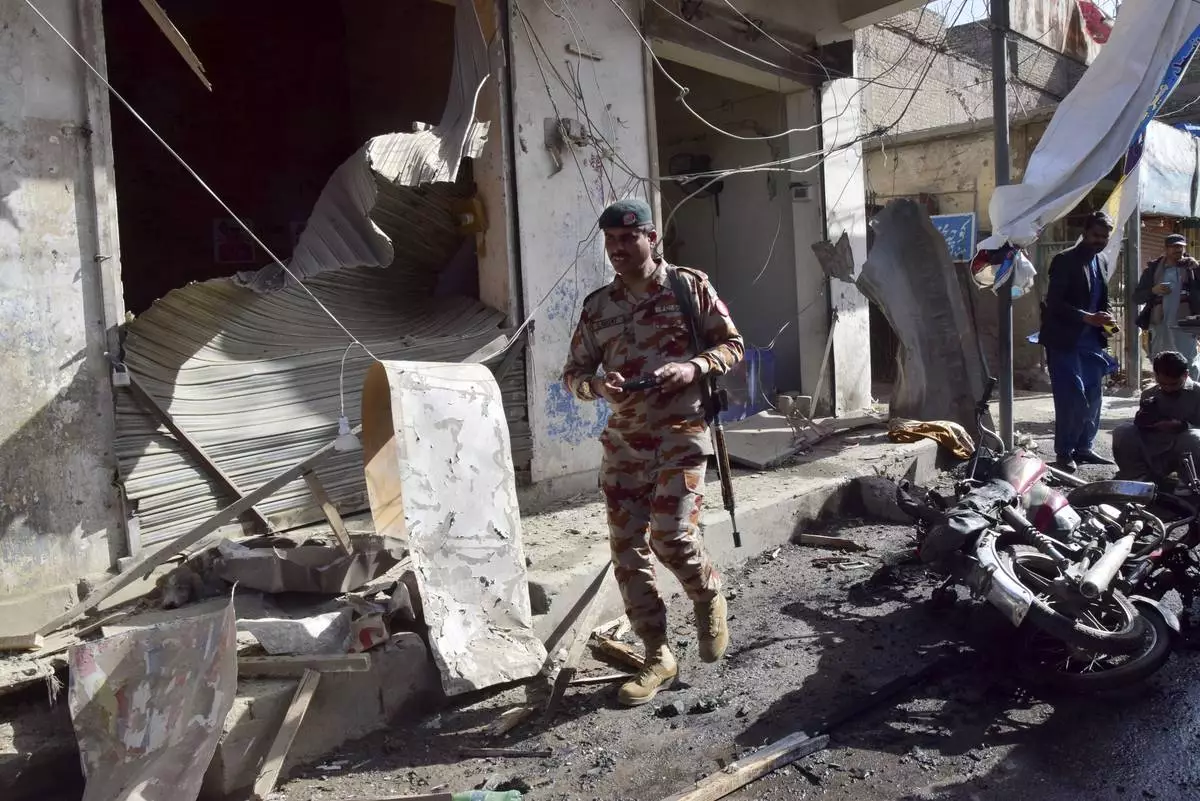
Security official checks at the site of a bomb blast in Quetta, Pakistan, Friday, Feb. 28, 2025. (AP Photo/Arshad Butt)
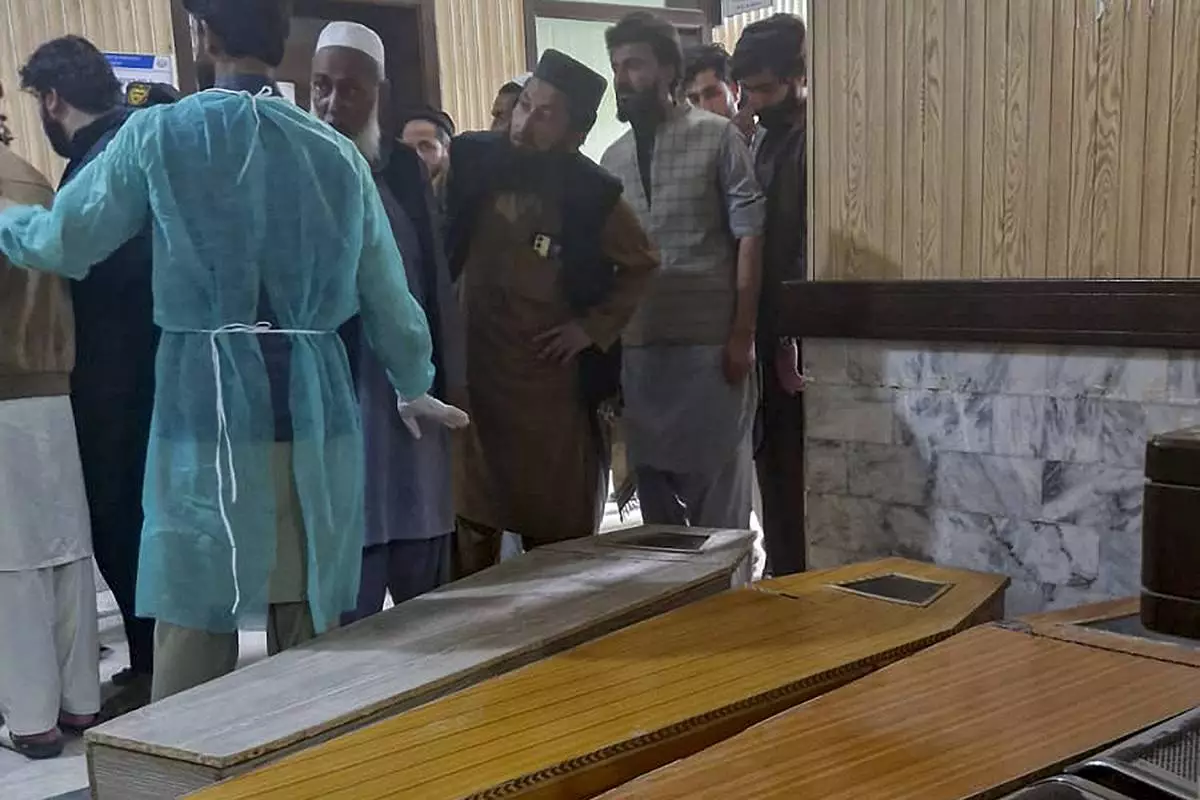
People stand next to the caskets of the victims of bomb explosion in a mosque within a pro-Taliban seminary, at a hospital in Nowshera, a town in the Pakistan's northwestern Khyber Pakhtunkhwa province, Friday, Feb. 28, 2025. (AP Photo/Riaz Khan)
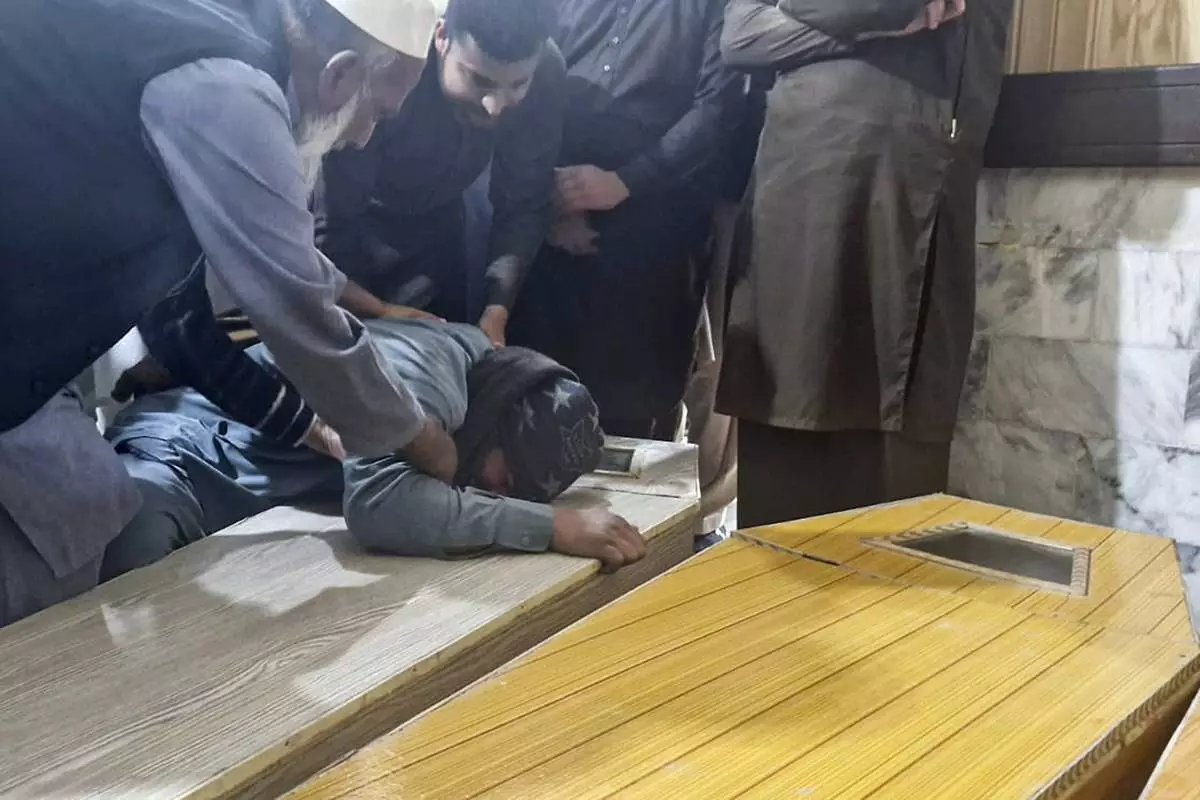
A Pakistani mourns next to the caskets of the victims of bomb explosion in a mosque within a pro-Taliban seminary, at a hospital in Nowshera, a town in the Pakistan's northwestern Khyber Pakhtunkhwa province, Friday, Feb. 28, 2025. (AP Photo/Riaz Khan)