Skip to Content Facebook Feature Image

Cook Islands looks to boost climate cooperation with China: PM

China

China

China

Cook Islands looks to boost climate cooperation with China: PM

2025-03-01 13:33 Last Updated At:14:07

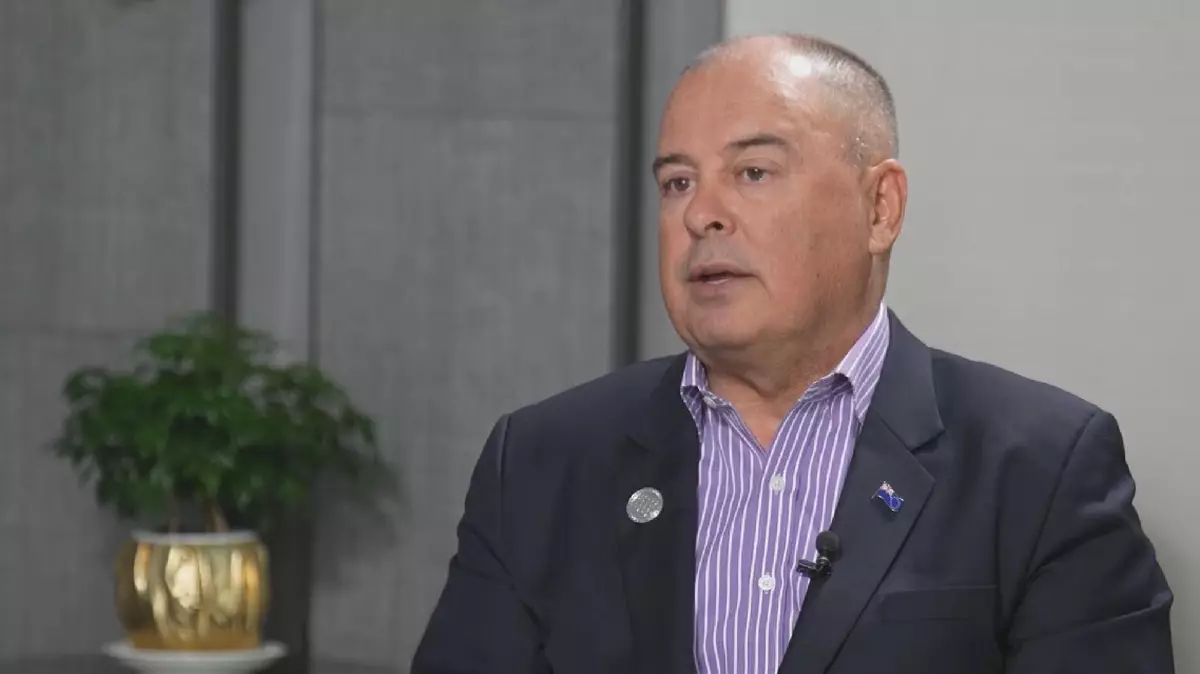
The Cook Islands are seeking to cooperate with China toward its clean energy transition, leveraging the transfer of key technologies, said Mark Brown, the Prime Minister of the island country.

Brown has been paying close attention to climate change and has often stressed the crisis as the biggest threat to the national security and livelihood of the Cook Islands.

In a recent interview with China Central Television (CCTV) in Harbin, capital of northeastern China's Heilongjiang Province, the prime minister reiterated the grave concern for climate change among Pacific island nations, calling for international efforts to advance climate financing solutions.

"We have made numerous statements as the Pacific Islands Forum that climate change is our single biggest threat to our existence. For many of our islands, they are just low-lying atolls, only a few meters above sea level. So the reality of increased storm surges that wash across our islands, the threat of coastal erosion and sea level rise, these are not just threats, these are everyday occurrences that many of our countries face," he said.

"What's important for us is if this is going to happen, how do we build resilience against the impacts of climate change? How do we strengthen things like foreshore development to make sure that our lands are not washed away? How do we strengthen the buildings that we have, that are more continuously being inundated with high winds and cyclones? These are the challenges that we face. There is no doubt that the cost of resilience is disproportionately high for small island countries because of the scale of economies. So reliance on climate finance is a critical component of our own development priorities moving forward. And we continue to advocate for those countries to be able to provide climate financing," Brown added.

The prime minister also highlighted recent progress in Cook Islands' efforts to strengthen cooperation with China on green technology.

"We're looking to collaborate with China in terms of the conversion to renewable energy in our country. Already with our discussions and meetings that we've had with certain key institutions, China has demonstrated that its advanced technology -- battery technology and renewable technology -- will play a significant role in helping countries like us transition to renewable energy," he said.
Cook Islands looks to boost climate cooperation with China: PM
Cook Islands looks to boost climate cooperation with China: PM
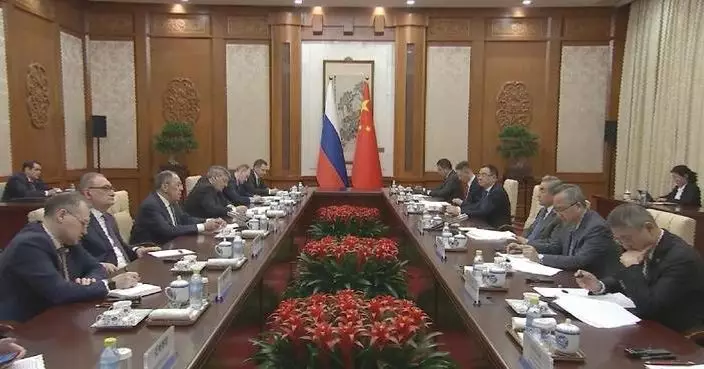
The International Monetary Fund (IMF) has lowered its global economic growth forecasts for 2026 to 3.1 percent in the World Economic Outlook (WEO) report published on Tuesday, while keeping its projection for 2027 at 3.2 percent.

This marks a deceleration from the estimated 3.4 percent growth achieved in 2025. Before the outbreak of the Middle East conflict, the bottom-up forecasts for global growth would have been 3.4 percent in 2026 and 3.2 percent in 2027.

The forecast incorporates the impact of the war and assumes that it will be limited in duration, intensity and scope, with disruptions fading by mid-2026.

Under the reference forecast, global headline inflation is expected to increase to 4.4 percent in 2026 and decline to 3.7 percent in 2027.

If the conflict and the ensuing spike in oil prices last longer, global economic growth in 2026 will fall to 2.5 percent, while global inflation will climb to 5.4 percent, according to the report.

In extreme cases, global economic growth in 2026 could drop to two percent, the report warned.

To be specific, the U.S. economy is projected to grow by 2.3 percent in 2026 and 2.1 percent in 2027, although higher trade barriers introduced since April 2025 are expected to continue to weigh on activity.

In the euro area, growth is projected to decline from 1.4 percent in 2025 to 1.1 percent in 2026 before edging up to 1.2 percent in 2027. The forecasts for 2026 and 2027 are each 0.2 percentage point lower than those compared in the January 2026 WEO Update.

The 2026 growth forecast for emerging market and developing economies is revised down by 0.3 percentage point, to 3.9 percent, while the outlook for advanced economies remains broadly unchanged. With risks still tilted to the downside since the January 2026 WEO Update, the IMF suggested a comprehensive policy package combining domestic measures with coordinated international actions to strengthen resilience and foster adaptability.

It also stated in the report that "trade restrictions play a limited role in correcting imbalances but can worsen output," and urged countries to cooperate and take coordinated actions to restore stability to international economic relations.

IMF lowers global growth forecast for 2026 to 3.1 pct

IMF lowers global growth forecast for 2026 to 3.1 pct

Recommended Articles