A member of the National Committee of the Chinese People's Political Consultative Conference (CPPCC) has been actively promoting the preservation of cultural heritage while striving to integrate it with rural revitalization.
With a commanding presence and a voice that captivates audiences, the CPPCC member, Miao Jie, has spent decades mastering the Jin opera, a traditional art form originating from north China's Shanxi Province.
Beyond the stage, she is also passionate about preserving this historic art form.
At last year's sessions of China's national legislature body, the National People's Congress (NPC), and the top political advisory body, the CPPCC National Committee, Miao submitted three proposals focusing on the preservation, development, and talent cultivation of traditional opera.
"After I submitted the three proposals, all of them were registered and I was thrilled to receive swift responses. It means that the CPPCC takes seriously all proposals from the CPPCC members, and the proposals submitted by all CPPCC members will be dealt with and processed in a dedicated manner. Every step of the processing of the proposals will be discussed with the relevant CPPCC members through communication in detail," said Miao, also serving as a vice president of Shanxi Arts Vocational College.
Last year, Miao conducted field research in over ten cities across China, exploring both the progress and challenges of opera heritage.
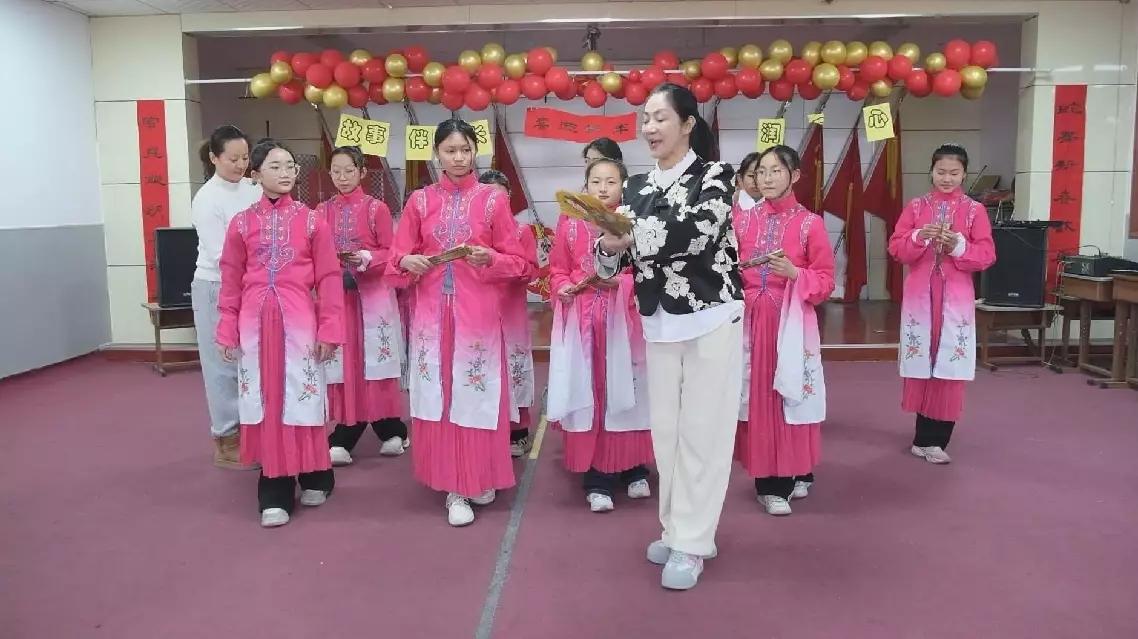
Miao said she believes that there is no right to speak without field research and that people are the best teachers. During a visit to the Chaoyang Primary and Secondary School in Jinzhong City of the province, Miao observed how students balance academics with opera training.
"I'm sure the children will have bright futures. Some may become artists, while others may not, but I believe opera culture will take root in their hearts and become part of their permanent memory," Miao said.
At a recent meeting in Jinzhong, local opera artists and industry veterans shared their insights and concerns with Miao.
Some pointed out that the education of the opera should also ensure that children who learn it and pursue it as a profession can earn a stable income.
"Opera must be integrated into the curriculum, not just introduced through occasional performances, like once or twice a year, on campus. True inheritance happens in classrooms like how we do it here in Chaoyang Primary and Secondary School," said Cheng Qiang, curator of Taigu Jin Opera Museum.
"The government has already adopted this idea. The next step is to bring opera education into primary and secondary schools, and to universities," said Miao.
Miao has been refining her proposals for this year's annual sessions, with a focus on integrated development of cultural heritage preservation and rural revitalization.
"After conducting a field research, I will definitely make changes to my proposals, even repeatedly. This is because every field research will bring me different new insights. I will incorporate into my proposals what I've found out in field research into how we can merge cultural heritage with rural revitalization," she said.
According to official figures, Shanxi invested over 100 million yuan, or 14 million U.S. dollars, last year, in supporting free public opera performances in rural areas.
It reaffirms Miao's belief that traditional arts thrive among the people. She expressed the hope that opera can bridge urban and rural communities, fostering cultural preservation and rural development in harmony.
Political advisor helps preserve traditional art form