In an effort to strengthen China's skilled workforce, National People's Congress (NPC) deputy Zheng Wei has been advocating enhanced vocational training to boost innovation capabilities.
Improving the professional skills and innovation capabilities of the workforce has been a primary focus for Zheng, as skilled workers are the backbone of China's manufacturing sector and innovation.
Over the past year, he visited more than 30 manufacturing enterprises, gathering insights and feedback from workers about industry developments and skill enhancement.
"Innovation relies mainly on talents, and talents are the primary productive force. However, enterprises face significant challenges in talent cultivation and the establishment of innovation studios," said Zheng.
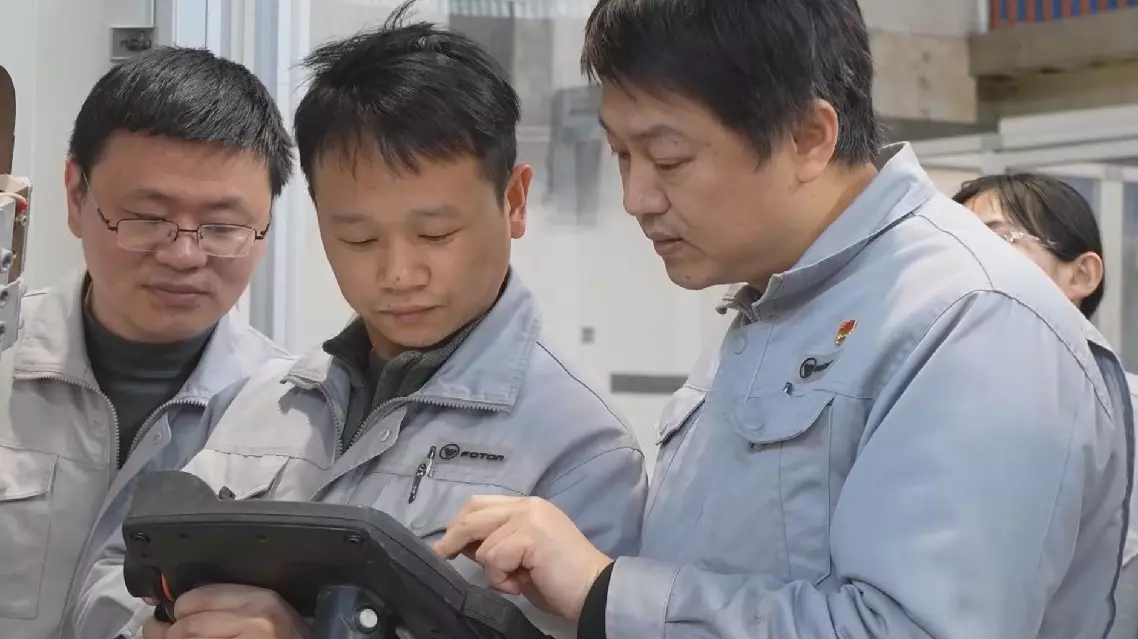
In Jiangxi, a province in east China, Zheng found that manufacturing equipment is becoming smarter, which means technicians need to master not only operation skills, but also advanced skills on equipment maintenance and upgrade.
However, there is a growing shortage of highly skilled workers in these areas, and companies lack the capacity for sustained investment in cultivating such versatile high-skilled talents.
At the NPC annual session last year, Zheng submitted a motion, calling for increased financial support for talent cultivation, and skill training subsidies and tax incentives to enterprises. He also called for efforts to encourage investment in employee training and innovation studios.
His suggestions quickly caught the attention of several ministries. The Ministry of Finance and the State Administration of Taxation raised the pre-tax deduction limit for employee education expenses from 2.5 percent to 8 percent of total wages, easing the burden on enterprises. "Raising the deduction cap means that enterprises can claim a larger portion of their spending on employee education as a tax deduction, allowing us to allocate more funds to employee training. In 2024, our company's investment in employee education and training increased by 13 percent compared to that in 2023, and the proportion of highly skilled workers rose by 5 percent," said Li Jiangtao, deputy secretary of the Party committee of Jiangxi commercial vehicle division of Foton Motor.
Zheng's motion also received positive feedback from the All-China Federation of Trade Unions, which promised to improve relevant systems, speed up policies supporting talent cultivation, and set up funding for innovation studios.
Ahead of the NPC annual session this year, Zheng become even busier, visiting enterprises, schools, and research institutions to explore how to align companies' need for talent with education.
"By doing so, it allows students to simulate real work scenarios at school. This enables talent cultivation and reduces the retraining process required when they enter the workforce," said Zheng Fei, director of the school-enterprise cooperation office at Jingdezhen Ceramic Technical College.
At this year's NPC sessions, Zheng plans to submit a new motion to foster synergy of industries, universities, research institutes, so as to efficiently translate knowledge and technology into production and build a new workforce that aligns with industrial upgrades.
"By training talents at schools, like finalizing orders, we can directly deliver trained talents to companies, reducing the adjustment period when they start working. It's a more efficient, faster, and targeted approach to supplying skilled workers to businesses," said Zheng.
NPC deputy promotes enhanced vocational training to boost China's skilled workforce