A salmon breeding base in northwest China's Xinjiang Uygur Autonomous Region, thousands of miles inland from the nearest ocean, has been ramping up production with the arrival of spring.
As the temperature rises, breeders at the base in Nilka County have been separating juvenile fish. Newly hatched fish weighing over 10 grams after an incubation period of five months are carefully sorted according to size, placed in different cages, and fed exclusively nutritious meals, allocated according to the growth stage. This process is now fully automated.
The breeding base plans to release about 9.1 million juvenile fish this year into a mountainside lake in the county. These young salmon will grow into catchable adult fish in two and a half to three years.
On the water surface, several members of a fishing team work together to pull in huge fishing nets on a daily basis. Salmon that meet standards are pulled into pipes from the breeding cages by a fish suction pump, and then sent directly to the processing and packaging workshop with the flow of water.
From there, they are bound for the domestic and international market alike.
"Recently, we have received a lot of orders, about 7,000 to 8,000 fish per day," said a fishing team member of Xinjiang Tianyun Organic Farming Company.
Xinjiang has more than about 3 million hectares of water bodies suitable for aquaculture, with good-quality cold water resources formed by melting snow and ice in the mountains rich in dissolved oxygen, providing a congenial environment for the growth and reproduction of salmon.
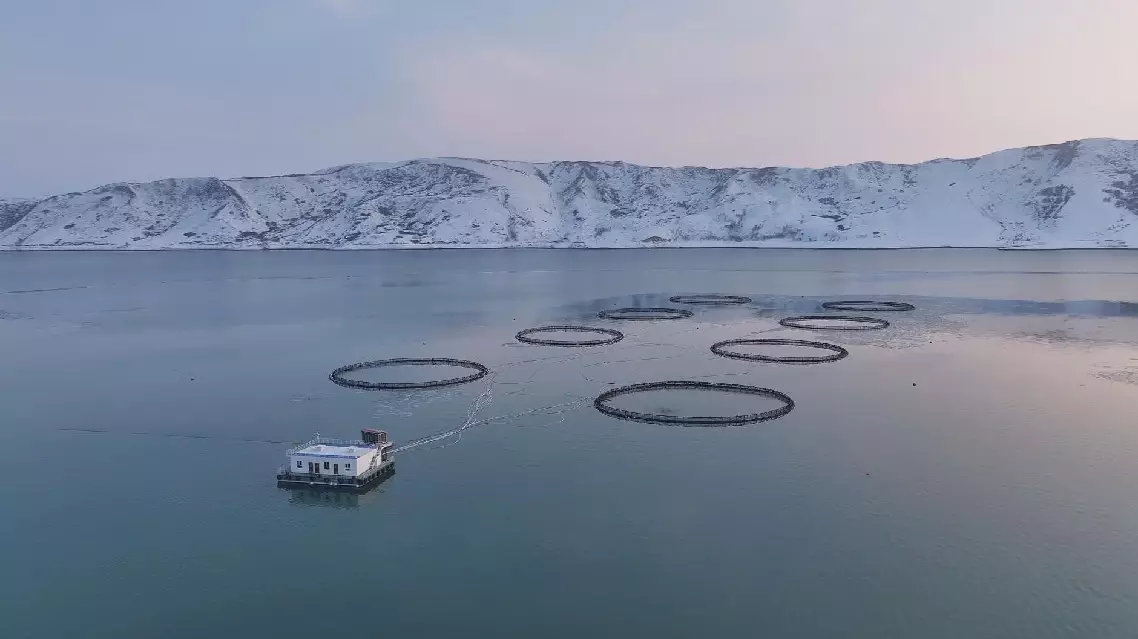
Inland salmon breeding base nets success in Xinjiang
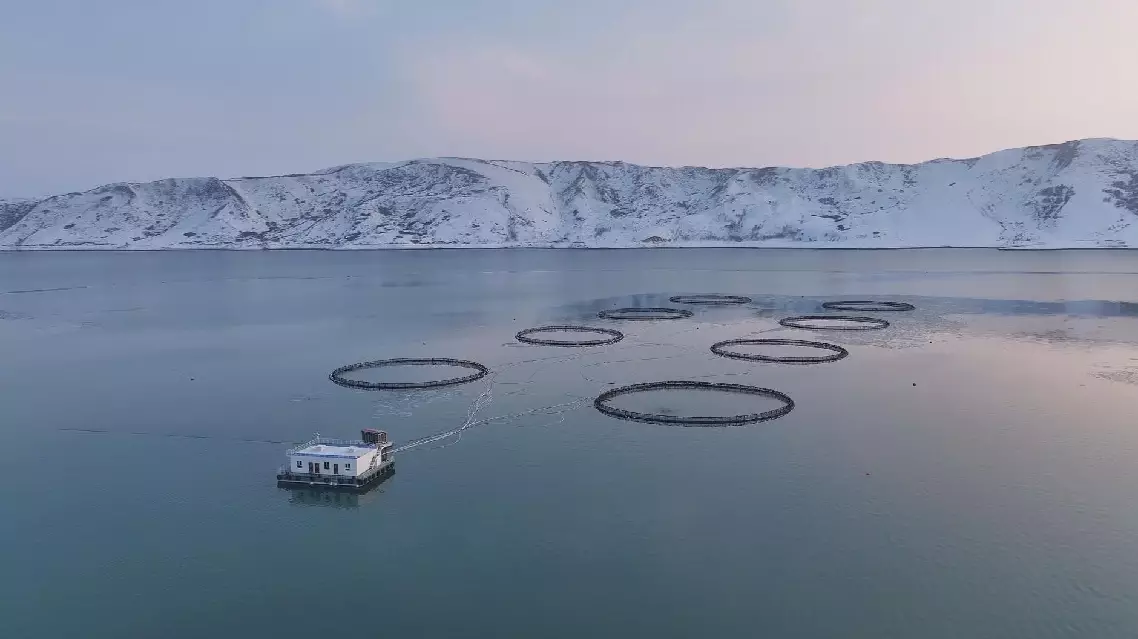
The United States cannot legitimize an operation that attacked Venezuela and captured its president, a Chinese scholar said Sunday.
On Saturday, the United States launched a large-scale strike on Venezuela, during which Venezuelan President Nicolas Maduro and his wife were 'captured and flown out of Venezuela' according to a post by U.S. President Donald Trump on his Truth Social account.
Teng Jianqun, director of the Center for Diplomatic Studies at Hunan Normal University, said in an interview with China Global Television Network (CGTN) that the aim of this operation is to take full control of Venezuela’s natural resources.
"I don't think the United States can legitimize this operation to take custody of the president of Venezuela. And also I don't think the United States can legitimize its any action in taking the oil reserves of that country. This is actually a very dangerous game played by the Trump administration. And of course, the United States would like to take full control of that country and to take full control of the natural resources, especially the large reserve of oil in Venezuela," said Teng.
Teng said Venezuela is not an isolated case but a common practice by the United States. The United States launched an invasion of Panama on Dec. 20, 1989, which continued until January 1990, with the stated objective of capturing Panamanian strongman Manuel Noriega on charges of drug trafficking and organized crime.
"We still remember the so-called sentence of the former president of Panama in the late 1980s. And this time, the president of Venezuela will be under some judicial condition (judicial proceedings) for the so-called drug trafficking and some other crimes. So I think this is not a single case for the Venezuela country, but also this is actually a practice by the United States -- to use force, to use so-called justice under law against any leaders in Latin America and the Caribbean waters," he said.
US cannot legitimize operation against Venezuela: Chinese scholar