China's whole-process people's democracy is the defining feature of socialist democracy and democracy in its broadest, most genuine, and most effective form, driving national progress especially during the national "two sessions."
Nearly 3,000 National People's Congress (NPC) deputies and over 2,000 members of the Chinese People's Political Consultative Conference (CPPCC) National Committee are gathering in Beijing for the annual "two sessions," a key political event shaping the country's policy direction.
The "two sessions", the annual meetings of the NPC and the CPPCC, are scheduled to open on March 5 and 4, respectively.
During the "two sessions," the NPC deputies and CPPCC members are valued advisors on key and critical issues such as employment, income, education, healthcare, elderly care, and childcare, fulfilling their responsibilities with dedication.
Many constructive opinions and suggestions raised by NPC deputies and CPPCC members during the "two sessions" are addressed through institutional mechanisms, with responses from local governments and departments, which are often integrated into national policies and measures, leading to tangible solutions for socio-economic challenges.
For instance, during last year's "two sessions," NPC deputy He Guanghua submitted a proposal to address "charging anxiety" among electric vehicle (EV) owners by strengthening EV charging infrastructure.
He's suggestion caught the attention of six national departments, including the National Energy Administration, which subsequently introduced policies to enhance charging infrastructure planning and construction. This year, she plans to further advocate for leveraging EVs as mobile energy storage units and advancing vehicle-to-grid (V2G) reverse charging technology based on her ongoing research. "I deeply feel the efficiency and precision of national ministries in promoting social development and solving real problems. This truly demonstrates the superiority of whole-process people's democracy," said He.
CPPCC member Tang Xudong, a faculty member at the China Academy of Chinese Medical Sciences, led 13 CPPCC members during the "two sessions" last year in submitting a joint proposal to address weaknesses in grassroots traditional Chinese medicine (TCM) services and talent shortages.
One year later, Tang and his colleagues were pleased to see progress that central government funding supported TCM specialty construction in 450 county-level hospitals, nearly 42,000 TCM clinics were established in grassroots healthcare institutions, and approximately 46,000 TCM professionals received training.
"Through democratic consultations, we turn the public's aspirations for a better life into feasible proposals and suggestions drafted by CPPCC members, integrating them into national strategies to address the real needs of the people effectively," said Tang.
Through in-depth research and discussions, the suggestions and opinions of NPC deputies and CPPCC members have become a driving force for socio-economic development.
According to statistics, during the second session of the 14th NPC, deputies submitted 9,235 suggestions, criticisms, and opinions, all of which were assigned to 213 handling units. Each unit completed the review process and responded to the deputies.
Over the past year, more than 2,000 CPPCC members submitted over 5,000 proposals, many of which were incorporated into policy documents, contributing to scientific and democratic decision-making.
"The 'two sessions' serve as a vital platform for the Chinese people to exercise their role as masters of the country. Through institutionalized democratic participation and extensive public opinion integration, they continuously drive policy implementation, showcasing the 'most extensive, genuine, and effective' feature of whole-process people's democracy. At the core, the 'two sessions' embed democracy in problem-solving and the enhancement of governance efficiency, reflecting China's unique characteristics while offering a distinctive model for global democratic practices," said Song Xiongwei, professor at the Party School of the CPC Central Committee (National Academy of Governance).
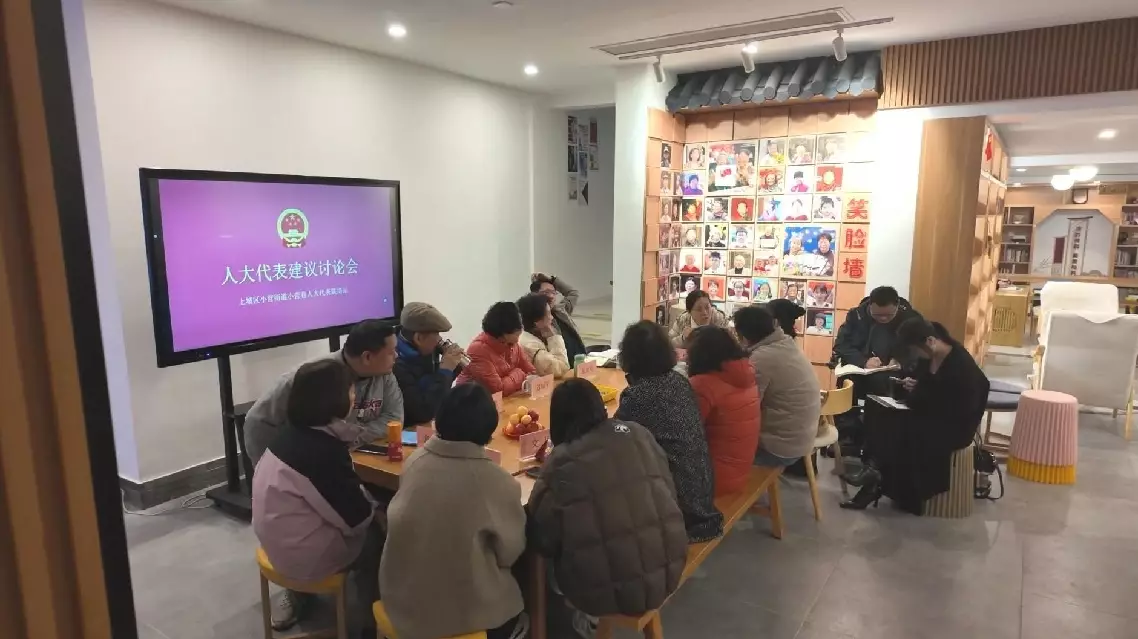
China's 'two sessions' highlight strength of whole-process people's democracy