China's National People's Congress (NPC), the country's highest organ of state power, on Wednesday started its annual session, with a string of confidence-boosting development goals unveiled, including an economic growth target of around 5 percent for 2025.
Nearly 3,000 deputies attended the third session of the 14th NPC, held at the Great Hall of the People in Beijing.
Click to Gallery
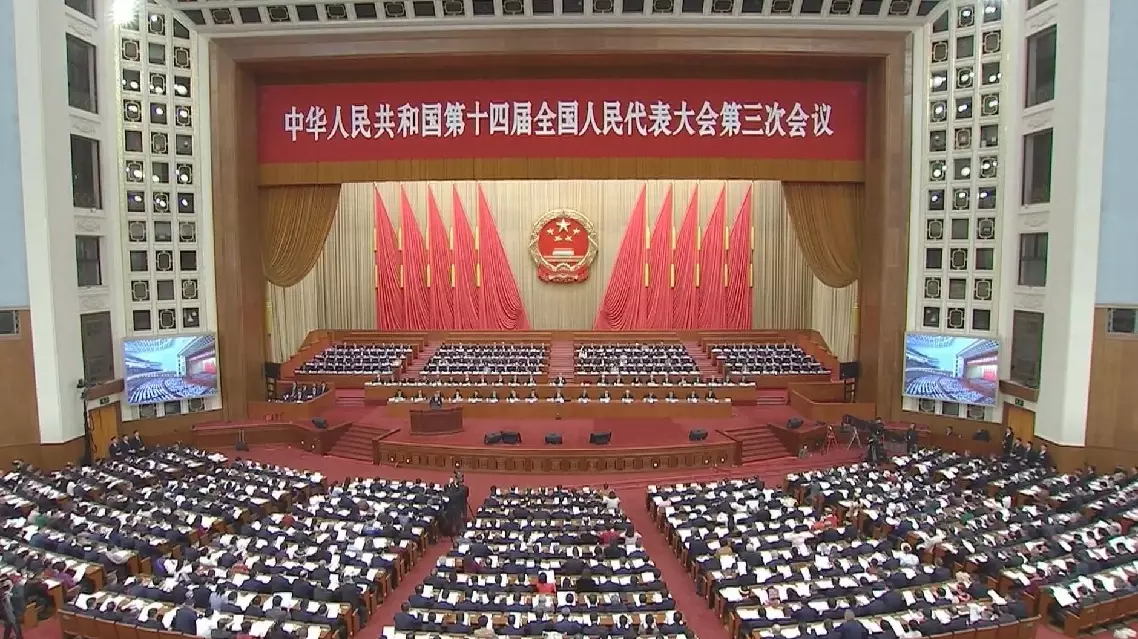
China's national legislature opens annual session
China's national legislature opens annual session
China's national legislature opens annual session
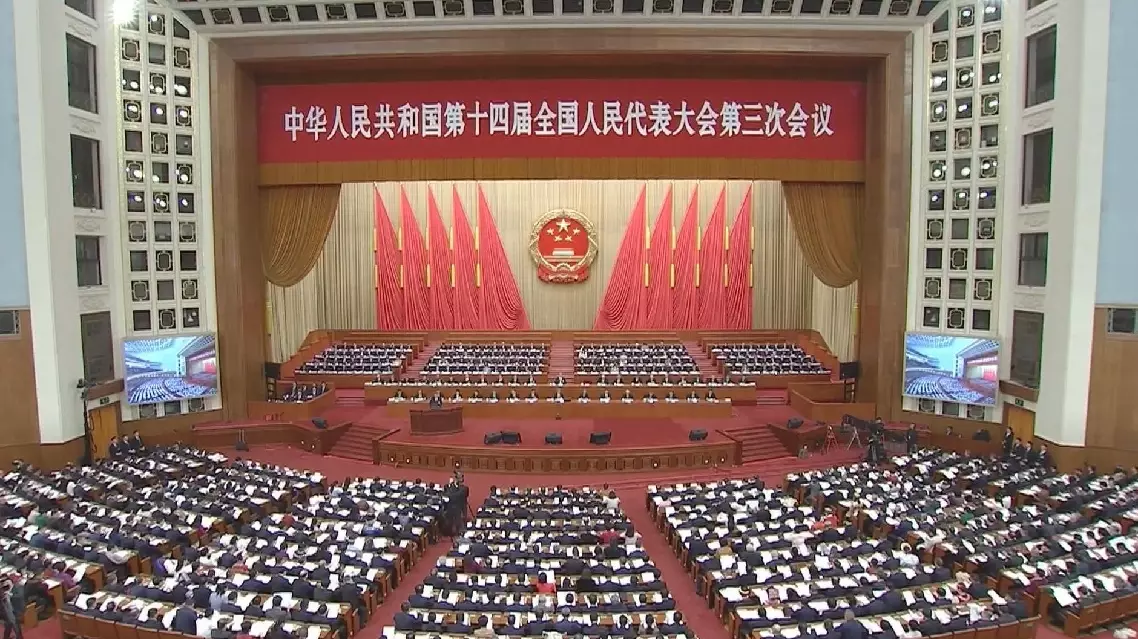
China's national legislature opens annual session
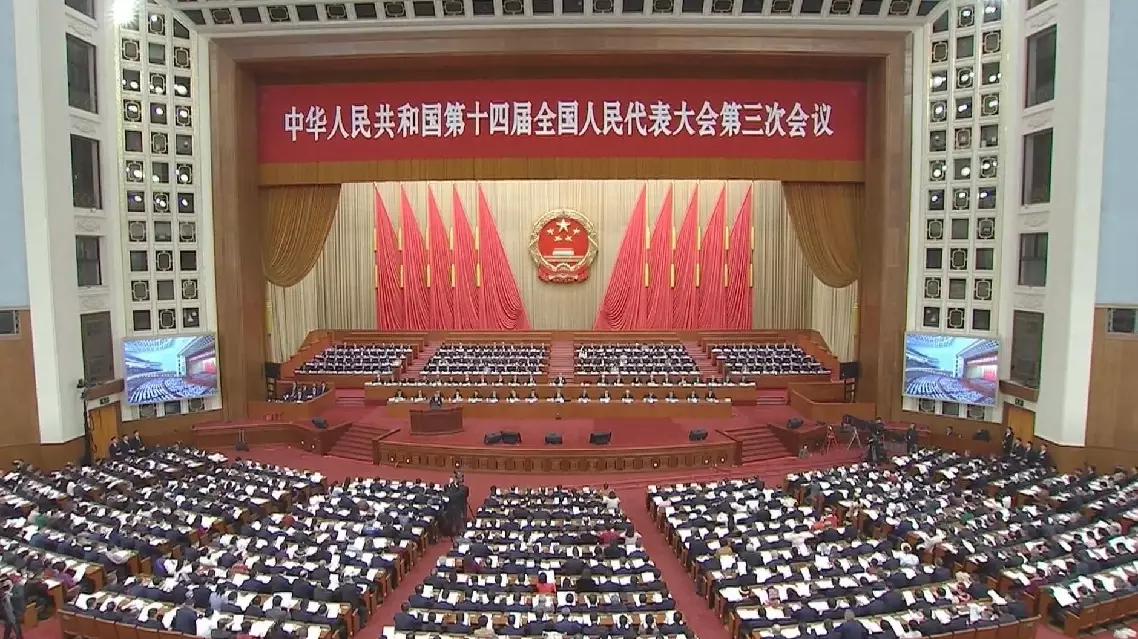
China's national legislature opens annual session
Chinese President Xi Jinping and other leaders including Li Qiang, Wang Huning, Cai Qi, Ding Xuexiang, Li Xi and Han Zheng, and members of the session's presidium, were seated at the rostrum.
Zhao Leji, executive chairman of the session's presidium, presided over the meeting.
Chinese Premier Li Qiang delivered a government work report. Reviewing the work of 2024, he said that in the face of the complex and grave situation marked by mounting external pressures and growing domestic difficulties, China has accomplished the main goals and tasks for economic and social development.
Solid headway was made in pursuing high-quality development and fostering new quality productive forces. China's economic strength, scientific and technological capabilities, and composite national strength continued to rise, and solid new strides were made in advancing Chinese modernization. These achievements have filled the nation with even greater confidence and resolve as it presses forward on the new journey to build a modern socialist country in all respects in the new era, said Li.
Over the past year, the government took more robust and innovative measures in conducting macro regulation in light of evolving conditions and promoted economic recovery and growth. It deepened reform and opening up comprehensively with unswerving commitment and boosted the internal momentum of development. It made major efforts to promote innovation-driven development and upgraded the industrial structure. It advanced coordinated development between urban and rural areas and between different regions and improved the economic layout. It actively developed social programs and improved the people's wellbeing. It continued to strengthen environmental protection and promoted green and low-carbon development. It also enhanced government performance and governance innovation and ensured social harmony and stability, Li said in the report. The premier pointed out that while recognizing the country's achievements, the government is keenly aware of the problems and challenges that confront it.
Noting that 2025 is the final year for implementing the 14th Five-Year Plan (2021-2025), the premier said China targets economic growth of around 5 percent this year.
The country has set the target for its surveyed urban unemployment rate at around 5.5 percent, and plans to create over 12 million new urban jobs in 2025, and targets an annual increase in the consumer price index of around 2 percent, he said.
The country also aims to keep residents' income growth in step with economic growth, maintain a basic equilibrium in the balance of payments, achieve grain output of around 700 million metric tons, targets a drop of around 3 percent in energy consumption per unit of GDP, and strive for continued improvements in the ecological environment quality, according to Li.
Noting that China faces formidable tasks in economic and social development, Li said the country should focus on major priorities and key links and strive to deliver a good performance in several areas, including vigorously boosting consumption, accelerating the development of a modernized industrial system, accelerating the implementation of landmark reform measures, expanding high-standard opening up, and stabilizing foreign trade and investment.
He also elaborated on work related to improving government performance, ethnic and religious affairs, overseas Chinese affairs, national defense and military development, the development of Hong Kong and Macao, cross-Strait relations, and China's foreign policies.
"Confidence builds strength, and hard work creates glorious achievements. Let us rally more closely around the CPC Central Committee with Comrade Xi Jinping at its core, hold high the great banner of socialism with Chinese characteristics, and follow the guidance of Xi Jinping Thought on Socialism with Chinese Characteristics for a New Era. Let us meet difficulties head-on and forge ahead with resolve to accomplish this year’s objectives and tasks for economic and social development and bring the 14th Five-Year Plan to a successful conclusion. Let us strive to build a great country and advance national rejuvenation on all fronts through Chinese modernization," Li said as he concluded the report. At Wednesday's meeting, NPC deputies reviewed a report from the State Council on the implementation of the 2024 plan for national economic and social development and on the 2025 draft plan, as well as the draft plan for national economic and social development in 2025.
They also reviewed a report from the State Council on the execution of the central and local budgets for 2024 and on the draft central and local budgets for 2025, as well as the draft central and local budgets for 2025.
Li Hongzhong, vice chairman of the NPC Standing Committee, explained a draft amendment to the Law on Deputies to the National People's Congress and to the Local People's Congresses at Various Levels.
The law amendment is necessary for developing whole-process people's democracy and ensuring that people's congresses and their standing committees at all levels maintain close ties with the people, according to the explanation.
China's national legislature opens annual session
China's national legislature opens annual session
China's national legislature opens annual session
China's national legislature opens annual session
China's national legislature opens annual session