Skip to Content Facebook Feature Image

First national analysis finds America's butterflies are disappearing at 'catastrophic' rate

News

First national analysis finds America's butterflies are disappearing at 'catastrophic' rate
News

News

First national analysis finds America's butterflies are disappearing at 'catastrophic' rate

2025-03-07 03:15 Last Updated At:03:21

WASHINGTON (AP) — America's butterflies are disappearing because of insecticides, climate change and habitat loss, with the number of the winged beauties down 22% since 2000, a new study finds.

The first countrywide systematic analysis of butterfly abundance found that the number of butterflies in the Lower 48 states has been falling on average 1.3% a year since the turn of the century, with 114 species showing significant declines and only nine increasing, according to a study in Thursday's journal Science.

More Images
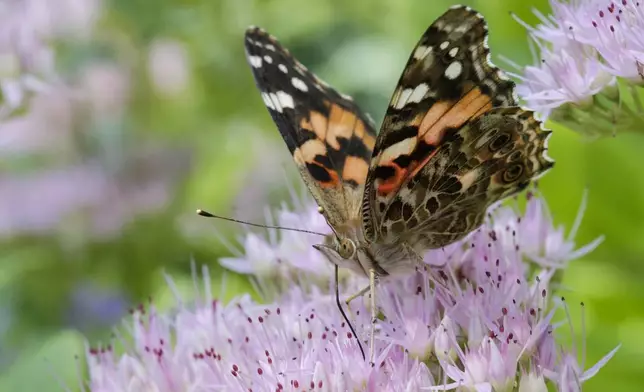
FILE - A painted lady butterfly feeds on Sedum flowers in Omaha, Neb., Sept. 19, 2017. (AP Photo/Nati Harnik, File)
FILE - A painted lady butterfly feeds on Sedum flowers in Omaha, Neb., Sept. 19, 2017. (AP Photo/Nati Harnik, File)

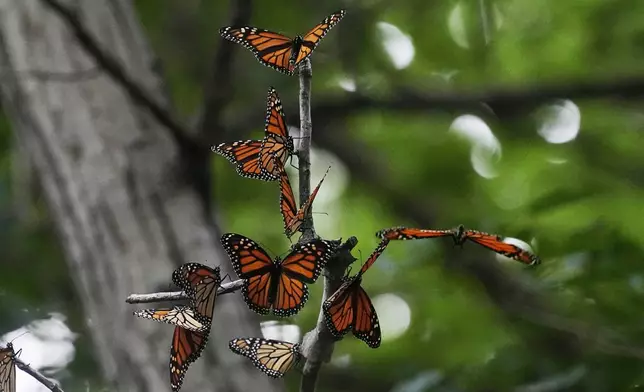
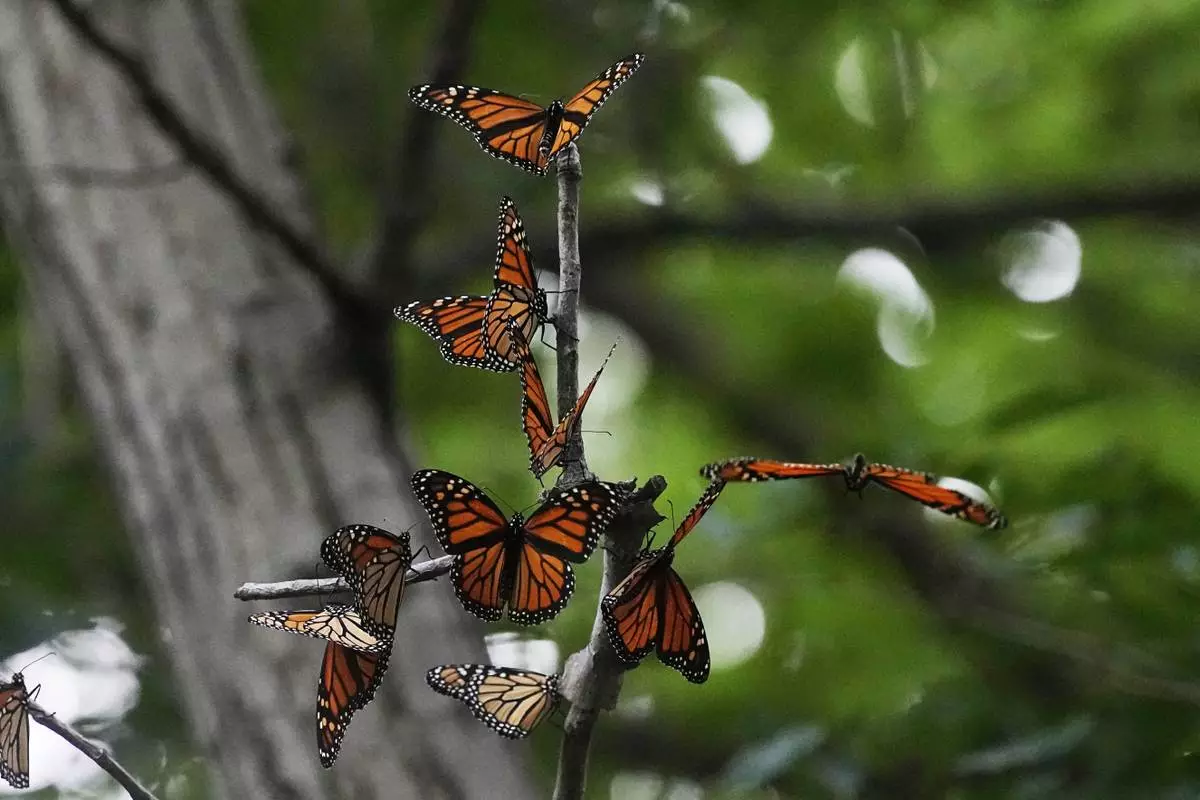
FILE - Monarch butterflies from Canada stop to rest in Wendy Park on their way to Mexico, Sept. 12, 2023, in Cleveland. (AP Photo/Sue Ogrocki, File)
FILE - Monarch butterflies from Canada stop to rest in Wendy Park on their way to Mexico, Sept. 12, 2023, in Cleveland. (AP Photo/Sue Ogrocki, File)

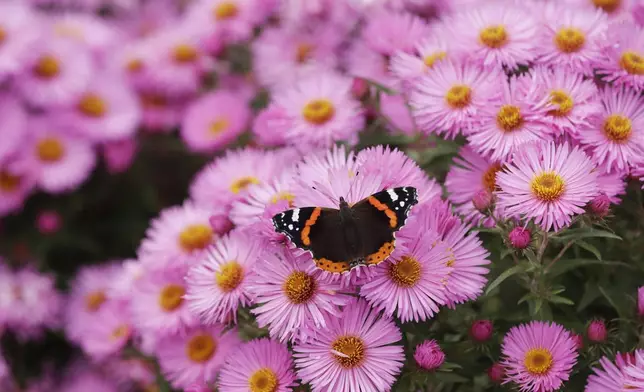
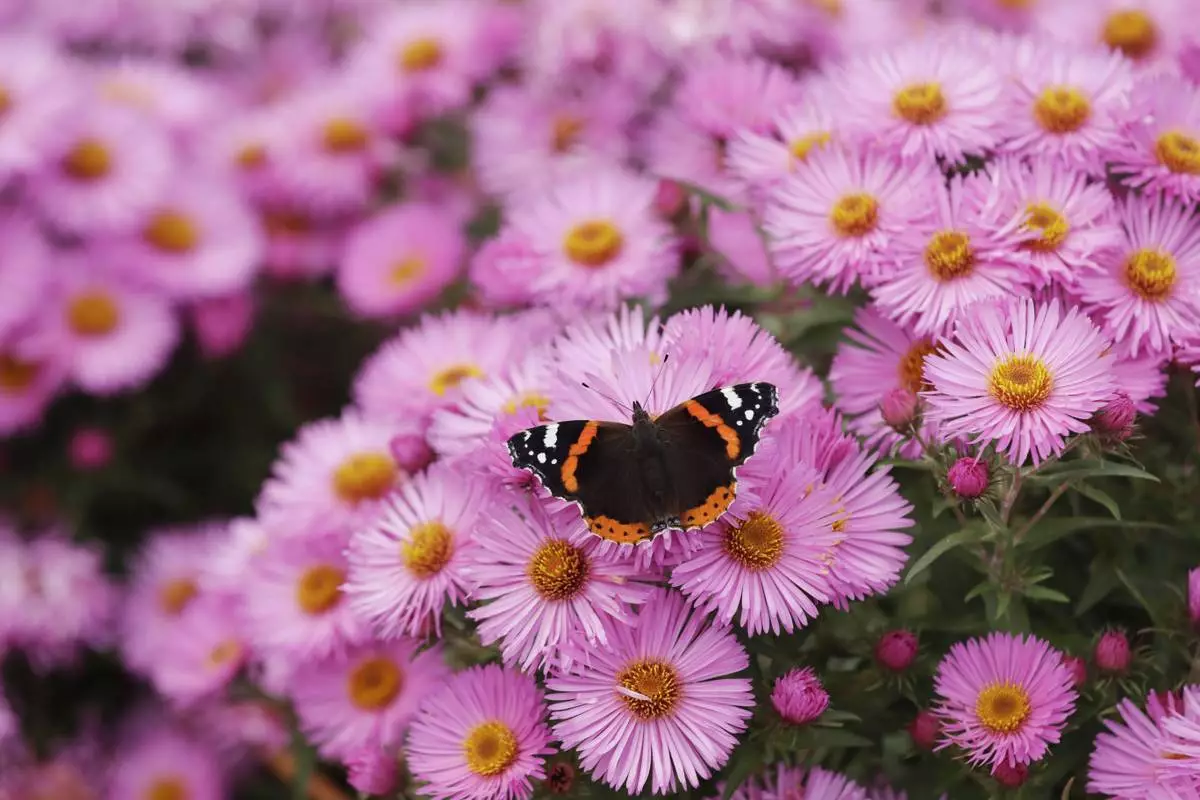
FILE - A red admiral butterfly stops on a New England Aster flower at the Royal Horticultural Society Garden Wisley, in the village of Wisley, near Woking, England, Oct. 4, 2017. (AP Photo/Matt Dunham, File)
FILE - A red admiral butterfly stops on a New England Aster flower at the Royal Horticultural Society Garden Wisley, in the village of Wisley, near Woking, England, Oct. 4, 2017. (AP Photo/Matt Dunham, File)

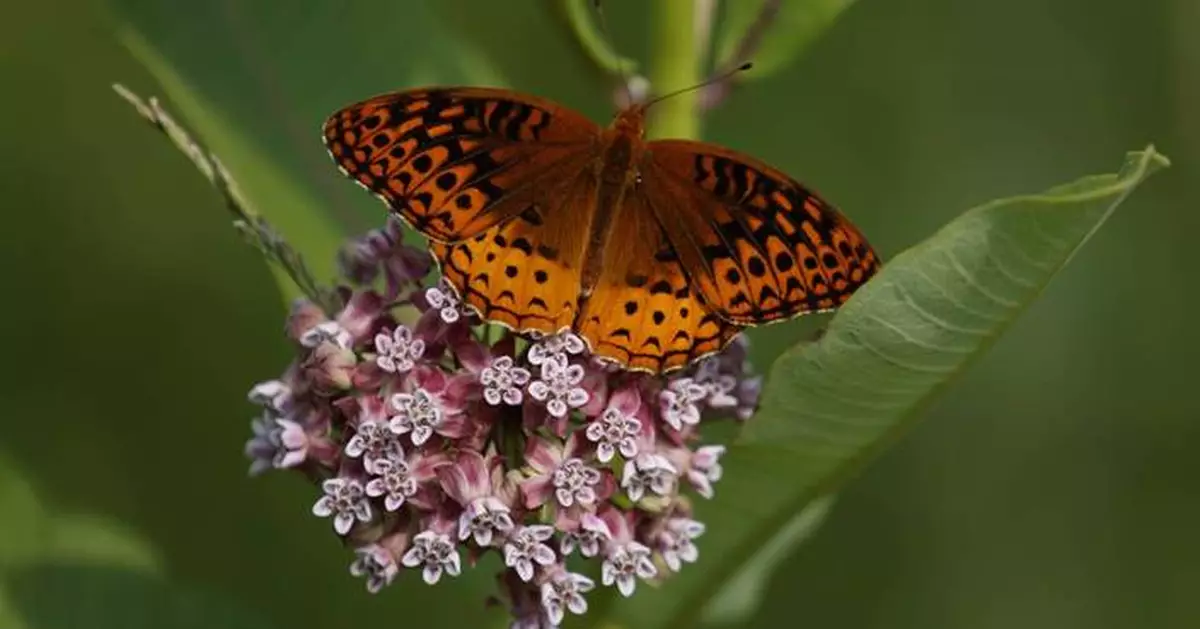
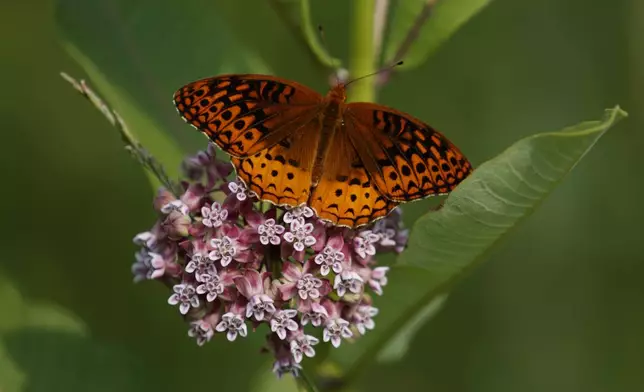
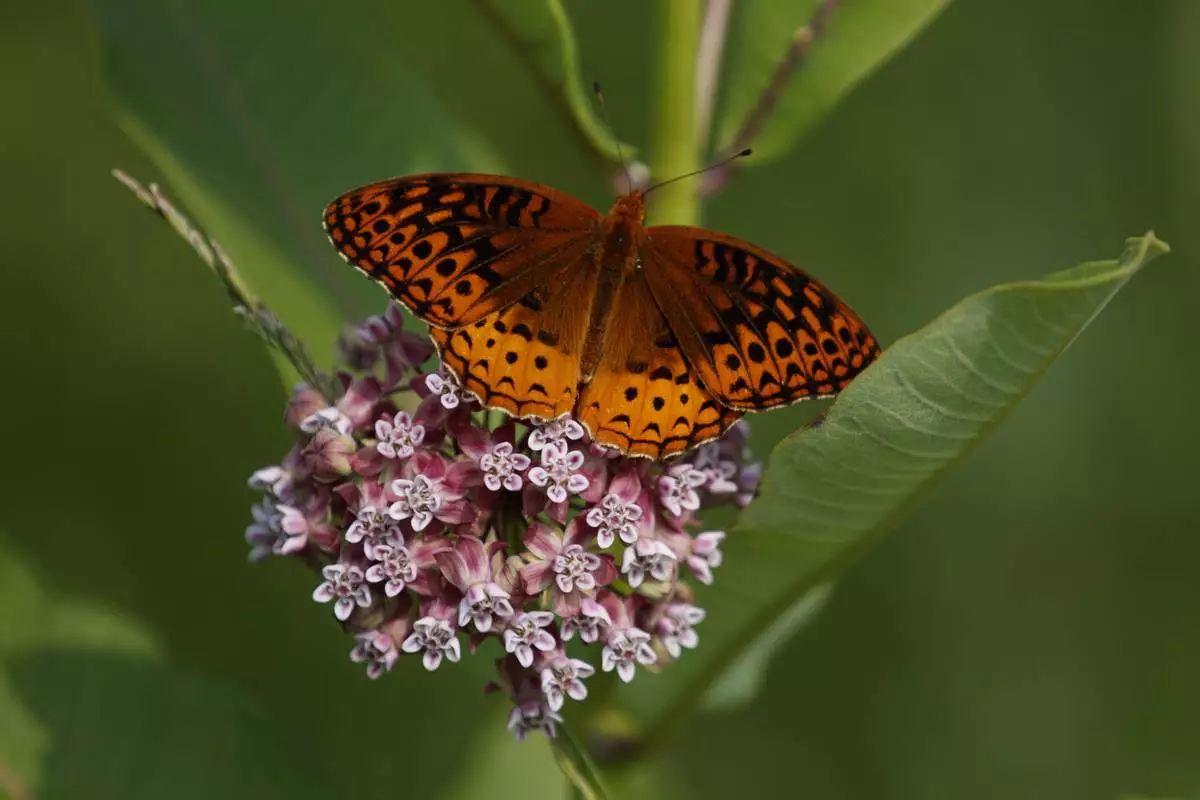
FILE - A fritillary butterfly perches on blooming milkweed at Patuxent Wildlife Research Center in Laurel, Md., June 5, 2019. (AP Photo/Carolyn Kaster, File)

FILE - A fritillary butterfly perches on blooming milkweed at Patuxent Wildlife Research Center in Laurel, Md., June 5, 2019. (AP Photo/Carolyn Kaster, File)

“Butterflies have been declining the last 20 years,” said study co-author Nick Haddad, an entomologist at Michigan State University. “And we don't see any sign that that's going to end."

A team of scientists combined 76,957 surveys from 35 monitoring programs and blended them for an apples-to-apples comparison and ended up counting 12.6 million butterflies over the decades. Last month an annual survey that looked just at monarch butterflies, which federal officials plan to put on the threatened species list, counted a nearly all-time low of fewer than 10,000, down from 1.2 million in 1997.

Many of the species in decline fell by 40% or more.

David Wagner, a University of Connecticut entomologist who wasn't part of the study, praised its scope. And he said while the annual rate of decline may not sound significant, it is “catastrophic and saddening” when compounded over time.

“In just 30 or 40 years we are talking about losing half the butterflies (and other insect life) over a continent!” Wagner said in an email. "The tree of life is being denuded at unprecedented rates.”

The United States has 650 butterfly species, but 96 species were so sparse they didn't show up in the data and another 212 species weren't found in sufficient number to calculate trends, said study lead author Collin Edwards, an ecologist and data scientist at the Washington Department of Fish and Wildlife.

“I'm probably most worried about the species that couldn't even be included in the analyses” because they were so rare, said University of Wisconsin-Madison entomologist Karen Oberhauser, who wasn't part of the research.

Haddad, who specializes in rare butterflies, said in recent years he has seen just two endangered St. Francis Satyr butterflies — which only live on a bomb range at Fort Bragg in North Carolina — “so it could be extinct.”

Some well-known species had large drops. The red admiral, which is so calm it lands on people, is down 44% and the American lady butterfly, with two large eyespots on its back wings, decreased by 58%, Edwards said.

Even the invasive white cabbage butterfly, “a species that is well adapted to invade the world," according to Haddad, fell by 50%.

"How can that be?” Haddad wondered.

Cornell University butterfly expert Anurag Agrawal said he worries most about the future of a different species: Humans.

“The loss of butterflies, parrots and porpoises is undoubtedly a bad sign for us, the ecosystems we need and the nature we enjoy,” Agrawal, who wasn't part of the study, said in an email. “They are telling us that our continent's health is not doing so well ... Butterflies are an ambassador for nature's beauty, fragility and the interdependence of species. They have something to teach us.”

Oberhauser said butterflies connect people with nature and that “calms us down, makes us healthier and happier and promotes learning.”

What's happening to butterflies in the United States is probably happening to other, less-studied insects across the continent and world, Wagner said. He said not only is this the most comprehensive butterfly study, but the most data-rich for any insect.

Butterflies are also pollinators, though not as prominent as bees, and are a major source of pollination of the Texas cotton crop, Haddad said.

The biggest decrease in butterflies was in the Southwest — Arizona, New Mexico, Texas and Oklahoma — where the number of butterflies dropped by more than half in the 20 years.

“It looks like the butterflies that are in dry and warm areas are doing particularly poorly,” Edwards said. “And that kind of captures a lot of the Southwest.”

Edwards said when they looked at butterfly species that lived both in the hotter South and cooler North, the ones that did better were in the cooler areas.

Climate change, habitat loss and insecticides tend to work together to weaken butterfly populations, Edwards and Haddad said. Of the three, it seems that insecticides are the biggest cause, based on previous research from the U.S. Midwest, Haddad said.

“It makes sense because insecticide use has changed in dramatic ways in the time since our study started,” Haddad said.

Habitats can be restored and so can butterflies, so there's hope, Haddad said.

“You can make changes in your backyard and in your neighborhood and in your state,” Haddad said. “That could really improve the situation for a lot of species.”

Follow Seth Borenstein on X at @borenbears

Read more of AP’s climate coverage at http://www.apnews.com/climate-and-environment

The Associated Press’ climate and environmental coverage receives financial support from multiple private foundations. AP is solely responsible for all content. Find AP’s standards for working with philanthropies, a list of supporters and funded coverage areas at AP.org.
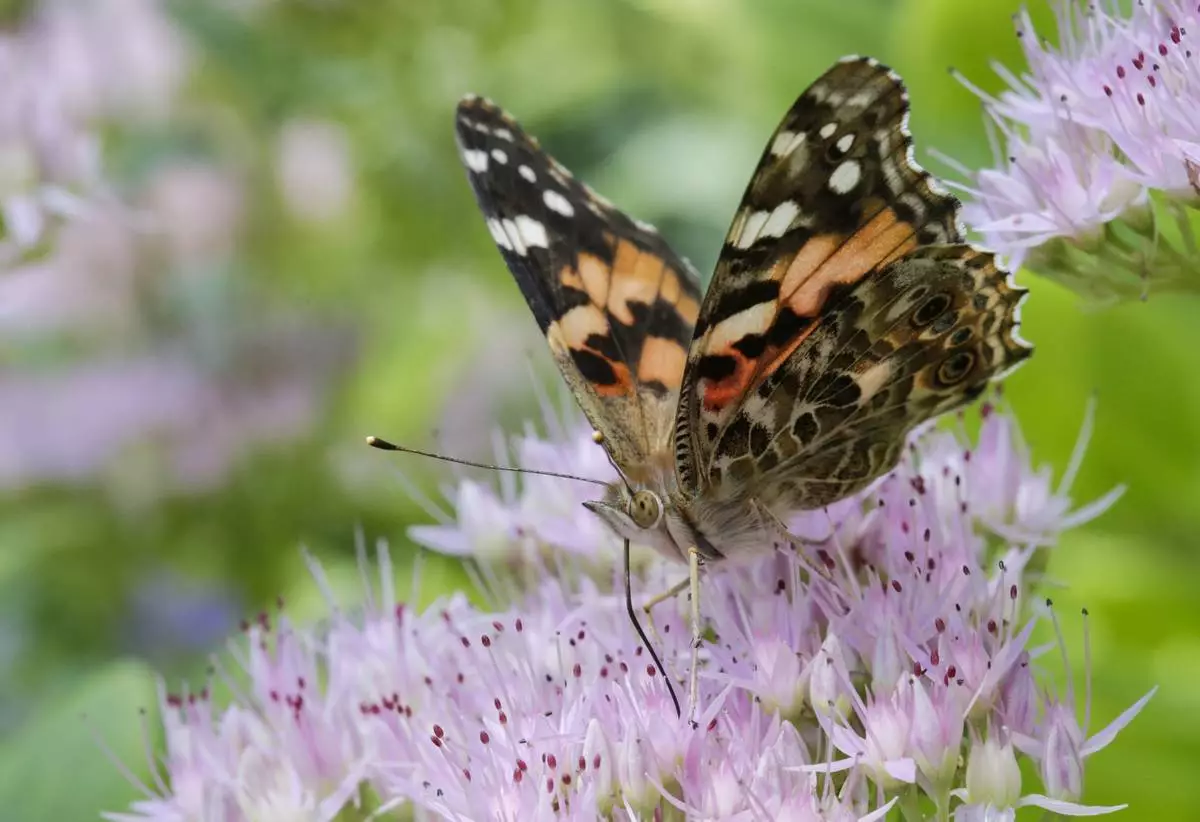
FILE - A painted lady butterfly feeds on Sedum flowers in Omaha, Neb., Sept. 19, 2017. (AP Photo/Nati Harnik, File)
FILE - A painted lady butterfly feeds on Sedum flowers in Omaha, Neb., Sept. 19, 2017. (AP Photo/Nati Harnik, File)

FILE - Monarch butterflies from Canada stop to rest in Wendy Park on their way to Mexico, Sept. 12, 2023, in Cleveland. (AP Photo/Sue Ogrocki, File)
FILE - Monarch butterflies from Canada stop to rest in Wendy Park on their way to Mexico, Sept. 12, 2023, in Cleveland. (AP Photo/Sue Ogrocki, File)

FILE - A red admiral butterfly stops on a New England Aster flower at the Royal Horticultural Society Garden Wisley, in the village of Wisley, near Woking, England, Oct. 4, 2017. (AP Photo/Matt Dunham, File)
FILE - A red admiral butterfly stops on a New England Aster flower at the Royal Horticultural Society Garden Wisley, in the village of Wisley, near Woking, England, Oct. 4, 2017. (AP Photo/Matt Dunham, File)

FILE - A fritillary butterfly perches on blooming milkweed at Patuxent Wildlife Research Center in Laurel, Md., June 5, 2019. (AP Photo/Carolyn Kaster, File)


FILE - A fritillary butterfly perches on blooming milkweed at Patuxent Wildlife Research Center in Laurel, Md., June 5, 2019. (AP Photo/Carolyn Kaster, File)

DUBAI, United Arab Emirates (AP) — U.S. President Donald Trump said Iran wants to negotiate with Washington after his threat to strike the Islamic Republic over its bloody crackdown on protesters, a move coming as activists said Monday the death toll in the nationwide demonstrations rose to at least 544.

Iran had no immediate reaction to the news, which came after the foreign minister of Oman — long an interlocutor between Washington and Tehran — traveled to Iran this weekend. It also remains unclear just what Iran could promise, particularly as Trump has set strict demands over its nuclear program and its ballistic missile arsenal, which Tehran insists is crucial for its national defense.

Meanwhile Monday, Iran called for pro-government demonstrators to head to the streets in support of the theocracy, a show of force after days of protests directly challenging the rule of 86-year-old Supreme Leader Ayatollah Ali Khamenei. Iranian state television aired chants from the crowd, who shouted “Death to America!” and “Death to Israel!”

Trump and his national security team have been weighing a range of potential responses against Iran including cyberattacks and direct strikes by the U.S. or Israel, according to two people familiar with internal White House discussions who were not authorized to comment publicly and spoke on condition of anonymity.

“The military is looking at it, and we’re looking at some very strong options,” Trump told reporters on Air Force One on Sunday night. Asked about Iran’s threats of retaliation, he said: “If they do that, we will hit them at levels that they’ve never been hit before.”

Trump said that his administration was in talks to set up a meeting with Tehran, but cautioned that he may have to act first as reports of the death toll in Iran mount and the government continues to arrest protesters.

“I think they’re tired of being beat up by the United States,” Trump said. “Iran wants to negotiate.”

He added: “The meeting is being set up, but we may have to act because of what’s happening before the meeting. But a meeting is being set up. Iran called, they want to negotiate.”

Iran through country's parliamentary speaker warned Sunday that the U.S. military and Israel would be “legitimate targets” if America uses force to protect demonstrators.

More than 10,600 people also have been detained over the two weeks of protests, said the U.S.-based Human Rights Activists News Agency, which has been accurate in previous unrest in recent years and gave the death toll. It relies on supporters in Iran crosschecking information. It said 496 of the dead were protesters and 48 were with security forces.

With the internet down in Iran and phone lines cut off, gauging the demonstrations from abroad has grown more difficult. The Associated Press has been unable to independently assess the toll. Iran’s government has not offered overall casualty figures.

Those abroad fear the information blackout is emboldening hard-liners within Iran’s security services to launch a bloody crackdown. Protesters flooded the streets in the country’s capital and its second-largest city on Saturday night into Sunday morning. Online videos purported to show more demonstrations Sunday night into Monday, with a Tehran official acknowledging them in state media.

In Tehran, a witness told the AP that the streets of the capital empty at the sunset call to prayers each night. By the Isha, or nighttime prayer, the streets are deserted.

Part of that stems from the fear of getting caught in the crackdown. Police sent the public a text message that warned: “Given the presence of terrorist groups and armed individuals in some gatherings last night and their plans to cause death, and the firm decision to not tolerate any appeasement and to deal decisively with the rioters, families are strongly advised to take care of their youth and teenagers.”

Another text, which claimed to come from the intelligence arm of the paramilitary Revolutionary Guard, also directly warned people not to take part in demonstrations.

“Dear parents, in view of the enemy’s plan to increase the level of naked violence and the decision to kill people, ... refrain from being on the streets and gathering in places involved in violence, and inform your children about the consequences of cooperating with terrorist mercenaries, which is an example of treason against the country,” the text warned.

The witness spoke to the AP on condition of anonymity due to the ongoing crackdown.

The demonstrations began Dec. 28 over the collapse of the Iranian rial currency, which trades at over 1.4 million to $1, as the country’s economy is squeezed by international sanctions in part levied over its nuclear program. The protests intensified and grew into calls directly challenging Iran’s theocracy.

Nikhinson reported from aboard Air Force One.

In this frame grab from video obtained by the AP outside Iran, a masked demonstrator holds a picture of Iran's Crown Prince Reza Pahlavi during a protest in Tehran, Iran, Friday, January. 9, 2026. (UGC via AP)

In this frame grab from video obtained by the AP outside Iran, a masked demonstrator holds a picture of Iran's Crown Prince Reza Pahlavi during a protest in Tehran, Iran, Friday, January. 9, 2026. (UGC via AP)

In this frame grab from footage circulating on social media from Iran shows protesters taking to the streets despite an intensifying crackdown as the Islamic Republic remains cut off from the rest of the world in Tehran, Iran, Friday, Jan. 9, 2026.(UGC via AP)

In this frame grab from footage circulating on social media from Iran shows protesters taking to the streets despite an intensifying crackdown as the Islamic Republic remains cut off from the rest of the world in Tehran, Iran, Friday, Jan. 9, 2026.(UGC via AP)

In this frame grab from footage circulating on social media from Iran showed protesters once again taking to the streets of Tehran despite an intensifying crackdown as the Islamic Republic remains cut off from the rest of the world in Tehran, Iran, Saturday Jan. 10, 2026. (UGC via AP)

In this frame grab from footage circulating on social media from Iran showed protesters once again taking to the streets of Tehran despite an intensifying crackdown as the Islamic Republic remains cut off from the rest of the world in Tehran, Iran, Saturday Jan. 10, 2026. (UGC via AP)

Recommended Articles