Skip to Content Facebook Feature Image

China's national legislature reviews work of 2024

China

China

China

China's national legislature reviews work of 2024

2025-03-08 11:08 Last Updated At:15:27

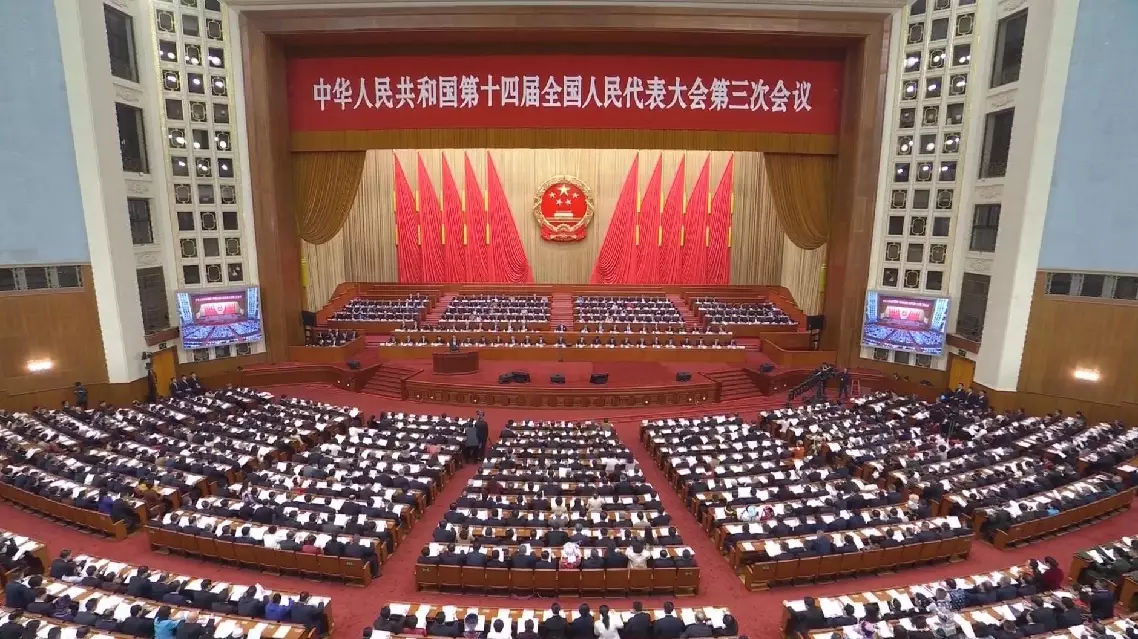
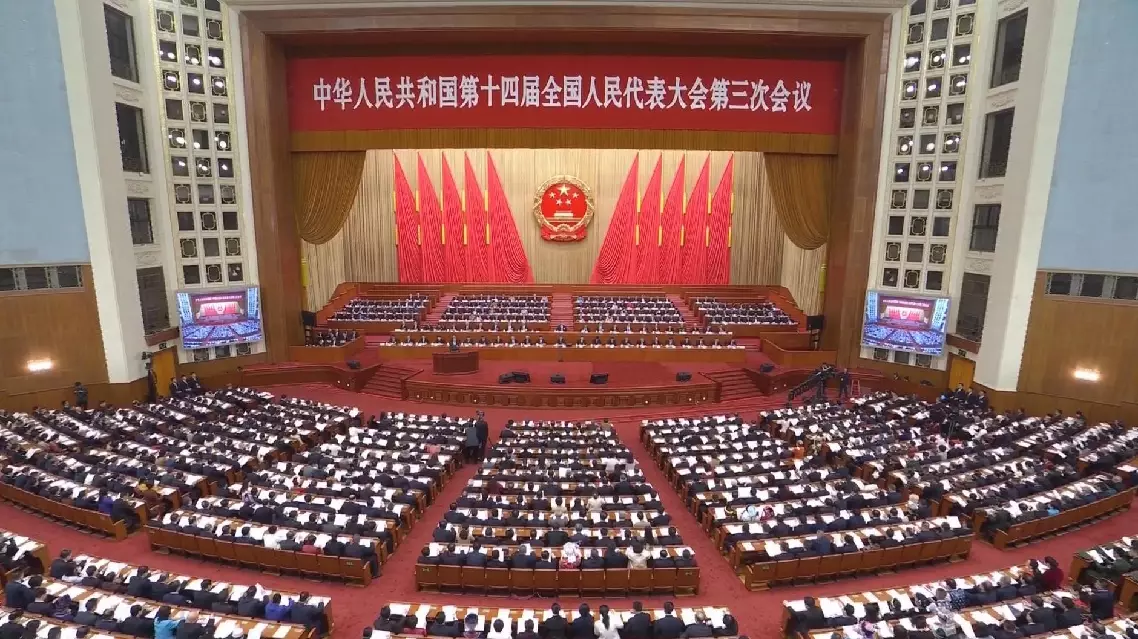
The Standing Committee of the National People's Congress (NPC) reviewed its work of 2024 while delivering a work report at the second plenary meeting of the third session of the 14th NPC in Beijing on Saturday.

Zhao Leji, chairman of the 14th NPC Standing Committee, delivered the report.

"The year 2024 marked the 75th anniversary of the founding of the People's Republic of China. The Central Committee of the Communist Party of China (CPC) with Comrade Xi Jinping at its core brought together the Chinese people of all ethnic groups and led them in overcoming numerous challenges and forging ahead with courage and determination. The economy maintained overall stability while achieving steady growth, solid progress was made in high-quality development, and reform and opening up were further advanced. Robust support was provided in improving public wellbeing, social stability was maintained, and fresh, substantial strides were made in advancing Chinese modernization. Through its 75 years of relentless effort, China has undergone tremendous and transformative changes, setting the rejuvenation of the Chinese nation on an irreversible historical course and fully demonstrating the exceptional strengths of the CPC's leadership and our country's socialist system," said Zhao.

Over the past year, the NPC Standing Committee strengthened the implementation of the Constitution and enhanced compliance oversight to uphold its authority and sanctity, according to Zhao.

"We moved forward with our work on constitutional review and the recording and review of normative documents. Guided by the principle of legislating in accordance with the Constitution and the law, we actively worked to ensure that the Constitution was observed throughout the entire legislative process. We also enhanced the alignment of the recording and review system with the constitutional review process," he said.

The top legislator said the NPC Standing Committee fulfilled its legislative functions to enhance the Chinese socialist legal system, bolstering legislation in key areas, and advancing legislation in a scientific and democratic manner in accordance with the law.

"We advanced legislation in a scientific and democratic manner in accordance with the law and, through such high-quality legislation, supported and served reform and development efforts. Over the past year, we deliberated on 39 legislative items, including 6 new laws, 14 revised laws, and 4 decisions on legal matters and other significant issues," said Zhao.

He noted that the NPC Standing Committee strengthened deputy-related work to support deputies in the lawful performance of duties.

"All of the 298 proposals put forward by deputies during the second session of the 14th NPC, the 9,235 deputy suggestions submitted during the previous session and the 105 suggestions raised when the NPC was not in session have been handled, with feedback given to deputies," he said.

Zhao also underlined the NPC Standing Committee's engagement in foreign exchanges for the advancement of China's diplomatic agenda.

"We actively enhanced foreign communication and outreach. We took active steps to practice and explain Xi Jinping Thought on Diplomacy. We promoted China's ideas and proposals, including the vision of building a community with a shared future for mankind, the Global Development Initiative, the Global Security Initiative, the Global Civilization Initiative, Belt and Road cooperation and Chinese modernization, along with our successful practices in these areas. We also presented China's achievements in pursuing development since the founding of the PRC 75 years ago, as well as the strengths of its whole-process people's democracy and people's congress system," he said.
China's national legislature reviews work of 2024
China's national legislature reviews work of 2024
China's national legislature reviews work of 2024

China's national legislature reviews work of 2024

Escalating tensions in the Strait of Hormuz are sending shockwaves through Gulf economies, driving up energy prices, disrupting shipping and straining supply chains.

The current crisis along the Strait of Hormuz came as part of Iran's response to U.S.-Israeli military strikes.

On Feb 28, Israel and the United States launched joint attacks on Tehran and several other Iranian cities, killing Iran's then Supreme Leader Ali Khamenei, along with senior military commanders and civilians.

Iran responded with waves of missile and drone strikes targeting Israel and U.S. assets in the Middle East as well as navigation restriction through the Strait of Hormuz.

As the war drags on, Iran has been leveraging its grip on the waterway, reducing shipping traffic to historical lows as concerns about the wider global economic impact continue to mount.

The narrow waterway carries nearly one‑fifth of the world's oil supply, and analysts warn the worst may be yet to come.

In the United Arab Emirates, already affected by spillover from the conflict, gasoline prices were raised by about 30 percent from the beginning of April, while diesel prices surged approximately 72 percent.

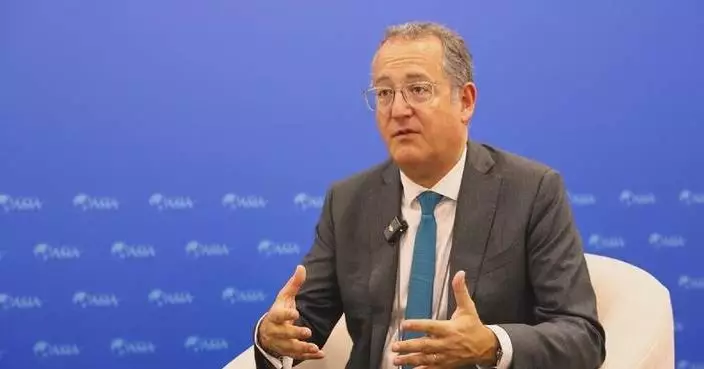
"Anyway, the UAE, for example, produces oil, so it shouldn't be affected as much as countries that are importing oil. But then there is also this global deal that even local prices should be reflecting somehow the global market. Asian countries and European countries are being more affected than the U.S.," said Farah Mourad, senior market analyst of IG Group in Dubai.

Disruptions to shipping are also rippling through global agriculture, with fertilizer costs soaring and transport blocked. Nearly half of the world's urea and large volumes of other fertilizers are exported from Gulf countries through the Strait of Hormuz. Prolonged instability could severely impact spring plowing in the Northern Hemisphere, driving up global agricultural costs and food prices.

The Strait of Hormuz transit has remained "at a near halt" over the past month, with maritime traffic falling by about 95 percent since the U.S.-Israel-Iran conflict, according to the UN Trade and Development (UNCTAD). The agency warned the standstill is disrupting energy shipments, slowing global trade growth, and could fuel inflation through higher energy prices and living costs.

"There are different layers of impact, and the clearest one is energy prices going up. So anything that needs energy, for (example), agriculture will be going up. But then again, we have fertilizer prices, anything being affected by a closure of the supply chain, pressure on supply chains is already being clear at the moment. Higher prices when it comes to insurance for transportation, from the moment you produce until the moment the buyer gets it. So these are energy prices along the way. But we still believe it might be the beginning of this pivot towards these commodities," said Mourad.

A recent report by the United Nations Development Programme warned that escalation of the conflict in the Middle East could cost Arab countries between 120 billion and 194 billion U.S. dollars. It projected 3.6 million job losses, an increase in regional unemployment of up to 4 percentage points, and more than 4 million people pushed into poverty.

Goldman Sachs earlier estimated that if the conflict continues through the end of April, the GDP of Saudi Arabia and the UAE could contract by 3 to 5 percent this year.

"Obviously, there are negatives, we saw in luxury, we saw airlines, we saw services. These will most probably suffer or continue to suffer some pressure. One of the most affected sectors is aviation. We're seeing lower flights, especially linked to this region because this region is a hub, it's a transit route. But then also because of higher oil prices and energy prices," said Mourad.

Analysts say the crisis has exposed the Gulf’s heavy reliance on the Strait of Hormuz as its only maritime outlet. In the longer term, they warn the conflict could push Gulf states to speed up construction of overland oil pipelines, railways and road networks to reduce dependence on the strategic waterway.

Strait of Hormuz tensions weigh heavily on Gulf economies: analyst

Strait of Hormuz tensions weigh heavily on Gulf economies: analyst

Recommended Articles