A UK business that converts of classic cars to electric, has introduced the "Tesla Rossa," a transformed Ferrari Testarossa now powered solely by electricity, with batteries and the components from factories in China.
The Newtown-based startup is addressing challenges faced by both traditional automakers and retrofit specialists in adapting vintage designs for a future dominated by battery-powered vehicles.
"This is a Tesla motor that we've put in this, taking the big 12-cylinder, big lump of a thing out. And we replaced it with a motor and battery pack. So down there is the main battery pack as well. We got another one up front that balances the car out. And now, it handles better, it's got more reliability, less maintenance issues and a lot more power because it's electric," said Richard Morgan, founder of the Electric Classic Cars.
Rather than redesigning an electric vehicle from the ground up, the company strives to find practical solutions for converting internal combustion engine (ICE) vehicles into electric ones with minimal changes to the original internal structure.
"We've got to try and fit a battery pack to an existing ICE vehicle. And to get started, a lot of the legacy manufacturers have also got that same challenge, that they've already got a platform. It's with a petrol or diesel car. Let's see how we can actually convert that existing platform to electric. Well, that's essentially what we do in a very niche format. And again, we also use new batteries as well. So, all the batteries and the components like chargers, DC converters, etc. come from the same factories in China," he said.
According to Morgan, his company's services allow car enthusiasts to retain a real connection to the vehicles of yesteryear while enjoying the benefits of electrification.
"You lose a lot with the noise and the vibrations. But modern cars can be a little bit soulless, that can be treated like white goods, for instance. And there's a, you know, a lot of people that want that emotional connectivity to their classic cars but still have it electric and without emissions and have reliability so they can use it and enjoy it every day without the stress of whether not it's going to break down, what's that vibration, etc. So that's why a lot of people now are considering converting their classic cars to electric. A Ferrari Testarossa is very much at the high end. We do little cars, city cars, Fiat 500s, little Minis, Land Rovers, all sorts of classic cars that people want to continue to use into the future, we can convert to electric," said Morgan.
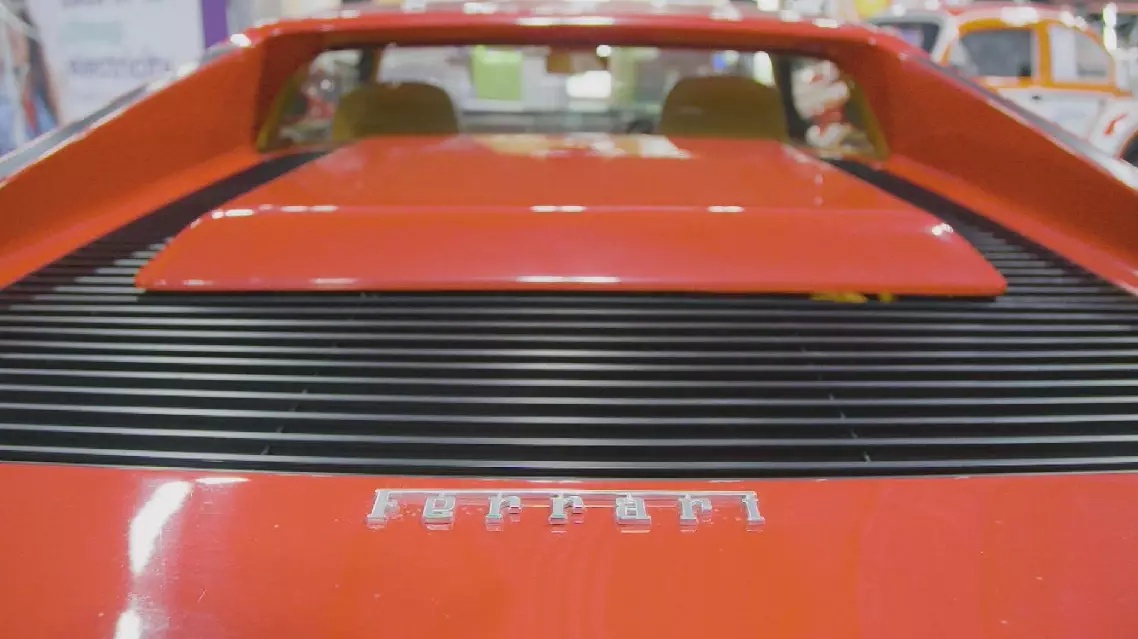
Ferrari Testarossa goes fully electric in conversion powered by batteries made in China