The presidium of the third session of the 14th National People's Congress (NPC), China's national legislature, held its second meeting Saturday.
Zhao Leji, executive chairman of the presidium, presided over the meeting.
The meeting decided to submit multiple documents to lawmakers for deliberation.
The documents include draft resolutions on the government work report, on the national economic and social development plan report and the plan for 2025, and on the central and local budgets report and the budgets for 2025.
The documents also include a draft decision on amending the Law on Deputies to the National People's Congress and to the Local People's Congresses at Various Levels.
The presidium's executive chairpersons met before the meeting to prepare the documents.
The executive chairpersons meeting was presided over by Zhao, who is also chairman of the NPC Standing Committee.
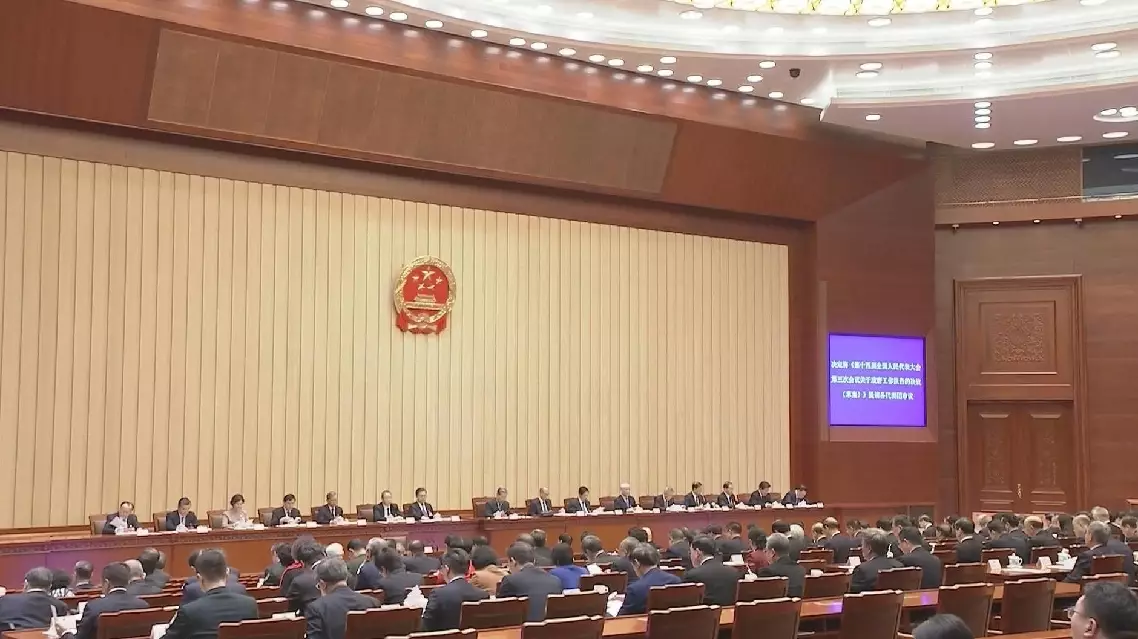
Presidium of NPC annual session holds 2nd meeting

Presidium of NPC annual session holds 2nd meeting
Myanmar's new President U Min Aung Hlaing met Wang Yi, a member of the Political Bureau of the Communist Party of China Central Committee and Chinese foreign minister, in Nay Pyi Taw, Myanmar's capital, on Saturday.
Noting that Myanmar consistently regards its relationship with China as the most important bilateral tie, U Min Aung Hlaing emphasized that Myanmar stays committed to the one-China principle and highly appreciates and actively supports the China-proposed four global initiatives.
The new Myanmar government expects to strengthen high-level exchanges with China, advance the construction of the Myanmar-China Economic Corridor, and work together to maintain border peace and stability, while continuously deepening the comprehensive strategic cooperative partnership between the two countries, the president said.
Myanmar will never allow any activities that harm China's interests within its borders, and will continue to intensify its crackdown on online gambling and telecom fraud and take concrete measures to ensure the safety of Chinese personnel, institutions and projects in Myanmar, he added.
For his part, Wang stressed that China's policy toward Myanmar remains consistent. China firmly supports Myanmar in following a successful development path that suits its national conditions and is supported by its people; firmly supports Myanmar in safeguarding its national sovereignty, security and territorial integrity; and firmly supports Myanmar in achieving national peace, reconciliation and social harmony, he said.
Wang also noted that building a China-Myanmar community with a shared future perfectly aligns with the development and revitalization needs of both countries and serves the fundamental interests of both peoples, urging both sides to unswervingly follow this path.
China is willing to cooperate with Myanmar to resolutely and thoroughly eradicate online gambling and telecom fraud, he noted. China will also support Myanmar's participation in more dialogue and cooperation mechanisms and the enhancement of its interaction with ASEAN, Wang added.
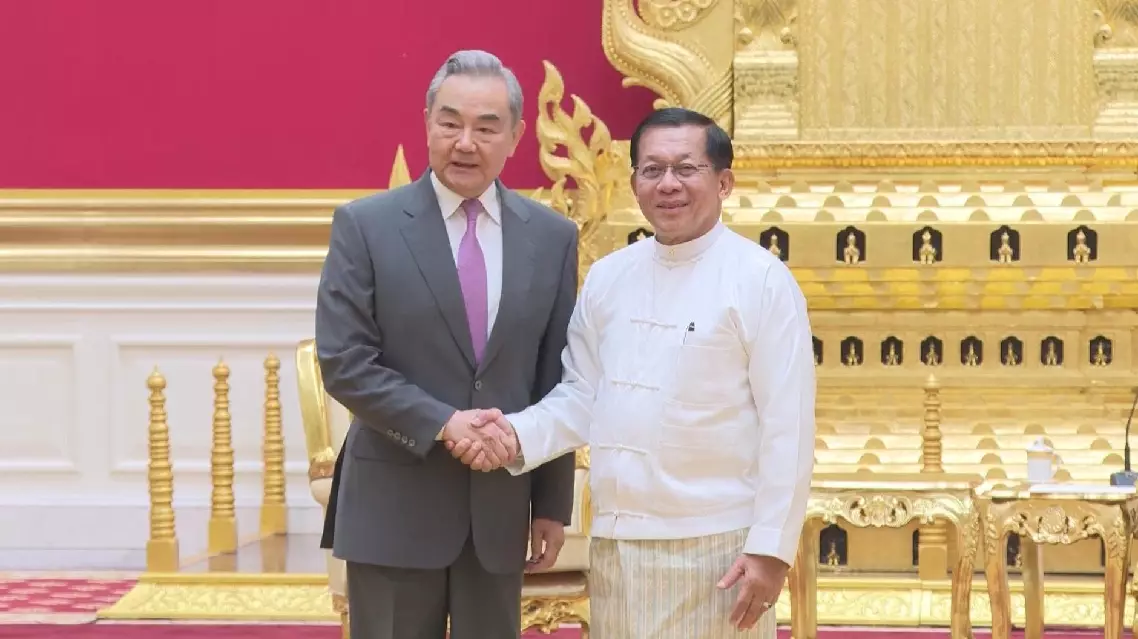
Myanmar president meets Chinese FM
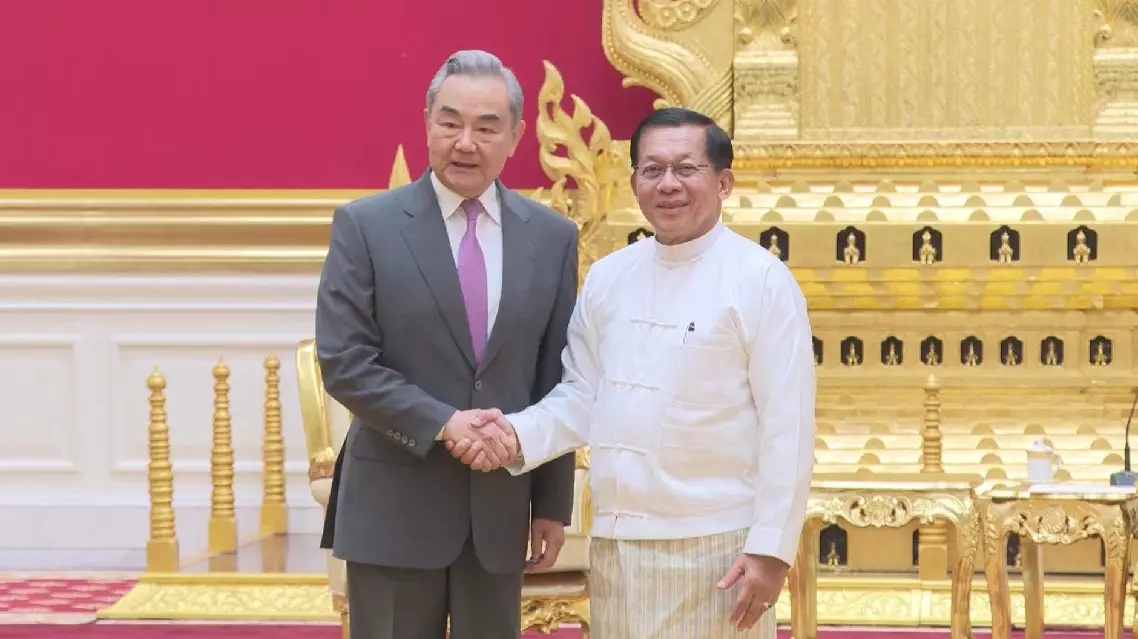
Myanmar president meets Chinese FM