Liu Yang, China's first female taikonaut and a deputy to the 14th National People's Congress (NPC), China's highest organ of state power, has shared her feelings about the achievements and continued progress of the country's space program.
In a recent interview held on the sidelines of an annual session of the NPC in Beijing, Liu, one of the three crew members of the Shenzhou-14 mission in 2022, shared her proud and fulfilling experience as a Chinese astronaut. She highlighted the values encapsulated by the "Two Bombs, One Satellite" spirit, which has been demonstrated by previous generations of Chinese aerospace researchers in achieving milestones amid challenging times.
The "Two Bombs, One Satellite" program refers to China's first atomic bomb, intercontinental ballistic missile, and satellite. In the 1960s and 1970s, more than 17,000 researchers from over 40 institutions under the Chinese Academy of Sciences (CAS) dedicated themselves to the program to advance the aerospace development in the country.
"The spirit of 'Two Bombs, One Satellite' is the essence originating from the struggles and efforts of the earlier generation of Chinese aerospace pioneers. Throughout my own career in the aerospace field, we've faced many challenges and obstacles. The dedication and perseverance of all my fellow aerospace workers are a reflection, inheritance and promotion of this spirit," said Liu.
As China plans to carry out a manned lunar landing by 2030, Liu hopes she could return to space and make more contributions to the space program.
"By 2030, we will embark on a manned lunar landing mission, which is both a challenge and an opportunity for us astronauts. I believe it's a dream for every Chinese astronaut. From the first batch to the newly inducted fourth batch of astronauts, we're all actively preparing and training for the future space station and lunar landing missions," she said.
For Liu, both her own participation in spaceflight missions and witnessing others complete their own missions bring her happiness.
"For me, there are two moments of pure happiness. One is when I put on the spacesuit and embark on a mission to space for my country. The other is when I welcome my fellow astronauts back after their successful missions. Seeing them return safely also brings me a unique kind of happiness," she added.
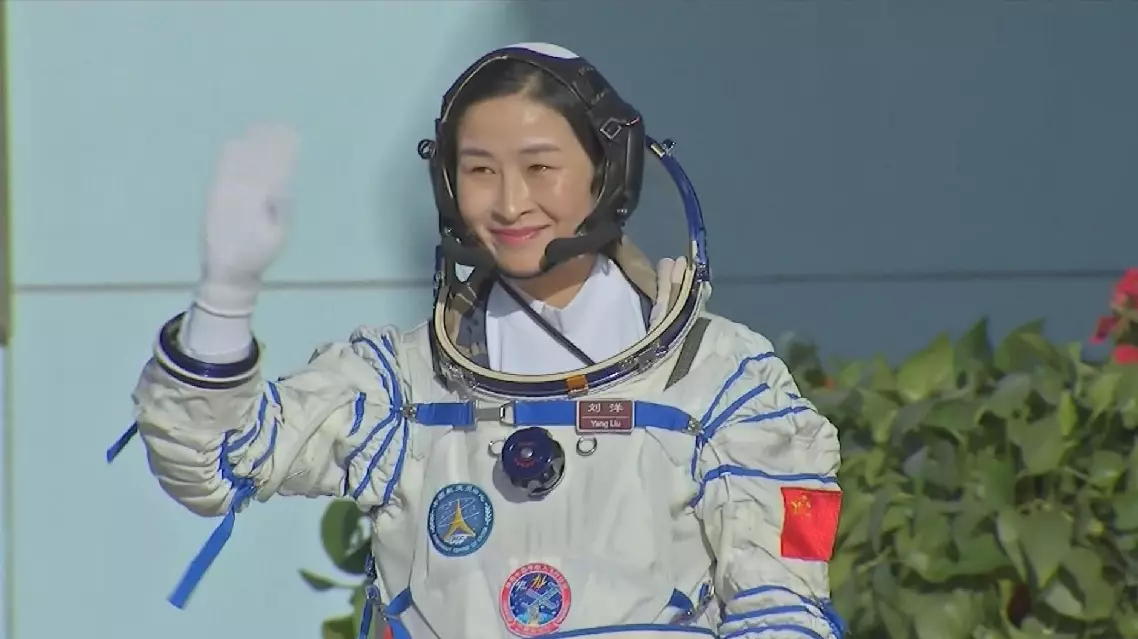
China's first female astronaut on achievements of country's space program
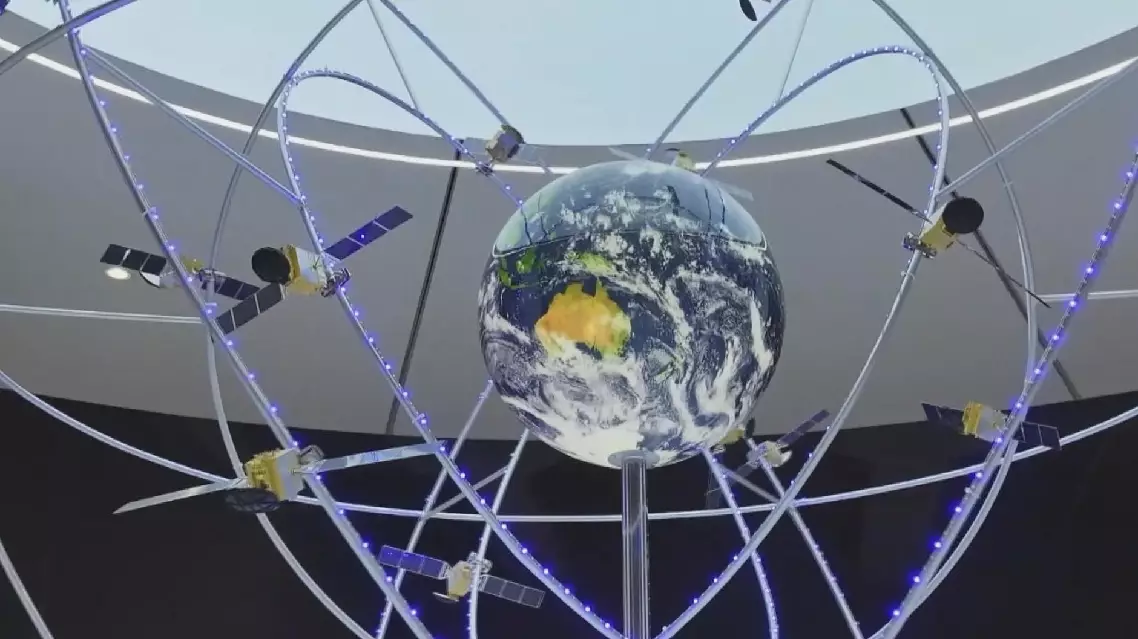
China's BeiDou space-time industry boomed in 2025 with a total output value of 1.3323 trillion yuan (about 186.5 billion U.S. dollars), according to a white paper on its development released on Monday.
The white paper on China's BeiDou Space-time Industry Development in 2026 released by the Global Navigation Satellite System (GNSS) and Location Based Services (LBS) Association of China (GLAC) said that the satellite navigation industry, serving as the foundation of the BeiDou space-time sector, achieved a total output value of 629 billion yuan in 2025, a year-on-year increase of 9.24 percent, demonstrating strong resilience and significant growth potential.
The BeiDou time-space industry is a comprehensive industrial system centered on the BeiDou Navigation Satellite System. It deeply integrates various technological approaches, including remote sensing, geographic information systems, mobile communications, and indoor positioning.
"The most distinctive hallmark of the BeiDou time-space industry in 2025 is its leap from satellite navigation to time-space services, demonstrating a development momentum featuring convergence of technologies, scenario-based applications, and diversified ecosystem. The industry's iterative upgrading continued to pace up, and its core competitiveness improved constantly," said Zhang Huifeng, president of the GLAC.
China has established a complete and autonomous BeiDou time-space industrial and supply chain, spanning from chips, modules, antennas, terminals to system integration and application services, with continuously improving levels of self-reliance and control.
Notably, cumulative shipments of BeiDou-compatible chips and modules have reached the scale of hundreds of millions, effectively safeguarding the secure and robust development of the industrial and supply chain.
The latest data showed that the domestic sales of BeiDou terminal products exceeded 410 million sets in 2025. Additionally, the total social stock of various terminal products equipped with BeiDou functionality has surpassed 2.2 billion sets.
"The digital transformation and intelligent upgrade across industries are comprehensively accelerating. This has led to a surge in demand for high-precision, high-reliability, real-time intelligent time-space information, products, and services, providing vast market opportunities for the development of the BeiDou time-space industry. The industrial value chain is shifting from product delivery to data operation with time-space data becoming a core factor of production, demonstrating immense developmental potential of the industry," Zhang said.
BeiDou industry output value exceeds 1.33 trln yuan in 2025