MADRID (AP) — The new Formula 1 track in Madrid will be called the Madring, organizers said Monday.
The new venue is due to bring F1 to the Spanish capital from next year with a 5.4-kilometer (3.4-mile) circuit laid out around an area of exhibition halls near Madrid's main airport, using a mix of existing roads and purpose-built sections of track. Organizers have signed a decade-long contract with F1 through 2035.
The choice of Madring echoes the likes of Austria's Red Bull Ring and Hungary's Hungaroring, both regular fixtures on the F1 calendar.
The name “aims to establish a concise and memorable identity that directly references its host city, is instantly recognizable worldwide, and requires no translation,” organizers said in a statement.
Organizers added the name is meant to emphasize the track's connection to the city of Madrid and said it would be a “spectacle circuit” similar to the F1 venues in Miami, Abu Dhabi and Las Vegas.
The new track is due to take over the Spanish Grand Prix from the Circuit de Barcelona-Catalunya near Barcelona, which has hosted the race since 1991. F1 last raced near Madrid in 1981 at the Jarama circuit on the city's outskirts.
AP auto racing: https://apnews.com/hub/auto-racing

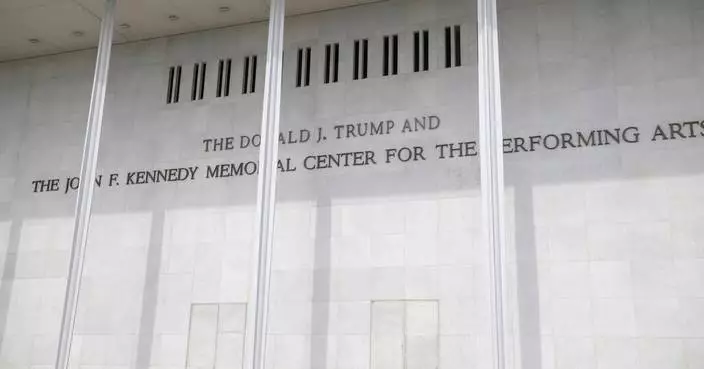
FILE - CEO of Formula One Group Stefano Domenicali speaks during a press conference at the IFEMA congress centre in Madrid, Spain, Jan. 23, 2024. (AP Photo/Manu Fernandez, File)
CHICAGO (AP) — The Chicago White Sox traded veteran outfielder Derek Hill to the Philadelphia Phillies on Thursday in a swap between contending teams.
The White Sox also sent $250,000 in international bonus pool money to the Phillies for minor league outfielder Dylan Campbell and minor league infielder José Colmenares.
The 30-year-old Hill is batting .213 with four homers, eight RBIs and seven steals in 50 games this season. He was claimed off waivers by the White Sox in September.
Chicago also acquired outfielder Nolan Jones and cash from Cleveland for $250,000 in international bonus pool money. The 28-year-old Jones will report to Triple-A Charlotte.
Philadelphia added to its outfield depth after Adolis García departed Wednesday night's 7-4 victory at Toronto because of a pulled muscle in his right shoulder. García was expected to get some imaging on Thursday.
The Phillies are 28-12 since Don Mattingly took over as interim manager after Rob Thomson was fired in April. They had an off day before beginning a weekend series at NL Central-leading Milwaukee on Friday night.
To make room on Philadelphia's 40-man roster, right-hander Jackson Rutledge was designated for assignment.
Chicago had won four of six going into Thursday night's game against Atlanta. After dropping at least 101 games in each of the previous three years, the White Sox began the day on top of the AL Central with a 36-31 record.
White Sox manager Will Venable praised Hill for his contribution to the team on and off the field.
“Really just a situation where we were in a little bit of a roster crunch there,” Venable said. “It speaks to D. Hill and his performance and who he is that there was a lot of interest in him and it also speaks to where our club is at that we are able to or really needed to push a really good player off our roster.”
Chicago also activated outfielder Everson Pereira from the 10-day injured list before its series finale against Atlanta. The 25-year-old Pereira had been sidelined by a right pectoral strain.
“It took a little more time than I was expecting to, but I feel very good right now,” Pereira said through a translator. "I don’t think I have to be concerned about it throughout the season.”
Pereira was in the starting lineup against the Braves, batting fifth and playing center field. Shortstop Colson Montgomery also returned to the lineup after missing two games because of back soreness.
“He’s going to have to manage it his whole career,” Venable said of Montgomery. “With backs, it’s something he’s dealt with in the past. Something he’ll deal with in the future. I don’t think to the degree you are concerned other than the daily maintenance you have to do to keep your body functioning properly.”
Jones had a big year for Colorado in 2023, batting .297 with 20 homers, 62 RBIs and 20 steals in 106 games. But he struggled for much of the past two seasons, hitting a career-low .211 with five homers in 136 games with the Guardians in 2025.
AP MLB: https://apnews.com/hub/MLB
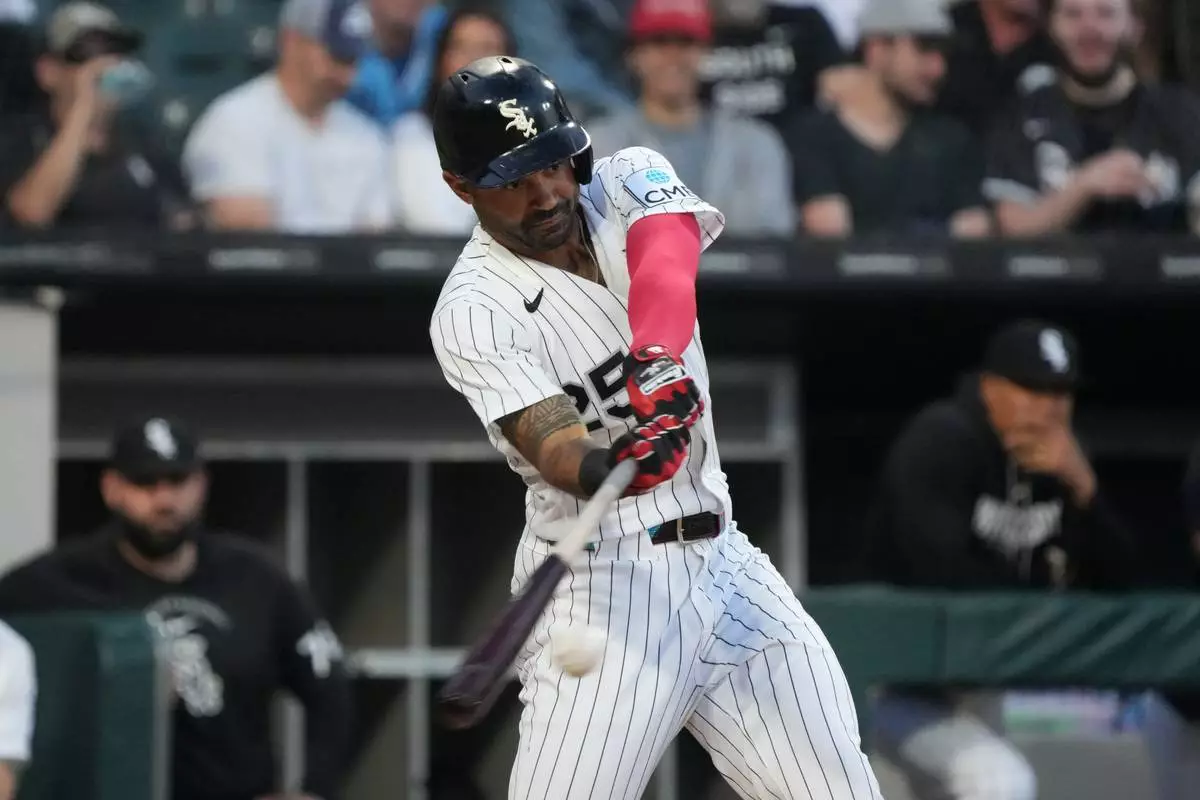
Chicago White Sox's Derek Hill hits a one-run single against the Atlanta Braves during the fourth inning in a baseball game, Wednesday, June 10, 2026, in Chicago. (AP Photo/David Banks)