China's new information infrastructure development continues to make progress this year, with a supercomputing center coming into operation and the construction of an intelligent computing network accelerating.
The new information infrastructure mainly includes network infrastructure, such as 5G networks and fiber broadband networks; computational infrastructure, such as data centers and general-purpose computing centers; and new technological facilities, such as artificial intelligence and blockchain infrastructure.
With an investment of over two billion yuan (about 275 million U.S. dollars), a Wanka-level green computing center composed of more than 10,000 GPU computing accelerator chips, began operation in northwest China's Qinghai Province at the beginning of the year, marking a breakthrough in the construction of large-scale intelligent computing infrastructure in western China.
Meanwhile, in Hami, northwest China's Xinjiang Uygur Autonomous Region, the second phase of an intelligent computing network integrating computing power, video, and broadcasting networks is progressing rapidly.
Expected to be operational by the end of the year, it will provide data backup service for provinces in central and eastern China.
"Our focus is on providing computing services for the autonomous region while also supporting scientific data annotation in other parts of the country," said Li Chao, executive director of Hami's energy-computing power fusion research institute.
Latest data show that the total number of standard racks in use at computing power centers nationwide has exceeded nine million, while the country's total computing power has reached 280 EFLOPS, effectively supporting computing resource allocation and the circulation of data.
EFLOPS is a measurement unit used to determine a computer's speed. A 1 EFLOPS computing system can complete 1 quintillion floating-point operations per second.
China is also making progress in promoting its network infrastructure, with more than 20 provinces and cities having launched pilot projects for next-generation 10-gigabit optical networks.
"The future planning of new information infrastructure will focus on strengthening nationwide coordination, promoting a green and low-carbon development approach, and facilitating coordinated development across regions, networks, and industries," said Chen Luping, director of the Electronic Information Institute at the China Center for Information Industry Development.
In addition, new technology infrastructures such as artificial intelligence and blockchain have been thriving this year. Nearly 200 generative AI models that have completed registration are now available to the public, with over 600 million registered users.
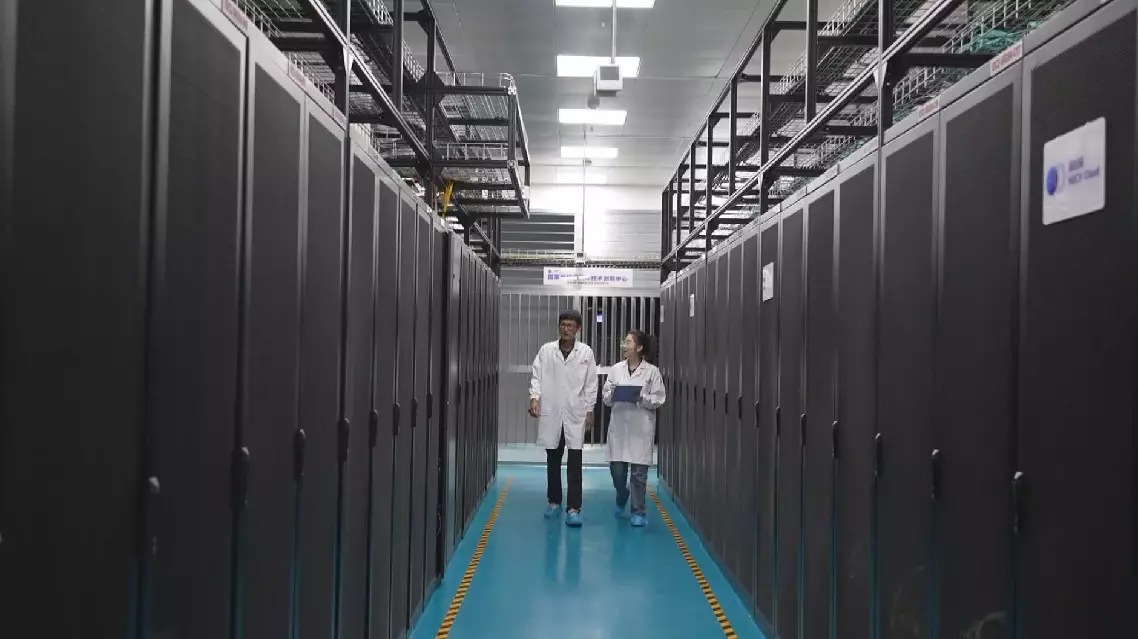
China's new information infrastructure continues to make progress