A Chinese representative elaborated China's latest achievements in drug control and its advocacy for international cooperation on Monday, while calling on the global community to jointly address drug issues and safeguard the international anti-drug system.
The representative made the call at the 68th session of the Commission on Narcotic Drugs, which opened in Vienna, Austria, on the same day.
In her speech, the Chinese representative stated that China has always adhered to comprehensive governance, actively promoted the construction of a drug control system with Chinese characteristics, and achieved positive results in law enforcement, drug prevention education, and management of drug users.
Meanwhile, China has controlled 510 types of anesthetic and psychotropic drugs, and scheduled fentanyl-related substances and synthetic cannabinoids, demonstrating a high level of vigilance and resolute response to new-type drug issues.
The representative also emphasized that the global drug issues continue to spread, especially with the increasingly serious challenges posed by synthenic drugs. Countries should uphold multilateralism and work together to address the drug issues.
China is willing to work with countries to strengthen efforts in areas such as drug prevention education, drug rehabilitation, law enforcement, international cooperation, and other aspects. This includes curbing the drug supply at the source, reducing the harm of drugs, sharing experiences and resources in drug control, promoting global governance of drug issues, so as to build a community with a shared future for mankind free from the harm of drugs, contribute to global security and stability, and protect the health and well-being of humanity.
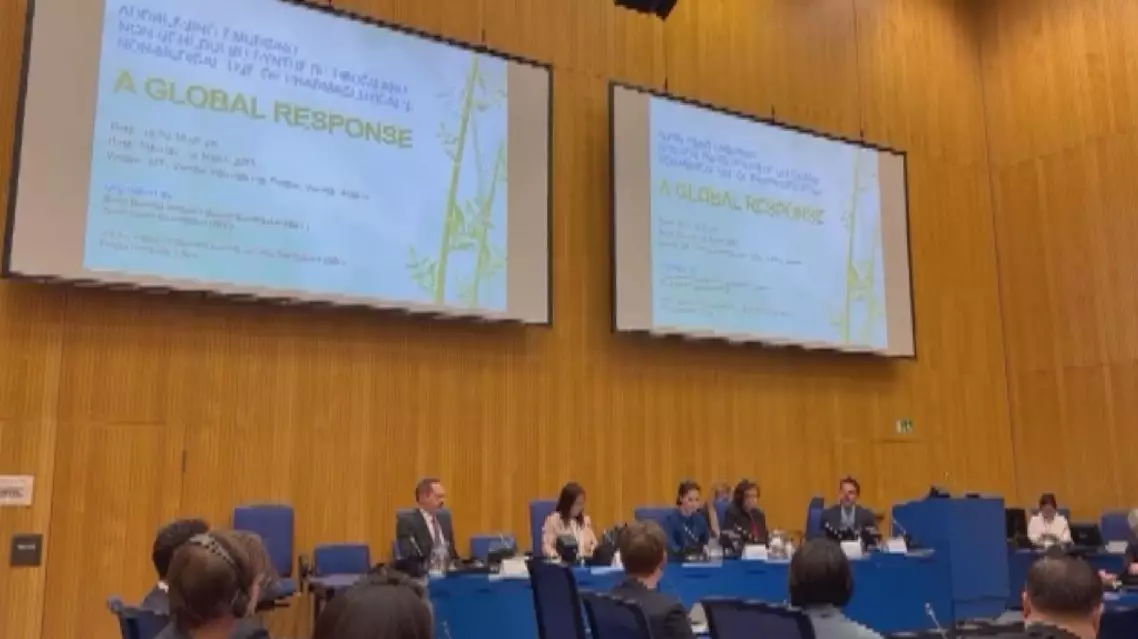
Chinese representative calls for int'l anti-drug cooperation
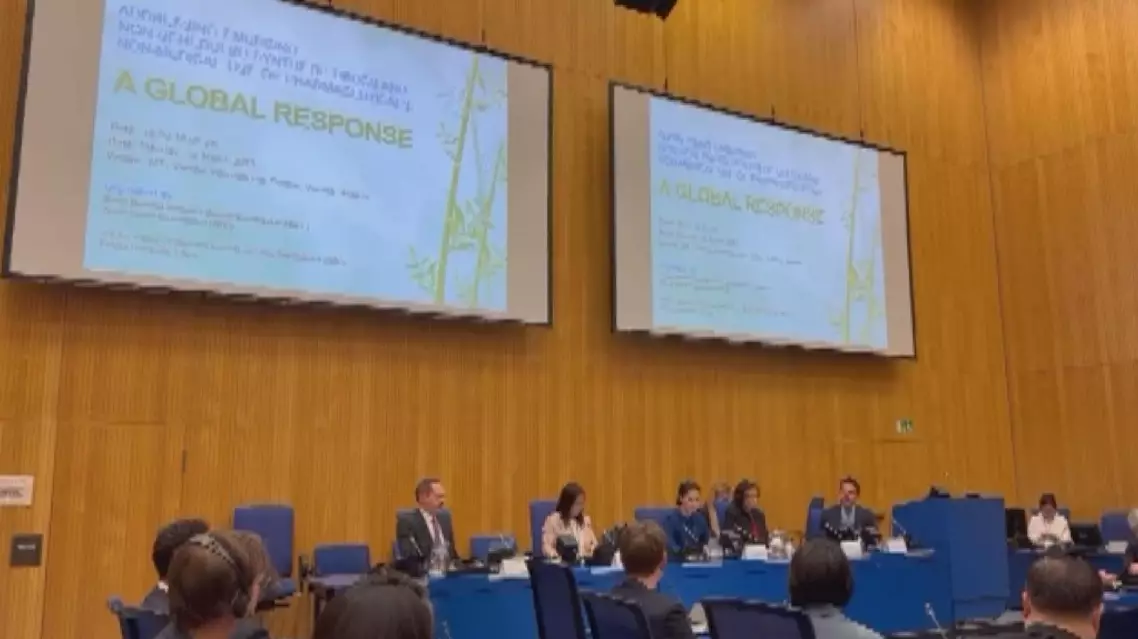
Chinese representative calls for int'l anti-drug cooperation
The Global Security Initiative (GSI) proposed by China has shifted the paradigm in thinking about global security away from the traditional zero-sum mentality toward a vision rooted in dialogue and development, said a Chinese expert on Tuesday.
In April 2022, China proposed the Global Security Initiative (GSI), which aims to create a new path to security that prioritizes dialogue over confrontation, partnership over alliance, and win-win over zero-sum thinking.
The initiative provides a new course and approach to addressing the root causes of international conflicts and solving security challenges facing humanity.
During an interview with China Global Television Network (CGTN), Wang Xinsong, associate professor at the School of Government at Beijing Normal University, hailed the initiative's importance amid escalating global challenges.
"It's been four years and we have witnessed that the Global Security Initiative or GSI has transformed from a framework in principle to an action plan with many actions having taken place in mediating the conflicts. The major difference between the GSI and the traditional and the existing mainstream idea about global security is that the mainstream idea is being the zero-sum mentality where the belief is that one country's safety is possible only if its neighbors safety is not existent. The GSI shifts the paradigm in thinking about global security away from the zero-sum mentality by arguing that security at the end of the day is very much related to development," Wang said.
Over the past four years, China has consistently promoted the implementation of the GSI. By the end of 2025, the initiative has received support and appreciation from more than 130 countries and regions, as well as international organizations, and has been explicitly incorporated into more than 140 bilateral and multilateral documents at home and abroad.

China's Global Security Initiative shifts paradigm away from traditional zero-sum mentality: expert