Skip to Content Facebook Feature Image

New interactive robot capable of riding bike set to serve in multiple scenarios

China

China

China

New interactive robot capable of riding bike set to serve in multiple scenarios

2025-03-12 20:12 Last Updated At:21:57

A brand-new quick-thinking interactive humanoid robot has caught wide attention after being unveiled in Shanghai on Tuesday for its wide range of performance capabilities, with the robot capable of riding a bicycle and even carrying out delicate tasks such as using a needle and thread.

The newly-launched robot is the latest in a series of eye-catching breakthroughs for China's robotics industry as the sector continues its rapid development.

The 1.3-meter-tall robot has also unlocked a range of new athletic skills, including riding a scooter and operating a self-balancing scooter with ease.

Featuring 28 different degrees of freedom (DOF), the robot is also equipped with a multimodal interaction model, enabling millisecond-level interactive responses.

It can also accurately judge and respond to human facial expressions and vocal tones. When asked, the robot says its purpose is to chat with its human counterparts, solve problems, and simply "make life more fun."

Peng Zhihui, co-founder of the company responsible for the new robot, stressed there is still a way to go to convincingly replicate the emotional level of a human.

"I believe the biggest challenge is enabling the robot to possess a level of intelligence as agile as that of a human. To achieve this, we need to make technological breakthroughs in three areas - motion intelligence, interactive intelligence, and operational intelligence," said Peng.

Additionally, the new robot has initially developed 'zero-shot' generalization capabilities for manipulating objects based on a large embodied model, which means it can learn to solve problems and respond to new challenges or tasks based on its own intuition.

For example, it can learn to pour water simply by watching videos of humans doing so, demonstrating the ability to extrapolate from learned tasks.

In addition, the robot can also recognize different types of cups without requiring repeated training for different shapes or sizes, marking a significant step toward the generalization and openness of embodied intelligence.

Many experts believe the robot has the potential to be utilized in various application scenarios in the future, including in the health care and service sectors, or may even be deployed to provide companionship in people's homes.
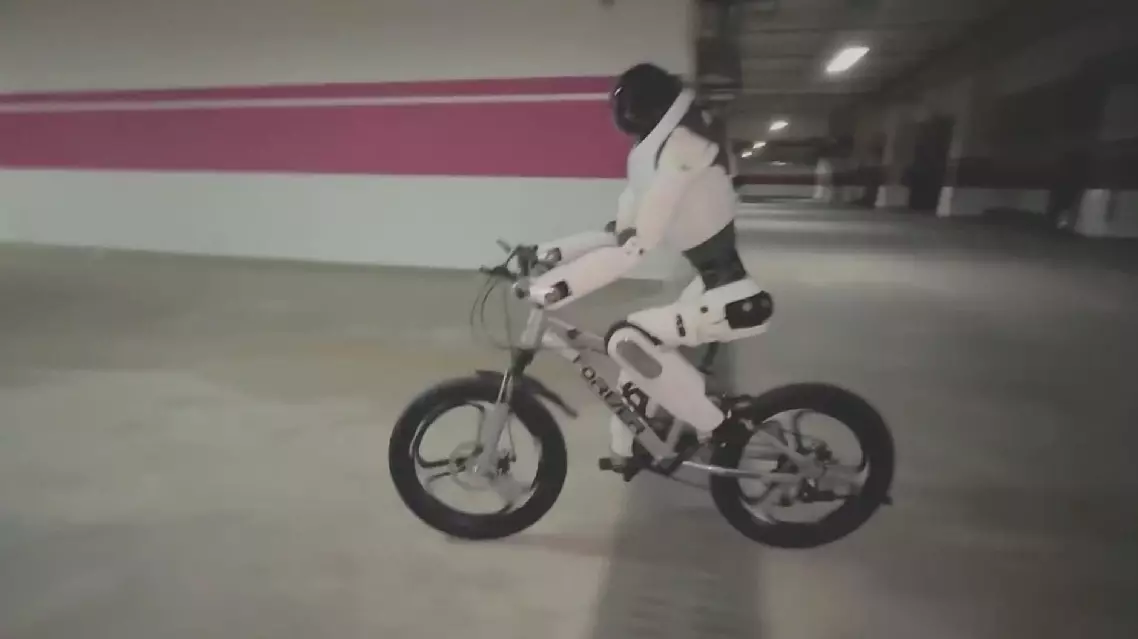
New interactive robot capable of riding bike set to serve in multiple scenarios

New interactive robot capable of riding bike set to serve in multiple scenarios

China continued to make headway in environmental protection throughout 2025, with notable improvements in both air quality and surface water conditions, according to the latest data released by the Ministry of Ecology and Environment.

According to the Ministry, the average concentration of PM2.5 in 339 cities at the prefectural level and above stood at 28.0 micrograms per cubic meter, marking a year-on-year decrease of 4.4 percent. 

Meanwhile, the average PM10 concentration reached 48 micrograms per cubic meter, down by 2.0 percent compared to the previous year.

Excluding days affected by exceptional sand and dust weather, the average proportion of days with good air quality was 89.3 percent, an increase of 1.9 percentage points from 2024.

In terms of surface water quality, monitoring data showed further improvement nationwide. 

Among 3,641 state-monitored surface water sections, 91.4 percent were rated as good quality (Grade I-III), up by 1.0 percentage point year-on-year. 

The proportion of sections with inferior quality (below Grade V, the lowest level in China's five-tier water quality rating system) remained stable at 0.6 percent.

Key river basins, including the Yangtze River, Yellow River, Pearl River, Songhua River, Huaihe River, Haihe River, and Liaohe River, as well as rivers in northwestern and southwestern regions and those in east China's provinces of Zhejiang and Fujian, recorded good-quality water in 93.0 percent of monitored sections, an improvement of 0.6 percentage points. 

The below-Grade V proportion in these basins was 0.4 percent, a slight increase of 0.1 percentage points.

Among 209 key lakes and reservoirs under observation, 78.5 percent attained good water quality, representing a rise of 1.4 percentage points from the previous year. The share of those with inferior water quality dropped by 1.0 percentage points to 3.3 percent.

China reports steady improvement in air, water quality for 2025

China reports steady improvement in air, water quality for 2025

Recommended Articles