Skip to Content Facebook Feature Image

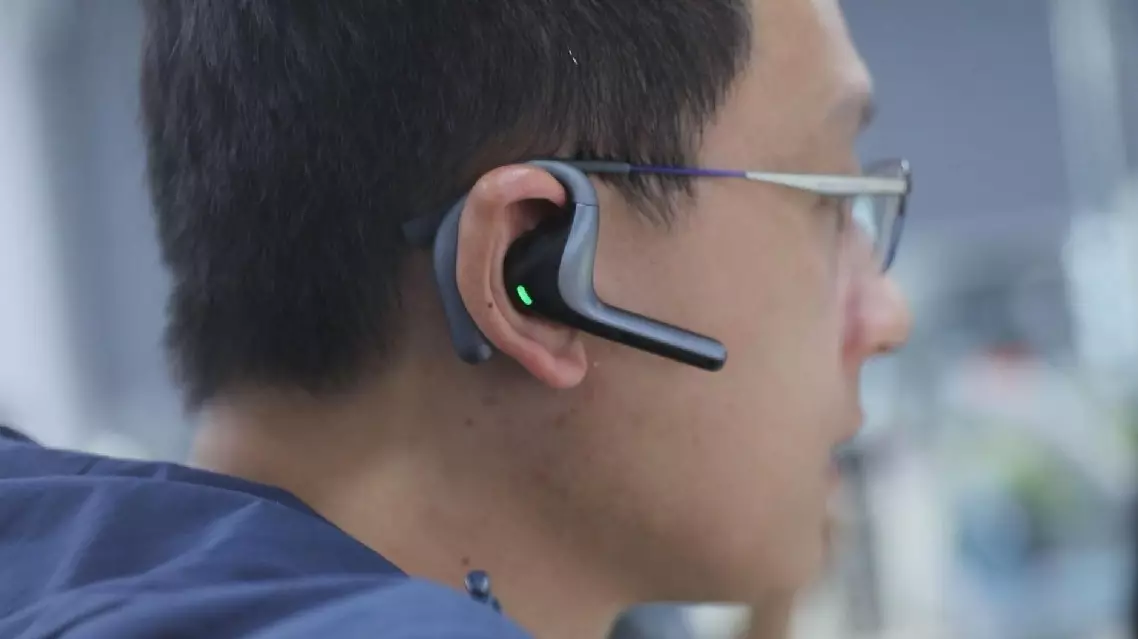
Translation earbuds made by Shenzhen start-up making 'big noises' on global market

China

China

China

Translation earbuds made by Shenzhen start-up making 'big noises' on global market

2025-03-13 22:59 Last Updated At:03-14 13:17

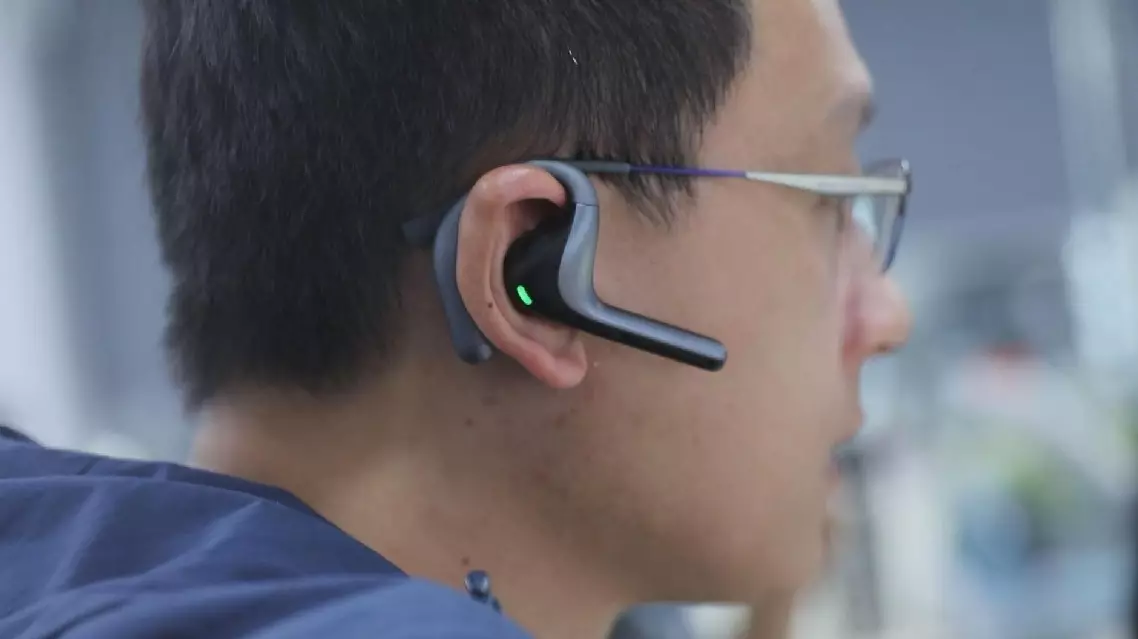
Chinese-made smart translation earbuds capable of real-time interpretation have become a sought-after product worldwide while throwing a spotlight on Timekettle, a start-up business behind them based in Shenzhen, a vibrant advanced manufacturing hub in south China's Guangdong Province.

Located in Shenzhen’s Nanshan District, Timekettle has created a market-leading product with simultaneous interpretation powered by artificial intelligence.

Jordan Gray, an American national who lives in China, has been looking for a wearable translation device that allows for seamless, natural conversations. He says that Timekettle’s earbuds can translate spoken words from different languages within a five-second delay, making communication incredibly easy.

"It's amazing for being able to actually connect people. I've used a lot of ‘transies’ [translation apps] on the phone which gets in between people. This device is amazing," said Gray.

The buzz is not just attracting new customers. Existing clients are placing fresh orders. A South Korean buyer plans to order 5,000 units this year, and a long-term North American client is expected to make a purchase of 10,000 units.

One-on-one real-time interpretation has previously relied heavily on bilingual speakers. Simultaneous interpretation with earbuds requires accurate recognition of a wearer's voice, a challenge that Timekettle has been tackling with over half of its 100 employees specializing in acoustics and interpretation algorithms.

"We've developed a world-first algorithm that can identify voices based on direction and distance and collect them. By doing so, the translation will be more accurate," said Tian Li, founder of Timekettle.

To gather data from noisy environments and eliminate background noise, Timekettle’s research and development team has been testing the device in various settings around the city.

"The earbuds have tiny batteries, but the algorithm is complicated, so we've done extensive optimization to make the algorithm run smoothly on such small hardware," said Shi Wei, head of Timekettle's research and development team.

The team also collaborates with top-tier interpreters to shorten translation times. Zhao Chenwei, an interpreter with over 20 years of experience in Chinese-English simultaneous interpretation, expressed his enthusiasm for human-machine collaboration.

"How to use technology to improve efficiency and reduce costs is something that many talented young people with big ambitions are innovating for the future of the translation industry. As a veteran interpreter, I'm thrilled," said Zhao.

With an average team age of just 28, the startup holds over 100 global patents, and its translation earbuds are sold in more than 170 countries and regions, capturing a 40 percent market share in North America.

"I think that startups should solve problems we meet in life, which is also the value of a business. We have a clear path, now it's all about working hard to make it and see it through to the end," said Tian.
Translation earbuds made by Shenzhen start-up making 'big noises' on global market
Translation earbuds made by Shenzhen start-up making 'big noises' on global market

Translation earbuds made by Shenzhen start-up become sought-after product at global market

Translation earbuds made by Shenzhen start-up become sought-after product at global market
The Iranian government is focusing on public concerns and maintaining stable supplies of essential goods amid recent protests, Iranian President Masoud Pezeshkian said in a televised interview on Sunday.

In the city of Karaj, northwest of the capital Tehran, daily life has largely continued as normal. A video filmed by a local resident on Sunday shows food stores open and grocery shelves fully stocked.

"This is the block near my home, and there are some food stores here. Daily life continues here. Last night we did not see many protests in Karaj. Right now the city is very safe. This is a grocery store close to my home. All the food is available; nothing is in shortage. Here are noodles and different types of beans. Here are dairy products, cheese, and yogurt. I also checked other grocery stores and didn't see any shortages. Everything is available," said local resident Ali Reza.

Iranian officials have described recent disturbances as acts orchestrated by the "enemy," including some carried out by well-trained and armed "terrorists." The incidents have caused casualties among security personnel and civilians, as well as property damage.

The Secretary of Iran's Supreme National Security Council Ali Larijani has directed authorities to severely punish the "terrorists."

Meanwhile, Iran's police chief Ahmad-Reza Radan said on Sunday that the police had raised alert levels and arrested several leaders of the troublemakers during the operations on Saturday.

President Pezeshkian noted in the interview that the normal demands of the Iranian people are reasonable and justified, but they must realize that triggering riots and carrying out terrorist acts are the enemy's attempts to undermine the country. He urged the public to remain vigilant.

Also on Sunday, Iranian Parliament Speaker Mohammad Baqer Qalibaf warned that Tehran would regard U.S. and Israeli bases and facilities in the Middle East as "legitimate targets" if Washington takes military action against Iran. His remarks followed media reports saying U.S. President Donald Trump is "seriously considering authorizing a strike" against Iran.

Iranian state media reported that at least 109 members of Iran's security forces have been killed in clashes since the protests began 14 days ago. Meanwhile, human rights groups based outside the country said the number of protesters killed has exceeded 200, though the figure could not be independently verified.

The protests initially erupted over a sharp depreciation of the rial and sweeping subsidy reforms. Iranian authorities have blamed the unrest on foreign-linked agents and sanctions imposed by the United States.

Iranian president says government focusing on ensuring supplies amid protests

Iranian president says government focusing on ensuring supplies amid protests

Recommended Articles