China is ramping up efforts to develop protein-rich corn varieties as part of a broader strategy to reduce its dependence on imported soybeans for poultry feed.
This initiative garnered great attention during the recently concluded "two sessions," China's most important annual political gatherings, where political advisor Yan Jianbing, president of Huazhong Agricultural University, highlighted the potential of high-protein corn to reshape the agricultural and feed industries.
High-protein corn is distinguished by its increased protein content in the kernels. While ordinary corn typically contains around 8-percent protein, high-protein corn varieties aim to elevate this by at least 1 percentage point.
"The initial goal for high-protein corn is to achieve a protein content of around 10 percent, and we've already made progress in this regard, with some varieties being promoted. Our next target is to reach 12 percent to 15 percent, or even higher, with the longer-term goal of optimizing the amino acid composition," said Zhan Junpeng, an associate professor at Huazhong Agricultural University.
China's total corn yield stood at 290 million tons in 2024. Experts estimate that increasing the protein content of corn by just 1 percentage point could translate into an additional 2.9 million tons of protein annually. If utilized effectively, this could reduce China's soybean imports by 7 to 8 million tons each year.
Currently, high-protein corn varieties with over 10-percent protein content have already been planted across more than 660 hectares of farmland nationwide.
High-protein corn is not for direct human consumption. Instead, it is primarily intended to supplement animal feed, addressing the shortage of protein-rich feed grains in livestock farming, according to Li Wenqiang, associate professor at Huazhong Agricultural University.
Li explained that increasing the protein content in animal feed promotes healthier growth, enhances immunity, and improves the quality of meat, eggs, and dairy products. It also boosts feed utilization efficiency, leading to higher profitability for farmers.
Traditionally, soybean meal has been added to corn-based feed to meet protein requirements. However, high-protein corn can significantly reduce the need for soybean meal, lowering feed costs and cutting reliance on soybean imports.
"For poultry and livestock such as chickens and pigs, they need to consume both energy and protein. Corn is the primary source of energy, while soybeans or soybean meal provide essential amino acids and protein. One of our goals of developing high-protein corn is to reduce soybean imports by replacing soybean meal with domestically produced corn," said Professor Zhan.
Experts noted that high-protein corn doesn't have any special environmental requirements compared with traditional varieties and can be widely planted across the country.
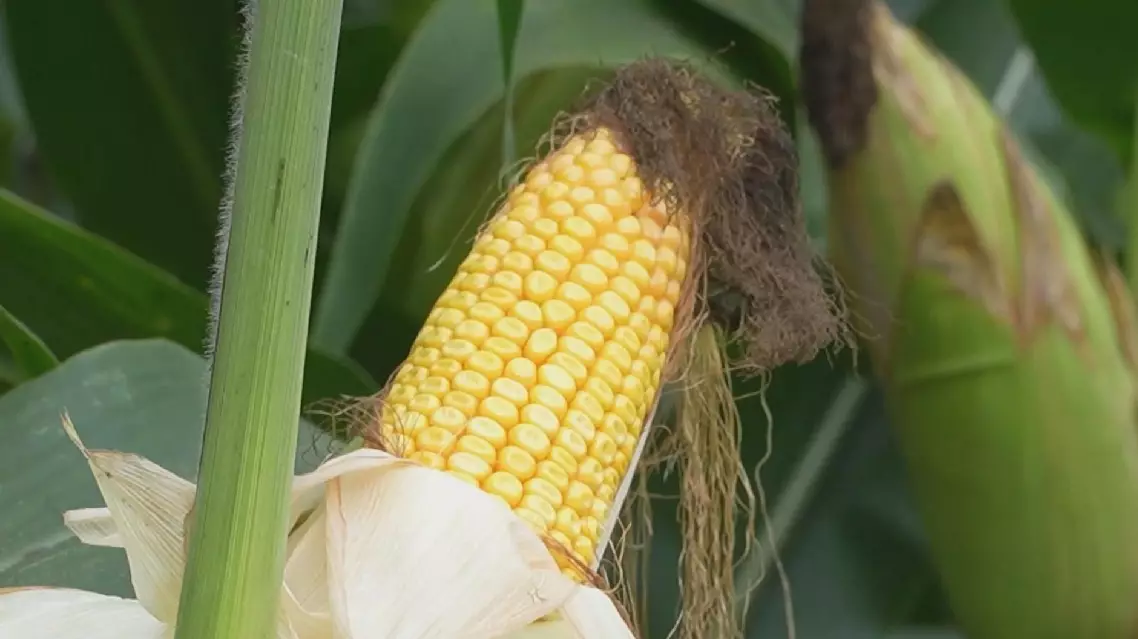
China cultivates high-protein corn to cut reliance on soybean imports