U.S. President Donald Trump's recent comments on annexing Greenland, an autonomous territory of Denmark, have drawn sharp criticism from the Danish public, as well as officials and scholars in the country.
Since returning to the White House in January, Trump has repeatedly expressed a strong desire to gain control of Greenland. He sent his son Donald Trump Jr. and others to visit the Arctic island and even suggested that he would not rule out using "military or economic coercion" to achieve this goal.
On Thursday, during a meeting with visiting North Atlantic Treaty Organization (NATO) Secretary General Mark Rutte in the Oval Office, Trump reiterated that the U.S. would annex Greenland, citing "international security" to justify his attempt.
Trump noted that the United States already has a military presence in Greenland. "Maybe you'll see more and more soldiers going there," he added.
Trump's statement was met with swift condemnation from Greenland's political leadership.
Jens-Frederik Nielsen, chairman of Denmark's Demokraatit party and the leading figure in ongoing negotiations to form Greenland's next government, called Trump's remarks "inappropriate." In a Facebook post, Nielsen urged Greenlanders to remain united against external pressure.
Incumbent Prime Minister Mute Egede also denounced Trump's comments, calling for an urgent meeting of Greenland's party leaders. "Once again, the American president has floated the idea of annexing us. I cannot, in any way, accept this," he wrote on social media.
Greenland, the world's largest island with a population of around 60,000, was a Danish colony until 1953, when it became an integral part of Denmark with Greenlanders given Danish citizenship. In 1979, Greenland achieved home rule, gaining greater self-governance while Denmark retained authority over its foreign and defense policy.
The U.S. has coveted Greenland for over a century. From proposals for compulsory purchase to the establishment of a military base and soft power infiltration, the island has long been under the shadow of U.S. strategic and economic calculations.
An opinion poll conducted by local media revealed on January 28 that an overwhelming majority of Greenland respondents, 85 percent, refuse to be part of the United States, with only six percent in favor and nine percent undecided.
Residents have expressed their outrage in interviews with CCTV.
"I don't support at all the way they tried to take us over," said a local man.
"We cannot be bought, and our cultural identity, who we are, cannot be bought. We have our ancestors, has fought for this history for a very long time. And it's disrespectful if he's going to break that. Because he himself has preached the idea about freedom and the right to protect yourself. But he's going on talking about and not excluding the idea that he might use military power. So it is disrespectful," said Oliver Bech, a member of the Greenland political party Siumut.
Meanwhile, Danish activists have taken a creative and satirical approach to counter the U.S. threats. More than 270,000 Danes have signed an online petition to buy California from the U.S. and turn it into "New Denmark," The Denmarkification campaign even proposed to rename the Disneyland in California as "Hans Christian Andersenland", after the famous Danish author.
Jan Oberg, a Danish scholar and founder of the Sweden-based Transnational Foundation for Peace and Future Research, also condemned the U.S. ambitions in an exclusive interview with CCTV.
"This is a gross violation of international law. You cannot just say I want another country. It happens to be the world's largest island. He (Trump) wants to make us to believe that for these three types, economic, political and world security, he needs to control Greenland," said Oberg.
He noted that Trump's territorial claims over Greenland, Canada, and the Panama Canal are not isolated cases.
In June 2024, the Swedish parliament approved a defense cooperation agreement with the U.S., granting American troops access to all military bases across Sweden. Similar agreements exist between the U.S. and Denmark, Norway, and Finland. This means the U.S. is establishing a military control arc stretching from Panama to Scandinavia and the Arctic, potentially escalating tensions in these regions, he said.
"We still have a low tension, relatively, in Scandinavia, we still have a low tension in the Arctic area. Now with that type of American provocation against everybody else, we are bound to get a militarized Arctic if this is not stopped and then you can see the paradoxical, absurd thing about it is: How does Trump reward the Scandinavian countries, by saying 'I couldn't care less about you. I want Greenland, I basically want to dominate Scandinavia and the Arctic", Oberg warned.
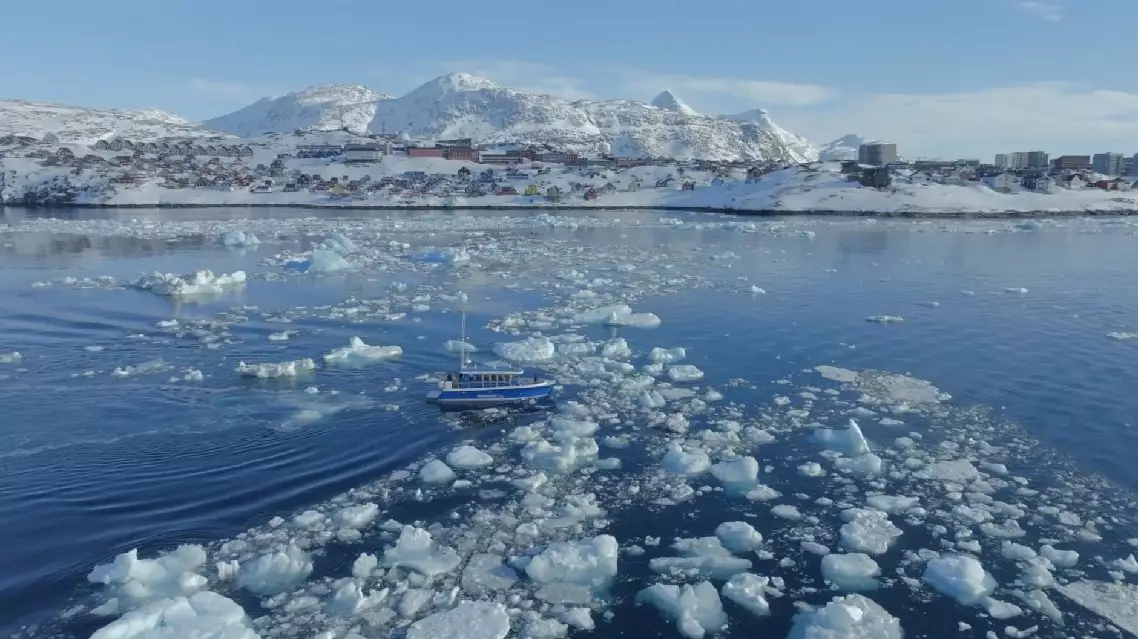
Trump's Greenland annexation remarks spark widespread backlash in Denmark

Trump's Greenland annexation remarks spark widespread backlash in Denmark
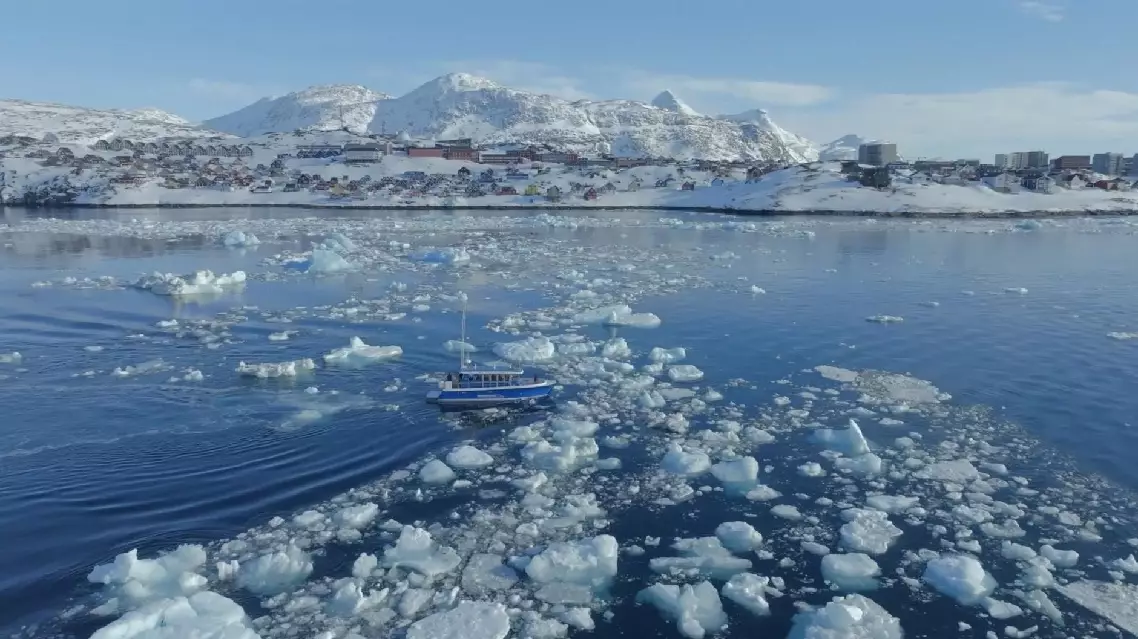
Trump's Greenland annexation remarks spark widespread backlash in Denmark