WESTWOOD, Mass.--(BUSINESS WIRE)--Mar 14, 2025--
The Predictive Index (PI), the data-driven HR platform used to hire top performers, develop effective managers and retain your people, announces its presence at Transform, the premier conference for professionals driving innovation in the workplace. Taking place on March 17-19 at Wynn Las Vegas, the event will gather 3,500+ industry professionals for three days of progressive programming, curated networking and cutting-edge HR technology.
This press release features multimedia. View the full release here: https://www.businesswire.com/news/home/20250313308213/en/
At PI’s interactive booth (Booth 538, next to the town square), attendees can contribute to an exclusive “Future of Work Forecast” via a giant crystal ball installation capturing real-time predictions. Participants receive a post-event industry report with actionable workforce recommendations.
"Transform has become the essential gathering for forward-thinking leaders shaping the future of HR and workplace innovation," said Matt Poepsel, PhD, VP and Godfather of Talent Optimization at The Predictive Index. "As organizations face unprecedented talent challenges, PI is proud to provide the behavioral insights and strategic frameworks needed to turn workforce complexity into competitive advantage."
Featured Sessions
PI’s leaders will share expert insights on workforce transformation, equipping HR professionals with practical strategies to build future-ready teams and optimize technology investments.
Future-Ready HR: Building Your Strategic Roadmap for Tomorrow’s Workforce
Monday, March 17 | 2:30 PM - 4:00 PM | Bandol 2, Track 3
Presented by:Matt Poepsel, PhD, VP and Godfather of Talent Optimization at The Predictive Index
As technologies, demographics and business models reshape workforce expectations, this interactive workshop will guide HR leaders through exercises and discussions to assess their organization's future readiness. Attendees will:
HR Tech Simplified: Cutting Through the Vendor Noise
Wednesday, March 19 | 2:00 PM - 2:50 PM at Bandol 2, Track 3
Presented by:Adam Berke, Chief Product Officer at The Predictive Index | Judy Park, Senior Advisor and Investor at FoW Partners | Brett Coin, Chief Transformation Officer at Findem.ai | George LaRocque, Founder and Principle Analyst at WorkTech | Elaine Paige, Chief People Officer at TaxJar
With HR technology solutions flooding the market, distinguishing essential innovations from unnecessary complexity is increasingly difficult. This expert panel offers a clear framework for evaluating and implementing technologies that drive efficiency without administrative burden. Attendees will:
Join PI at Transform and be part of the conversation shaping the next era of work. Register now at https://transform.us/register/ or discover how PI can optimize your talent strategy at www.predictiveindex.com/.
About The Predictive Index
The Predictive Index (PI) is the data-driven HR platform to hire top performers, develop effective managers, and retain your people. More than 60 years of proven science, software, and a curriculum of insightful management workshops make PI the solution for any company looking to design great teams and culture, make objective hiring decisions, foster engagement, and inspire greatness in their people anywhere in the world. More than 10,000 clients and 480+ partners use PI—including Nissan, Citizens Bank, Subway, Blue Cross Blue Shield, and Omni Hotels—across 90+ countries. Learn more at www.predictiveindex.com.

The Predictive Index Charts HR’s Strategic Future at Transform 2025
BRUSSELS (AP) — Belgium insisted on Thursday that its European Union partners must provide ironclad guarantees that it will be protected from Russian retaliation before it would back a massive loan for Ukraine.
At a high-stakes EU summit in Brussels, the 27-nation bloc’s leaders are set to decide on whether to use tens of billions of euros in frozen Russian assets to underwrite a loan to meet Ukraine’s military and financial needs over the next two years.
The bulk of the assets — some 193 billion euros ($227 billion) as of September — are held in the Brussels-based financial clearing house Euroclear. Russia’s Central Bank sued Euroclear last week.
“Give me a parachute and we’ll all jump together,” Prime Minister Bart De Wever told members of the Belgian parliament just before the summit began. “If we have confidence in the parachute that shouldn’t be a problem.”
Belgium fears that Russia will strike back and would prefer that the bloc borrow the money on international markets. It wants frozen assets held in other European countries to be thrown into the pot as well, and for its partners to guarantee that Euroclear will have the funds it needs should it come under legal attack.
European officials say Russia is waging a campaign of sabotage and disruption across the continent. The Central Bank lawsuit ramped up pressure on Belgium and its European partners ahead of the summit.
The “reparations loan” plan would see the EU give 90 billion euros ($106 billion) to Ukraine. Countries like the U.K., Canada and Norway would make up any shortfall.
Russia's claim to the assets would still stand, but the assets would remain locked away at least until the Kremlin ends its war on Ukraine and pays for the massive damage it's caused.
In mapping out the loan plan, the European Commission set up safeguards to protect Belgium, but De Wever remains unconvinced.
“I have not yet seen a text that could satisfactorily address Belgium’s concerns," he said. "I hope to see one today.”
De Wever insisted that Belgium remains “a faithful ally” of Ukraine and wants to continue to help.
Whatever method they use, the leaders have pledged to meet most of Ukraine's needs in 2026 and 2027. The International Monetary Fund estimates that would amount to 137 billion euros ($160 billion). The war-ravaged country is at risk of bankruptcy and needs the money by spring.
“We have to find a solution today," European Commission President Ursula von der Leyen told reporters. EU Council President António Costa, who is chairing the meeting, has vowed to keep leaders negotiating until an agreement is reached, even if it takes days.
Polish Prime Minister Donald Tusk said: “Now we have a simple choice. Either money today or blood tomorrow." He insisted that "all European leaders have to rise to the occasion.”
EU envoys have worked around the clock in recent weeks to flesh out the details and narrow differences among the 27 member countries. If enough countries object, the plan could be blocked. There is no majority support for a plan B of raising the funds on international markets.
“At this stage, it depends on political will,” Ukrainian President Volodymyr Zelenskyy said in a Whatsapp chat with reporters while flying to Brussels. “I very much hope that we can obtain a positive decision. Without it, Ukraine will face a major problem.”
German Chancellor Friedrich Merz said that he hopes Belgium's concerns can be addressed.
"The reactions of the Russian president in recent hours show how necessary this is. In my view, this is indeed the only option. We are basically faced with the choice of using European debt or Russian assets for Ukraine, and my opinion is clear: we must use the Russian assets.”
Hungary and Slovakia oppose von der Leyen’s plan for a reparations loan. Apart from Belgium, Bulgaria, Italy and Malta are also undecided.
“I would not like a European Union in war," said Hungarian Prime Minister Viktor Orbán, who sees himself as a peacemaker. He’s also Russian President Vladimir Putin’s closest ally in Europe. “To give money means war.”
Orbán described the loan plan as “a dead end,” and said that “the whole idea is a stupid one.”
The outcome of the summit has significant ramifications for Europe's place in negotiations to end the war. The United States wants assurances that the Europeans are intent on supporting Ukraine financially and backing it militarily, even as the talks drag on with few results so far.
The loan plan in particular also poses important challenges to the way the bloc goes about its business. Should a two-thirds majority of EU leaders decide to impose the scheme on Belgium, which has most to lose, the impact on decision-making in Europe would be profound.
Finding voting majorities and avoiding vetoes in the future could become infinitely more complex if one of the EU's founding members is forced to weather an attack on its interests by its very own partners.
De Wever too must weigh whether the cost of holding out against a majority is worth the hit his government's credibility would take in Europe.
Whatever is decided, the process does not end at this summit. Legal experts would have to convert any political deal into a workable agreement, and some national parliaments may have to weigh in before the loan money could start flowing to Ukraine.
Associated Press Writers Kirsten Grieshaber in Berlin and Illia Novikov in Kyiv contributed to this report.
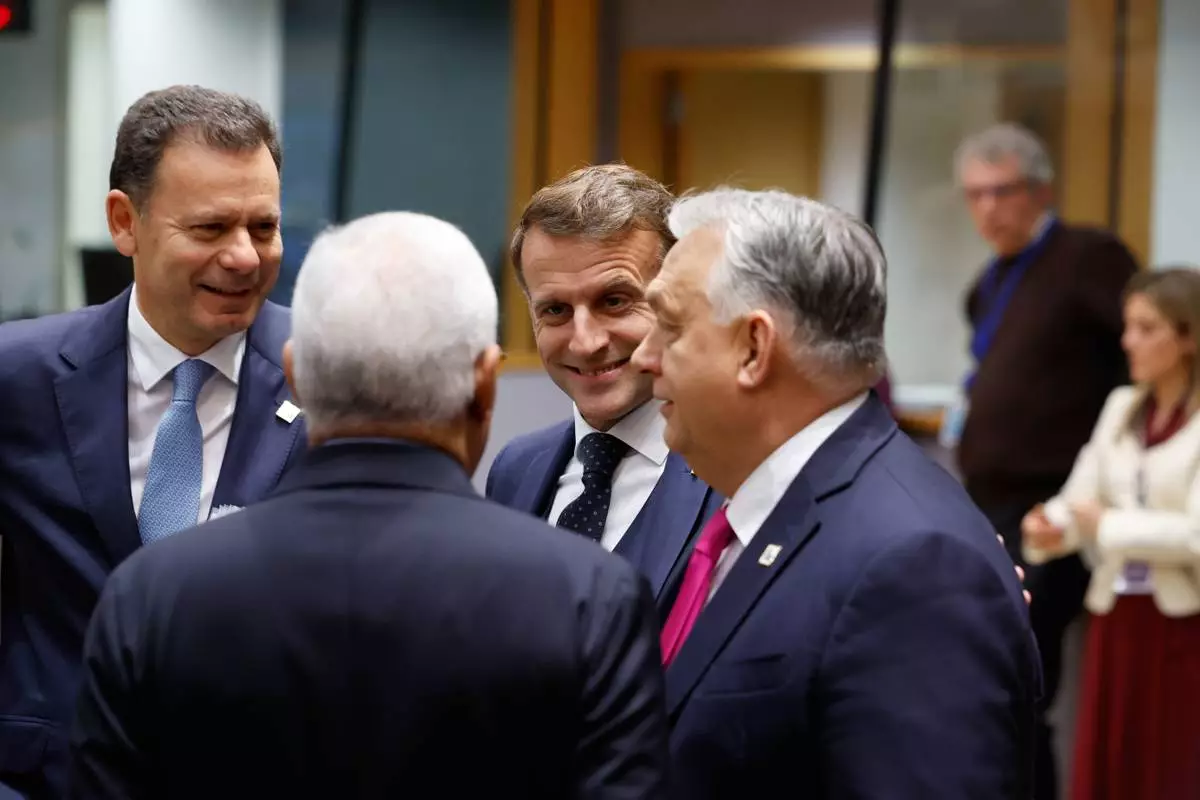
From left, Portugal's Prime Minister Luis Montenegro, European Council President Antonio Costa, French President Emmanuel Macron and Hungary's Prime Minister Viktor Orban during a round table meeting at the EU Summit in Brussels, Thursday, Dec. 18, 2025. (AP Photo/Geert Vanden Wijngaert)
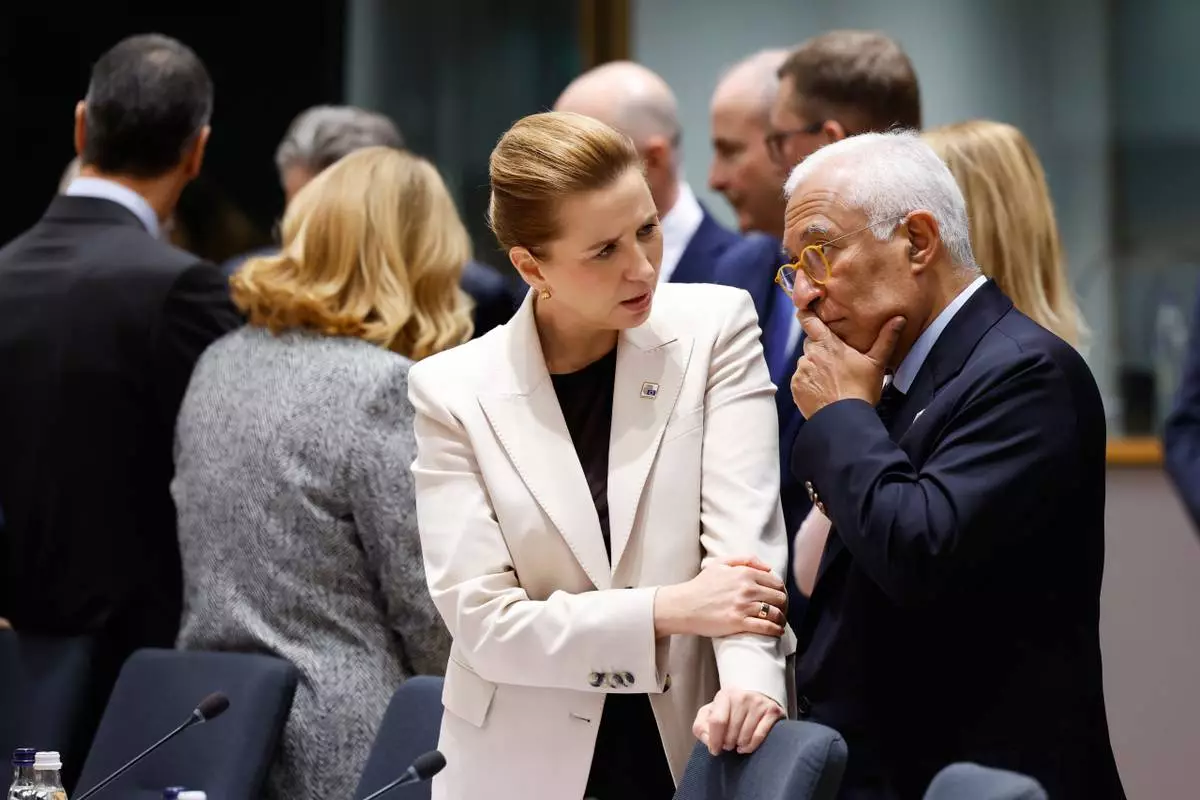
European Council President Antonio Costa, center right, speaks with Denmark's Prime Minister Mette Frederiksen, center left, during a round table meeting at the EU Summit in Brussels, Thursday, Dec. 18, 2025. (AP Photo/Geert Vanden Wijngaert)
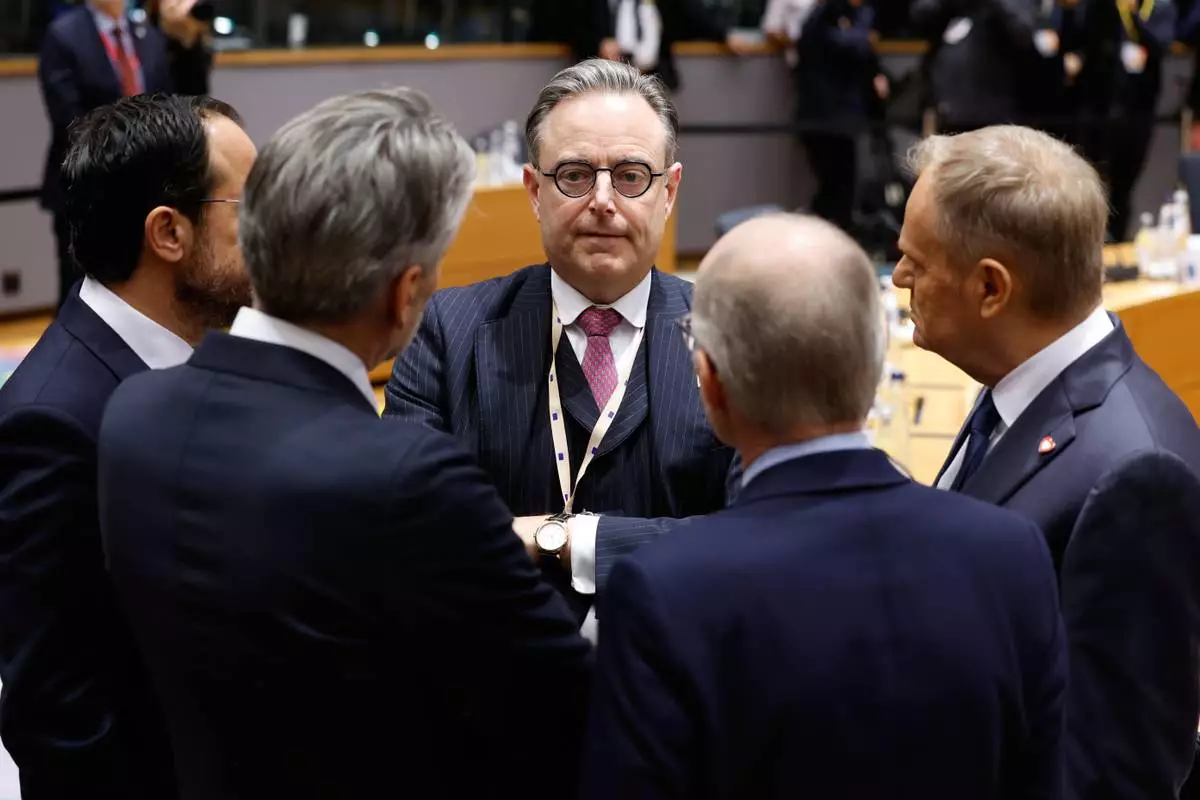
Belgium's Prime Minister Bart De Wever, center, speaks with from left, Cypriot President Nikos Christodoulides, Netherland's Prime Minister Dick Schoof, Luxembourg's Prime Minister Luc Frieden and Poland's Prime Minister Donald Tusk during a round table meeting at the EU Summit in Brussels, Thursday, Dec. 18, 2025. (AP Photo/Geert Vanden Wijngaert)
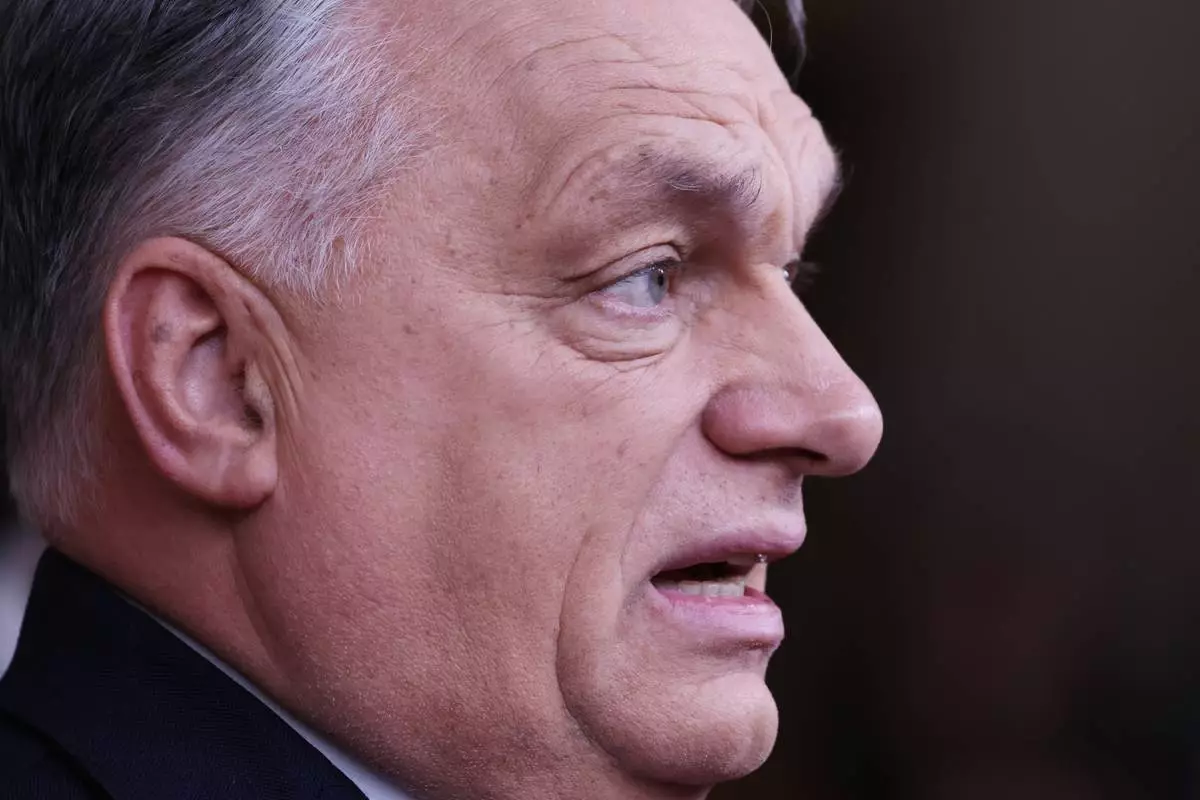
Hungary's Prime Minister Viktor Orban speaks with the media as he arrives for the EU Summit in Brussels, Thursday, Dec. 18, 2025. (AP Photo/Geert Vanden Wijngaert)
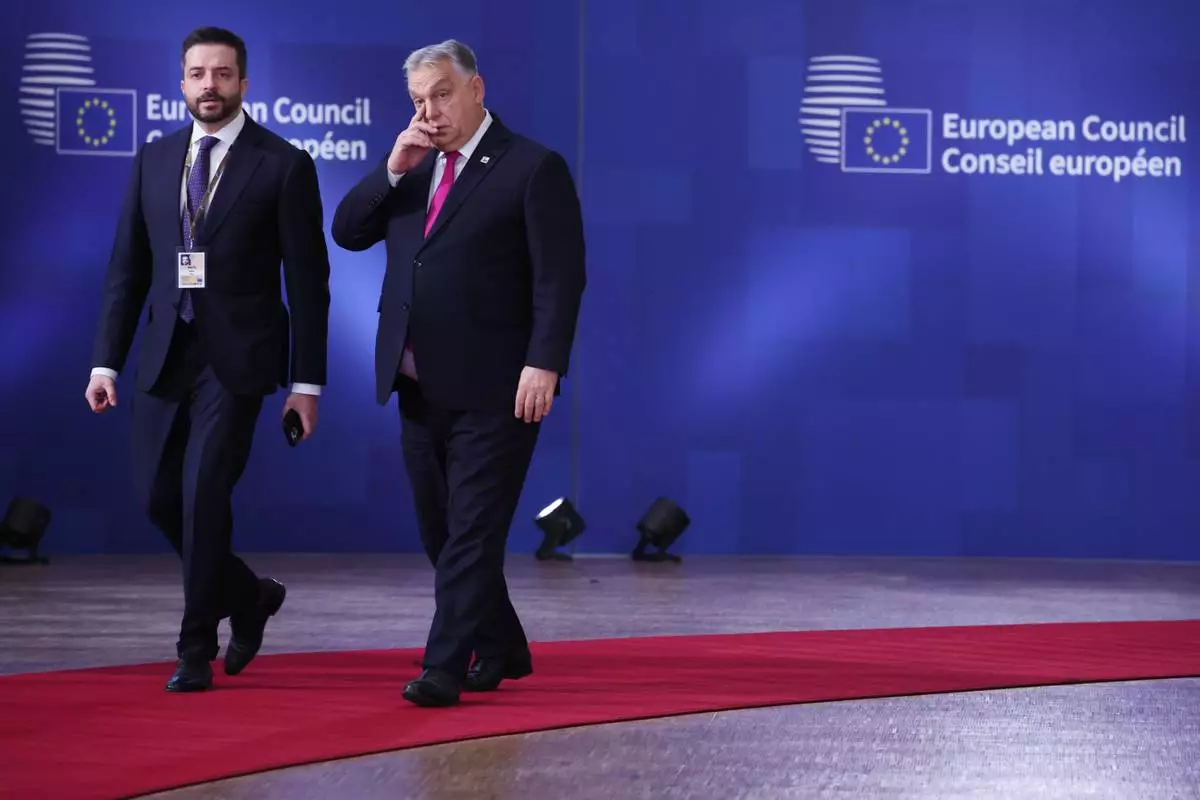
Hungary's Prime Minister Viktor Orban, right, arrives for the EU Summit in Brussels, Thursday, Dec. 18, 2025. (AP Photo/Omar Havana)
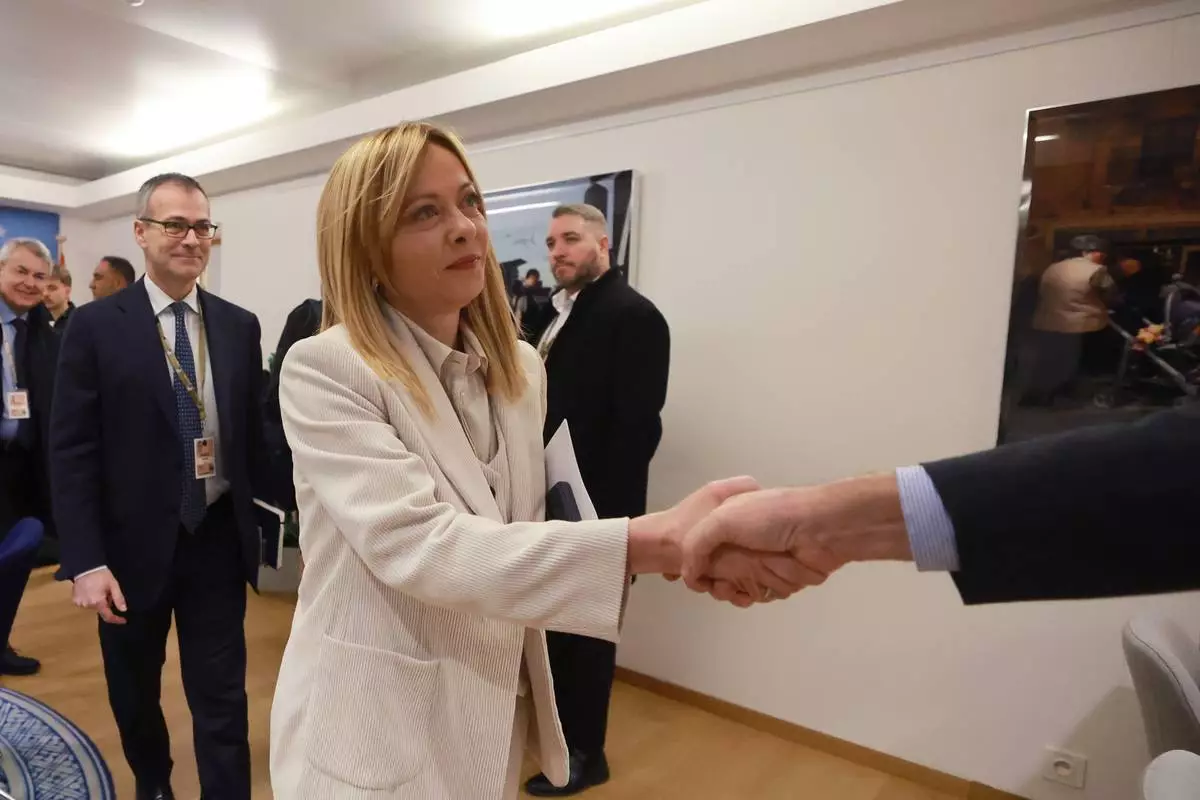
Italy's Prime Minister Giorgia Meloni, center, is greeted as she arrives for a round table meeting on migration at the EU Summit in Brussels, Thursday, Dec. 18, 2025. (AP Photo/Olivier Hoslet, Pool Photo via AP)
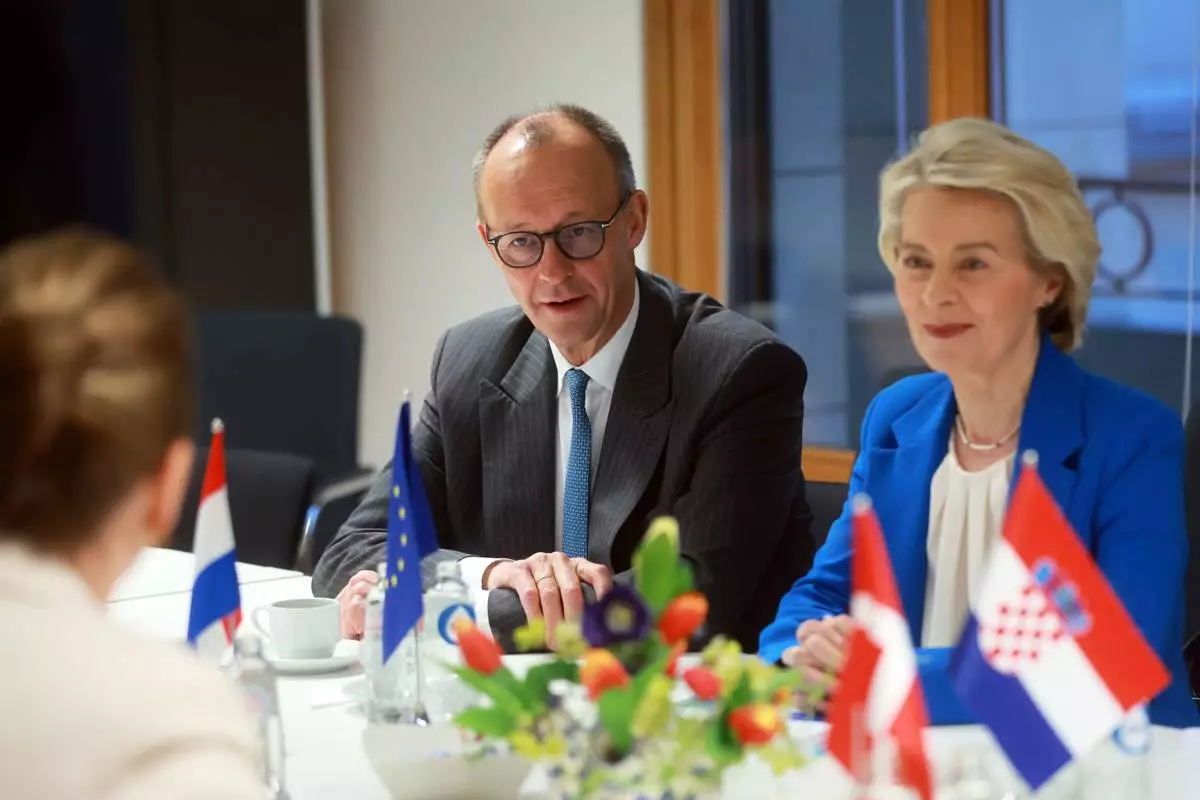
European Commission President Ursula von der Leyen, right, and Germany's Chancellor Friedrich Merz, left, attend a round table meeting on migration at the EU Summit in Brussels, Thursday, Dec. 18, 2025. (AP Photo/Olivier Hoslet, Pool Photo via AP)

FILE - A view of the headquarters of Euroclear in Brussels, on Oct. 23, 2025. (AP Photo/Geert Vanden Wijngaert, File)