China's central bank said it will implement a moderately loose monetary policy this year, and introduce a combination of measures in support of economic development.
According to the People's Bank of China (PBOC), this year's monetary policy aims to bolster the real economy, prevent risks, and address constraints such as the interest rate gap between China and the United States and the interest rate gap between banks. The policy must be implemented at a reasonable speed and level.
"In light of changing situation, efforts will be made to keep the total amount, structure, interest rate, exchange rate and other aspects of monetary policy at a reasonable and balanced level, following the introduction of a policy combination," said Dong Ximiao, the chief researcher of Merchants Union Consumer Finance.
Industry insiders said that since the beginning of this year, the central bank has made many positive proposals for monetary policy in terms of total volume, interest rate, structure, exchange rate among others, which are conducive to further boosting market confidence.
In terms of total volume, there is still room to cut reserve requirement ratio, indicating that the central bank has the ability and willingness to increase macro regulation and support the real economy.
As for the structure, the central bank said it will study the creation of new structural policies, with a focus on supporting investment and financing for boosting scientific and technological innovation, promoting consumption and stabilizing foreign trade.
"Increasing financial support for major strategies, key areas and weak links will help promote smooth macroeconomic circulation, accelerate economic structural transformation and cultivate new growth drivers," said Wen Bin, the chief economist of China Minsheng Bank.
Regarding the exchange rate, the PBOC has reiterated that it will resolutely prevent the RMB exchange rate from overshooting, and has the experience, confidence and ability to maintain stable operation of the foreign exchange market.
The central bank said that it has sufficient reserve tools and policy space in the face of uncertainties in the macro environment, especially the external environment.
It said that many positive factors have underlined the improvement of the economic situation. With more proactive and effective macro policies continuing to take effect, it said, the financial system will provide more support for the recovery and improvement of the real economy and promote high-quality development.
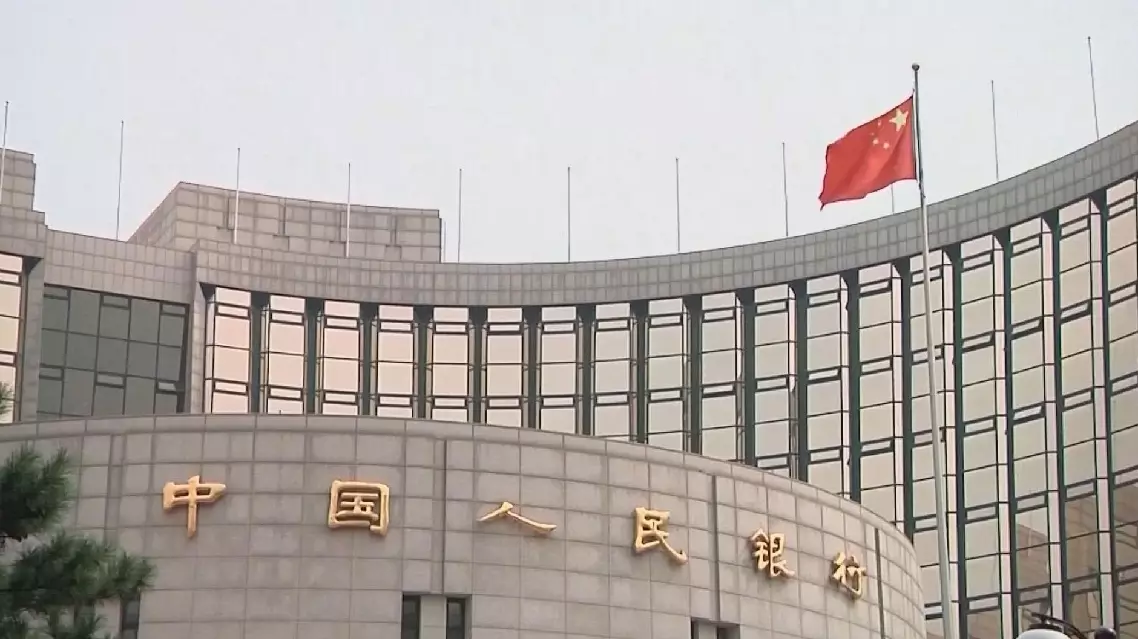
China to implement moderately loose monetary policy, launch measures to support economy
A group of Japanese citizens held a study session in Shibuya, Tokyo on Saturday to reflect on Japan's history of aggression during World War II and voice opposition to the government's push for constitutional revision and military buildup.
During the session, the organizers screened videos about Japan's invasion of China, stressing that only a genuine understanding of history can the country be prevented from starting another aggressive war.
"We must earnestly study history and understand what the Japanese military did to China and other Asian countries, and what Japan has done in the past. Without understanding this part of history, it is very difficult to truly oppose war," said an organizer of the session.
At the Liberal Democratic Party (LDP) convention in Tokyo last Sunday, Japanese Prime Minister Sanae Takaichi declared that "the time has come" to reform the Constitution, saying that "we would like to hold next year's convention with a proposal for a constitutional amendment in sight."
The ruling party also formally announced its new policy vision, recognizing its goal of revising the Constitution as "critically needed" in shaping Japan's future security framework.
Japan's Constitution, which took effect in 1947, is often referred to as the pacifist Constitution because its Article 9 renounces war as a sovereign right and prohibits Japan from possessing "war potential" such as military forces.
The ruling party's move has sparked widespread concern and criticism in Japan as it could mark a significant turning point in Japan's postwar trajectory.
"The constitution clearly states that Japan forever renounces war. To change that would be equivalent to Japan reemerging on the world stage as an imperialist, war-waging nation. I believe all Japanese people must stand up to stop this," said a participant.
"We must never allow Takaichi's tendency to wage war. We must resolutely prevent Japan from going to war again," said another participant.
"The so-called enhancing 'deterrence' does not prevent war from happening. If all countries keep enhancing their military preparations in the name of deterrence, there will be no end to it. I think this actually serves the vested interests of imperialist capitalists and the arms industry, so we must never allow endless increases in defense budgets and arms races. Tax money should be used to improve the lives of workers and ordinary people," said another participant.
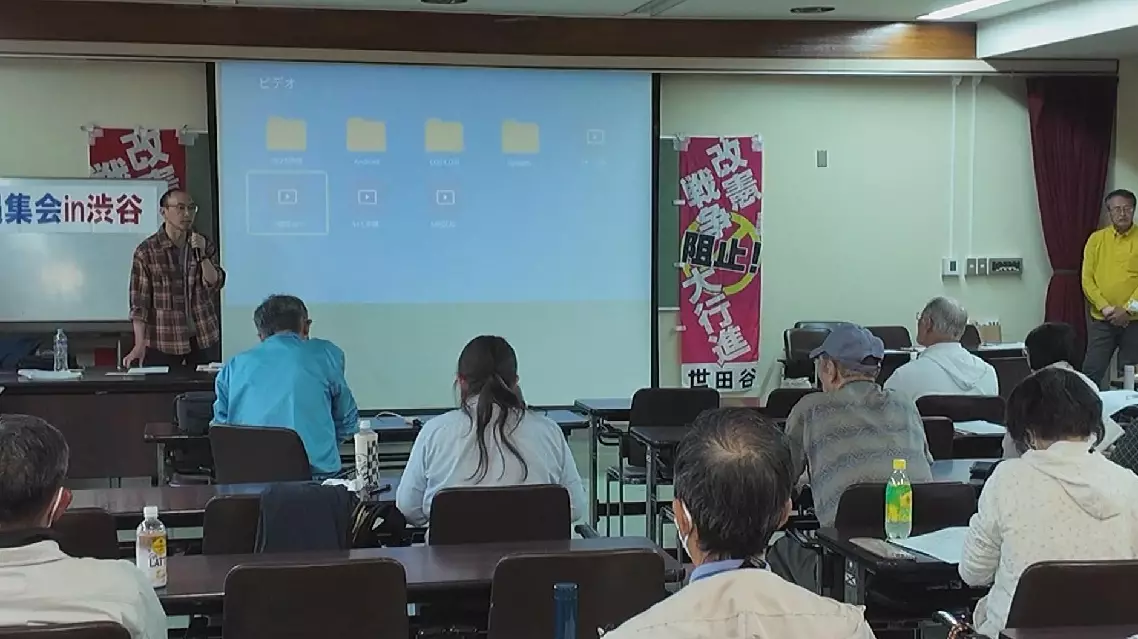
Japanese citizens hold study session to reflect on WWII aggression, oppose constitutional revision
Japanese citizens hold study session to reflect on WWII aggression, oppose constitutional revision