Tianjin Port in north China launched a new direct route to South Africa on Saturday to optimize its maritime transport network and fuel foreign trade growth in the Beijing-Tianjin-Hebei region.
As the first direct shipping link to South Africa in recent years, the service deploys twelve 140,000-deadweight-ton vessels with weekly departures from Tianjin to Coega and Durban.
The shortest voyage lasts just 40 days, bringing higher transport efficiency, stronger cargo compatibility and greater logistics flexibility.
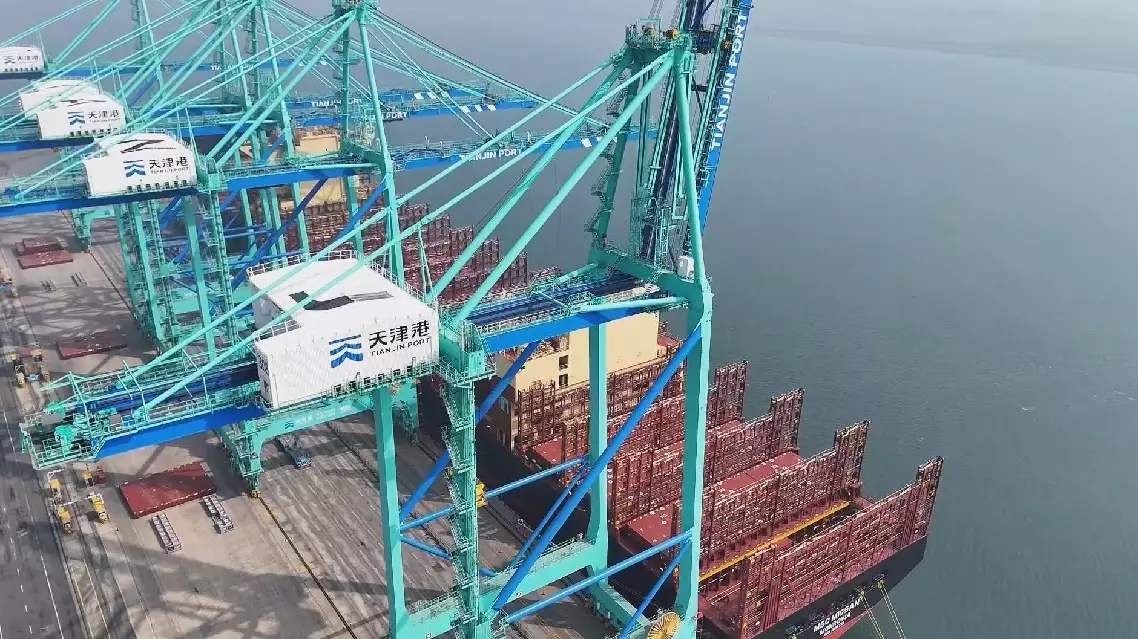
Tianjin Port opens new direct trade route to South Africa
China's lithium-ion battery industry has become one of the fastest growing industries over the past three months in terms of output, driven by robust demand on smart products and latest technical innovations.
According to the National Bureau of Statistics (NBS), the output of lithium-ion battery products increased by 40.8 percent year-on-year in the first quarter of 2026, making it one of the highlights in China's industrial growth for this period of time.
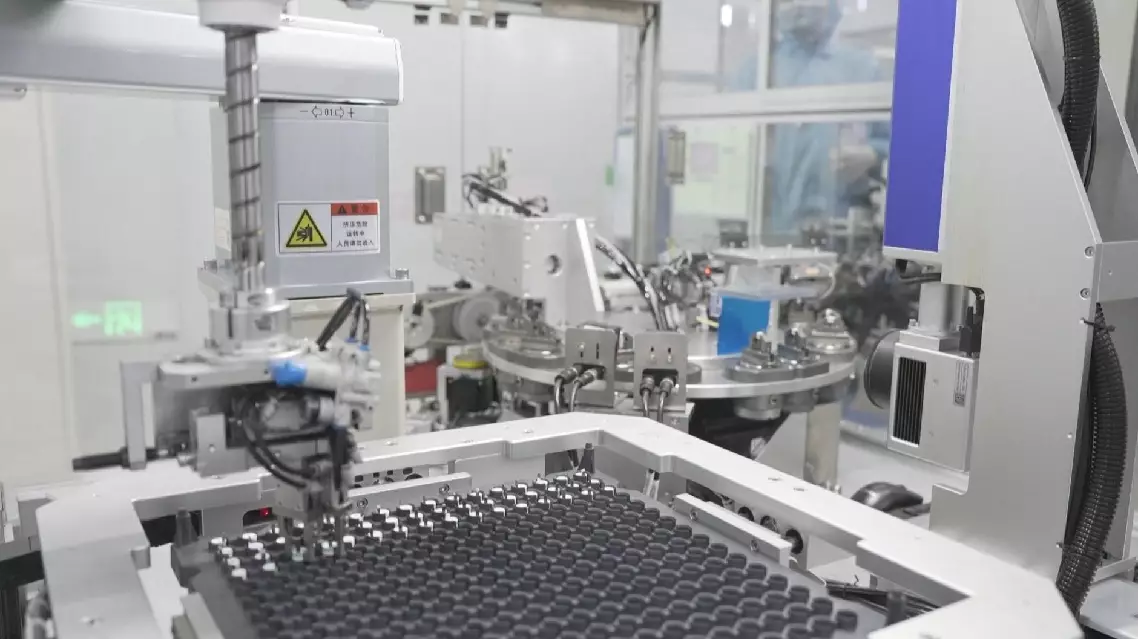
At a smart plant of a lithium ion battery manufacturing company in Heyuan City of south China's Guangdong Province, numerous of wearable micro lithium-ion batteries were encapsulated in vacuum environment and then delivered to other leading manufacturers.
The annual production capacity here tops 50 million batteries, with total shipments surpassing 100 million units. Its revenue has achieved an average annual compound growth rate of more than 100 percent.
Currently, we hold orders worth over 300 million yuan (about 41.5 million U.S. dollars). The output has tripled compared to that of the same period last year. Our Heyuan plant is running at full capacity, with most lines already booked into Q3. This makes it imperative for us to establish new facilities to expand and support our production capacity said Cao Zhifeng, founder of a lithium ion battery manufacturing company.
Behind the expansion of production capacity lies breakthroughs in core technology. In the R&D laboratory in Guangdong's Shenzhen City, technicians sealed lithium-ion batteries in an inert gas environment.
"We set solid-state electronics as our core technology, and we have been making breakthroughs in developing batteries with higher capacity. For now, the overall energy density of our battery has increased from just over 200 Wh/kg in the early stage to 300, 360, and even 400 Wh/kg. In drones, for example, we have extended the flight endurance from 20 minutes to as long as two hours," said Xiao Zhixian, deputy director, research institute of a local lithium ion battery manufacturing company.
China’s lithium-ion battery industry sees breakthroughs in revenue, technique