Russia reported on Saturday that its forces attacked several Ukrainian military targets over the past day, while Ukraine on the same day claimed it hit Russian oil facilities.
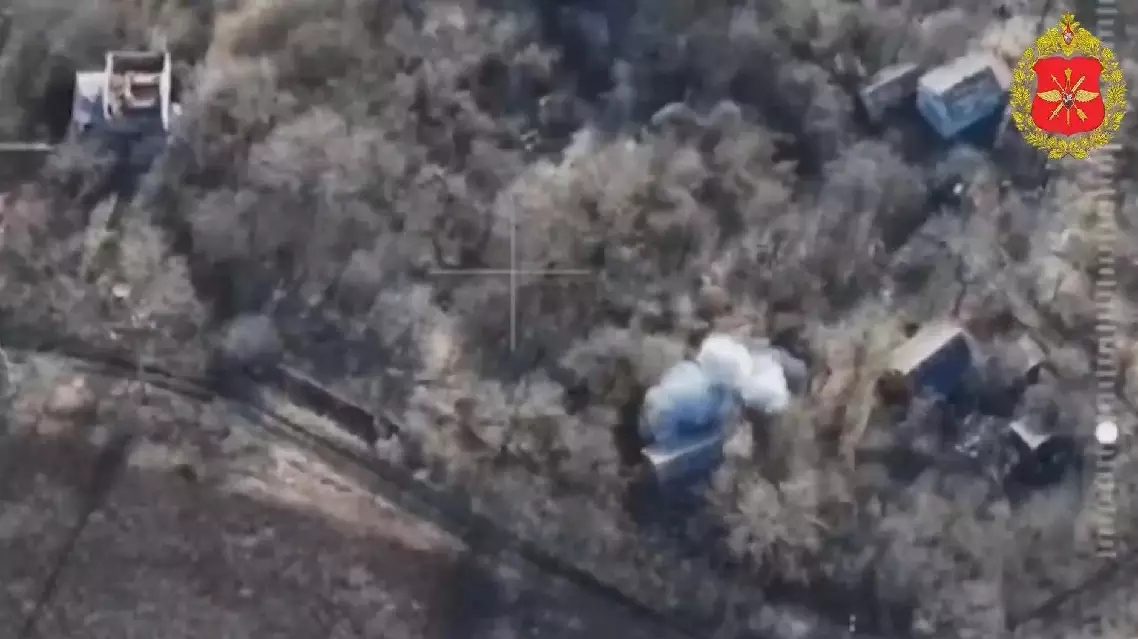
The Russian Defense Ministry said in its latest report that over the past 24 hours, the Russian forces conducted strikes on Ukrainian energy and transport infrastructure, drone storage sites and fuel depots, temporary deployment points of Ukrainian armed formations and foreign mercenaries in 145 locations. The ministry said Russian air defense forces shot down 568 drones over the past day.
Meanwhile, the General Staff of the Armed Forces of Ukraine reported on the same day that a total of 151 combat engagements were reported on the battlefield over the past day. It said the Ukrainian forces launched attacks on multiple Russian troops and an equipment concentration area and drone control points, and shot down 2,104 operational-tactical level Russian drones. The Ukrainian forces also hit four key Russian oil facilities on Saturday, said the report.
Ukraine's Security Service (SSU) said in a social media post on Saturday that it had hit three Russian warships in Crimea. The SSU said that the hit warships included the Russian Navy's large landing ships Yamal and Azov,and a third warship of an unspecified type. Other reports said that a Russian Project 21980 anti-sabotage boat "may have been hit."
According to the SSU, Ukraine also launched drones to attack Russia's communication systems, a radar station, and an oil base in Crimea.
Russia has not responded to these reports.
Russia claims striking multiple Ukrainian targets; Ukraine reports hitting Russian oil facilities
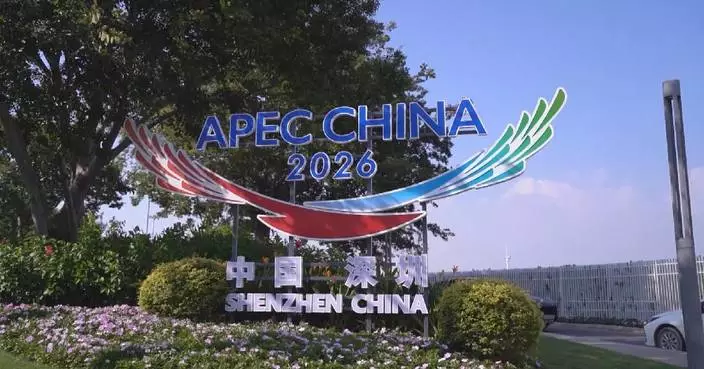
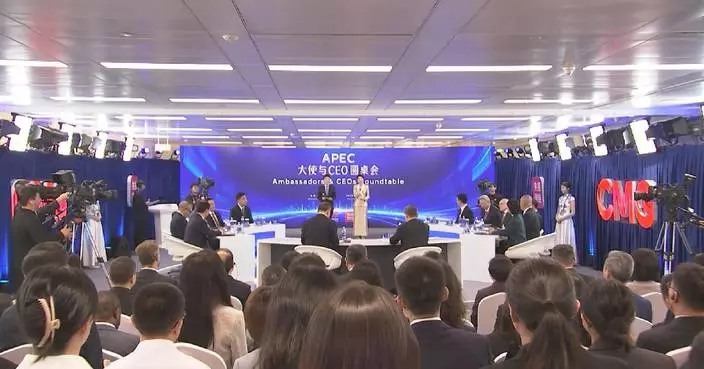
The fourth meeting of the APEC Business Advisory Council (ABAC) opened on Saturday in Shenzhen City in south China's Guangdong Province, drawing members who underscored China's expanding leadership in driving trade integration, green energy and multilateral cooperation across the Asia-Pacific.
The three-day meeting has gathered more than 60 representatives from 21 APEC economies, along with nearly 200 experts and accompanying staff, according to the organizer, the China Council for the Promotion of International Trade (CCPIT).
As global trade faces mounting economic headwinds and shifts toward sustainability, international business leaders pointed to China's technological advancements as a crucial catalyst for regional development.
Kasemsit Pathomsak, a Thai representative on ABAC, APEC's private-sector advisory body, highlighted China's contributions to green technology.
"China has played a very important role all along, especially when it comes to the renewable and green initiatives, with solar production, green technology, EVs. China has been very forefront in innovating and bringing this technology to the masses. I think it's very important to try help the world to try and become more green and affordable, to try transition to this green technology," said Pathomsak.
Members also highlighted APEC's vital platform for bilateral and multilateral engagement, fostering commercial bridges across diverse markets.
"As one of the economies that's in APEC, China, as we all acknowledge, is a very important trade partner in this region in both bilateral and multilateral opportunities. For Canada, we see that it is very important for us to establish a proper conduit of opportunities where we can grow together and understand the risks where we have to be clear about where we can and cannot go together. So, we think that APEC is an excellent opportunity where the public sector and the private sector, which I represent, would be able to engage in a deeper conversation on this," said Joseph Fung, an ABAC member from Canada.
Meanwhile, Francisco Suarez Hernandez, an ABAC member from Mexico, praised China's logistical and organizational leadership in hosting the meeting.
"It's really important and China hosting this event is the best example of leading. I think creating a bridge between Mexico, next year Vietnam, and this year China is going to be a great example. We actually hosted ABAC II (Second meeting of APEC Business Advisory Council) this year in Mexico. So, I know the effort," he said.
Founded in November 1995, ABAC is the only non-governmental body with an official advisory role in the APEC Economic Leaders' Meeting, engaging in a formal dialogue and submitting annual policy recommendation reports to APEC leaders.
After the ABAC meeting, Shenzhen will host the 2026 APEC CEO Summit on Nov 17 to 18, drawing the region's top business and government leaders to chart a course for Asia-Pacific prosperity.
This is the third time China has hosted APEC meetings, and the first in 12 years.
Working with other member economies under the theme of "Building an Asia-Pacific Community to Prosper Together," China has focused on three priorities, namely openness, innovation and cooperation, and has hosted more than 300 meetings and events across the country during the year.
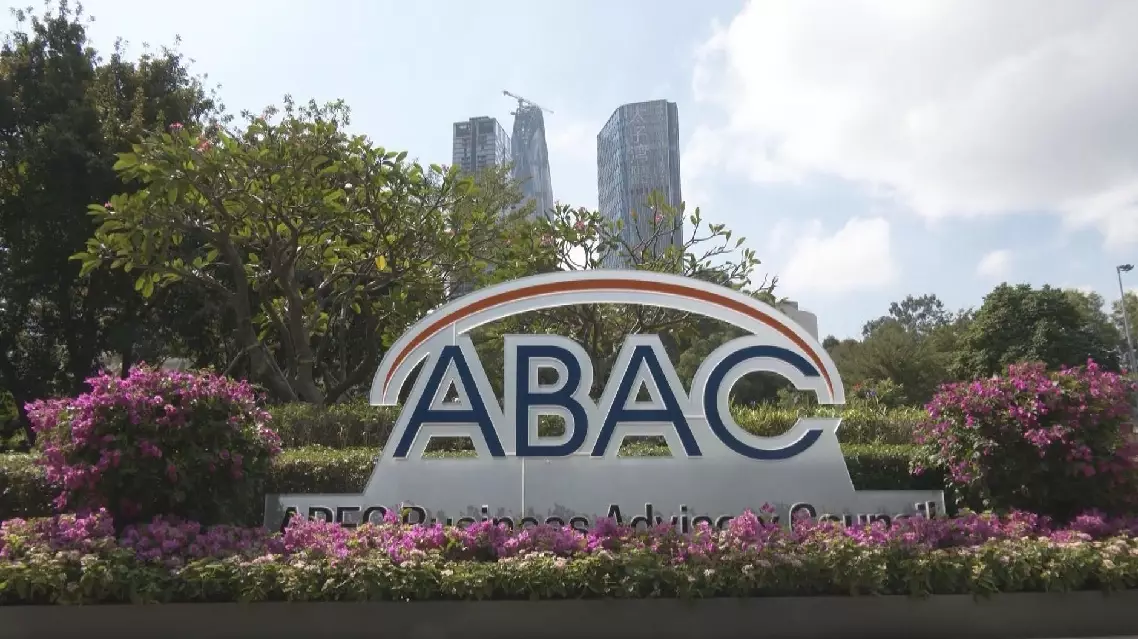
ABAC members laud China's role in Asia-Pacific economic integration