Cities across China are intensifying efforts to safeguard the nation's treasure trove of over five million ancient and famous trees, using innovative practices to preserve these living relics of history while unlocking their economic potential.
China's new Regulation on the Protection of Ancient and Famous Trees took effect on Saturday. According to the latest survey, there are a total of 5,081,900 ancient and famous trees nationwide. Local authorities are adopting innovative conservation measures, leveraging advanced technology to protect these "green legacies" and promote high-quality development.
In Jian'ge County of southwest China's Sichuan Province, the lush and vibrant Cuiyunlang corridor is home to 7,778 ancient cypress trees, some of which date back 2,300 years. To ensure their survival, the local government has launched a new round of restoration efforts this month, aimed to revive 576 endangered and vulnerable ancient cypresses.
"We are taking solid steps to rescue and revive endangered and weak ancient trees, striving to achieve full coverage of conservation within the year. Our goal is to breathe new life and vigor into these ancient treasures," said Tang Tianyong, director of Jian'ge County's Ancient Cypress Protection Center.
In Fuzhou, east China's Fujian Province, experts are using cutting-edge tools such as ultrasonic trunk detectors and radar root scanners to conduct comprehensive health examinations on over 10,000 ancient trees, establishing detailed electronic records for each one.
Meanwhile, in the Huangsang National Nature Reserve of Shaoyang City, central China's Hunan Province, efforts are underway to protect the largest wild population of Phoebe bournei trees south of the Yangtze River. Over 3,000 trees are being tracked for their dynamic growth patterns, and ancient trees over 800 years old are now equipped with sensors and health analyzers for real-time monitoring.
In Nanchuan District of southwest China's Chongqing Municipality, more than 700 ancient trees have been incorporated into a smart management platform, with tailored protection plans for each tree.
Conservation efforts are also yielding economic benefits.
In Shaoxing, east China's Zhejiang Province, the famed Kuaiji Mountain boasts more than 78,000 Chinese torreya trees aged over 100 years. The region has successfully balanced ecological conservation with economic development. In 2024 alone, Shaoxing's dried Torreya nut production reached over 12,000 tons, with nearly half sourced from ancient trees, contributing to an industry-wide output value of 2.66 billion yuan (about 312 million U.S. dollars).
In Tongyu County, Jilin Province, located on the eastern edge of the Horqin Grassland, local authorities are capitalizing on centuries-old elm trees to develop a cultural park, turning the natural asset into a popular tourist attraction.
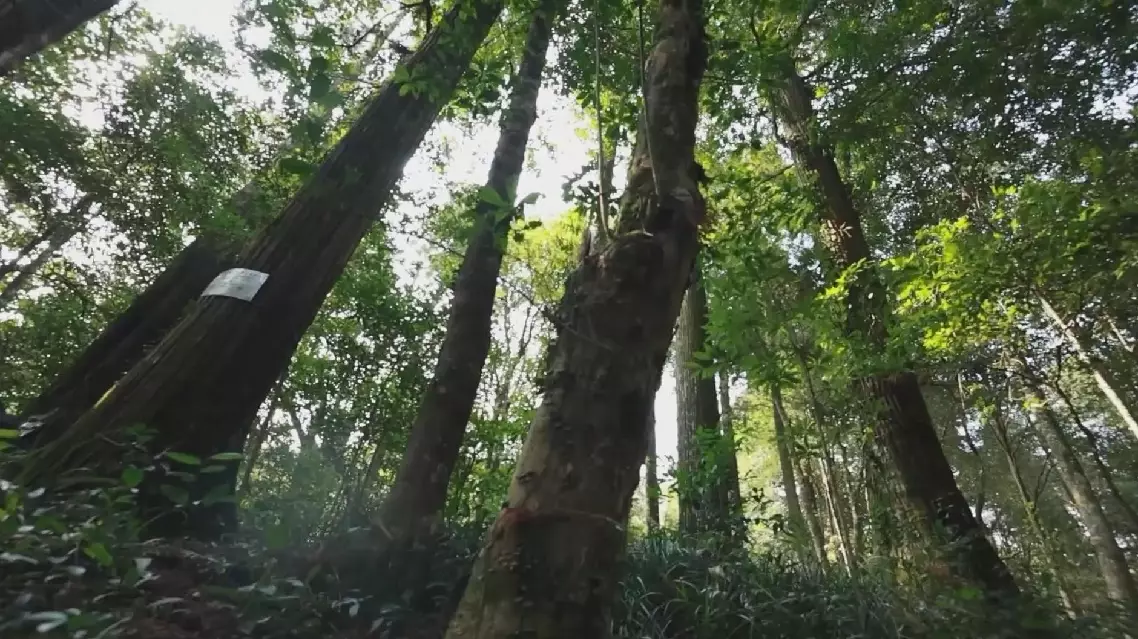
Chinese cities step up protection of endangered ancient trees