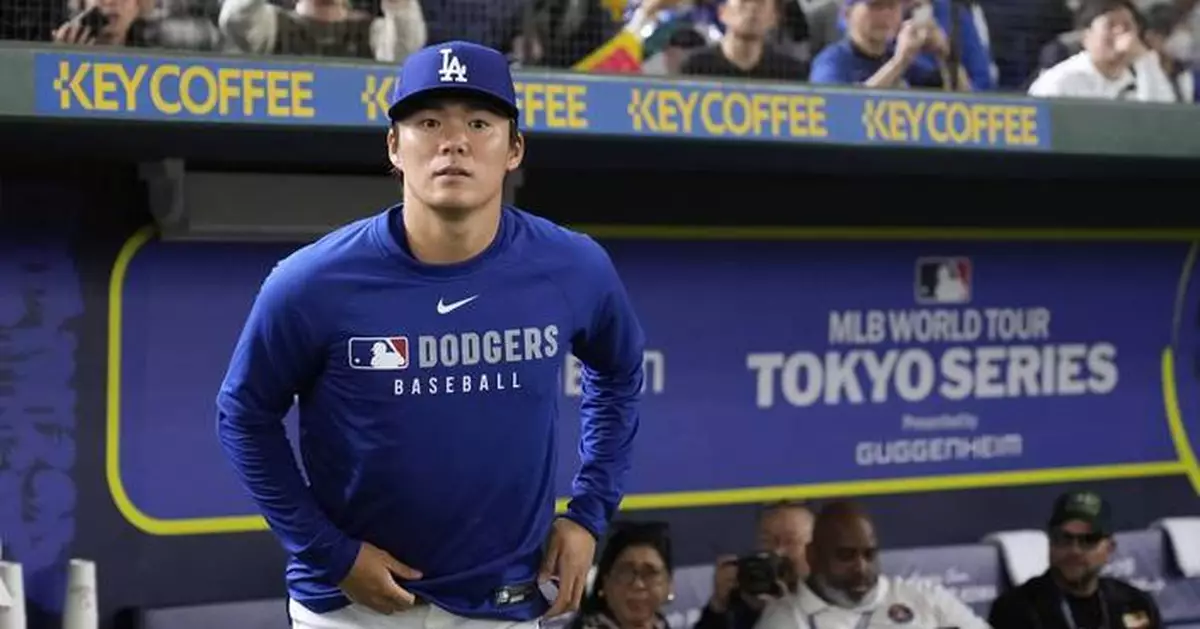
TOKYO (AP) — Yoshinobu Yamamoto knows what it's like to travel across the world to take the mound for his first start of the Major League Baseball season.
It's safe to say the first attempt didn't go very well.
But the Japanese right-hander bounced back from that brutal 2024 MLB debut in South Korea — where he gave up five runs in just one inning against the San Diego Padres — and ended up being a crucial part of a team that captured a World Series title by beating the New York Yankees in five games.
One season later, he's ready to be a star.
“This is my second year, I’m not a rookie anymore,” Yamamoto said through an interpreter. “So I’d like to get better and be a player who can make a contribution to the team a lot more.”
Yamamoto has emerged as a potential ace for the Dodgers this season and he'll take the mound for the team's opening day start against the Chicago Cubs on Tuesday at the Tokyo Dome.
Though often overshadowed by superstar teammate Shohei Ohtani, Yamamoto's development is arguably just as important for the Dodgers as he enters the second year of a $325 million, 12-year deal he signed before last season.
“I think Yoshinobu has grown up considerably in one year, I really do,” manager Dave Roberts said. “I think he’ll have a tremendous season. I think it speaks to his character in the sense that after that debacle, that rough start, to bounce back like he did, it speaks to his compete and his character.”
After the first start, Yamamoto was very good when he pitched in 2024, posting a 7-2 record, 3.00 ERA and 105 strikeouts in 90 innings despite a shoulder injury that forced him to miss about half of the season. He was solid in the playoffs, particularly during the World Series, when he gave up just one run over 6 1/3 innings in a Game 2 win.
Yamamoto relies mostly on a three-pitch mix of a mid-90s fastball, a curveball and a devastating splitter that coaxes plenty of swing and miss. Now he also knows he can thrive in the big leagues.
“I think the biggest thing is confidence, which you have to go through the experience, to gain more confidence,” Roberts said. “How that manifests is that he trusts his fastball in the strike zone and he doesn’t have to be too fine with it, and that makes everything else better.”
The 26-year-old Yamamoto could be one of the headliners of an elite starting rotation that includes two-time Cy Young Award winner Blake Snell, Tyler Glasnow, Tony Gonsolin, Japanese rookie Roki Sasaki and eventually Ohtani, who hopes to return to the mound in May.
Dustin May and Bobby Miller are also options while veteran left-hander Clayton Kershaw could contribute if healthy.
But the first game of the regular season belongs to Yamamoto. He's ready to seize the opportunity in his home country, especially since the start opposite Cubs lefty Shota Imanaga features the first all-Japanese starting pitcher matchup in MLB history.
That rough start in South Korea a year ago is far from his mind.
“In terms of preparation, there’s not much difference," Yamamoto said. "Last year, things didn’t go my way, but this year, I think I’m pretty happy with where I am.”
During the Dodgers' exhibition games against the Hanshin Tigers and Yomiuri Giants this weekend, Yamamoto has enjoyed a bit of role reversal. After his teammates helped him adjust to the U.S. last season, he gets to be the one with the local knowledge this week in Japan.
“I like to help as much as I can, in my way," Yamamoto said. "I think they’re all enjoying the different environment.”
AP MLB: https://apnews.com/hub/mlb
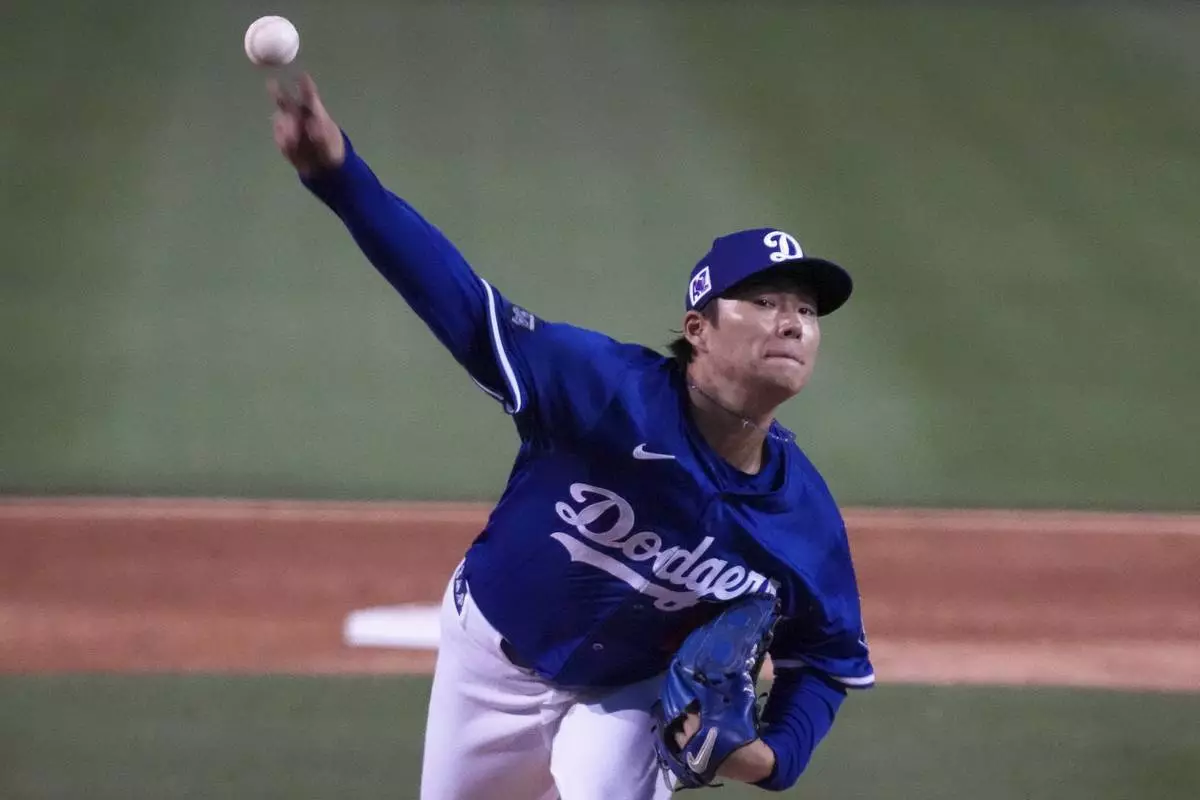
Los Angeles Dodgers pitcher Yoshinobu Yamamoto (18) throws during the third inning of a spring training baseball game against the Cincinnati Reds, Tuesday, March. 4, 2025, in Phoenix. (AP Photo/Darryl Webb)
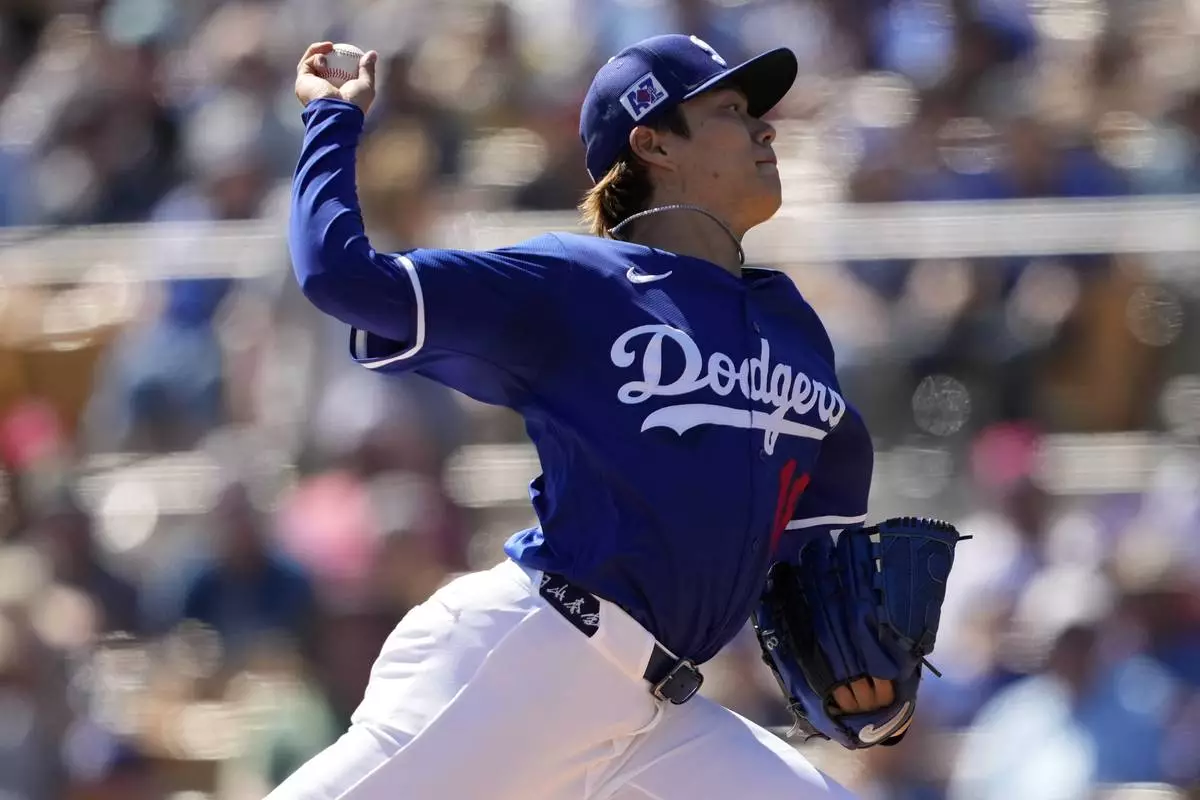
Los Angeles Dodgers pitcher Yoshinobu Yamamoto throws against the Arizona Diamondbacks' during the first inning of a spring training baseball game, Monday, March 10, 2025, in Phoenix. (AP Photo/Matt York)
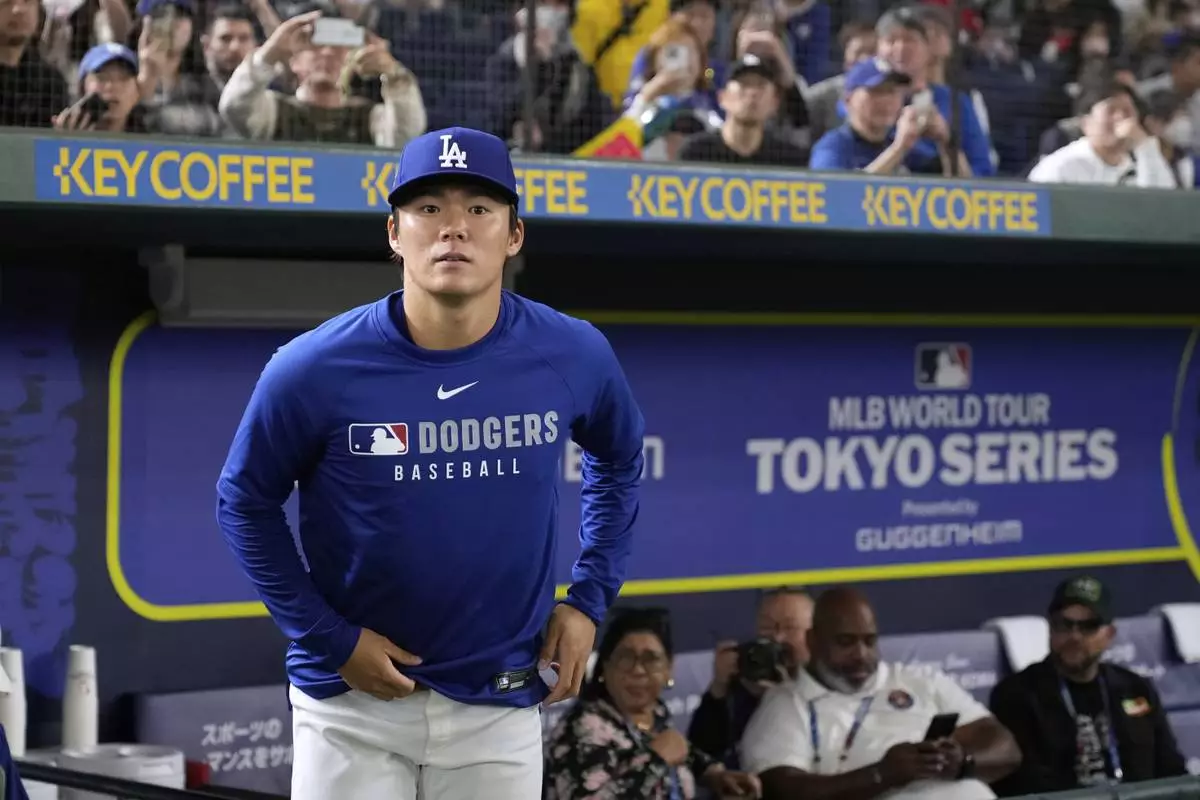
Yoshinobu Yamamoto, a pitcher of the Los Angeles Dodgers, starts a practice session at Tokyo Dome in Tokyo, Friday, March 14, 2025, as the Dodgers play their MLB opening games against the Chicago Cubs at the venue next week. (AP Photo/Hiro Komae)
WASHINGTON (AP) — If the U.S. and Iran aren’t able to soon come to a deal to end the war or extend the ceasefire that expires next week, the Trump administration is setting the stage to shift its war campaign toward a more economic-focused effort aimed at choking Tehran into submission rather than relying on bombs alone.
Treasury Secretary Scott Bessent told reporters at a White House briefing Wednesday that the U.S. plans to ramp up economic pain on Iran, and said the new moves will be the “financial equivalent” of a bombing campaign.
The threat of secondary economic sanctions on countries doing business with people, firms, and ships under Iranian control — including allies like the United Arab Emirates and competitors like China — represents an escalation of sanctions that the U.S. is already employing.
Bessent said the administration has “told companies, we have told countries that if you are buying Iranian oil, that if Iranian money is sitting in your banks, we are now willing to apply secondary sanctions, which is a very stern measure. And the Iranians should know that this is going to be the financial equivalent of what we saw in the kinetic activities.”
The warning comes the day after the Treasury Department sent a letter to financial institutions in China, Hong Kong, the UAE, and Oman, threatening to levy secondary sanctions for doing business with Iran, and accusing those countries of allowing Iranian illicit activities to flow through their financial institutions.
It's part of an economic playbook that President Donald Trump still can use to pressure Iran to accept U.S. proposals to limit its nuclear ambitions, a person familiar with the administration's thinking told The Associated Press. The person spoke on the condition of anonymity because they were not authorized to discuss private discussions on the record.
Privately, the argument being made to Trump is that the Iranians think they can weather the storm — but if they cannot pay their loyalists, that could pressure Iran to the table.
And some in the administration believe there are still more economic targets that can be hit that would put the economic hurt on Iran, including bonyads, the charitable trusts that account for a significant percentage of the Iranian economy.
Bessent told reporters that two Chinese banks have received warnings about handling Iranian money. Trump is preparing to visit Beijing next month for talks with Chinese President Xi Jinping.
Bessent also said that Iran’s Gulf neighbors are now willing to look at freezing Iranian money in their banks because of Iran's aggression during the war.
Still, Massachusetts Sen. Elizabeth Warren, the top Democrat on the Banking Committee, argued that any new economic sanctions would be effectively offset by the financial windfall that Iran was seeing in the aftermath of the war.
“Instead of circumstances where we can keep sanctions on Iran and constrict their economy, the blockade in the Strait of Hormuz — combined with the sharply rising price of oil — has helped Iran’s economy,” Warren said, adding, “What Secretary Bessent is trying to do is mop up the mess that Donald Trump has created by initiating this war.”
Daniel Pickard, a sanctions attorney, said imposing secondary sanctions could result in “diplomatic and economic blowback” from allies that could hurt efforts to build coalitions against Tehran.
“A lot of our trading partners have been outspoken in regard to their opposition to the conflict in Iran," Pickard said. “Most economic sanctions professionals would agree that when you get more people on the team, the chances of your economic sanctions being effective or greater."
On Wednesday, the U.S. imposed sanctions on an oil smuggling network connected to the deceased senior Iranian security official Ali Shamkhani, who was a close adviser to the former Supreme Leader of Iran. Sanctions include dozens of individuals, companies, and vessels involved in secretly transporting and selling Iranian and Russian oil through front companies, many of which are in the UAE.
“Treasury will continue to cut off Iran’s illicit smuggling and terror proxy networks," Bessent said in a statement. "Financial institutions should be on notice that Treasury will leverage all tools and authorities, including secondary sanctions, against those that continue to support Tehran’s terrorist activities.
Trump administration officials have also signaled growing confidence that the ceasefire and a blockade of shipments from Iranian ports in the Strait of Hormuz have shifted momentum in Trump’s favor.
Iran has endured tens of billions of dollars in damage during the bombardment to the country's infrastructure — including setbacks to its oil industry, the heart of its fragile and long-isolated economy — that could take years to repair.
Vice President JD Vance on Tuesday said Trump “doesn’t want to make, like, a small deal. He wants to make the grand bargain.”
"That’s the trade that he’s offering,” Vance said. “If you guys commit to not having a nuclear weapon, we are going to make Iran thrive.”
The president's deputy chief of staff, Stephen Miller, offered a more caustic assessment of the moment, suggesting that Trump had “played the checkmate move" on Iran by implementing the blockage in the strait.
“If Iran chooses the path of a deal that's great for the world, that's great for everybody. If Iran chooses the path of economic strangulation by blockade, then the world will pass Iran by,” Miller said in a Fox News appearance Tuesday evening. "New energy routes will be established. New supply chains will be established. Other nations throughout the region — throughout the world, and especially America — will power the world and Iran will become a footnote.”
Some Republicans believe that any tactic to exert more pressure on Tehran is worth trying.
“I would support anything,” said Sen. Thom Tillis, R-N.C. “If the administration came up with the ideas, I would support all of the above. More pressure, the better.”
Others were skeptical, noting that Tehran was already facing a litany of economic penalties that had little impact on its behavior.
“I’m not sure if it’s sanctions that’ll do it. I think we’re putting some pretty heavy sanctions on right now,” said Sen. Mike Rounds, R-S.D., a member of the Banking and Armed Services Committees. “I personally am just not optimistic that we actually can fix this thing without a regime change.”
Trita Parsi, executive vice president of the Quincy Institute, a think tank that has been critical of Trump's decision to launch the war, says that Trump had been “politically cornered and strategically constrained" before he announced the ceasefire. But now, Parsi argues, Trump may have altered the difficult dynamic and created a situation where “Iran now appears to need an agreement more than the United States does.”
“The window now open offers Tehran a chance to convert battlefield leverage into lasting strategic gain," Parsi wrote in a new analysis. "To let it close would mean forfeiting not just incremental progress, but the possibility of reshaping its economic and geopolitical position. By contrast, the United States, having already secured a tenuous exit ramp through the ceasefire, has less at stake in the short term.”
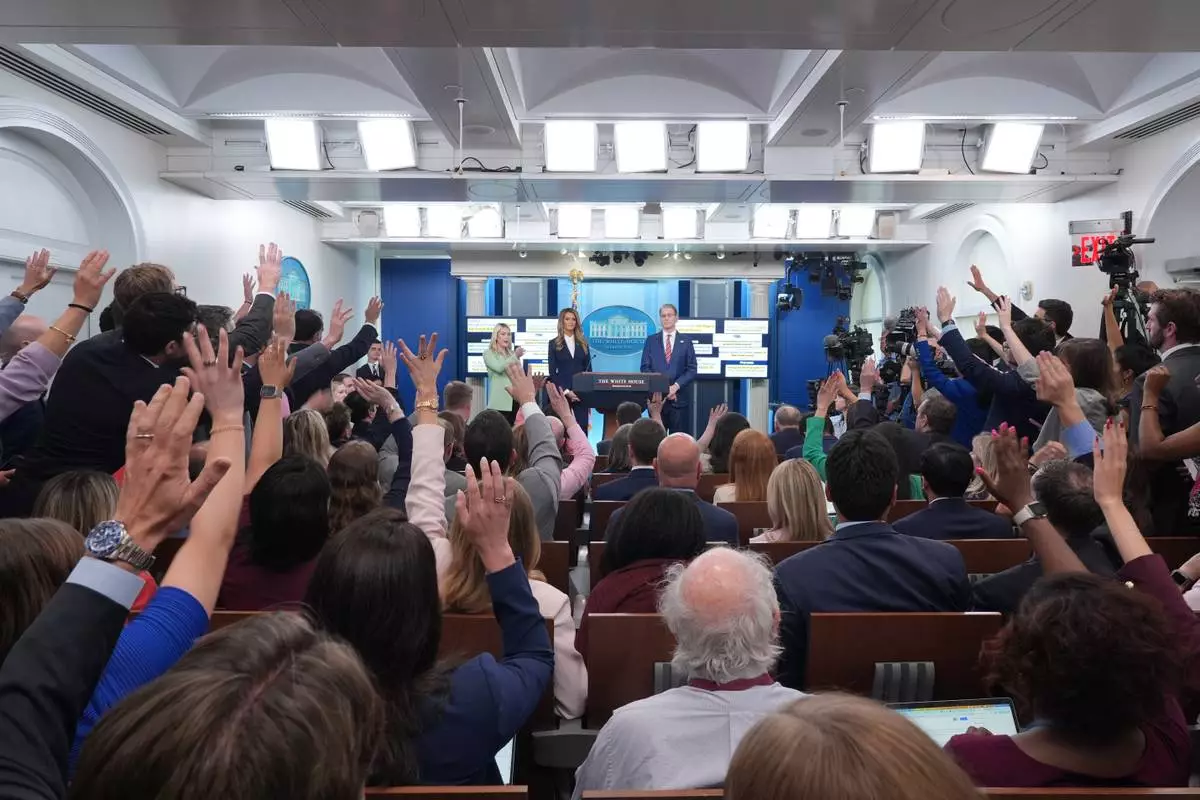
White House press secretary Karoline Leavitt , Small Business Administration administrator Kelly Loeffler and Treasury Secretary Scott Bessent speak with reporters in the James Brady Press Briefing Room at the White House, Wednesday, April 15, 2026, in Washington. (AP Photo/Alex Brandon)