China has introduced a set of measures to enhance the implementation of its fair competition review regulations in an effort to ensure a level playing field for all market players and build a unified national market free from regional protectionist practices.
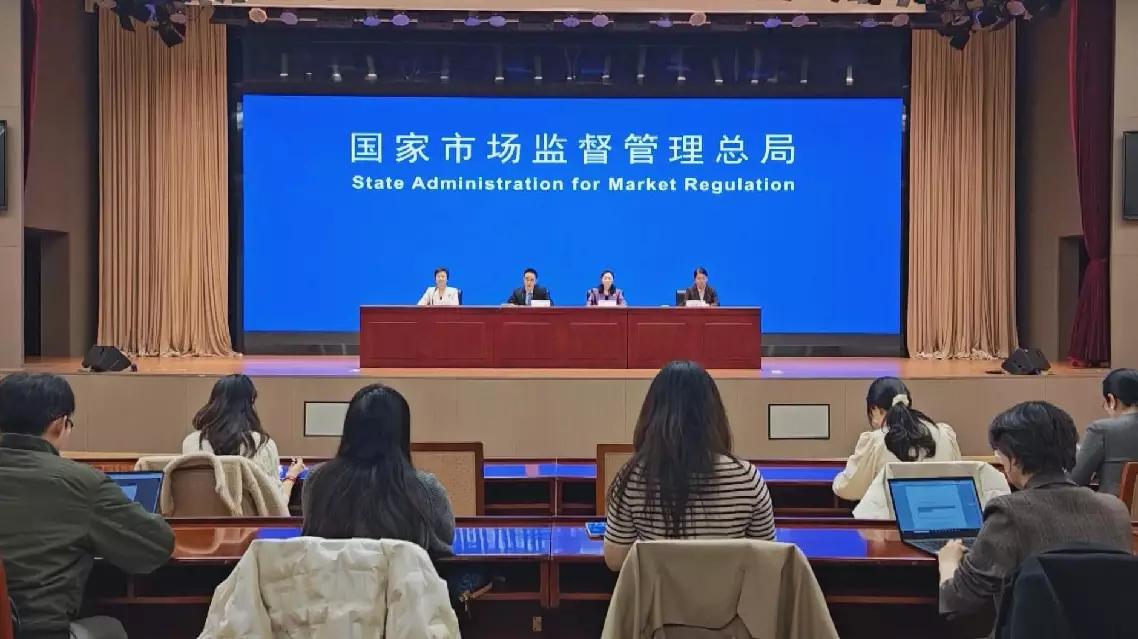
The 48-article measures, due to take effect on April 20, provide details on the overall review requirements, departmental responsibilities, review standards, mechanisms and procedures, as well as supervisory measures, the State Administration for Market Regulation (SAMR) said on Tuesday.
Regulations on fair competition review were enacted last year to prevent authorities from rolling out measures that exclude or restrict market competition.
When formulating laws, rules and policies related to business activities, the authorities will be required to conduct such reviews over aspects including market entry or exit, the free flow of goods, and business operation costs and practices, according to the regulations.
The administration also announced plans on Tuesday to launch initiatives aimed at enhancing its fair competition review capabilities, seeking to eliminate practices that undermine a unified national market and fair competition.
"The implementation measures draw on practical experience, breaking down the regulation that prohibits restricting the operation, purchase, or use of goods or services from specific operators into five specific prohibited actions, including explicit or implicit limitations on transactions; restricting the ownership form, registration location, or setting other unreasonable conditions; establishing unreasonable project library or catalog lists; and limiting transactions through rewarding or punitive measures. These actions cover the main types of anti-competitive practices identified in current regulatory enforcement," said Zhou Zhigao, director of the Competition Coordination Department at SAMR, at a press conference in Beijing.
China unveils new measures to bolster fair market competition
The International Monetary Fund (IMF) has lowered its global economic growth forecasts for 2026 to 3.1 percent in the World Economic Outlook (WEO) report published on Tuesday, while keeping its projection for 2027 at 3.2 percent.
This marks a deceleration from the estimated 3.4 percent growth achieved in 2025. Before the outbreak of the Middle East conflict, the bottom-up forecasts for global growth would have been 3.4 percent in 2026 and 3.2 percent in 2027.
The forecast incorporates the impact of the war and assumes that it will be limited in duration, intensity and scope, with disruptions fading by mid-2026.
Under the reference forecast, global headline inflation is expected to increase to 4.4 percent in 2026 and decline to 3.7 percent in 2027.
If the conflict and the ensuing spike in oil prices last longer, global economic growth in 2026 will fall to 2.5 percent, while global inflation will climb to 5.4 percent, according to the report.
In extreme cases, global economic growth in 2026 could drop to two percent, the report warned.
To be specific, the U.S. economy is projected to grow by 2.3 percent in 2026 and 2.1 percent in 2027, although higher trade barriers introduced since April 2025 are expected to continue to weigh on activity.
In the euro area, growth is projected to decline from 1.4 percent in 2025 to 1.1 percent in 2026 before edging up to 1.2 percent in 2027. The forecasts for 2026 and 2027 are each 0.2 percentage point lower than those compared in the January 2026 WEO Update.
The 2026 growth forecast for emerging market and developing economies is revised down by 0.3 percentage point, to 3.9 percent, while the outlook for advanced economies remains broadly unchanged. With risks still tilted to the downside since the January 2026 WEO Update, the IMF suggested a comprehensive policy package combining domestic measures with coordinated international actions to strengthen resilience and foster adaptability.
It also stated in the report that "trade restrictions play a limited role in correcting imbalances but can worsen output," and urged countries to cooperate and take coordinated actions to restore stability to international economic relations.
IMF lowers global growth forecast for 2026 to 3.1 pct