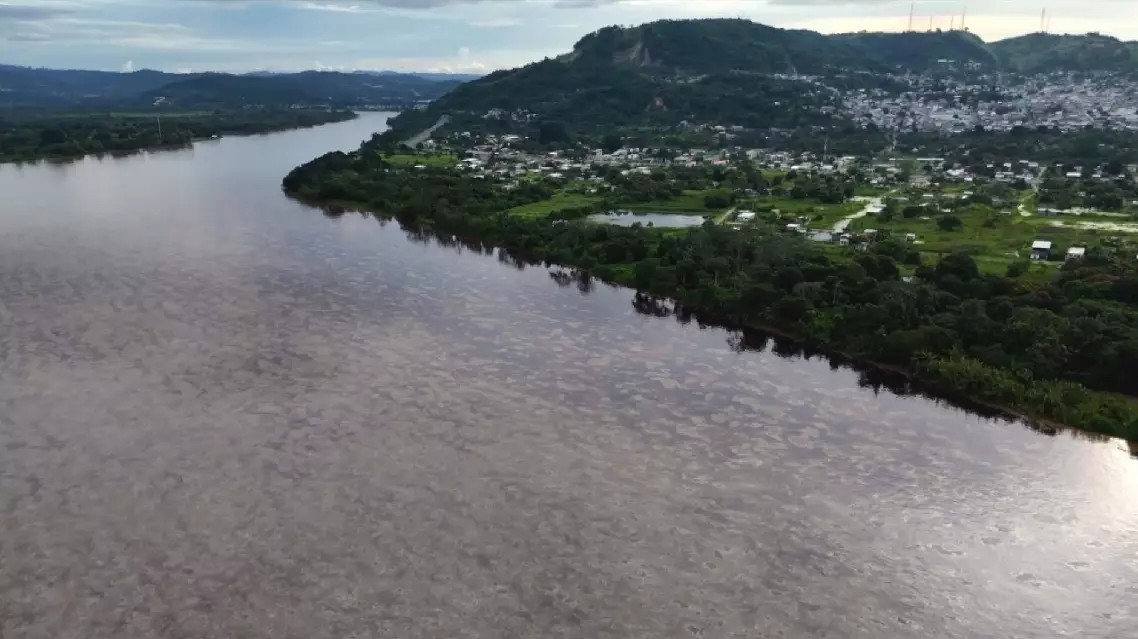
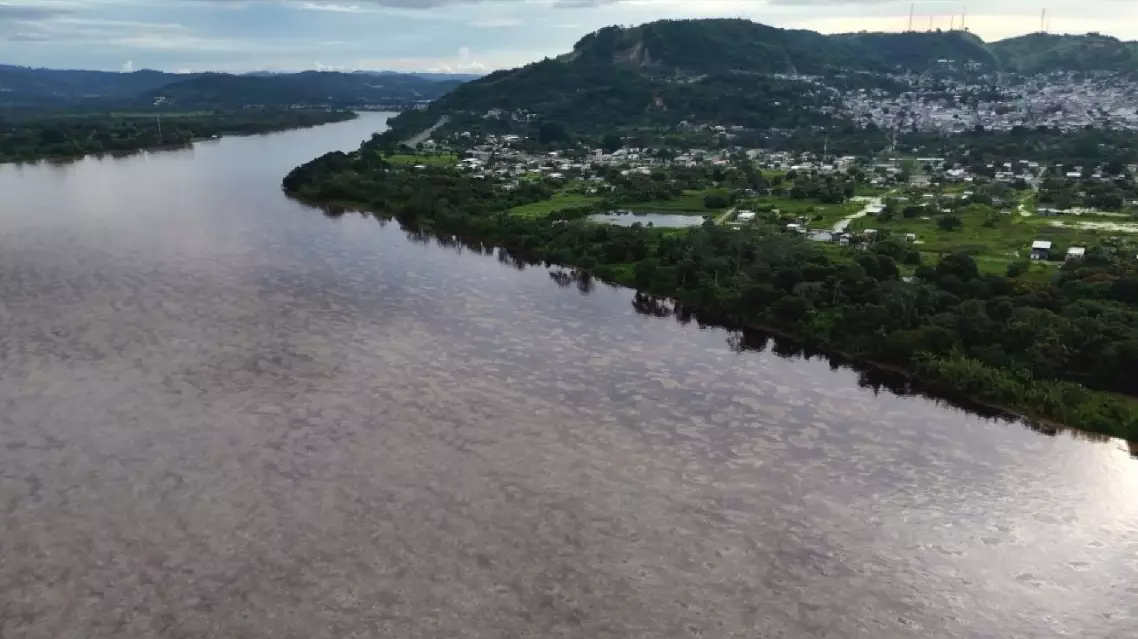
An oil spill in northwestern Ecuador is continuing to spread, causing an environmental crisis that is damaging the local ecosystem and impacting residents' lives.
The spill in the Canton Quininde area of Esmeraldas Province was caused by a landslide on Friday that ruptured a major oil pipeline, according to a statement from the State Petroleum Company of Ecuador.
Following the incident, Ecuadorian authorities declared an environmental emergency to minimize the damage and protect local residents' livelihoods.
Efforts to contain the spill are underway, but as of Monday, the spill has continued to spread.
An estimated 200,000 barrels of oil have been spilled so far, affecting an area of 50 kilometers and contaminating several rivers and even some coastal sea areas.
In addition, drinking water supplies to over 50,000 households in the affected area have been cut off due to the contamination. The ongoing oil spill has also led to widespread illness among locals, while fishermen have to suspend their activities.
"Children have been severely affected by the oil contamination, with a three-month-old infant having a fever. Our community is experiencing an outbreak of illness, with many people having sore throats. Fishermen have also been heavily impacted, as they are unable to go out to sea to fish," said Wilson Ganchile Tenorio, a local official.
Meanwhile, the oil spill has forced many beaches in Esmeraldas to close, severely disrupting local tourism.
"It affects a lot of people severely. It's not just us—everyone in the travel industry has been impacted. The situation is awful right now," said Luis Carlos Guanapatin, a local vendor.
Ecuador's ongoing oil spill worsens environmental crisis, impacts communities
Ecuador's ongoing oil spill worsens environmental crisis, impacts communities
China attaches great importance to the development of China-Singapore relations, and is willing to maintain the momentum of high-level exchanges, promote practical cooperation in various fields, and enhance people-to-people exchanges with Singapore, Chinese Foreign Minister Wang Yi said on Monday.
Wang, also a member of the Political Bureau of the Communist Party of China Central Committee, made the remarks when holding talks with Singaporean Foreign Minister Vivian Balakrishnan in Beijing.
Noting that over the past year, under the strategic guidance of leaders of the two countries and joint efforts of both sides, the all-round high-quality and future-oriented partnership between China and Singapore has maintained a good momentum, Wang urged the two countries to continue to enhance strategic communication, increase mutual trust, jointly address the ever-emerging global challenges at present, and safeguard the overall situation of regional peace and stability.
Wang said that maintaining the security of global industrial and supply chains and the smooth flow of maritime navigation is in the common interests of the international community, and China is willing to continue to make efforts to this end.
Noting that Singapore is an important ASEAN member and will assume ASEAN's rotating presidency next year, Wang said China expects the Singaporean side to continue playing an active role in promoting China-ASEAN cooperation.
Balakrishnan said Singapore highly values its relations with China, adheres to the one-China policy, and firmly opposes "Taiwan independence."
Singapore is willing to maintain close high-level exchanges with China, promote practical cooperation in various fields, carry out key cooperation projects of both sides, and promote regional connectivity, he said.
Singapore is ready to promote greater progress in ASEAN-China comprehensive strategic partnership, support the Global Development Initiative, and uphold multilateralism and free trade, and is willing to work with China to make joint efforts in promoting world peace, development and prosperity, he added.
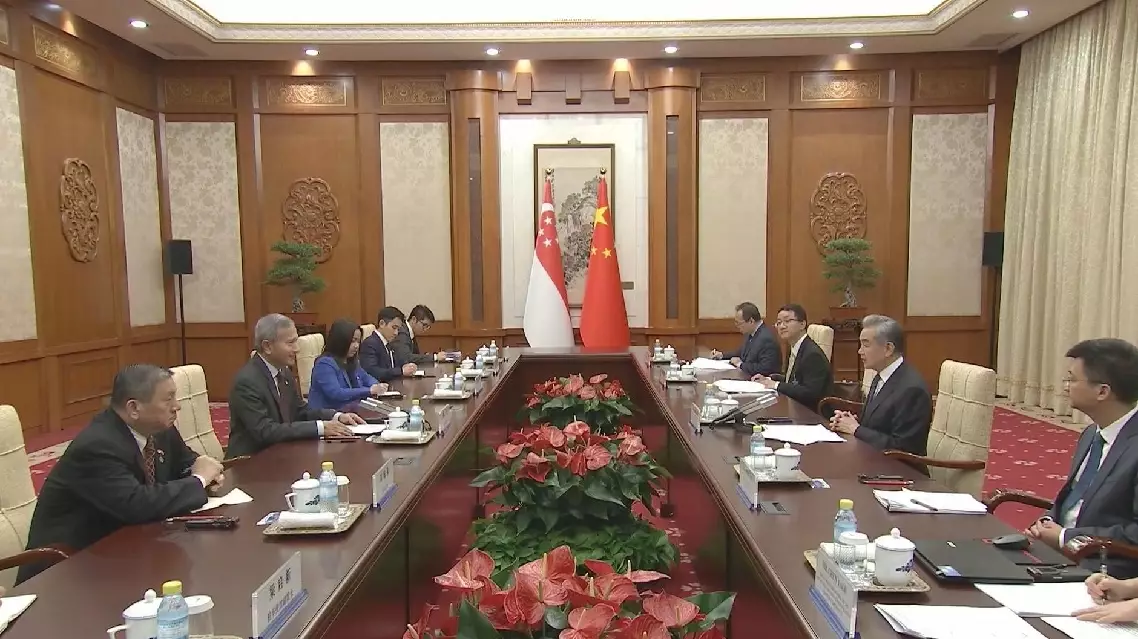
China ready to promote practical cooperation with Singapore: Chinese FM