Skip to Content Facebook Feature Image

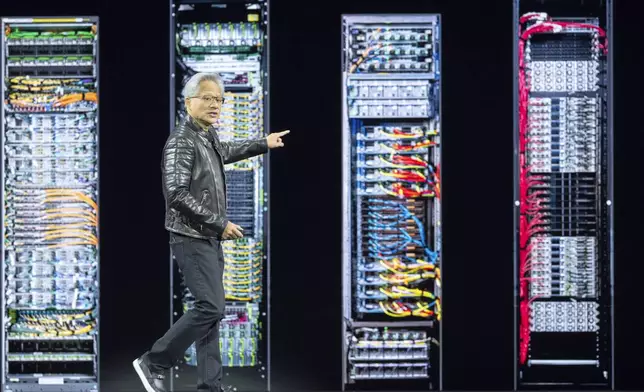
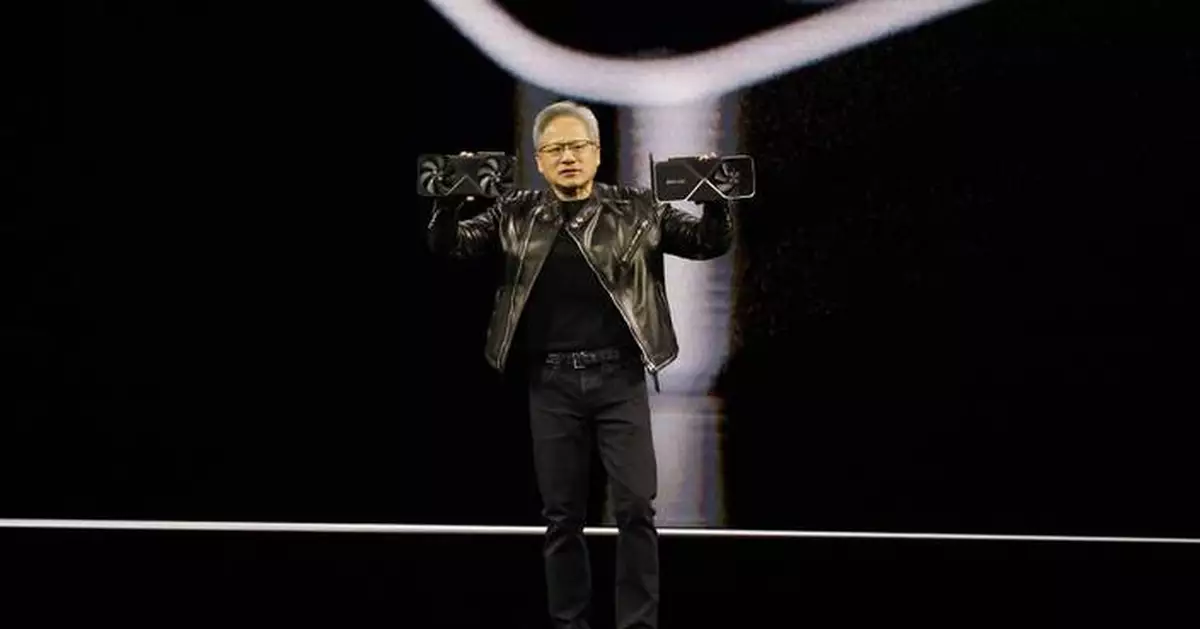
Nvidia CEO Jensen Huang unveils new Rubin AI chips at GTC 2025

News

Nvidia CEO Jensen Huang unveils new Rubin AI chips at GTC 2025
News

News

Nvidia CEO Jensen Huang unveils new Rubin AI chips at GTC 2025

2025-03-19 05:24 Last Updated At:05:31

Nvidia founder Jensen Huang kicked off the company’s artificial intelligence developer conference on Tuesday by telling a crowd of thousands that AI is going through “an inflection point.”

At GTC 2025 — dubbed the “Super Bowl of AI” — Huang focused his keynote on the company’s advancements in AI and his predictions for how the industry will move over the next few years. Demand for GPUs from the top four cloud service providers is surging, he said, adding that he expects Nvidia’s data center infrastructure revenue to hit $1 trillion by 2028.

More Images
CEO Jensen Huang talks during the keynote address of Nvidia GTC Tuesday, March 18, 2025, in San Jose, Calif. (AP Photo/Nic Coury)
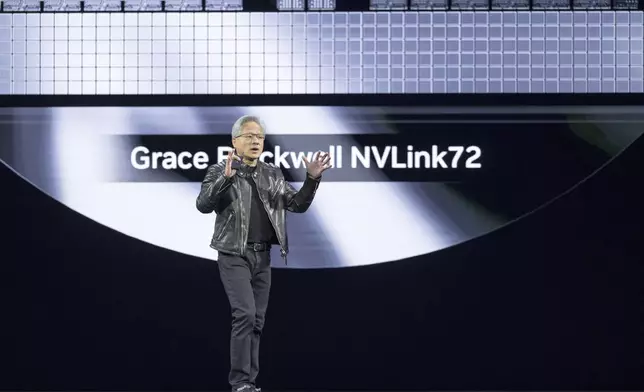
CEO Jensen Huang talks during the keynote address of Nvidia GTC Tuesday, March 18, 2025, in San Jose, Calif. (AP Photo/Nic Coury)
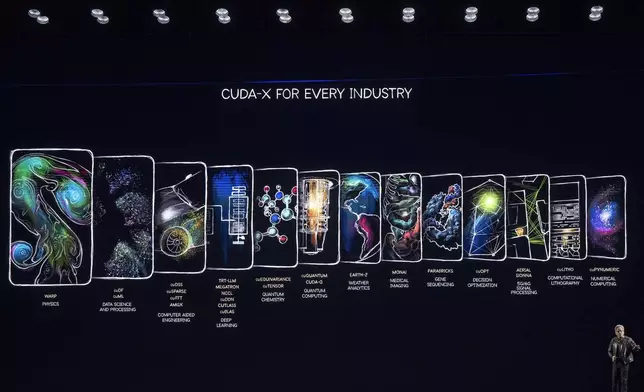
CEO Jensen Huang talks during the keynote address of Nvidia GTC Tuesday, March 18, 2025, in San Jose, Calif. (AP Photo/Nic Coury)
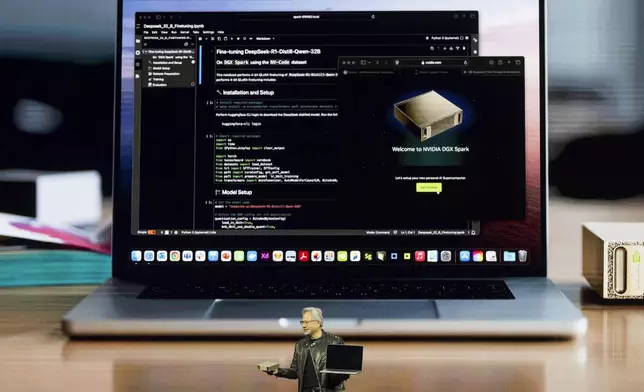
CEO Jensen Huang talks during the keynote address of Nvidia GTC Tuesday, March 18, 2025, in San Jose, Calif. (AP Photo/Nic Coury)
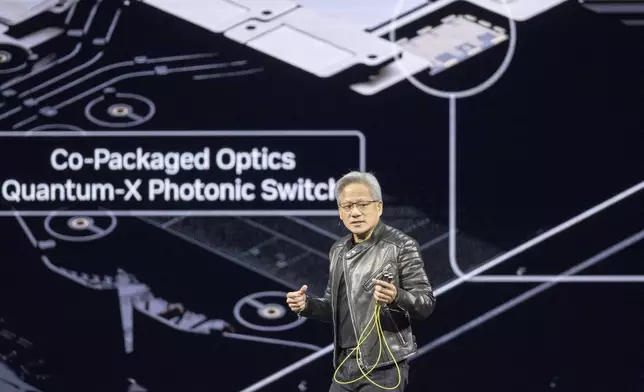
CEO Jensen Huang talks during the keynote address of Nvidia GTC Tuesday, March 18, 2025, in San Jose, Calif. (AP Photo/Nic Coury)
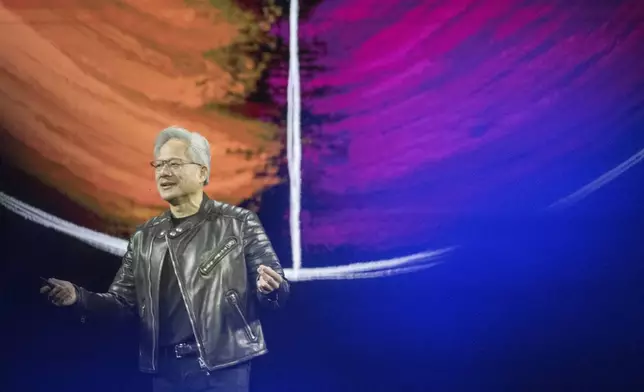
CEO Jensen Huang talks during the keynote address of Nvidia GTC Tuesday, March 18, 2025, in San Jose, Calif. (AP Photo/Nic Coury)

CEO Jensen Huang talks during the keynote address of Nvidia GTC Tuesday, March 18, 2025, in San Jose, Calif. (AP Photo/Nic Coury)

CEO Jensen Huang talks during the keynote address of Nvidia GTC Tuesday, March 18, 2025, in San Jose, Calif. (AP Photo/Nic Coury)

CEO Jensen Huang talks during the keynote address of Nvidia GTC Tuesday, March 18, 2025, in San Jose, Calif. (AP Photo/Nic Coury)

CEO Jensen Huang talks during the keynote address of Nvidia GTC Tuesday, March 18, 2025, in San Jose, Calif. (AP Photo/Nic Coury)

CEO Jensen Huang talks during the keynote address of Nvidia GTC Tuesday, March 18, 2025, in San Jose, Calif. (AP Photo/Nic Coury)

CEO Jensen Huang talks during the keynote address of Nvidia GTC Tuesday, March 18, 2025, in San Jose, Calif. (AP Photo/Nic Coury)

Nvidia CEO Jensen Huang delivers a keynote during the Nvidia GPU Technology Conference (GTC) in San Jose, Calif., Tuesday, March 18, 2025. (Stephen Lam /San Francisco Chronicle via AP)
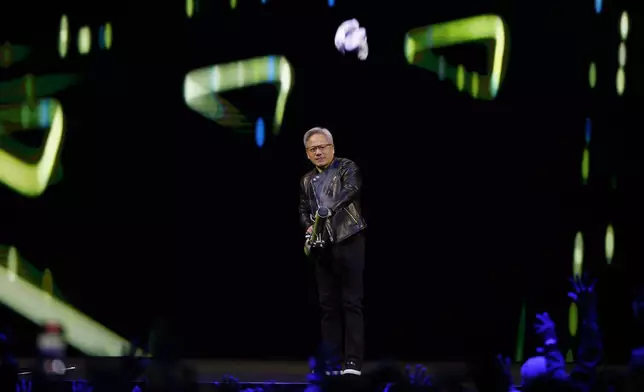
Nvidia CEO Jensen Huang delivers a keynote during the Nvidia GPU Technology Conference (GTC) in San Jose, Calif., Tuesday, March 18, 2025. (Stephen Lam /San Francisco Chronicle via AP)
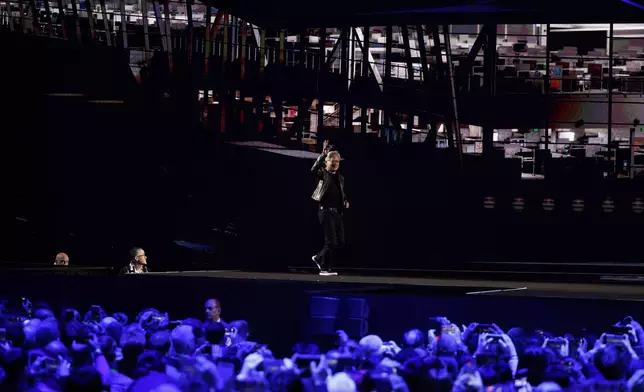
Nvidia CEO Jensen Huang gives away swag to attendees on stage during the Nvidia GPU Technology Conference (GTC) in San Jose, Calif., Tuesday, March 18, 2025. (Stephen Lam /San Francisco Chronicle via AP)
Nvidia CEO Jensen Huang gives away swag to attendees on stage during the Nvidia GPU Technology Conference (GTC) in San Jose, Calif., Tuesday, March 18, 2025. (Stephen Lam /San Francisco Chronicle via AP)
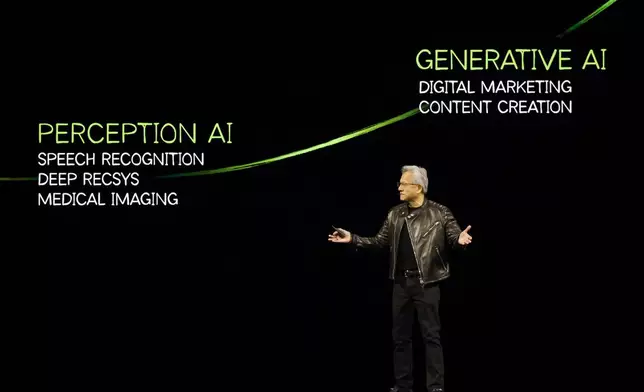
Nvidia CEO Jensen Huang delivers a keynote during the Nvidia GPU Technology Conference (GTC) in San Jose, Calif., Tuesday, March 18, 2025. (Stephen Lam /San Francisco Chronicle via AP)

Nvidia CEO Jensen Huang delivers a keynote during the Nvidia GPU Technology Conference (GTC) in San Jose, Calif., Tuesday, March 18, 2025. (Stephen Lam /San Francisco Chronicle via AP)

Nvidia CEO Jensen Huang delivers a keynote during the Nvidia GPU Technology Conference (GTC) in San Jose, Calif., Tuesday, March 18, 2025. (Stephen Lam /San Francisco Chronicle via AP)

Nvidia CEO Jensen Huang delivers a keynote during the Nvidia GPU Technology Conference (GTC) in San Jose, Calif., Tuesday, March 18, 2025. (Stephen Lam /San Francisco Chronicle via AP)

Nvidia CEO Jensen Huang speaks on stage during a keynote at the Nvidia GPU Technology Conference (GTC) in San Jose, Calif., Tuesday, March 18, 2025. (Stephen Lam /San Francisco Chronicle via AP)

Nvidia CEO Jensen Huang speaks on stage during a keynote at the Nvidia GPU Technology Conference (GTC) in San Jose, Calif., Tuesday, March 18, 2025. (Stephen Lam /San Francisco Chronicle via AP)

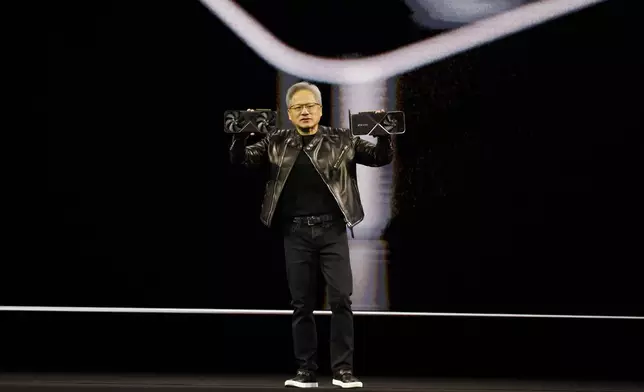
Huang’s highly anticipated announcement revealed more details around Nvidia’s next-generation graphics architectures: Blackwell Ultra and Vera Rubin -- named for the famous astronomer. Blackwell Ultra is slated for the second half of 2025, while its successor, the Rubin AI chip, is expected to launch in late 2026. Rubin Ultra will take the stage in 2027.

In a talk that lasted at over two hours, Huang outlined the “extraordinary progress" that AI has made. In 10 years, he said, AI graduated from perception and “computer vision” to generative AI, and now to agentic AI — or AI that has the ability to reason.

“AI understands the context, understands what we're asking. Understands the meaning of our request,” he said. “It now generates answers. Fundamentally changed how computing is done.”

The next wave of AI, he said, is already happening: robotics.

Robotics fueled by so-called “physical AI” can understand concepts like friction and inertia, cause and effect, and object permanence, he said.

“Each one of these phases, each one of these waves, opens up new market opportunities for all of us,” Huang said.

The key to that physical AI, and many of Huang’s other announcements, was the concept of using synthetic data generation — AI or computer-created data — for model training. AI needs digital experiences to learn from, he said, and it learns at speeds that make using humans in the training loops obsolete.

“There's only so much data and so much human demonstration we can perform,” he said. “This is the big breakthrough in the last couple of years: reinforcement learning."

Nvidia's tech, he said, can help with that type of learning for AI as it attacks or tries to engage in solving a problem, step by step.

To that end, Huang announced Isaac GR00T N1, an open-source foundation model designed to assist in developing humanoid robots. Isaac GR00T N1 would be paired with an updated Cosmos AI model to help develop simulated training data for robots.

Benjamin Lee, a professor of electrical and systems engineering at the University of Pennsylvania, said that the challenge in training robotics lies in data collection because training in the real world is time-consuming and expensive.

A simulated environment has long been a standard for reinforcement learning, Lee said, so researchers can test the effectiveness of their models.

“I think it’s really exciting. Providing a platform, and an open-source one, will allow more people to learn on reinforcement learning,” Lee said. “More researchers could start playing with this synthetic data — not just big players in the industry but also academic researchers.”

Huang introduced the Cosmos series of AI models, which can generate cost-efficient photo-realistic video that can then be used to train robots and other automated services, at CES earlier this year.

The open-source model, which works with the Nvidia’s Omniverse — a physics simulation tool — to create more realistic video, promises to be much cheaper than traditional forms of gathering training, such as having cars record road experiences or having people teach robots repetitive tasks.

U.S. car maker General Motors plans to integrate Nvidia technology in its new fleet of self-driving cars, Huang said. The two two companies will work together to build custom AI systems using both Omniverse and Cosmos to train AI manufacturing models.

The Nvidia head also unveiled the company’s Halos system, an AI solution built around automotive — especially autonomous driving — safety.

“We’re the first company in the world, I believe, to have every line of code safety assessed,” Huang said.

At the end of his talk, Huang an open-source physics engine for robotics simulation called Newton, which is being developed with Google DeepMind and Disney Research.

A small, boxy robot named Blue joined him on stage, popping up from a hatch in the floor. It beeped at Huang and followed his commands, standing beside him as he wrapped up his thoughts.

“The age of generalist robotics is here,” Huang said.
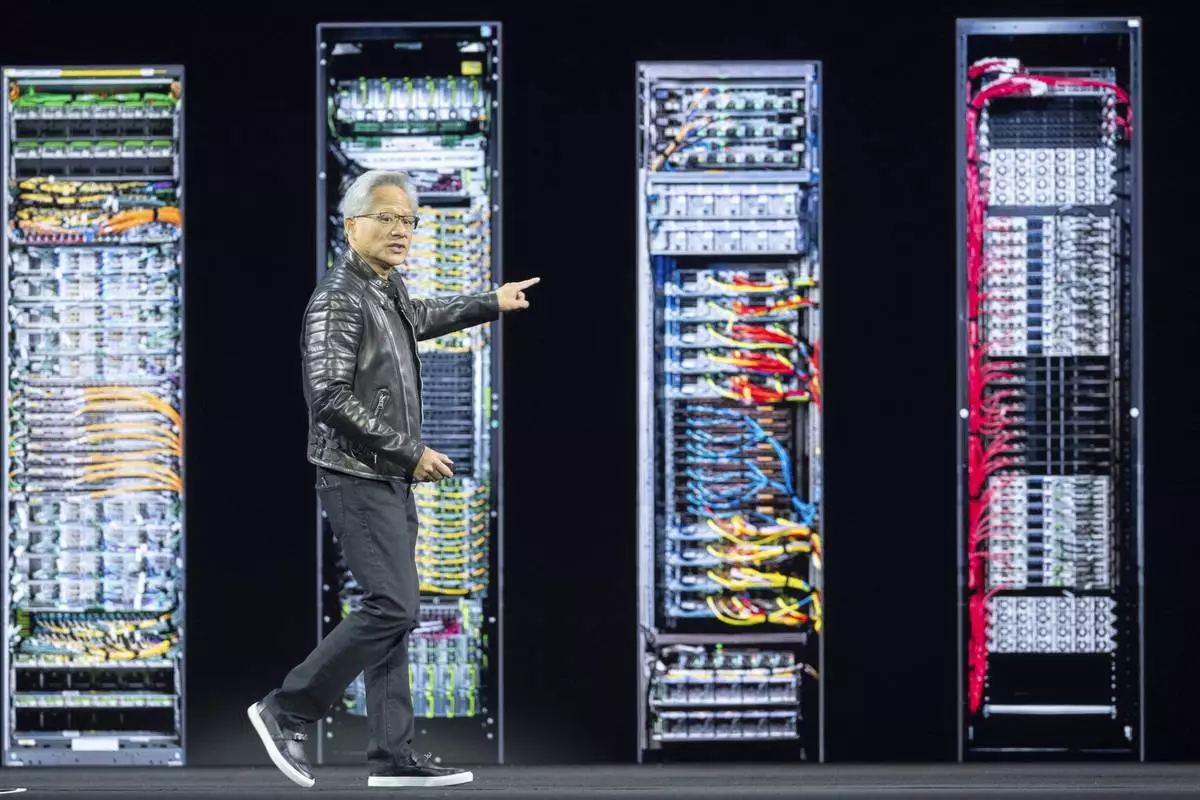
CEO Jensen Huang talks during the keynote address of Nvidia GTC Tuesday, March 18, 2025, in San Jose, Calif. (AP Photo/Nic Coury)
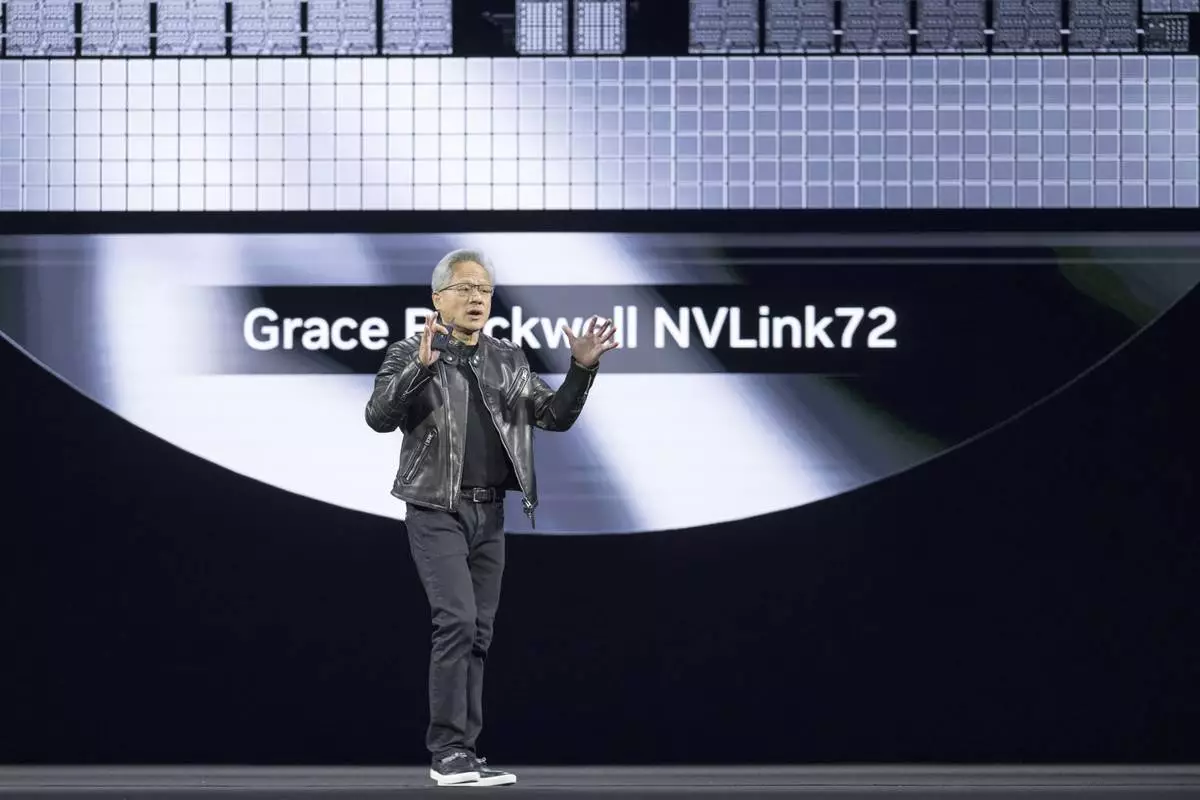
CEO Jensen Huang talks during the keynote address of Nvidia GTC Tuesday, March 18, 2025, in San Jose, Calif. (AP Photo/Nic Coury)
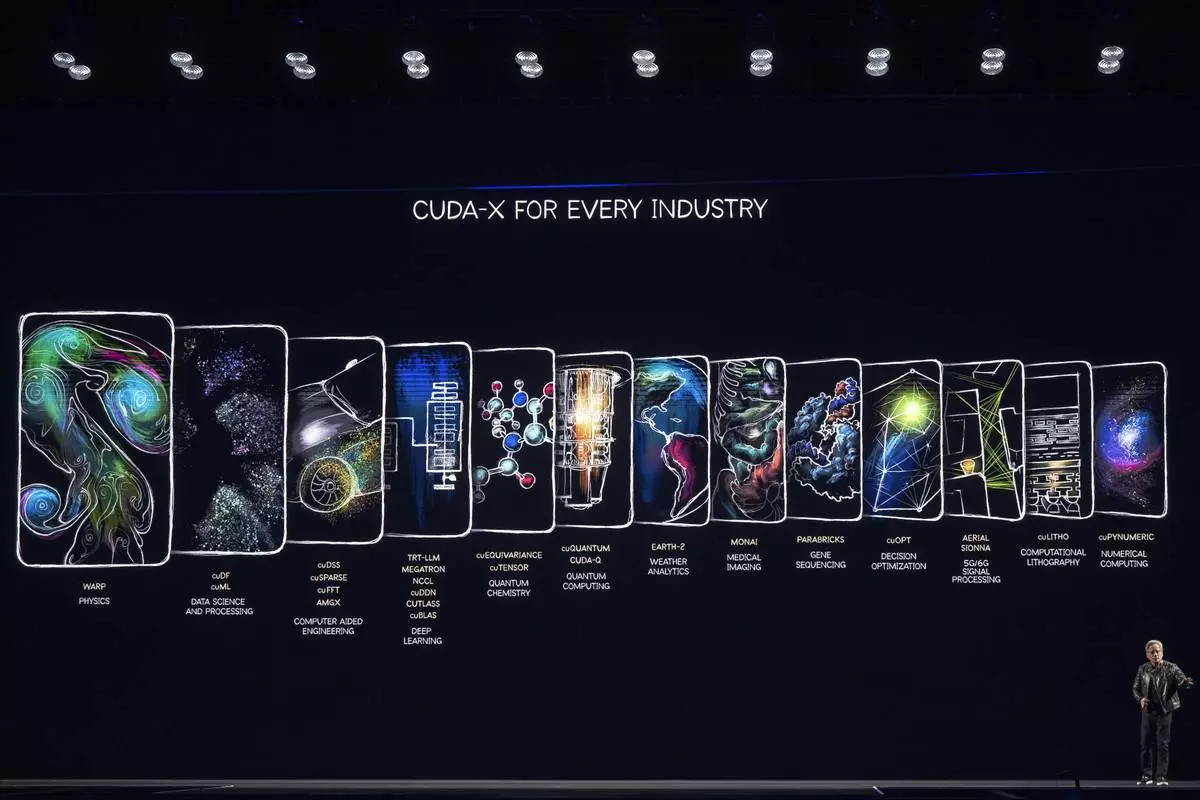
CEO Jensen Huang talks during the keynote address of Nvidia GTC Tuesday, March 18, 2025, in San Jose, Calif. (AP Photo/Nic Coury)
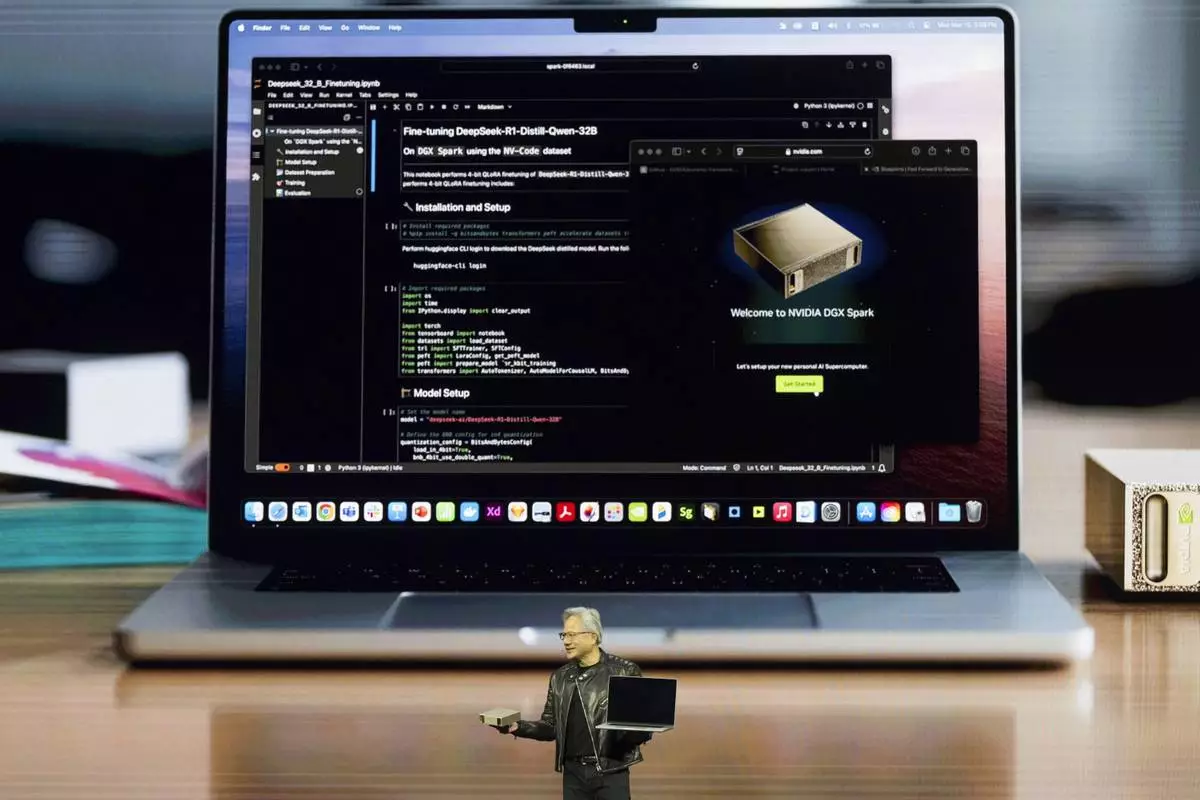
CEO Jensen Huang talks during the keynote address of Nvidia GTC Tuesday, March 18, 2025, in San Jose, Calif. (AP Photo/Nic Coury)
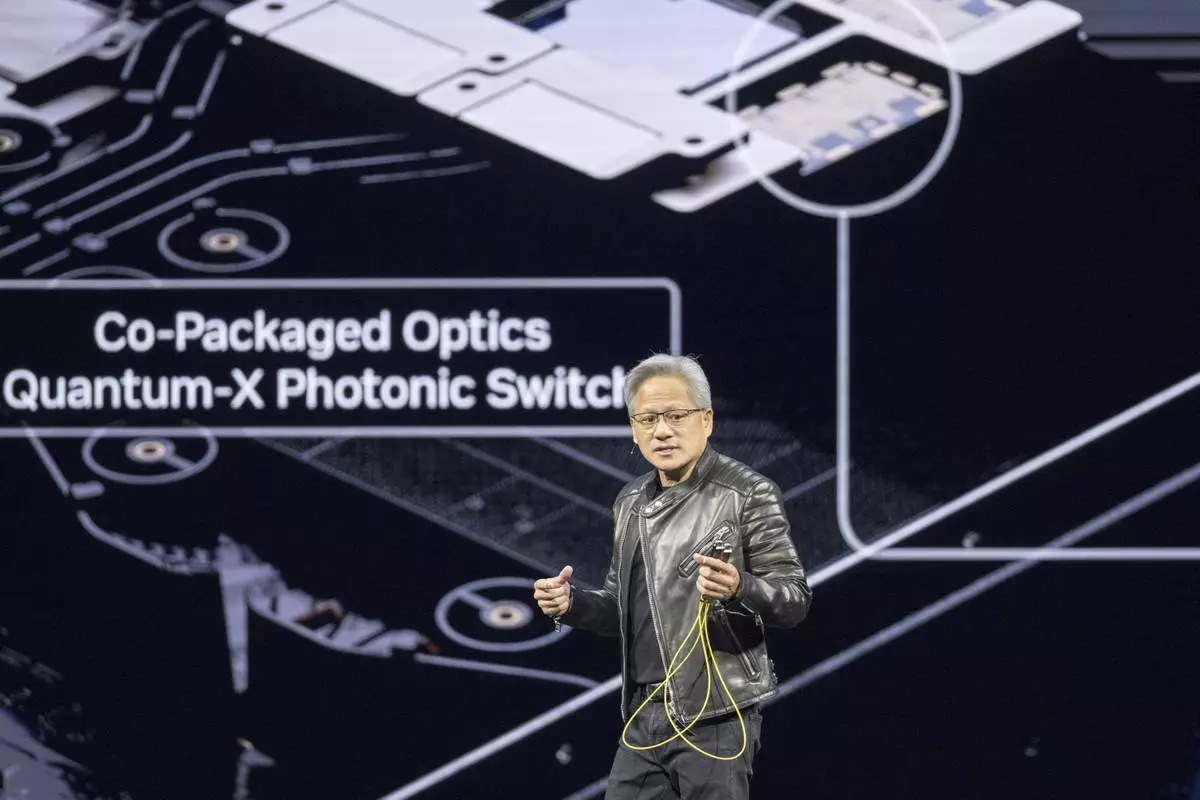
CEO Jensen Huang talks during the keynote address of Nvidia GTC Tuesday, March 18, 2025, in San Jose, Calif. (AP Photo/Nic Coury)
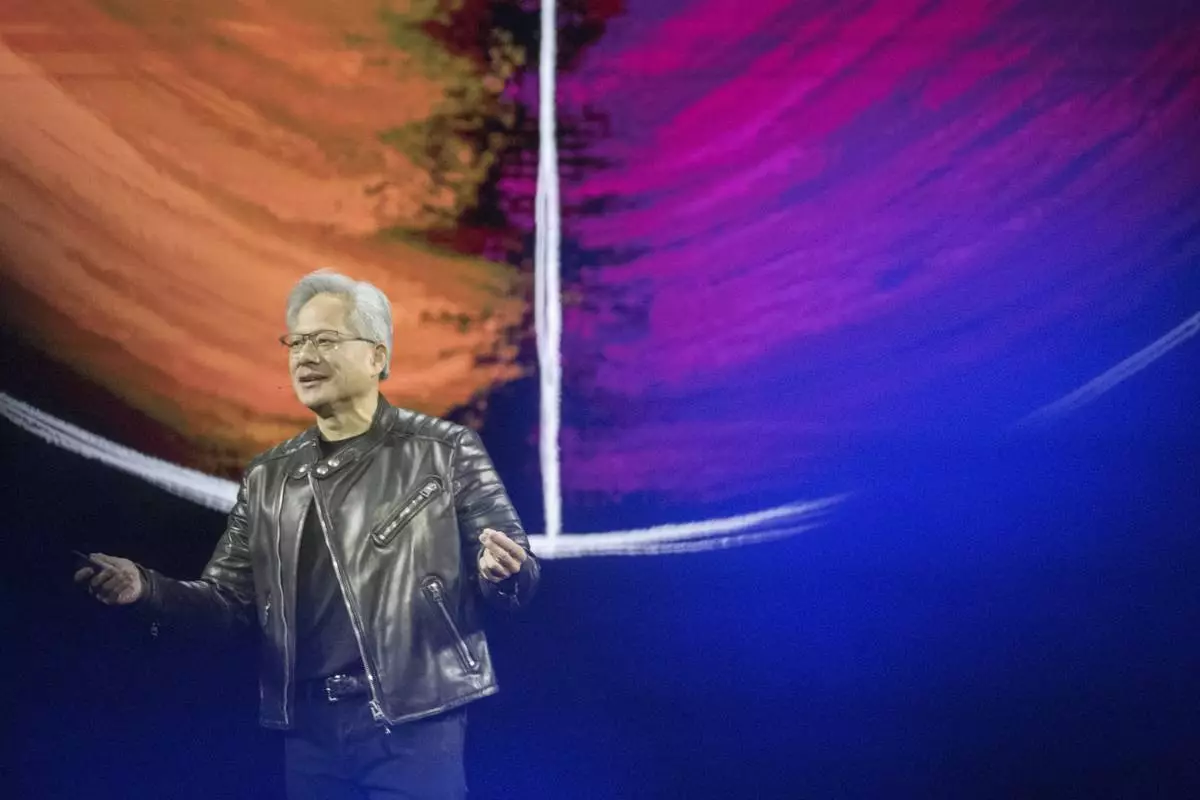
CEO Jensen Huang talks during the keynote address of Nvidia GTC Tuesday, March 18, 2025, in San Jose, Calif. (AP Photo/Nic Coury)
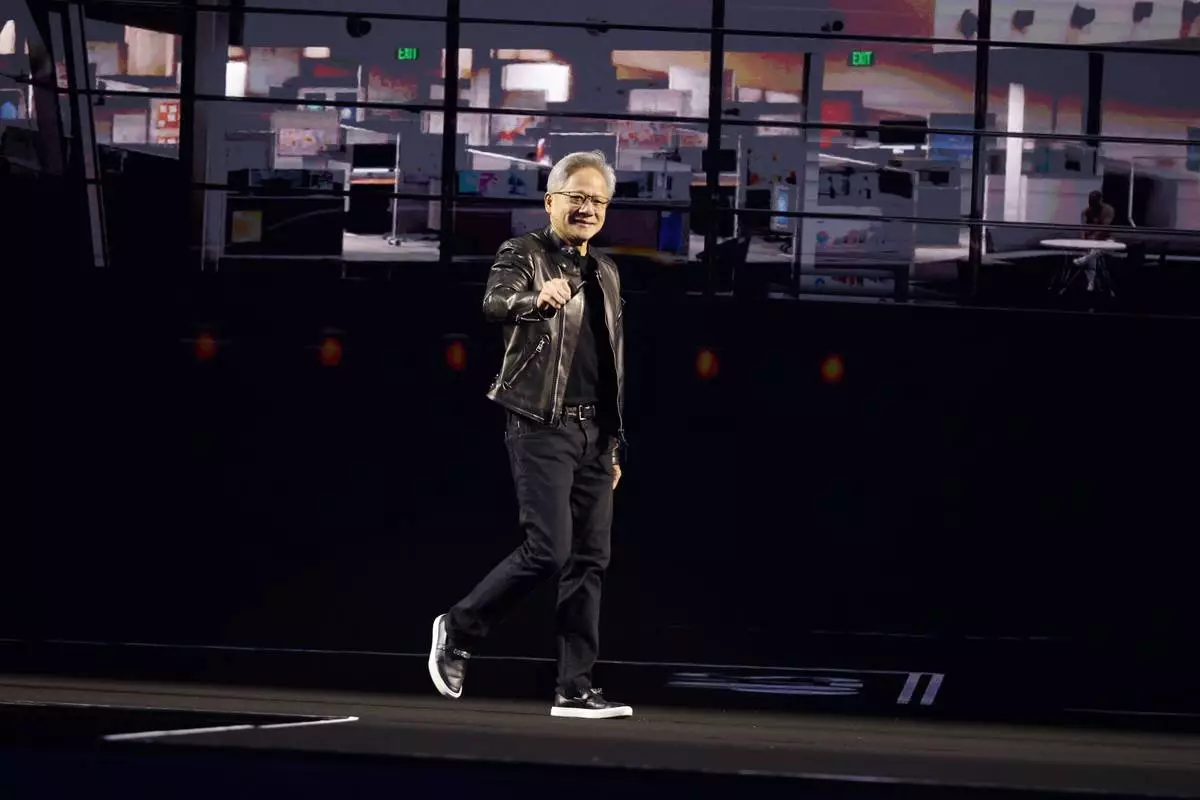
CEO Jensen Huang talks during the keynote address of Nvidia GTC Tuesday, March 18, 2025, in San Jose, Calif. (AP Photo/Nic Coury)

CEO Jensen Huang talks during the keynote address of Nvidia GTC Tuesday, March 18, 2025, in San Jose, Calif. (AP Photo/Nic Coury)

CEO Jensen Huang talks during the keynote address of Nvidia GTC Tuesday, March 18, 2025, in San Jose, Calif. (AP Photo/Nic Coury)

CEO Jensen Huang talks during the keynote address of Nvidia GTC Tuesday, March 18, 2025, in San Jose, Calif. (AP Photo/Nic Coury)

CEO Jensen Huang talks during the keynote address of Nvidia GTC Tuesday, March 18, 2025, in San Jose, Calif. (AP Photo/Nic Coury)

CEO Jensen Huang talks during the keynote address of Nvidia GTC Tuesday, March 18, 2025, in San Jose, Calif. (AP Photo/Nic Coury)

Nvidia CEO Jensen Huang delivers a keynote during the Nvidia GPU Technology Conference (GTC) in San Jose, Calif., Tuesday, March 18, 2025. (Stephen Lam /San Francisco Chronicle via AP)
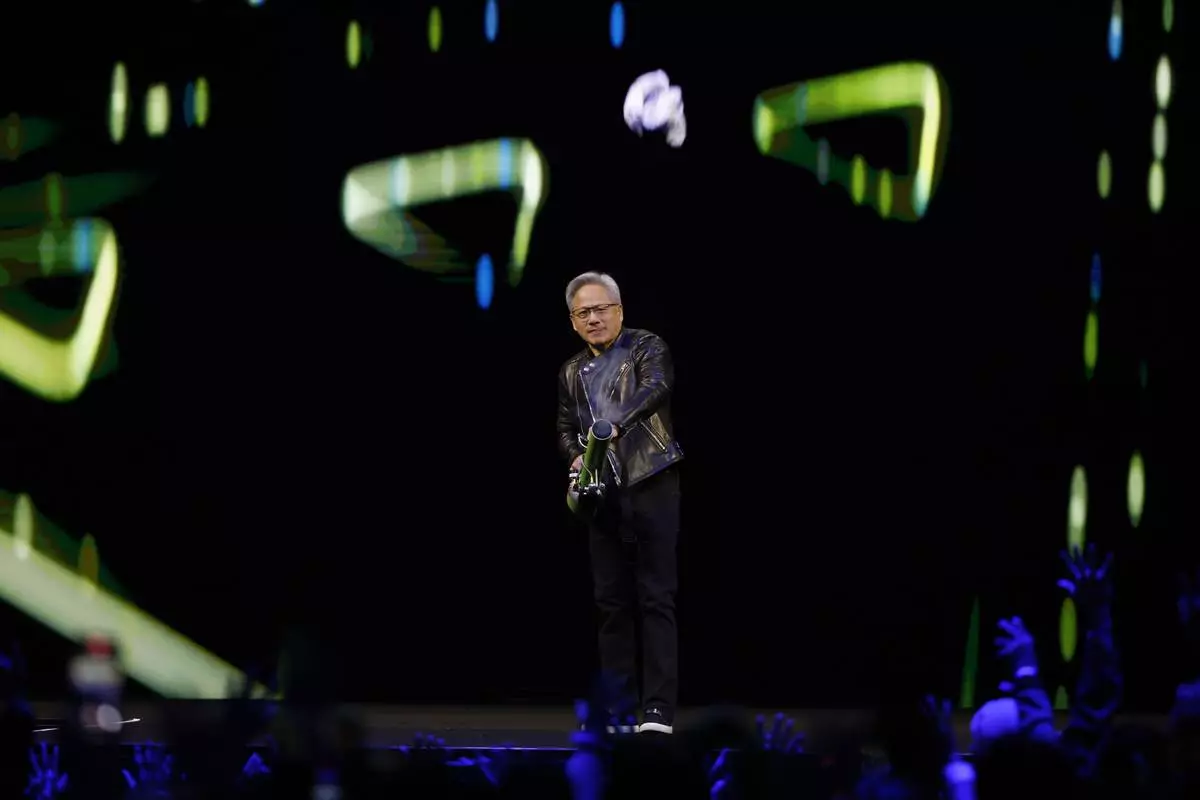
Nvidia CEO Jensen Huang delivers a keynote during the Nvidia GPU Technology Conference (GTC) in San Jose, Calif., Tuesday, March 18, 2025. (Stephen Lam /San Francisco Chronicle via AP)
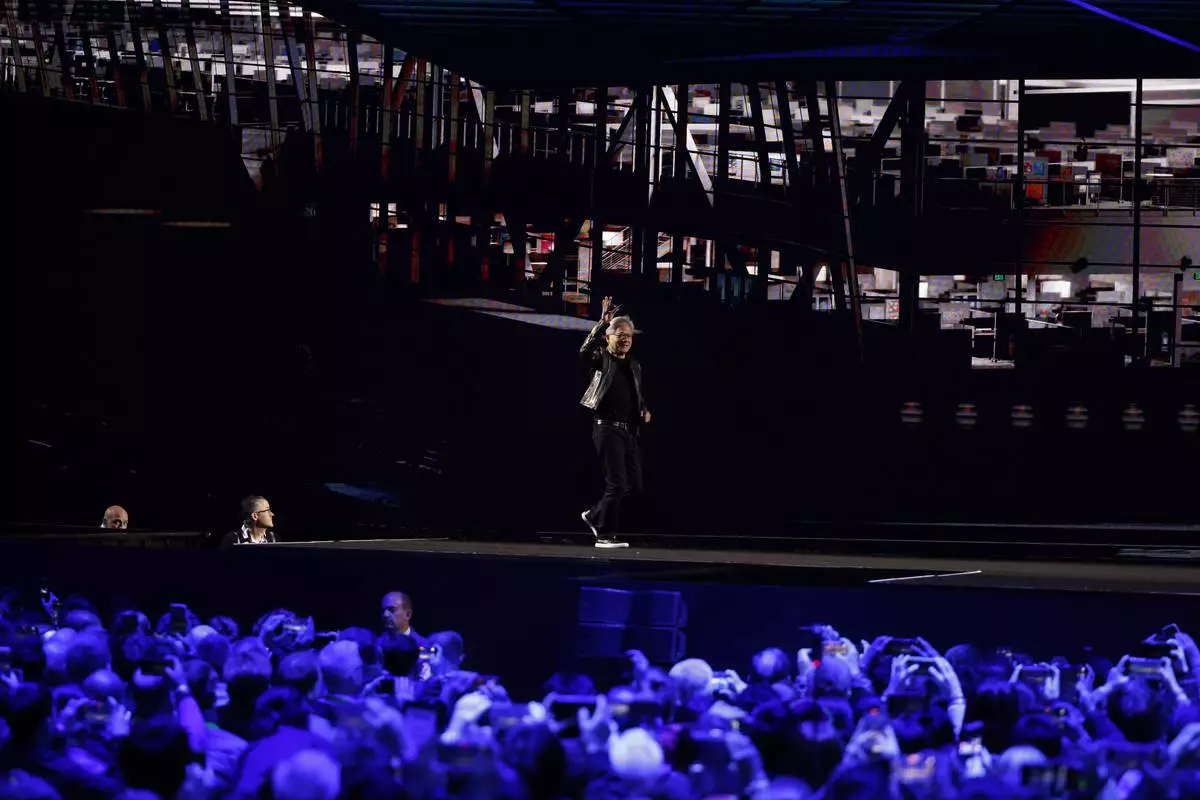
Nvidia CEO Jensen Huang gives away swag to attendees on stage during the Nvidia GPU Technology Conference (GTC) in San Jose, Calif., Tuesday, March 18, 2025. (Stephen Lam /San Francisco Chronicle via AP)
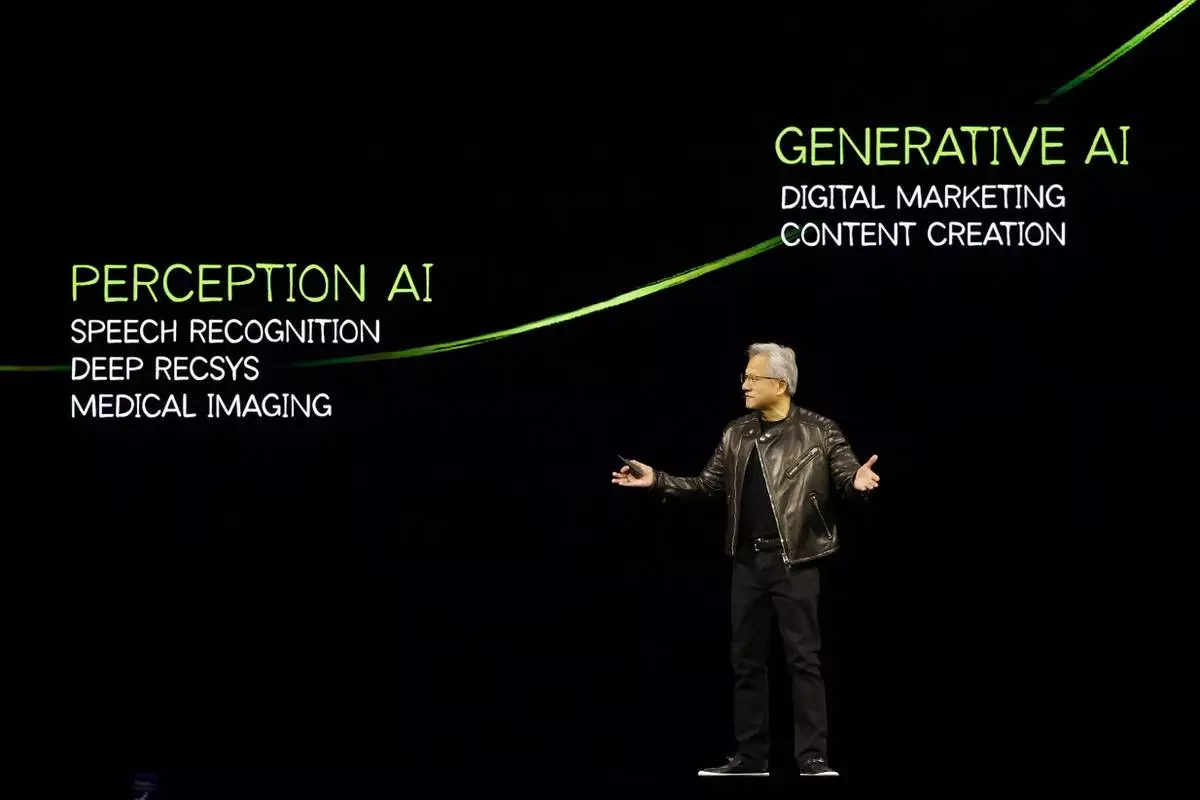
Nvidia CEO Jensen Huang gives away swag to attendees on stage during the Nvidia GPU Technology Conference (GTC) in San Jose, Calif., Tuesday, March 18, 2025. (Stephen Lam /San Francisco Chronicle via AP)
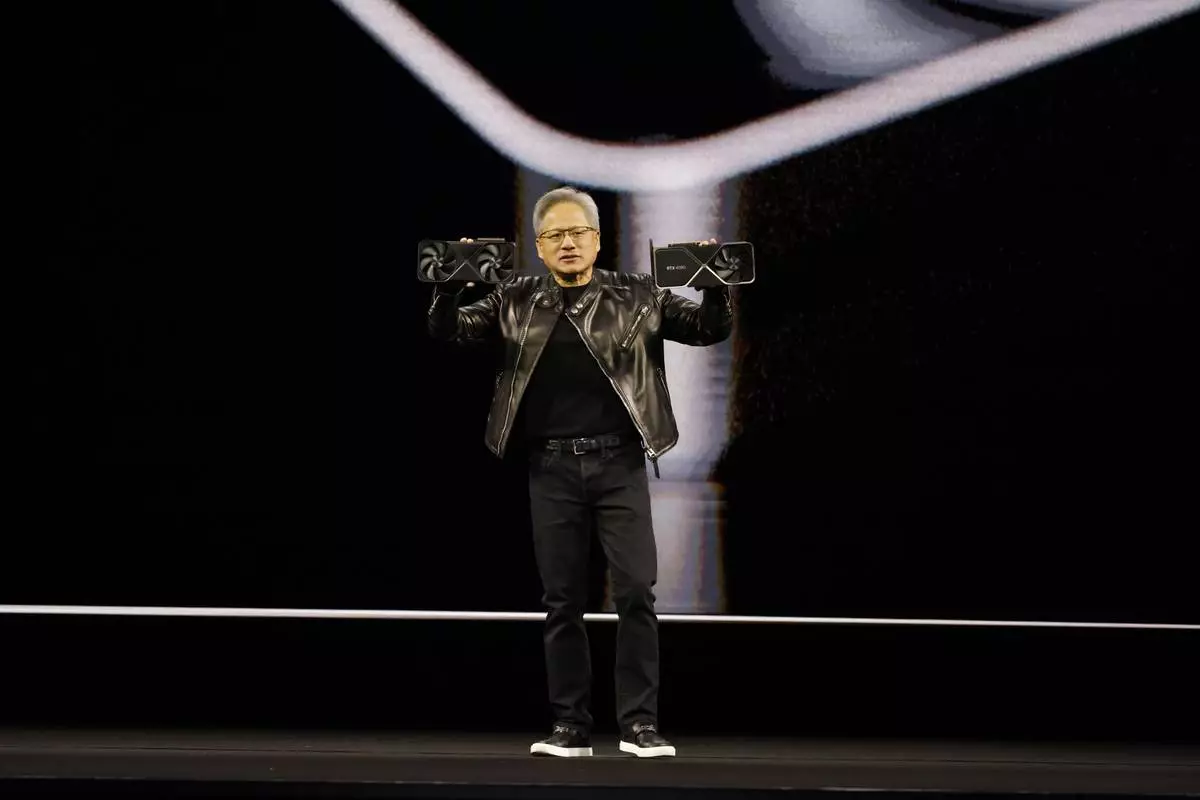
Nvidia CEO Jensen Huang delivers a keynote during the Nvidia GPU Technology Conference (GTC) in San Jose, Calif., Tuesday, March 18, 2025. (Stephen Lam /San Francisco Chronicle via AP)

Nvidia CEO Jensen Huang delivers a keynote during the Nvidia GPU Technology Conference (GTC) in San Jose, Calif., Tuesday, March 18, 2025. (Stephen Lam /San Francisco Chronicle via AP)

Nvidia CEO Jensen Huang delivers a keynote during the Nvidia GPU Technology Conference (GTC) in San Jose, Calif., Tuesday, March 18, 2025. (Stephen Lam /San Francisco Chronicle via AP)

Nvidia CEO Jensen Huang delivers a keynote during the Nvidia GPU Technology Conference (GTC) in San Jose, Calif., Tuesday, March 18, 2025. (Stephen Lam /San Francisco Chronicle via AP)

Nvidia CEO Jensen Huang speaks on stage during a keynote at the Nvidia GPU Technology Conference (GTC) in San Jose, Calif., Tuesday, March 18, 2025. (Stephen Lam /San Francisco Chronicle via AP)

Nvidia CEO Jensen Huang speaks on stage during a keynote at the Nvidia GPU Technology Conference (GTC) in San Jose, Calif., Tuesday, March 18, 2025. (Stephen Lam /San Francisco Chronicle via AP)

LAS VEGAS (AP) — With the start of the New Year squarely behind us, it's once again time for the annual CES trade show to shine a spotlight on the latest tech companies plan on offering in 2026.

The multi-day event, organized by the Consumer Technology Association, kicks off this week in Las Vegas, where advances across industries like robotics, healthcare, vehicles, wearables, gaming and more are set to be on display.

Artificial intelligence will be anchored in nearly everything, again, as the tech industry explores offerings consumers will want to buy. AI industry heavyweight Jensen Huang will be taking the stage to showcase Nvidia's latest productivity solutions, and AMD CEO Lisa Su will keynote to “share her vision for delivering future AI solutions.” Expect AI to come up in other keynotes, like from Lenovo's CEO, Yuanqing Yang.

The AI industry is out in full force tackling issues in healthcare, with a particular emphasis on changing individual health habits to treat conditions — such as Beyond Medicine's prescription app focused on a particular jaw disorder — or addressing data shortages in subjects such as breast milk production.

Expect more unveils around domestic robots too. Korean tech giant LG already has announced it will show off a helper bot named “ CLOiD,” which allegedly will handle a range of household tasks. Hyundai also is announcing a major push on robotics and manufacturing advancements. Extended reality, basically a virtual training ground for robots and other physical AI, is also in the buzz around CES.

In 2025, more than 141,000 attendees from over 150 countries, regions, and territories attended the CES. Organizers expect around the same numbers for this year’s show, with more than 3,500 exhibitors across the floor space this week.

The AP spoke with CTA Executive Chair and CEO Gary Shapiro about what to expect for CES 2026. The conversation has been edited for clarity and length.

Well, we have a lot at this year's show.

Obviously, using AI in a way that makes sense for people. We’re seeing a lot in robotics. More robots and humanoid-looking robots than we’ve ever had before.

We also see longevity in health, there’s a lot of focus on that. All sorts of wearable devices for almost every part of the body. Technology is answering healthcare’s gaps very quickly and that’s great for everyone.

Mobility is big with not only self-driving vehicles but also with boats and drones and all sorts of other ways of getting around. That’s very important.

And of course, content creation is always very big.

You are seeing humanoid robots right now. It sometimes works, sometimes doesn’t.

But yes, there are more and more humanoid robots. And when we talk about CES 5, 10, 15, 20 years now, we’re going to see an even larger range of humanoid robots.

Obviously, last year we saw a great interest in them. The number one product of the show was a little robotic dog that seems so life-like and fun, and affectionate for people that need that type of affection.

But of course, the humanoid robots are just one aspect of that industry. There’s a lot of specialization in robot creation, depending on what you want the robot to do. And robots can do many things that humans can’t.

AI is the future of creativity.

Certainly AI itself may be arguably creative, but the human mind is so unique that you definitely get new ideas that way. So I think the future is more of a hybrid approach, where content creators are working with AI to craft variations on a theme or to better monetize what they have to a broader audience.

We’re seeing all sorts of different devices that are implementing AI. But we have a special focus at this show, for the first time, on the disability community. Verizon set this whole stage up where we have all different ways of taking this technology and having it help people with disabilities and older people.

Well, there’s definitely no bubble when it comes to what AI can do. And what AI can do is perform miracles and solve fundamental human problems in food production and clean air and clean water. Obviously in healthcare, it’s gonna be overwhelming.

But this was like the internet itself. There was a lot of talk about a bubble, and there actually was a bubble. The difference is that in late 1990s there were basically were no revenue models. Companies were raising a lot of money with no plans for revenue.

These AI companies have significant revenues today, and companies are investing in it.

What I’m more concerned about, honestly, is not Wall Street and a bubble. Others can be concerned about that. I’m concerned about getting enough energy to process all that AI. And at this show, for the first time, we have a Korean company showing the first ever small-scale nuclear-powered energy creation device. We expect more and more of these people rushing to fill this gap because we need the energy, we need it clean and we need a kind of all-of-the-above solution.

A Coro breastfeeding monitor is pictured at a Coroflo booth during the CES Unveiled tech show Sunday, Jan. 4, 2026, in Las Vegas. (AP Photo/Abbie Parr)

A Coro breastfeeding monitor is pictured at a Coroflo booth during the CES Unveiled tech show Sunday, Jan. 4, 2026, in Las Vegas. (AP Photo/Abbie Parr)

Yonbo X1 robots are pictured at the X-Orgin booth during the CES Unveiled tech show Sunday, Jan. 4, 2026, in Las Vegas. (AP Photo/Abbie Parr)

Yonbo X1 robots are pictured at the X-Orgin booth during the CES Unveiled tech show Sunday, Jan. 4, 2026, in Las Vegas. (AP Photo/Abbie Parr)

A Tombot robotic puppy is pictured at a Tombot booth during the CES Unveiled tech show Sunday, Jan. 4, 2026, in Las Vegas. (AP Photo/Abbie Parr)

A Tombot robotic puppy is pictured at a Tombot booth during the CES Unveiled tech show Sunday, Jan. 4, 2026, in Las Vegas. (AP Photo/Abbie Parr)

People arrive at the CES Unveiled tech show Sunday, Jan. 4, 2026, in Las Vegas. (AP Photo/Abbie Parr)

People arrive at the CES Unveiled tech show Sunday, Jan. 4, 2026, in Las Vegas. (AP Photo/Abbie Parr)

Recommended Articles