Skip to Content Facebook Feature Image

What to expect from CES 2026, the annual show of all things tech?

TECH

What to expect from CES 2026, the annual show of all things tech?
TECH

TECH

What to expect from CES 2026, the annual show of all things tech?

2026-01-05 13:31 Last Updated At:14:50

LAS VEGAS (AP) — With the start of the New Year squarely behind us, it's once again time for the annual CES trade show to shine a spotlight on the latest tech companies plan on offering in 2026.

The multi-day event, organized by the Consumer Technology Association, kicks off this week in Las Vegas, where advances across industries like robotics, healthcare, vehicles, wearables, gaming and more are set to be on display.

More Images
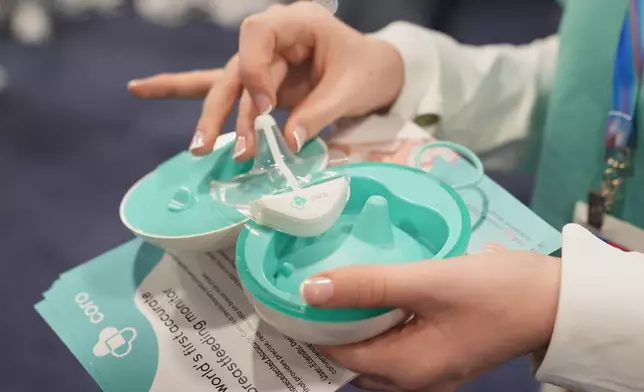
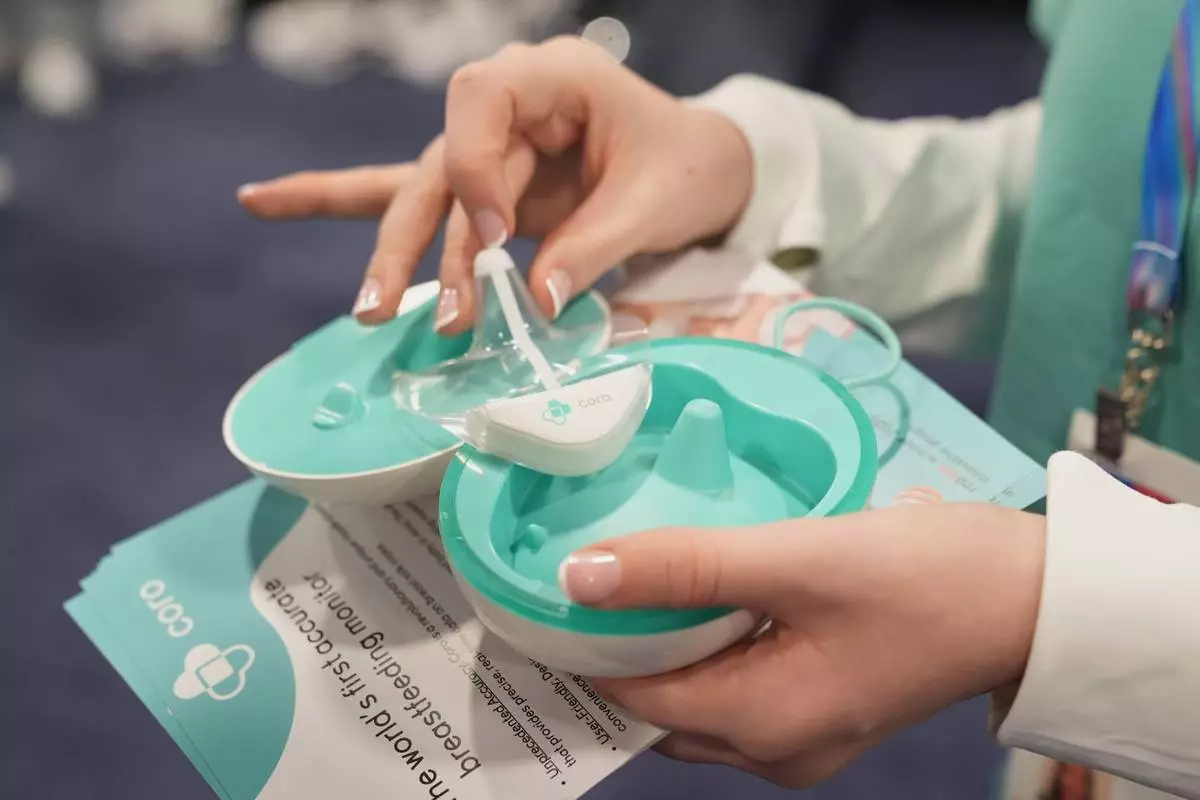
A Coro breastfeeding monitor is pictured at a Coroflo booth during the CES Unveiled tech show Sunday, Jan. 4, 2026, in Las Vegas. (AP Photo/Abbie Parr)

A Coro breastfeeding monitor is pictured at a Coroflo booth during the CES Unveiled tech show Sunday, Jan. 4, 2026, in Las Vegas. (AP Photo/Abbie Parr)

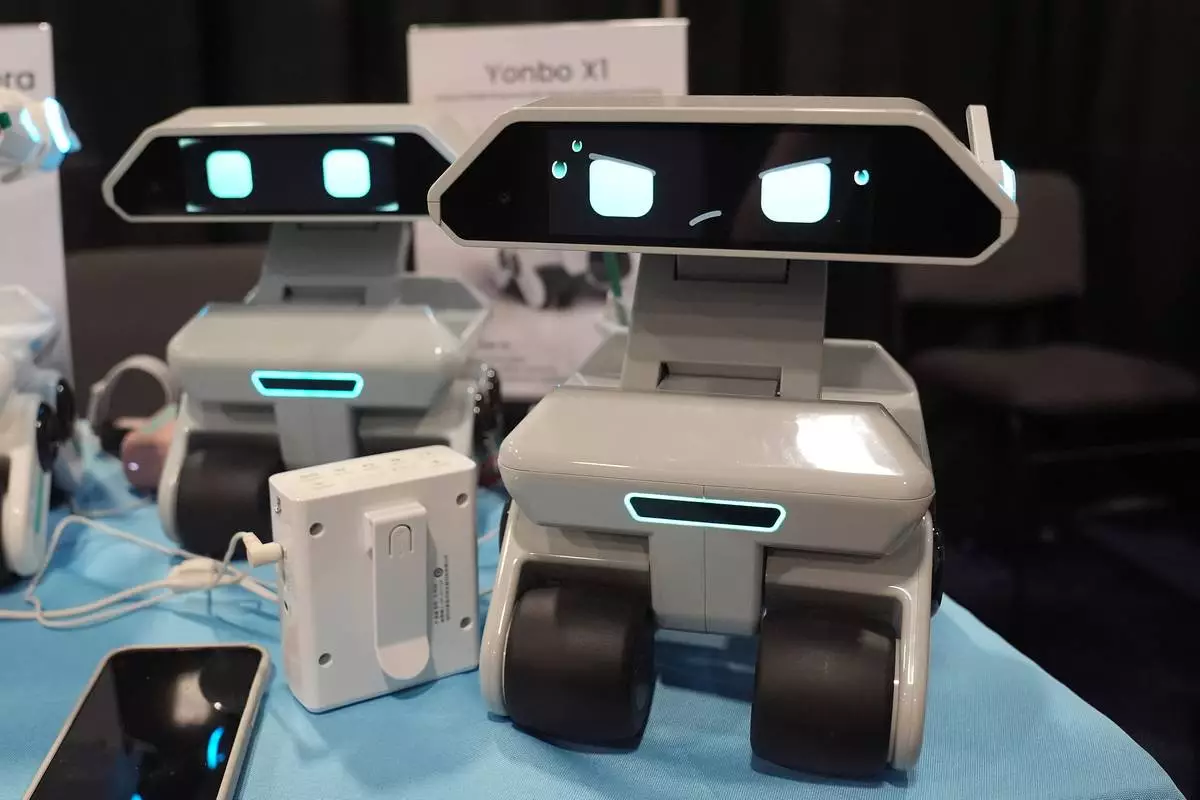
Yonbo X1 robots are pictured at the X-Orgin booth during the CES Unveiled tech show Sunday, Jan. 4, 2026, in Las Vegas. (AP Photo/Abbie Parr)

Yonbo X1 robots are pictured at the X-Orgin booth during the CES Unveiled tech show Sunday, Jan. 4, 2026, in Las Vegas. (AP Photo/Abbie Parr)

A Tombot robotic puppy is pictured at a Tombot booth during the CES Unveiled tech show Sunday, Jan. 4, 2026, in Las Vegas. (AP Photo/Abbie Parr)

A Tombot robotic puppy is pictured at a Tombot booth during the CES Unveiled tech show Sunday, Jan. 4, 2026, in Las Vegas. (AP Photo/Abbie Parr)

People arrive at the CES Unveiled tech show Sunday, Jan. 4, 2026, in Las Vegas. (AP Photo/Abbie Parr)

People arrive at the CES Unveiled tech show Sunday, Jan. 4, 2026, in Las Vegas. (AP Photo/Abbie Parr)

Artificial intelligence will be anchored in nearly everything, again, as the tech industry explores offerings consumers will want to buy. AI industry heavyweight Jensen Huang will be taking the stage to showcase Nvidia's latest productivity solutions, and AMD CEO Lisa Su will keynote to “share her vision for delivering future AI solutions.” Expect AI to come up in other keynotes, like from Lenovo's CEO, Yuanqing Yang.

The AI industry is out in full force tackling issues in healthcare, with a particular emphasis on changing individual health habits to treat conditions — such as Beyond Medicine's prescription app focused on a particular jaw disorder — or addressing data shortages in subjects such as breast milk production.

Expect more unveils around domestic robots too. Korean tech giant LG already has announced it will show off a helper bot named “ CLOiD,” which allegedly will handle a range of household tasks. Hyundai also is announcing a major push on robotics and manufacturing advancements. Extended reality, basically a virtual training ground for robots and other physical AI, is also in the buzz around CES.

In 2025, more than 141,000 attendees from over 150 countries, regions, and territories attended the CES. Organizers expect around the same numbers for this year’s show, with more than 3,500 exhibitors across the floor space this week.

The AP spoke with CTA Executive Chair and CEO Gary Shapiro about what to expect for CES 2026. The conversation has been edited for clarity and length.

Well, we have a lot at this year's show.

Obviously, using AI in a way that makes sense for people. We’re seeing a lot in robotics. More robots and humanoid-looking robots than we’ve ever had before.

We also see longevity in health, there’s a lot of focus on that. All sorts of wearable devices for almost every part of the body. Technology is answering healthcare’s gaps very quickly and that’s great for everyone.

Mobility is big with not only self-driving vehicles but also with boats and drones and all sorts of other ways of getting around. That’s very important.

And of course, content creation is always very big.

You are seeing humanoid robots right now. It sometimes works, sometimes doesn’t.

But yes, there are more and more humanoid robots. And when we talk about CES 5, 10, 15, 20 years now, we’re going to see an even larger range of humanoid robots.

Obviously, last year we saw a great interest in them. The number one product of the show was a little robotic dog that seems so life-like and fun, and affectionate for people that need that type of affection.

But of course, the humanoid robots are just one aspect of that industry. There’s a lot of specialization in robot creation, depending on what you want the robot to do. And robots can do many things that humans can’t.

AI is the future of creativity.

Certainly AI itself may be arguably creative, but the human mind is so unique that you definitely get new ideas that way. So I think the future is more of a hybrid approach, where content creators are working with AI to craft variations on a theme or to better monetize what they have to a broader audience.

We’re seeing all sorts of different devices that are implementing AI. But we have a special focus at this show, for the first time, on the disability community. Verizon set this whole stage up where we have all different ways of taking this technology and having it help people with disabilities and older people.

Well, there’s definitely no bubble when it comes to what AI can do. And what AI can do is perform miracles and solve fundamental human problems in food production and clean air and clean water. Obviously in healthcare, it’s gonna be overwhelming.

But this was like the internet itself. There was a lot of talk about a bubble, and there actually was a bubble. The difference is that in late 1990s there were basically were no revenue models. Companies were raising a lot of money with no plans for revenue.

These AI companies have significant revenues today, and companies are investing in it.

What I’m more concerned about, honestly, is not Wall Street and a bubble. Others can be concerned about that. I’m concerned about getting enough energy to process all that AI. And at this show, for the first time, we have a Korean company showing the first ever small-scale nuclear-powered energy creation device. We expect more and more of these people rushing to fill this gap because we need the energy, we need it clean and we need a kind of all-of-the-above solution.
A Coro breastfeeding monitor is pictured at a Coroflo booth during the CES Unveiled tech show Sunday, Jan. 4, 2026, in Las Vegas. (AP Photo/Abbie Parr)
A Coro breastfeeding monitor is pictured at a Coroflo booth during the CES Unveiled tech show Sunday, Jan. 4, 2026, in Las Vegas. (AP Photo/Abbie Parr)

Yonbo X1 robots are pictured at the X-Orgin booth during the CES Unveiled tech show Sunday, Jan. 4, 2026, in Las Vegas. (AP Photo/Abbie Parr)

Yonbo X1 robots are pictured at the X-Orgin booth during the CES Unveiled tech show Sunday, Jan. 4, 2026, in Las Vegas. (AP Photo/Abbie Parr)

A Tombot robotic puppy is pictured at a Tombot booth during the CES Unveiled tech show Sunday, Jan. 4, 2026, in Las Vegas. (AP Photo/Abbie Parr)

A Tombot robotic puppy is pictured at a Tombot booth during the CES Unveiled tech show Sunday, Jan. 4, 2026, in Las Vegas. (AP Photo/Abbie Parr)

People arrive at the CES Unveiled tech show Sunday, Jan. 4, 2026, in Las Vegas. (AP Photo/Abbie Parr)


People arrive at the CES Unveiled tech show Sunday, Jan. 4, 2026, in Las Vegas. (AP Photo/Abbie Parr)

SIOUX FALLS, S.D. (AP) — Easter is around the corner, and it's time to start thinking about how to decorate your eggs.

Whether you're dying eggs for your table spread or planning to hide them for an egg hunt, it's important to follow food safety guidelines to minimize germs and maximize your egg quality.

Eggs are remarkably long lasting, so there needn't be a giant rush to eat them.

“Stores usually do turn over eggs pretty quickly, so the recommendations is you should consume eggs three to five weeks after you purchase them,” said Kara Lynch, food safety educator with Michigan State University Extension.

There is also a benefit in letting eggs age just a bit, as older eggs can be easier to peel. That's because eggs shrink over time within the shell, creating an air pocket between the egg and the shell.

Egg processors clean eggs before they reach store shelves, but it also is important to thoroughly cook eggs to reduce the risk of foodborne illness, especially salmonella. That bacteria lives naturally in the gastrointestinal and reproductive tracts of chickens, said Kimberly Baker, associate extension specialist at Clemson University.

To cook your eggs, place them in a saucepan, fill it with water and bring it to a boil. After that, put the lid on, turn the heat off and let it sit for about 12 minutes. Some also favor turning down the heat and simmering eggs.

You can vary the time in the hot water depending on a desire for harder boiled or slightly creamier eggs, but the yolk should be pretty solid to be safe. Boiling them for too long can risk creating green sulfur development on the outside of the yolk.

After that, Don Schaffner, food science department chair at Rutgers University, said there are two options.

You can run your eggs under cold water to reduce the temperature. From there, you can color them right away or place them back in the fridge until you're ready. Or, after you've boiled them, you can let them air dry until they've cooled.

The boiling process sanitizes the eggs, and as long as they are kept out of water, Schaffner said, they will remain safe to eat.

“You’ve boiled the egg, you’ve gotten rid of any bacteria that might be in the egg. And now you’ve air-cooled it, right? So it’s going to cool more slowly, it’s probably going to cook more,” he said. “But most importantly, you don’t have to worry about any bacteria from the water getting internalized into the egg.”

Either artificial or natural food dye is OK as long as the dye label says it's food grade. For those keeping track, the U.S. Food and Drug Administration has been updating its guidance and regulations regarding certain dyes.

And no, it's not a problem if the dye seeps through the shell.

“Eggs kind of naturally have their own abilities to absorb only so much,” Baker said.

As you're decorating the eggs and have the eggs outside, she suggested keeping your eggs in an ice bath, so they can stay at a cooler temperature while you're decorating.

Eggs should generally be kept at or below 40 degrees (4.4 degrees Celsius) to minimize the risk of contaminants.

Cooked eggs that weren't air-cooled should spend no more than two hours at room temperature. And that's cumulative, including the time spent decorating and the time spent hiding during the Easter egg hunt.

But if it's particularly warm, then that two-hour rule may be shortened to one hour, Lynch said.

Hard boiled eggs are generally good for about a week in the fridge.

Be careful with your eggs as you handle them.

One of the biggest concerns is making sure your eggs haven't cracked during an Easter egg hunt, making them vulnerable to contaminants. And once the egg has been hard boiled, there's no way to kill bacteria that get inside, Baker said.

“We don’t want to be putting them in the soil or in lawns where pets have gone to the bathroom,” she said.

Whether the eggs are hidden outdoors or in a corner of your home, you should rinse them in cool water before you peel them. And wash your hands, too, just in case the eggs have picked up something.

If the Easter egg hunt means your eggs will be at room temperature for longer than two hours, experts recommended using plastic eggs for the hunt instead of real ones to minimize food safety risk.

“If it’s an outdoor Easter egg hunt at any time, I would say go with the plastic eggs and be safe,” Baker said. “And use your dyed Easter eggs as your centerpiece on your table or your buffet, and enjoy them that way.”

FILE - Painted Easter eggs hang from an Easter Tree in Saalfeld, central Germany, March 30, 2018. (AP Photo/Jens Meyer, File)

FILE - Painted Easter eggs hang from an Easter Tree in Saalfeld, central Germany, March 30, 2018. (AP Photo/Jens Meyer, File)

Recommended Articles