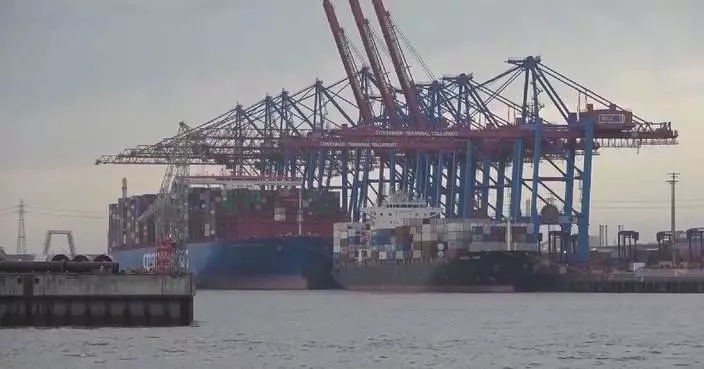
The Chinese capital of Beijing marked a significant milestone in expanding its trade connections with Central Asia on Wednesday morning, with the launch of its first ever freight train to Tashkent, the capital of Uzbekistan.
The train, carrying 90 20-foot equivalent units (TEUs) filled with exports, departed from Beijing's railway logistics center and will arrive in Tashkent in 14 days.
The cargoes carried by the train, valued at over 16 million yuan (about 2.2 million U.S. dollars), are mainly goods such as fresh air ventilators, compressors, engines, and thermostats, which are all made in the Beijing-Tianjin-Hebei region. This has also been a significant step toward the region's outward-oriented economic development.
"For the launch of this freight train, we have developed a customized transportation plan based on the needs of enterprises. As for organizing the transportation, we have prioritized planning, empty container allocation, loading and transportation, and customs clearance in a bid to establish a fast channel for the train's operation," said Zhang Shusheng, manager of the marketing department of Beijing's railway logistics center.
The opening of the train route will provide important support for the Beijing-Tianjin-Hebei region to strengthen economic ties with Central Asian countries and build high-quality Belt and Road cooperation.
The Central Asia freight trains connect major destinations in five Central Asian countries with various Chinese cities including Tianjin, Xi'an, Jinan, Hefei, and Lianyungang. Since July 2020, 32 dedicated freight train routes between China and Central Asia have been established.
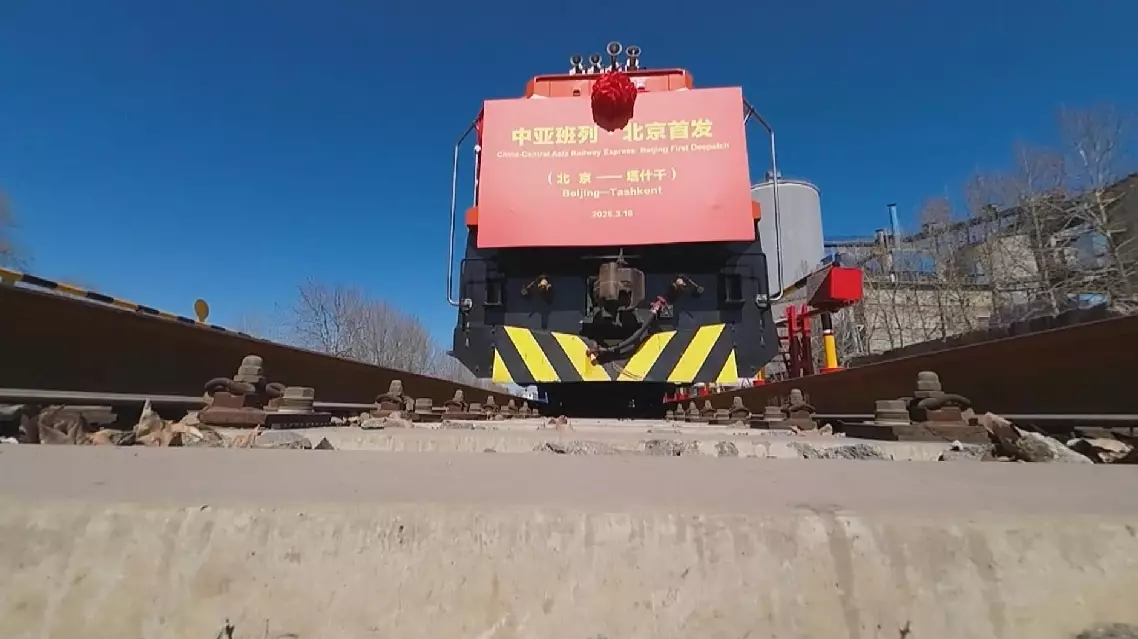
Beijing launches first direct freight train to Central Asia
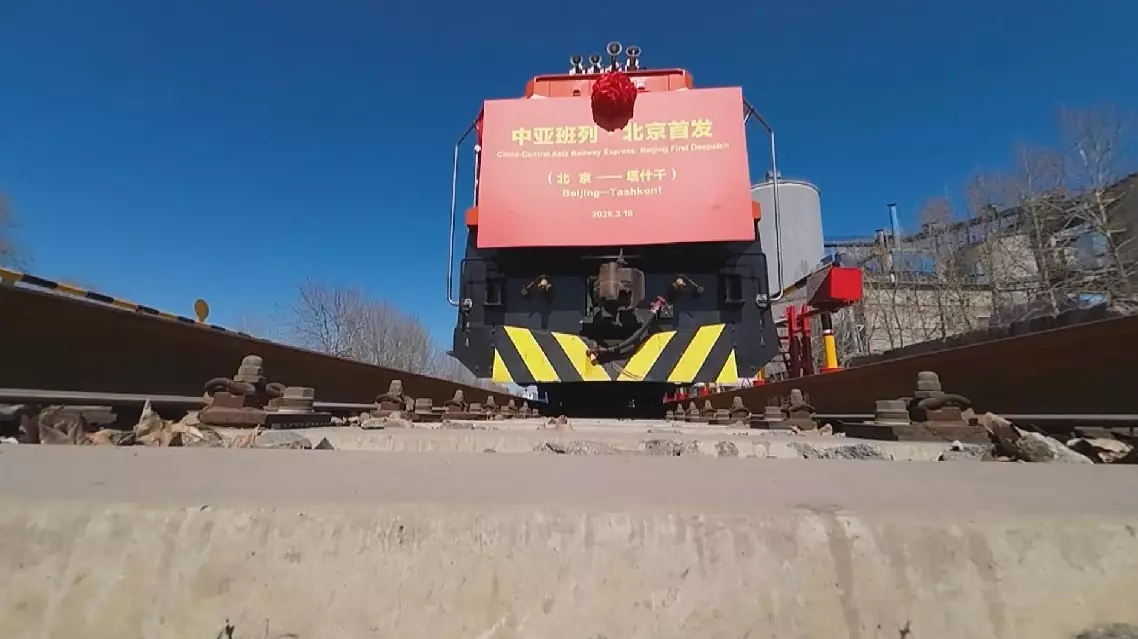
Beijing launches first direct freight train to Central Asia
Nicaragua's co-foreign minister Valdrack Jaentschke has warned that militarism must never be allowed to rise again, as Japan's recent moves to lift its arms export ban and revise the pacifist Constitution continue to draw international concern.
This year marks the 80th anniversary of the opening of the Tokyo Trials, where Japan's Class-A war criminals from World War II were brought to justice.
In an interview with China Global Television Network (CGTN), Valdrack Jaentschke voiced his concern that today's world order is being undermined by interventionism and other challenges.
"It is necessary for us to remember that after the end of World War II, countries worked hard to build a new international order based on international law. However, regrettably, more than 80 years later, we are seeing that this once explored and attempted order is being challenged by interventionism, a confrontational mindset, and tendencies like 'might makes right.' These are precisely the conditions that gave rise to fascism and militarism in the past, which ultimately led to the tragedy of World War II," he said.
He said the international community has a responsibility to pursue a new international order -- one fundamentally grounded in peace.
"Looking back at the history more than eight decades ago and comparing it with today's reality, it is our responsibility to recognize that the world should, and must, build a new international order that is more just, fairer, rooted in international law, based on a logic of mutual benefit and shared success, and fundamentally grounded in peace," said the minister.
"Today, as we revisit the Tokyo Trials, it is meant to remind the world that such a tragedy must never be repeated -- and that we must do everything in our power to prevent it from happening again. We must stop that dark world -- born from militarism, interventionism, and fascism -- from ever returning," he said.
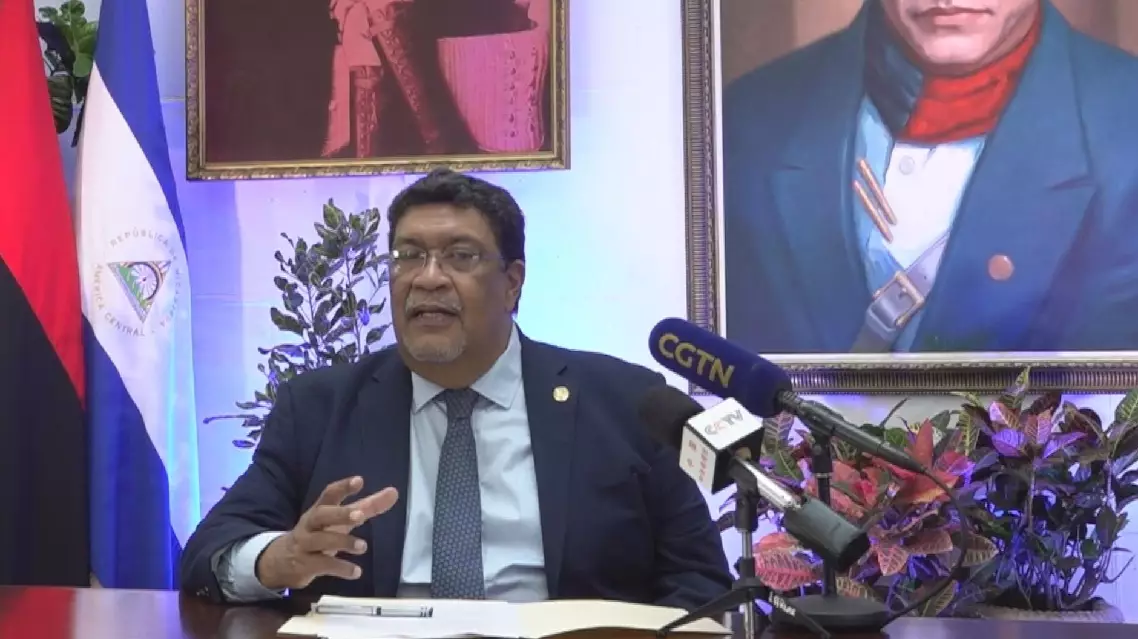
Nicaraguan FM warns of militarism revival