The recent imposition of global tariffs on U.S. agricultural products, including California almonds, has added instability to the once stable and highly beneficial industry.
Earlier this month, China issued additional tariffs on imports from the United States after President Donald Trump imposed tariffs on Chinese imports.
Back in the 2018 China-U.S. trade frictions, China's tariffs on American almonds cracked the country's almond industry, especially in California, the largest agriculture market in the United States.
"In the previous round of Trump tariffs, one of our biggest markets at the time was China. And China retaliated with a 50-percent tariff. And that's had consequences for California almonds that have cost the farmers hundreds of millions of dollars. And it was still in effect, even when some of these new tariffs were announced," said Colin Carter, professor emeritus of agricultural economics at the University of California, Davis.
Last year, California exported 37 percent less almonds to China compared with 2018, when China was the top market for California almonds before the first round of tariffs.
The European Union's imports reached 1.2 billion dollars last year, making up over a third of California's almond exports. But local almond growers are now worried that they could also lose customers in Europe as the EU has also retaliated with its own tariffs on California almonds.
California produces nearly 80 percent of the world's supply of almonds, and nearly 70 percent of those crops are slated for export.
The tariffs concern local almond farmers, especially at a time when the market price for almonds have gone down, while its production costs have risen.
"To be fair, like, obviously, we prefer not to have them (tariffs) because, you know, we're better off if our customers are doing well and making money. And so, in the long run, it's not helpful for us. In the short term, it's much more of a burden on the customer than it is on California," said Zachary Williams, senior director of marketing at an almond grower named Stewart and Jasper Orchards.
Professor Carter warned that tariffs have long-term impacts on both sellers and buyers. If the tariffs force buyers to find alternatives, they may never come back.
"Basically, two things happened in China. They pivoted towards Australia and Australia ramped up its production. And they also expanded domestic supplies. So, California has lost significant market share in China. So another lesson is that tariffs have a long-term impact. If a foreign buyer is subjected to a trade war, they might look elsewhere for supplies, and they wouldn't necessarily come back," Carter said.
Given the uncertainty of returns on their investment, some California growers are questioning the feasibility of a long-term commitment to growing almonds.
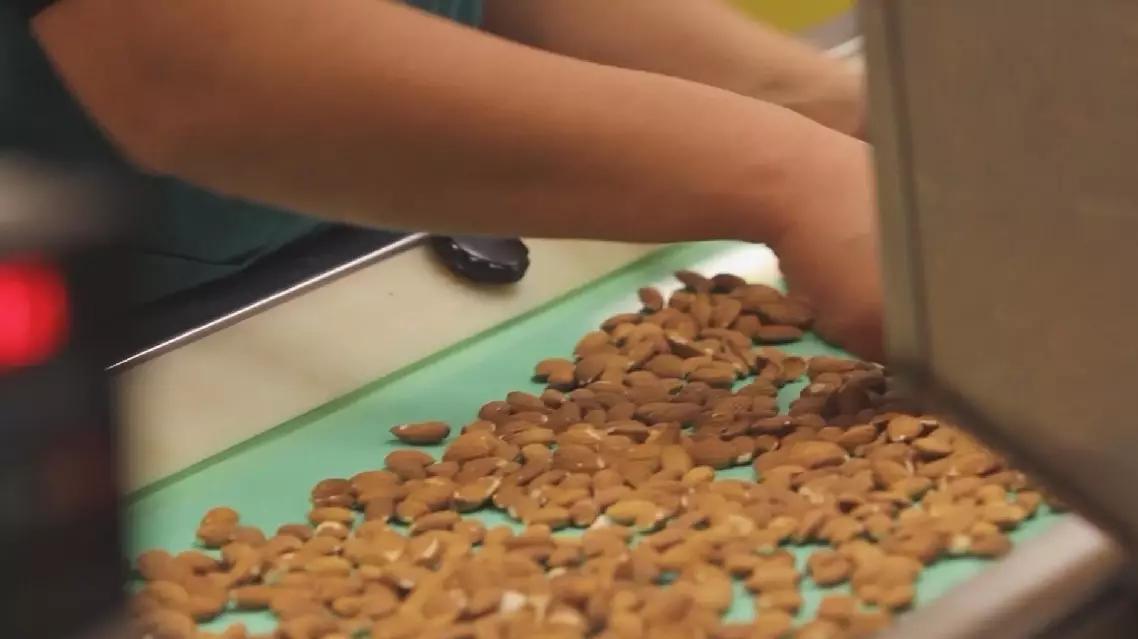
Almond growers in California face losses, uncertainty amid global trade tension