Skip to Content Facebook Feature Image

Xi's visit to Lijiang encourages locals to work harder for rural development, cultural preservation

China

China

China

Xi's visit to Lijiang encourages locals to work harder for rural development, cultural preservation

2025-03-21 20:48 Last Updated At:03-22 18:07

Chinese President Xi Jinping's visit to Lijiang City of southwest China's Yunnan Province has encouraged local people to work harder for rural development and cultural preservation.

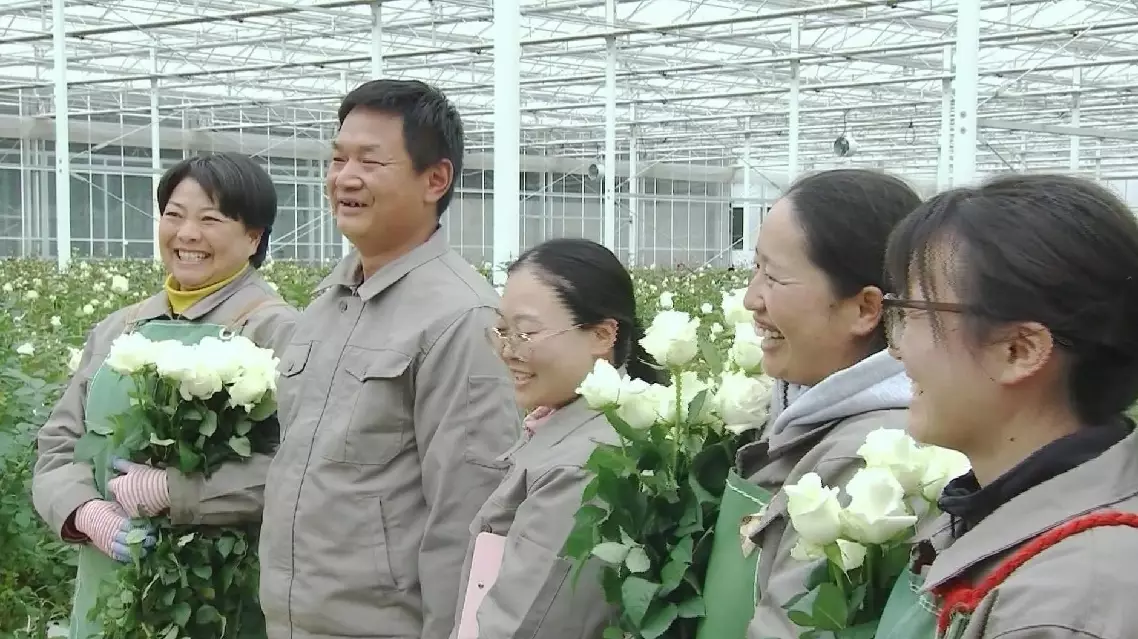
Xi, also general secretary of the Communist Party of China Central Committee, visited a modern flower industry park in the city on Wednesday, talking with the villagers and technicians there to learn about flower varieties, market sales and their incomes.

"We walked to the colored calla lily exhibition area. General Secretary Xi was very interested in our black calla lilies. He said he had never seen such a black flower. I told him that among all fresh-cut flowers, only colored calla lilies can come in black," said Yang Jia, an agricultural technician who guided Xi to visit the park.

"I told him that I've been working here for three years and serve as a field team leader in charge of these flowers and workers. I was proud to tell him that. He encouraged me, saying, 'You have a great management ability! Good Job!' What a praise for me!" said He Yuehua, a local villager working in the park.

Yunnan is one of leading flower producers in the world. Xi highlighted the promising future of the province's flower industry, emphasizing the importance of developing a whole industrial chain so that the "beautiful industry" can deliver more benefits to the people.

"We aim to drive innovation in flower varieties and develop our Yunnan's proprietary breeds with independent intellectual property rights to expand our market presence," said Yang.

The president also visited the Old Town of Lijiang, a UNESCO World Cultural Heritage site with over 800 years of history. He stressed the need to strike a balance between protection and development to make the beautiful old town shine with new vigor and vitality.

Xi was invited for a cup of coffee in the town, hailing Yunnan coffee a feature product that represents China.

"I sincerely hope General Secretary Xi will visit Lijiang again, and enjoy a cup of authentic Yunnan arabica coffee," said Liu Yongle, the vendor who had sent out the invitation to Xi during his visit.

Xi also learned about the history and distinctive dwellings of the Naxi ethnic people.

At the Mufu Mansion, once the residential and working site of the Naxi rulers of Lijiang in ancient times and currently a landmark blending architectural styles from various ethnic groups, Xi explored its historic structures and watched an exhibition of the ancient Dongba culture.

He Hong, a local researcher, said she read an excerpt from a Dongba classic in Naxi language for President Xi.

"It tells people to live in harmony with nature, taking only what is needed, or they will be punished by nature," she said.

As part of China's vast western region, Yunnan is stepping up efforts to drive high-quality development. Xi's visit is expected to inspire confidence among local governments, businesses, and residents as they're working toward economic growth and cultural preservation.
Xi's visit to Lijiang encourages locals to work harder for rural development, cultural preservation

Xi's visit to Lijiang encourages locals to work harder for rural development, cultural preservation

A former television host from Taiwan, Zhai Xuan, has made a pivotal decision to leave mainstream broadcasting in order to create content that provides a better understanding of the Chinese mainland and cross-strait relations.

Zhai, a seasoned television host with over a decade of experience in Taiwan's media landscape, recently addressed an audience at an event in Beijing, where she revealed her complete transition into independent online media.

In her remarks, she articulated her aspiration to bridge what she perceives as a significant information gap between audiences on both sides of the Strait, highlighting her commitment to fostering a deeper understanding and connection through her new endeavors.

"I was really surprised by all the fake news. There were stories saying people on the mainland can't afford tea eggs or that they live in mud houses and in Taiwan, this was the main information many people received," said Zhai.

Zhai said she initially began producing online videos to challenge such perceptions while continuing her work as a television host.

In April 2025, she travelled to the mainland with her father to fulfill her late grandfather's wish to return to his hometown. The trip, which reunited family members separated since 1949, was recorded in a video series titled "Journey to Find Our Roots", drawing attention from viewers in both Taiwan and the mainland.

"Many people in Taiwan told me that after watching, they wanted to apply for a mainland travel permit immediately and go looking for their relatives. Some had long forgotten these things, but after seeing my story, they began thinking about their hometowns and family members they had never met and decided to search for their roots," Zhai shared her story at the event.

By mid-2025, Zhai said she began to feel increasing pressure amid rising political tensions and a tightening atmosphere around cross-Strait exchanges in Taiwan.

After more than 12 years in the industry, Zhai resigned from her position, believing it was the right thing to do.

"At that moment, I felt this was a major issue,not just for me, but for Chinese people on both sides of the Strait. If I backed down then, I wouldn’t be standing on the right side," said Zhai.

Since leaving television, Zhai has broadened her online programming to encompass a range of daily-life topics, including practical guidance on applying for a mainland travel permit and using commonly employed mobile applications, in addition to content that delves into historical memory and cultural connections across the Strait.

As the debate over cross-Strait relations continues in Taiwan, Zhai said she remains committed to her current path.

Former Taiwan TV host bridges cross-Strait divide via online media

Former Taiwan TV host bridges cross-Strait divide via online media

Recommended Articles