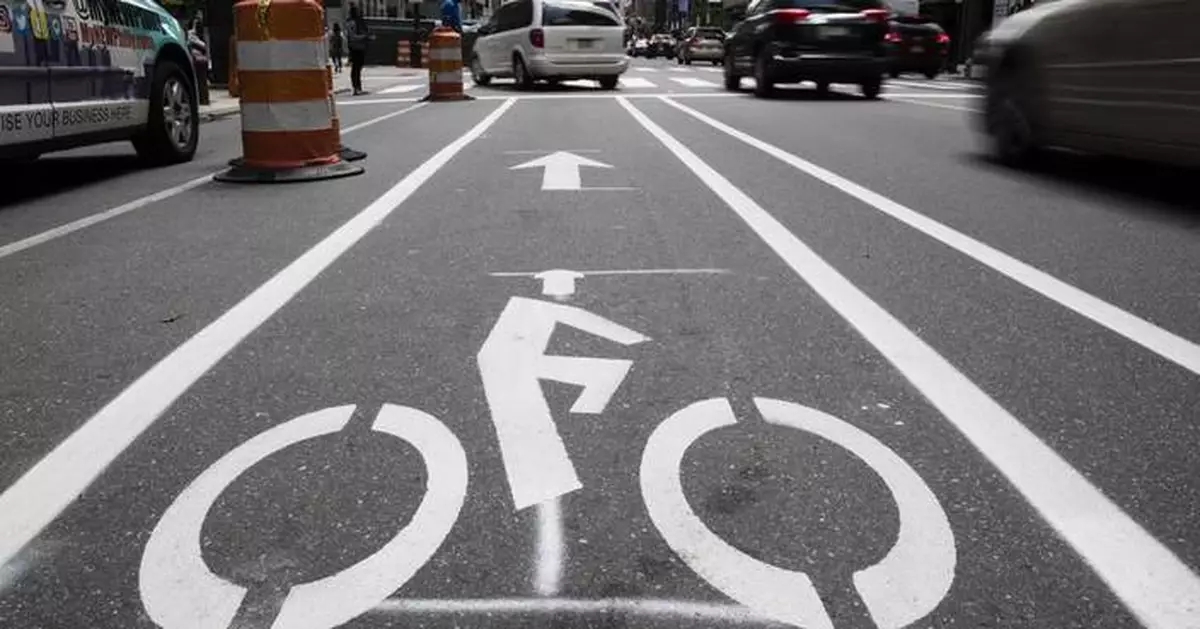
CHICAGO (AP) — Hundreds of bicycle advocates were at an annual summit this month in Washington, D.C., when their cellphones lit up over breakfast with an urgent email warning that President Donald Trump's transportation department had just halted federal grant funding for bike lanes.
As the administration targets green energy projects championed by former President Joe Biden that boosted transit, recreational trails and bicycle infrastructure, several states are banding together to advance those priorities on their own.
California, Illinois, Maryland, Michigan, Minnesota, New York and Pennsylvania joined forces for a national organizing effort dubbed the Clean Rides Network. The group gained momentum in various statehouses this year on environmentally friendly transportation projects it contends the federal government has abandoned.
“These are changes we need to make anyway, but they’re more urgent than ever,” said Justin Balik, senior state program director for the environmental advocacy group Evergreen Action and one of the organizers of the Clean Rides Network. “I’ve been calling the state departments of transportation the next frontier of climate advocacy.”
Although Colorado wasn't among the seven charter members of the Clean Rides Network, a policy enacted there set the framework for one of its most ambitious goals.
In 2021, Gov. Jared Polis committed to a dramatic reduction in Colorado's greenhouse gas emissions and employed a novel approach to accelerate the timeline. Whenever the state's transportation department commits money to a large-scale project that increases vehicle traffic such as a new highway, it must also pursue a corresponding project to offset the environmental harms.
Two major highway expansion projects were canceled because of the policy, said Matt Frommer of the Southwest Energy Efficiency Project. The group advocated for the change.
Colorado used the savings to expand an intercity bus service that has soared in popularity for urban residents and tourists traveling to ski resorts.
Polis' vision lined up with the multimodal transportation aims under the $1.1 trillion bipartisan infrastructure law Biden signed that year. In the final months of Biden's administration, the city of Denver won a $150 million federal grant to build a rapid transit bus line along one of its busiest corridors.
Frommer, a transportation and land use policy manager, said there are fears that states will now have to pursue projects like that on their own.
“If your state cares about climate change, you need to take the reins and step up and direct your transportation funds to projects that are going to reduce emissions," Frommer said. “We may not be able to rely on the federal government to put that policy in place or to really help you in many ways.”
Minnesota followed Colorado's lead and adopted a similar rule to offset greenhouse emissions. Other states that are part of the network are pushing proposals this session.
The Maryland House recently passed its version of the Colorado law, and Senate sponsor Shelly Hettleman said she's cautiously optimistic it will win final passage before lawmakers adjourn.
In trying to persuade her colleagues, Hettleman has focused less on the environmental benefits than what she sees as economic ones. A study commissioned by the Colorado transportation department projected up to $40 billion in savings through improved air quality, road safety and reduced traffic congestion, among other things.
Lawmakers in the Clean Rides states of Illinois and Massachusetts have advanced similar proposals, but they've encountered resistance from some business leaders and advocates for road construction.
“This is another ill-advised piece of legislation, not based upon science, that will defer needed improvements to our crumbling transportation infrastructure in Illinois," said Mike Sturino, president and CEO of the Illinois Road and Transportation Builders Association. “Commuters will have to wait for improvements to our existing interstate system, as this bill would delay addressing unsafe conditions on our roads and bridges.”
Although most of the state leaders who have pushed alternative transportation options have been Democrats, the Clean Rides Network said more conservative states have shown interest in some of the topics, too.
Just as Colorado's anticipated cost savings helped spur legislation in Maryland, economic concerns continue to be foremost in the minds of residents, with some studies showing that transportation ranks second to housing in consumer costs.
“Forget about the cost of eggs. It’s never been more expensive to drive a car,” said Miguel Moravec with the nonprofit climate think tank RMI, which created a calculator to help states project the money they could save through policies that reduce emissions.
Virginia employs a scale that scores potential transportation projects based on factors such as safety, congestion relief, and environmental impacts.
Utah launched an ambitious transit plan for the rapidly growing state, while Montana implemented land use and zoning reforms that made cities more walkable.
Muhammed Patel, senior transportation advocate for the Natural Resources Defense Council in Chicago, said states are at least rethinking some of their policy priorities.
“We do live luckily in a country where states have authority over their own transportation systems,” Patel said. “There’s flexibility innately built in.”
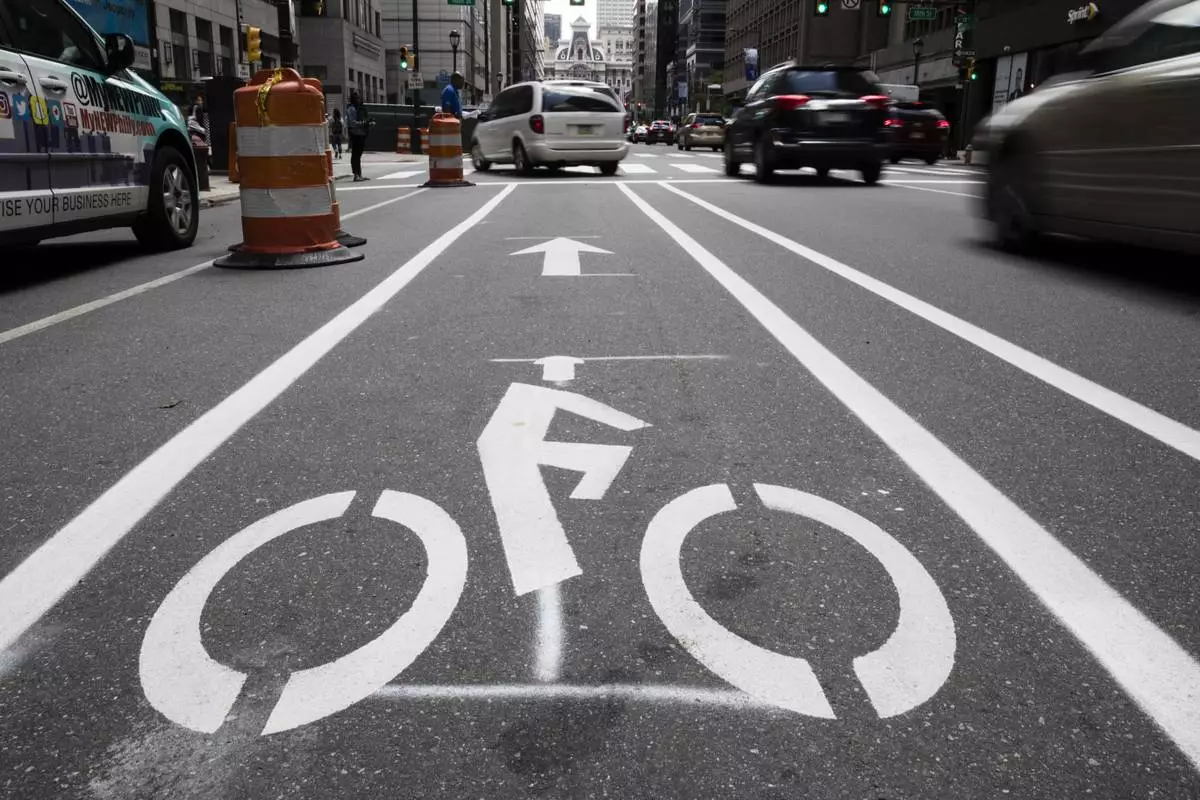
FILE - A bicycle lane along Market Street in Philadelphia, on June 4, 2018. (AP Photo/Matt Rourke, File)
DUBAI, United Arab Emirates (AP) — The death toll from nationwide protests in Iran surpassed 2,000 people on Tuesday, activists said, as Iranians made phone calls abroad for the first time in days after authorities severed communications during a crackdown on demonstrators.
The number of dead climbed to at least 2,003, as reported by the U.S.-based Human Rights Activists News Agency. That figure dwarfs the death toll from any other round of protest or unrest in Iran in decades and recalls the chaos surrounding the country's 1979 Islamic Revolution.
Iranian state television offered the first official acknowledgment of the deaths, quoting an official saying the country had “a lot of martyrs” and that it did not release a toll earlier because of the dead suffering gruesome injuries. However, that statement came only after activists reported their toll.
The demonstrations began a little over two weeks ago in anger over Iran’s ailing economy and soon targeted the theocracy, particularly 86-year-old Supreme Leader Ayatollah Ali Khamenei. Images obtained Tuesday by The Associated Press from demonstrations in Tehran showed graffiti and chants calling for Khamenei's death — something that could carry a death sentence.
Soon after the new death toll became public, U.S. President Donald Trump wrote on his Truth Social platform: “Iranian Patriots, KEEP PROTESTING - TAKE OVER YOUR INSTITUTIONS!!!”
He added: “I have cancelled all meetings with Iranian Officials until the senseless killing of protesters STOPS. HELP IS ON ITS WAY.” Trump did not give details.
Iranian Foreign Minister Abbas Araghchi, speaking to the Qatar-funded satellite news network Al Jazeera in an interview aired Monday night, said he had continued to communicate with U.S. envoy Steve Witkoff.
But after Trump's message Tuesday, top Iranian security official Ali Larijani responded by writing: “We declare the names of the main killers of the people of Iran: 1- Trump 2-” Israeli Prime Minister Benjamin Netanyahu.
The activist group said 1,850 of the dead were protesters and 135 were government-affiliated. Nine children were killed, along with nine civilians it said were not taking part in protests. More than 16,700 people have been detained, the group said.
With the internet down in Iran, gauging the demonstrations from abroad has grown more difficult. The AP has been unable to independently assess the toll. Iran’s government has not offered overall casualty figures.
Skylar Thompson with the Human Rights Activists News Agency told AP the new toll was shocking, particularly since it reached four times the death toll of the monthslong 2022 Mahsa Amini protests in just two weeks.
She warned that the toll would still rise: “We’re horrified, but we still think the number is conservative."
Speaking by phone for the first time since their calls were cut off from the outside world, Iranian witnesses described a heavy security presence in central Tehran, burned-out government buildings, smashed ATMs and few passersby. Meanwhile, people were concerned about what comes next, including the possibility of a U.S. attack.
“My customers talk about Trump’s reaction while wondering if he plans a military strike against the Islamic Republic,” said shopkeeper Mahmoud, who gave only his first name out of concern for his safety. “I don’t expect Trump or any other foreign country cares about the interests of Iranians.”
Reza, a taxi driver who also gave just his first name, said protests are on many people's minds. “People — particularly young ones — are hopeless, but they talk about continuing the protests,” he said.
Several people in Tehran were able to call the AP on Tuesday and speak to a journalist. The AP bureau in Dubai, United Arab Emirates, was unable to call those numbers back. Witnesses said text messaging was still down, and internet users in Iran could connect to government-approved websites locally but nothing abroad.
Anti-riot police officers wore helmets and body armor while carrying batons, shields, shotguns and tear gas launchers, according to the witnesses. Police stood watch at major intersections. Nearby, witnesses saw members of the Revolutionary Guard's all-volunteer Basij force, who carried firearms and batons. Security officials in plainclothes were visible in public spaces.
Several banks and government offices were burned during the unrest, witnesses said. Banks struggled to complete transactions without the internet, they added.
Shops were open, though there was little foot traffic in the capital. Tehran's Grand Bazaar, where the demonstrations began Dec. 28 over the collapse of Iran's rial currency, opened Tuesday. A witness described speaking to multiple shopkeepers who said security forces ordered them to reopen no matter what. Iranian state media did not acknowledge that order.
The witnesses spoke on condition of anonymity for fear of reprisal.
It also appeared that security service personnel were searching for Starlink terminals, as people in northern Tehran reported authorities raiding apartment buildings with satellite dishes. While satellite television dishes are illegal, many in the capital have them in homes, and officials broadly had given up on enforcing the law in recent years.
On the streets, people also could be seen challenging plainclothes security officials, who were stopping passersby at random.
State television also read a statement about mortuary and morgue services being free — a signal that some likely charged high fees for the release of bodies amid the crackdown.
Khamenei, in a statement carried by state TV, praised the tens of thousands who took part in pro-government demonstrations nationwide on Monday.
“This was a warning to American politicians to stop their deceit and not rely on traitorous mercenaries,” he said. “The Iranian nation is strong and powerful and aware of the enemy.”
State TV on Monday aired chants from the crowd, which appeared to number in the tens of thousands. They chanted “Death to America!” and “Death to Israel!” Others cried out, “Death to the enemies of God!” Iran’s attorney general has warned that anyone taking part in protests will be considered an “enemy of God,” a death-penalty charge.
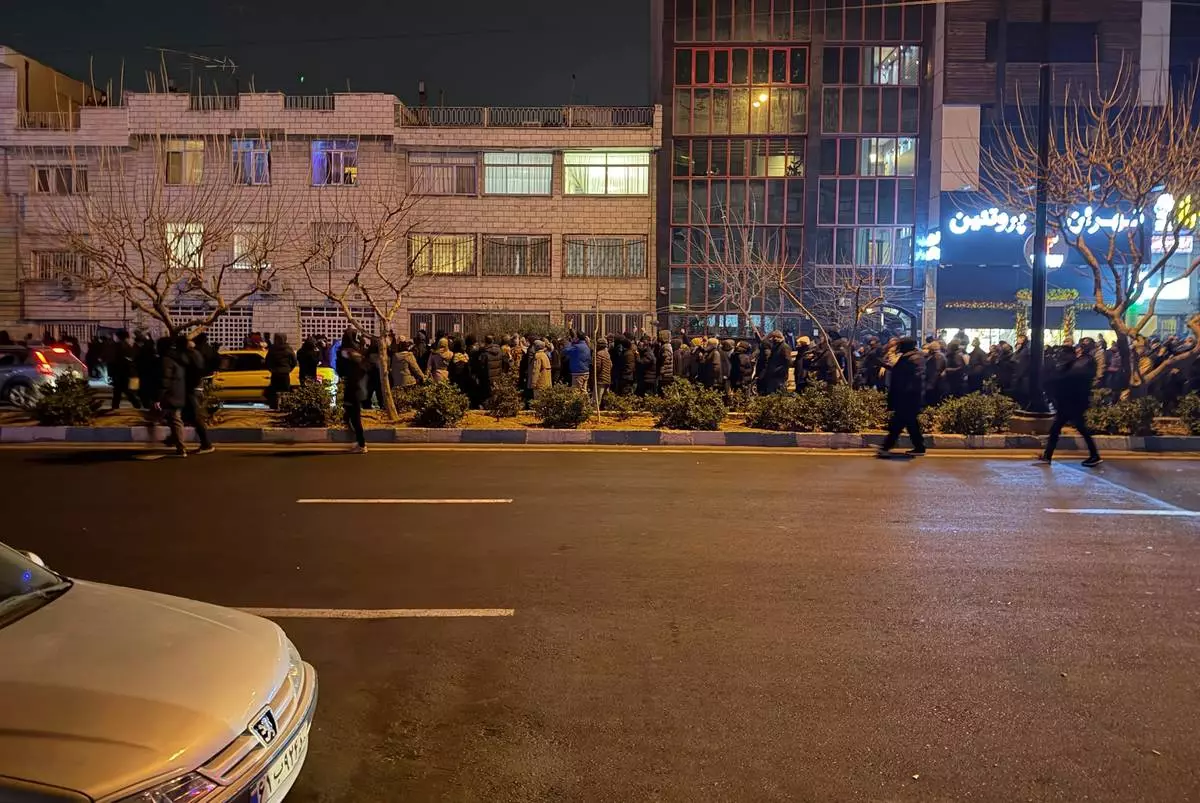
In this photo obtained by The Associated Press, Iranians attend an anti-government protest in Tehran, Iran, Thursday, Jan. 8, 2026.(UGC via AP)
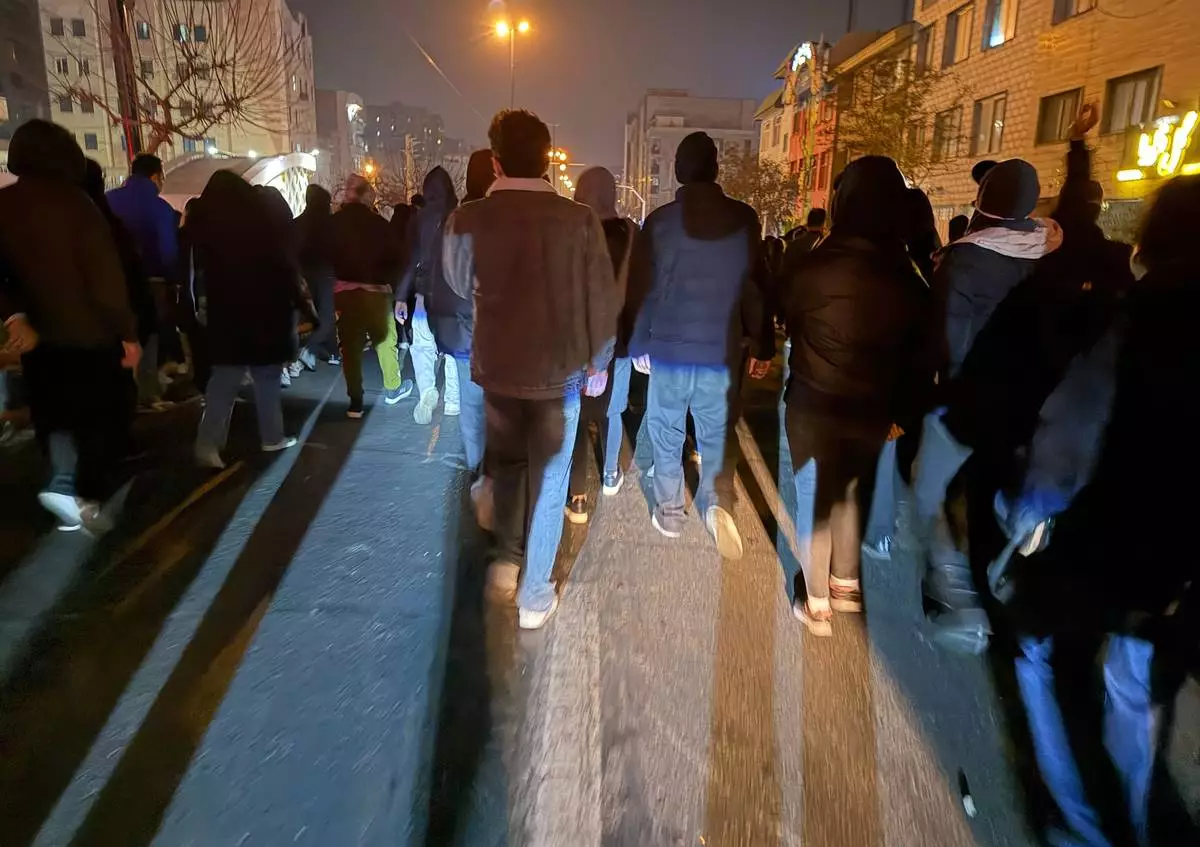
In this photo obtained by The Associated Press, Iranians attend an anti-government protest in Tehran, Iran, Thursday, Jan. 8, 2026. (UGC via AP)
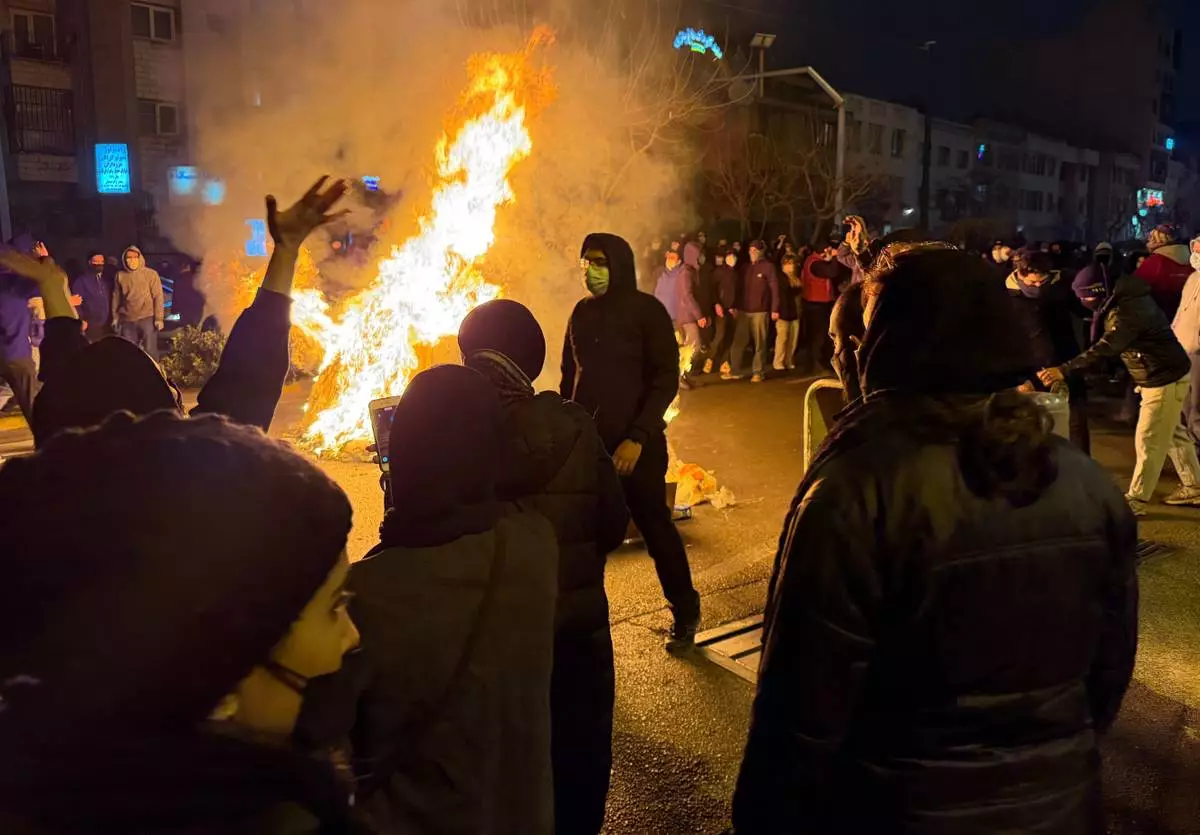
In this photo obtained by The Associated Press, Iranians attend an anti-government protest in Tehran, Iran, Friday, Jan. 9, 2026. (UGC via AP)
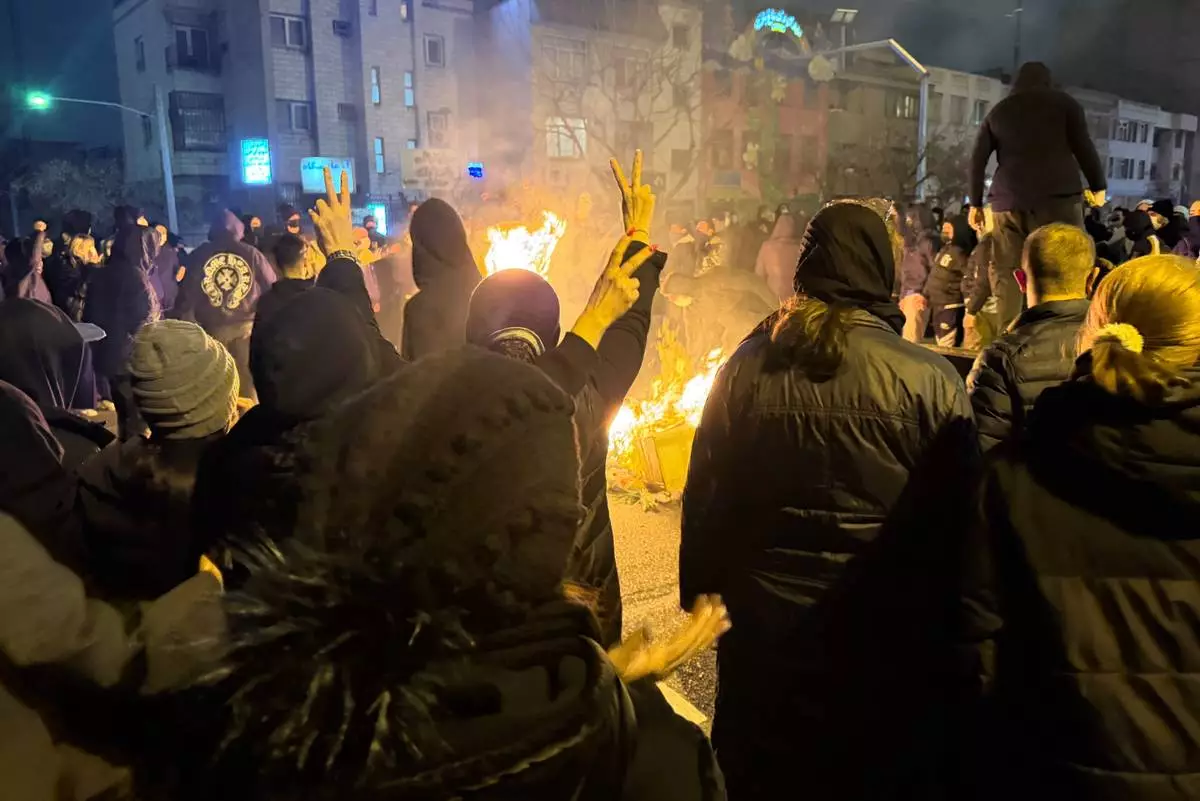
Iranians attend an anti-government protest in Tehran, Iran, Friday, Jan. 9, 2026. (AP Photo)
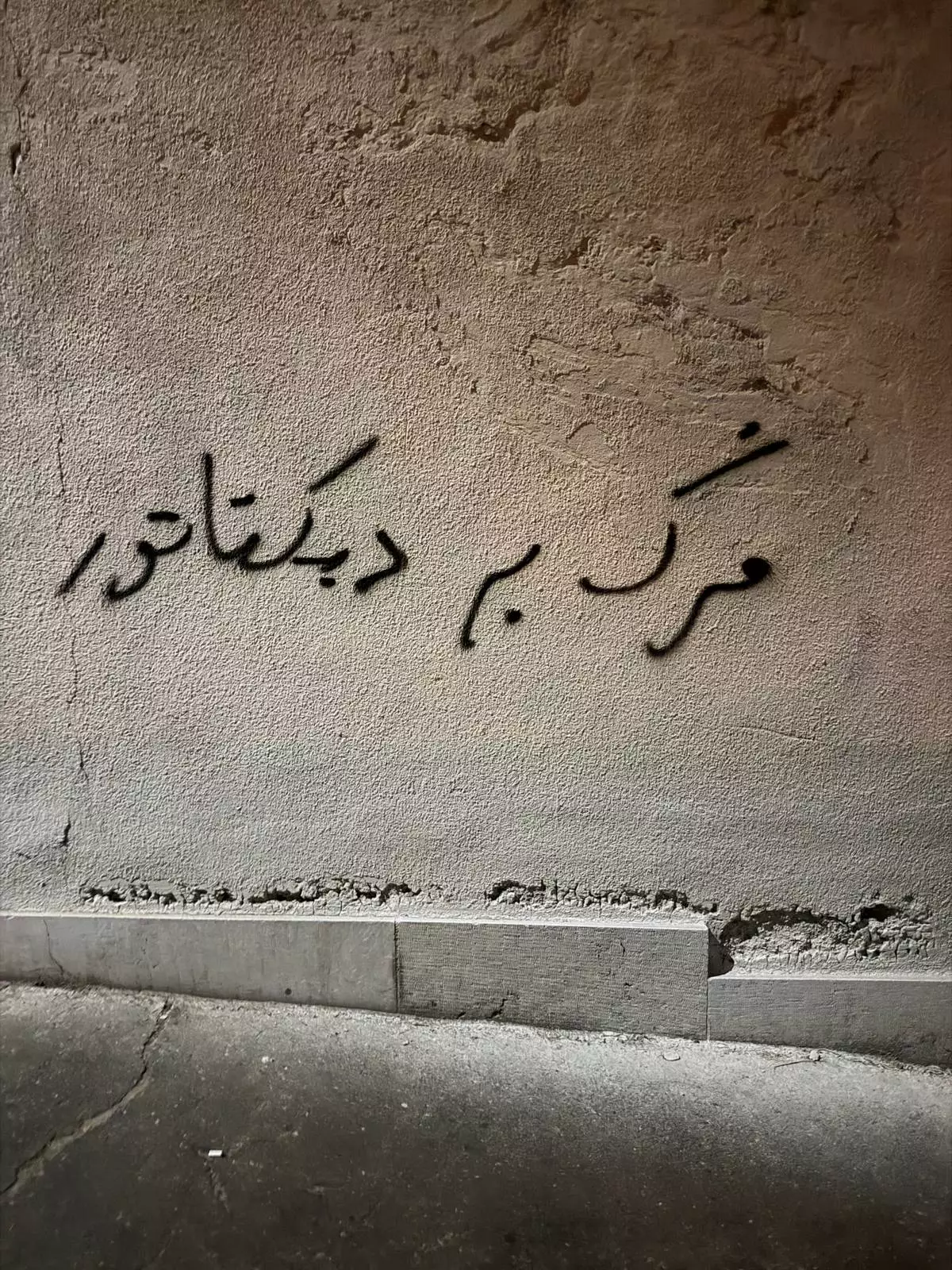
A slogan is written on a wall reading in Farsi: "Death to dictator" in an anti-government protest in Tehran, Iran, Saturday, Jan. 10, 2026. (AP Photo)
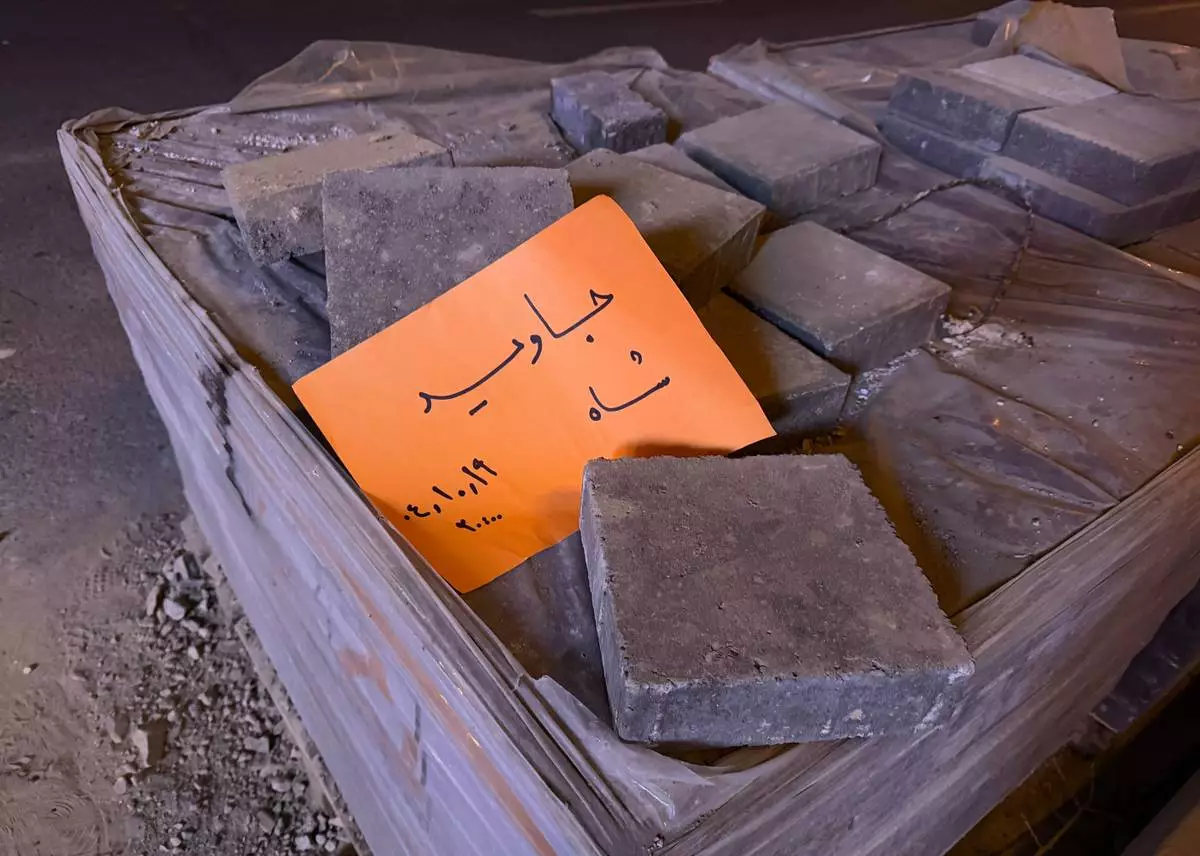
A placard is placed on bricks which reads in Farsi: "Long live the Shah," referring to the Pahlavi dynasty which was toppled by 1979 Islamic Revolution, in an anti-government protest in Tehran, Iran, Friday, Jan. 9, 2026. (AP Photo)
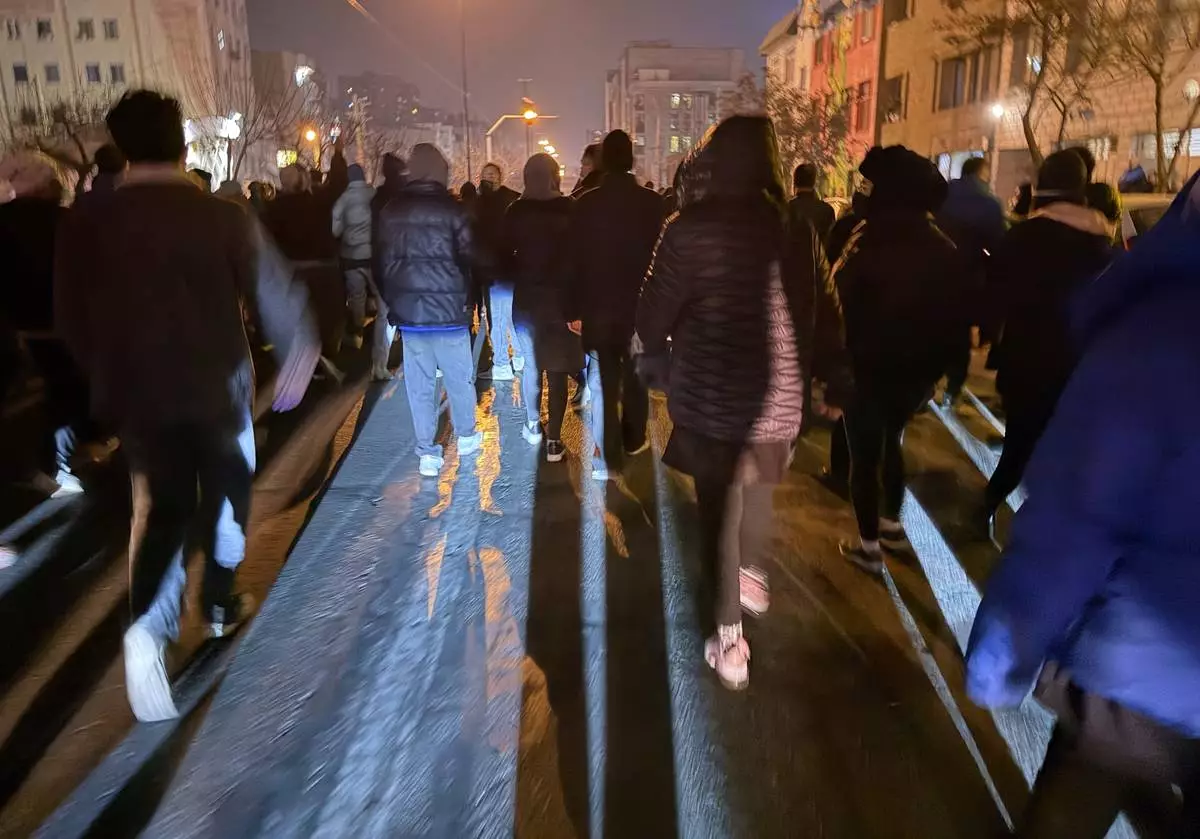
Iranians attend an anti-government protest in Tehran, Iran, Thursday, Jan. 8, 2026. (AP Photo)
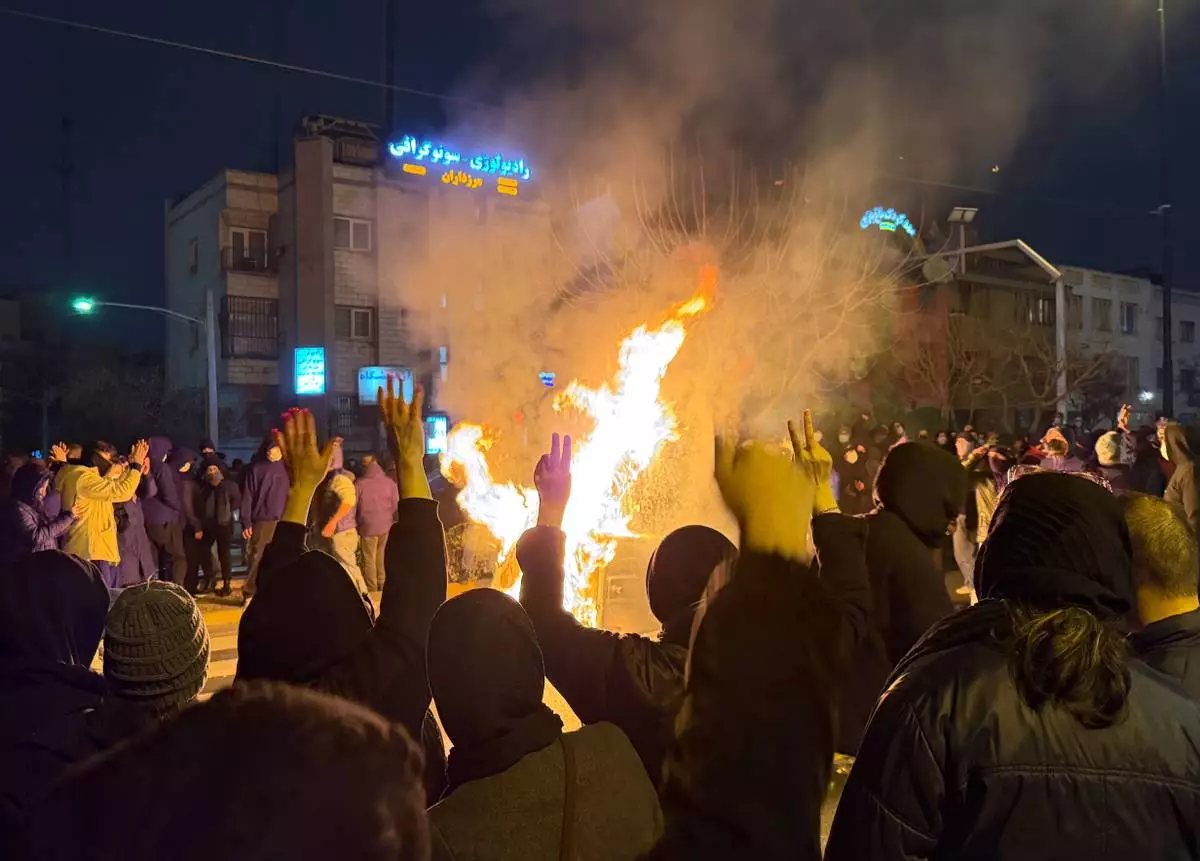
Iranians attend an anti-government protest in Tehran, Iran, Friday, Jan. 9, 2026. (AP Photo)
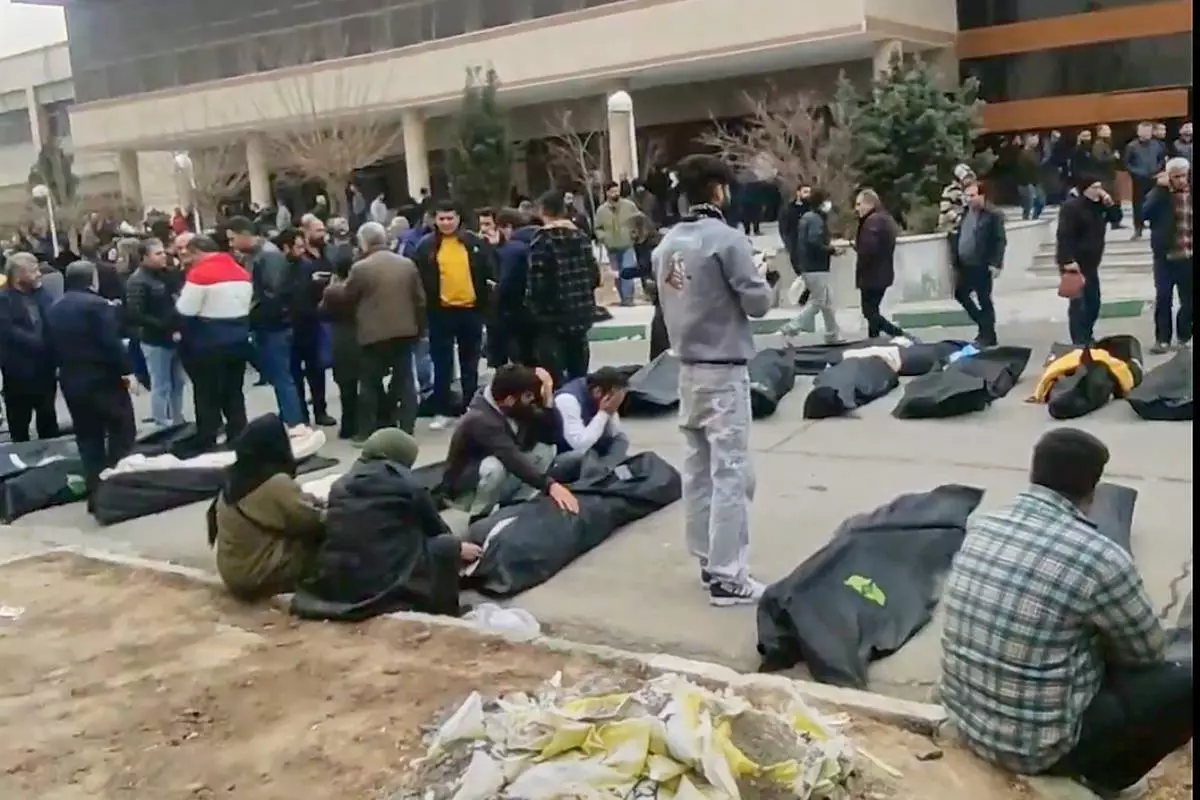
This frame grab from videos taken between Jan. 9 and Jan. 11, 2026, and circulating on social media purportedly shows images from a morgue with dozens of bodies and mourners after crackdown on the outskirts of Iran's capital, in Kahrizak, Tehran Province. (UGC via AP)
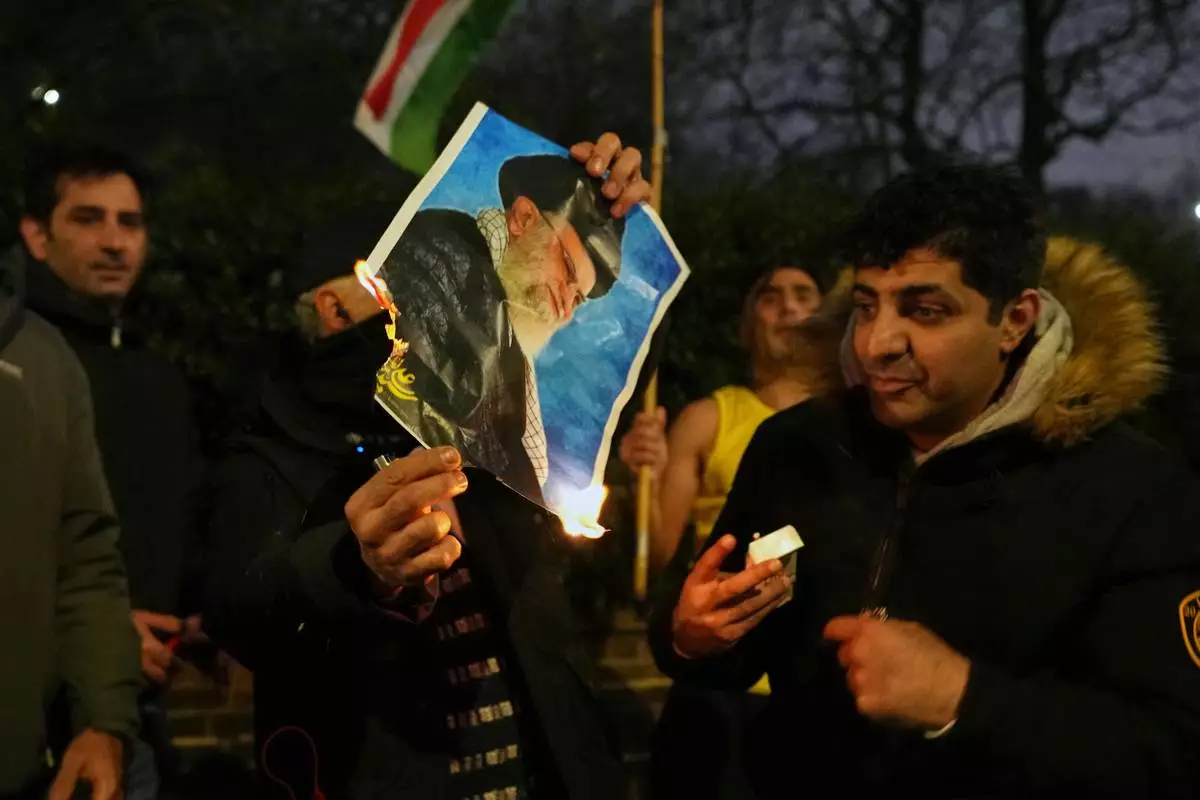
A picture of Ayatollah Ali Khamenei is set alight by protesters outside the Iranian Embassy in London, Monday, Jan. 12, 2026. (AP Photo/Alastair Grant)
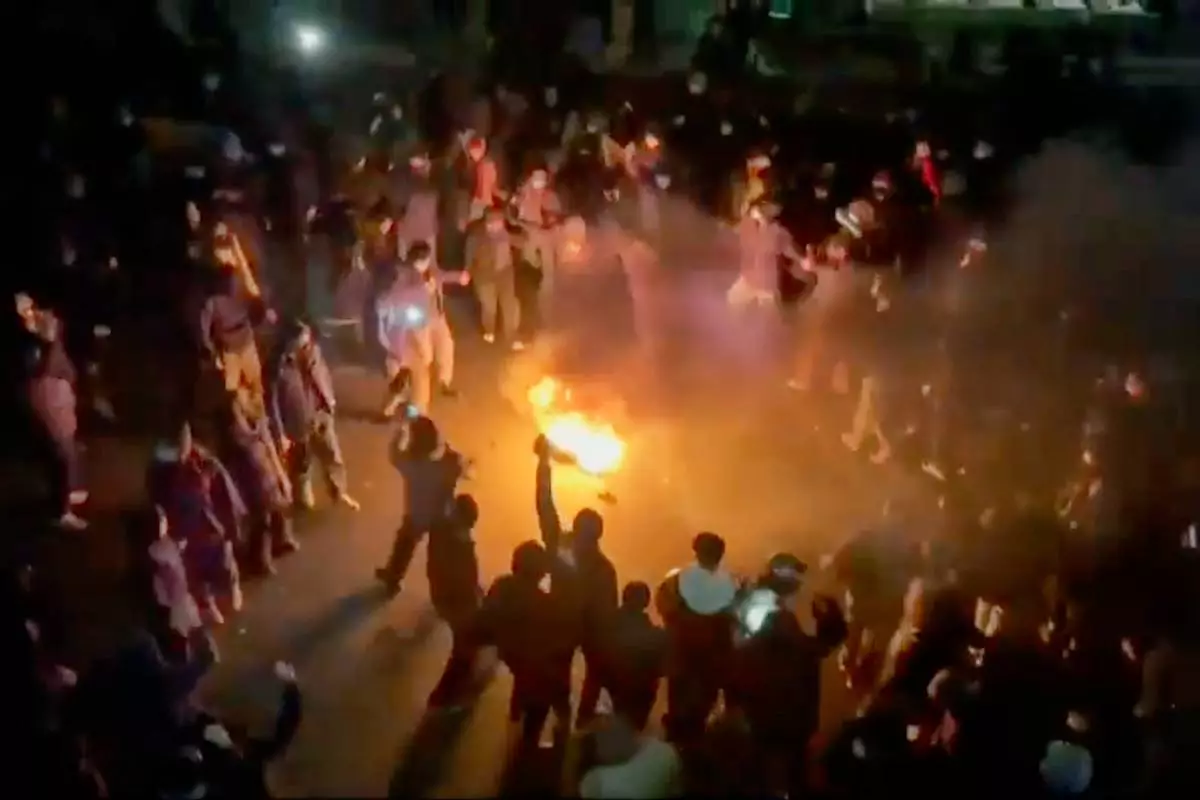
In this frame grab from footage circulating on social media shows protesters dancing and cheering around a bonfire as they take to the streets despite an intensifying crackdown as the Islamic Republic remains cut off from the rest of the world, in Tehran, Iran, Friday, Jan. 9, 2026.(UGC via AP)
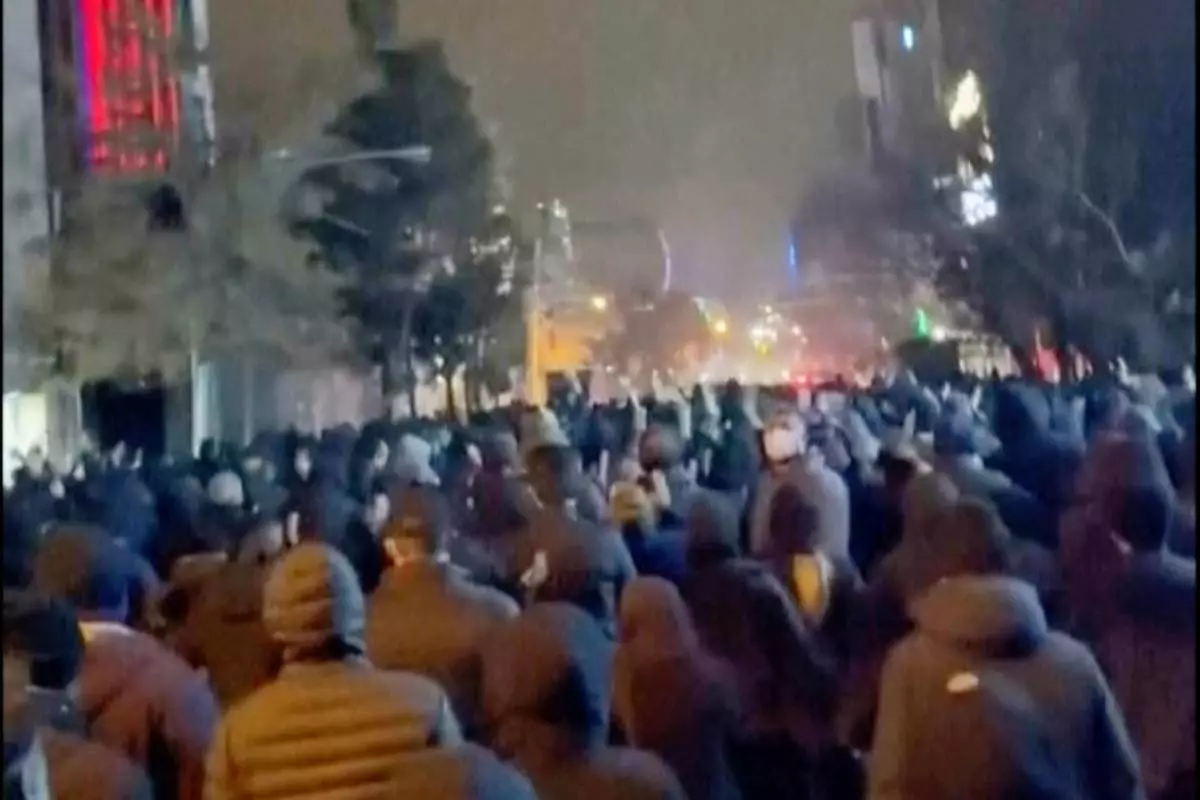
In this frame grab from footage circulating on social media from Iran showed protesters once again taking to the streets of Tehran despite an intensifying crackdown as the Islamic Republic remains cut off from the rest of the world in Tehran, Iran, Saturday Jan. 10, 2026. (UGC via AP)
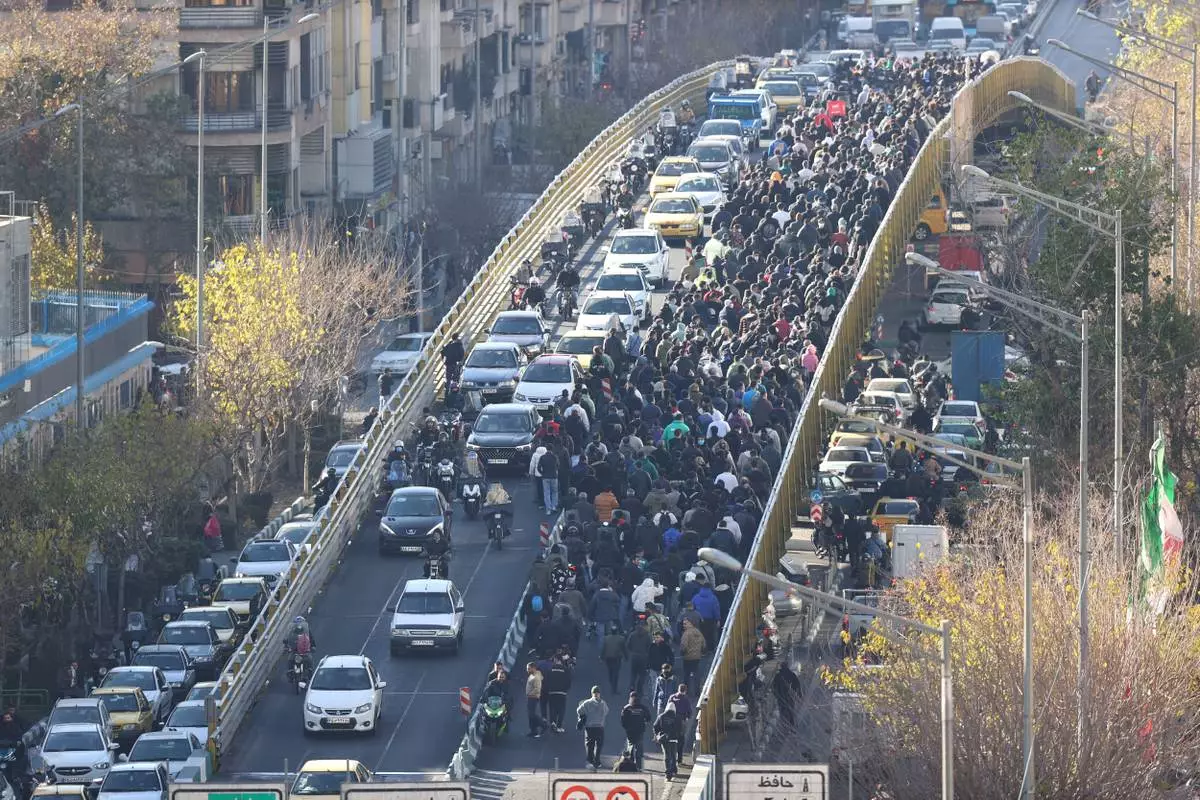
FILE - Protesters march on a bridge in Tehran, Iran, on Dec. 29, 2025. (Fars News Agency via AP, File)