The Multimode Trans-Scale Biomedical Imaging Facility, one of China's key scientific infrastructure projects, officially passed the state acceptance testing on Friday, marking a milestone in advancing life sciences research and the diagnosis and treatment of major diseases, said the Institute of Biophysics under the Chinese Academy of Sciences. Referred to as a "life observatory," the facility -- China's first comprehensive, large-scale scientific device in biomedical imaging -- enables trans-scale and panoramic observation to reveal life's mysteries, according to the National Biomedical Imaging Center at Peking University (NBIC), which oversees the facility's construction and operation. In specific, it can perform many modal studies on research targets, such as optical microscopy, electron microscopy, magnetoencephalography, magnetic resonance, and provides an experimental environment with imaging scales spanning from sub-nanometer to meter, and from millisecond to life cycle.
The facility's core components comprise a multimodal medical imaging platform, a multimodal live cell imaging platform, a multimodal high-resolution molecular imaging platform, and a multi-scale image data integration system. It is capable of conducting trans-scale visualization and precise measurement of the structure and function of living organisms from molecules to cells, tissues, and entire organisms. According to the Institute of Biophysics, the facility has attracted 29 major project proposals in digital life sciences, which will focus on systematic research and development in fields including brain science and tumor diagnosis and treatment.
"Sometimes we need to observe very fine structures, like atomic resolution, while sometimes we need to observe macro structures, such as some imaging of the brain, which may only require a resolution of from centimeters to millimeters. We also need both dynamic and static imaging. So it's necessary for us to study them by using different imaging equipment and technologies," said Zhu Bing, deputy head of the Institute of Biophysics of the Chinese Academy of Sciences.
The facility covers 15 imaging modes and derived modes including positron emission, magnetic resonance, ultrasound, optics, X-rays, and electron microscopy.
"Only such a large-scale scientific facility can enable us to better and systematically depict all aspects of biological and medical events, and help us understand the mechanisms of specific diseases, evaluate the effects of certain specific intervention treatments, and even help promote the development of targeted intervention strategies," said Zhu.
With its construction starting in 2019, the facility was jointly initiated by Peking University and the Institute of Biophysics, and built with several other research institutions including Harbin Institute of Technology and University of Science and Technology of China. The total investment reached 1.717 billion yuan (about 237 million U.S. dollars). Related researchers have developed instruments and equipment with international leading indicators like live cell super-resolution imaging microscope and have also published nearly 200 papers in international high-level academic journals.
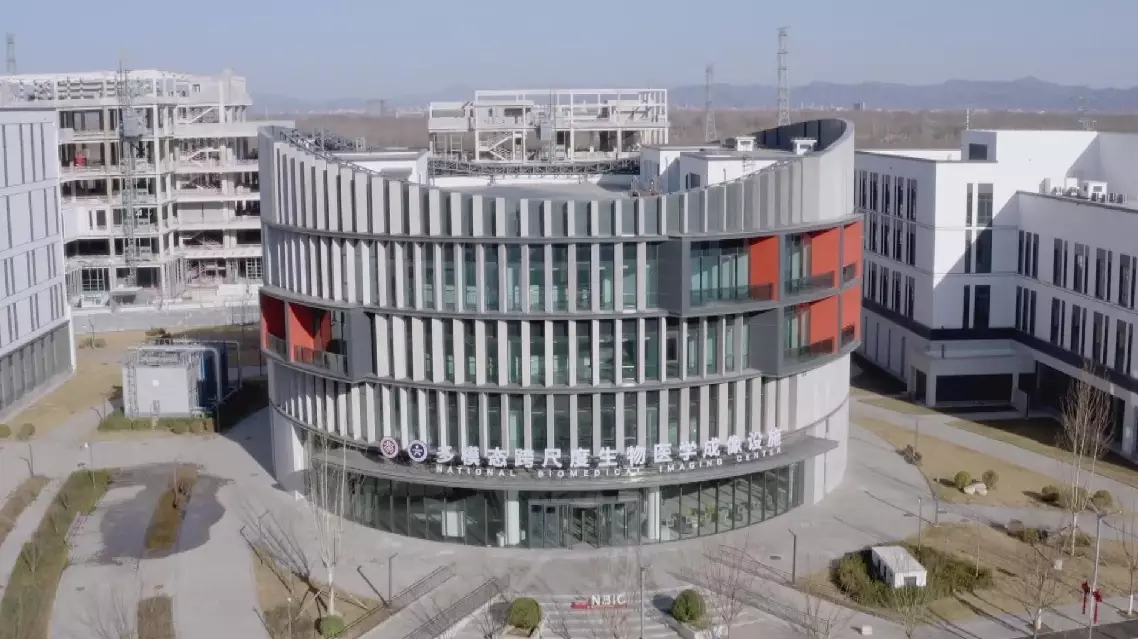
China builds trans-scale biomedical imaging facility to boost life sciences research