A groundbreaking collaborative dive expedition between Chinese and New Zealand scientists has revealed new marine life forms in the Puysegur Trench -- one of the world’s deepest ocean trenches, located off the southern coast of New Zealand.
The joint expedition was conducted by the CAS Institute of Deep-Sea Science and Engineering (IDSSE), in collaboration with New Zealand’s National Institute of Water and Atmospheric Research (NIWA). The mission also marked the first international scientific dive in the Puysegur Trench, and the second collaborative deep-sea expedition between China and New Zealand.
Using China's state-of-the-art Fendouzhe submersible, the three-month expedition conducted a world record 32 dives. Almost 3,000 samples were collected from the 800-kilometer-long trench in New Zealand's Southern Ocean. The scientists were able to dive more than six kilometers to the sea floor, observe how animals survive in these extreme conditions, and conduct vital research on climate change.
"It's amazing feeling, seeing that with your own eyes, seeing the animals serenely swimming around on the bottom, and the little sea cucumbers munching away on the mud at the seafloor. So yeah, it's amazing experience," said Sadie Mills, a New Zealand scientist.
The expedition leader said it is "a dream come true" to be able to study how chemicals rise from the earth’s core to provide food and energy for marine life.
The research has also provided New Zealand with valuable knowledge about marine life -- knowledge that would not have been possible without Chinese technology.
"It was an amazing opportunity for us to get access to parts of the trench and get some understanding about how those deep environments operate that we could never do ourselves," said Rob Murdoch, deputy chief executive of NIWA.
The initial findings were revealed aboard the scientific research ship Tan Suo Yi Hao (Discovery One). China's ambassador said the scientific collaboration demonstrates the value of China's strategic partnership with New Zealand.
"Our bilateral exchanges and cooperation in various fields have brought tangible benefits to both peoples," said Wang Xiaolong, Chinese ambassador to New Zealand.
This expedition will undoubtedly advance human exploration of the deep ocean and deepen our understanding of the ocean’s potential impact on climate change.
"The oceans are an intimate part of the climate system. They're already changing, and they're already having an influence on our atmospheric climate," Rob Murdoch added.
The expedition involved 68 scientists from eight countries -- including New Zealand, Malaysia, Denmark, Germany, France, Brazil, India, and China -- who aim to raise global awareness about life on the seafloor and its connection to climate change.
"So we need these international collaborations and seagoing expeditions worldwide to understand the global distribution of carbon, and how it finally ended in the sea floor," noted Frank Wenzhofer, a German scientist.
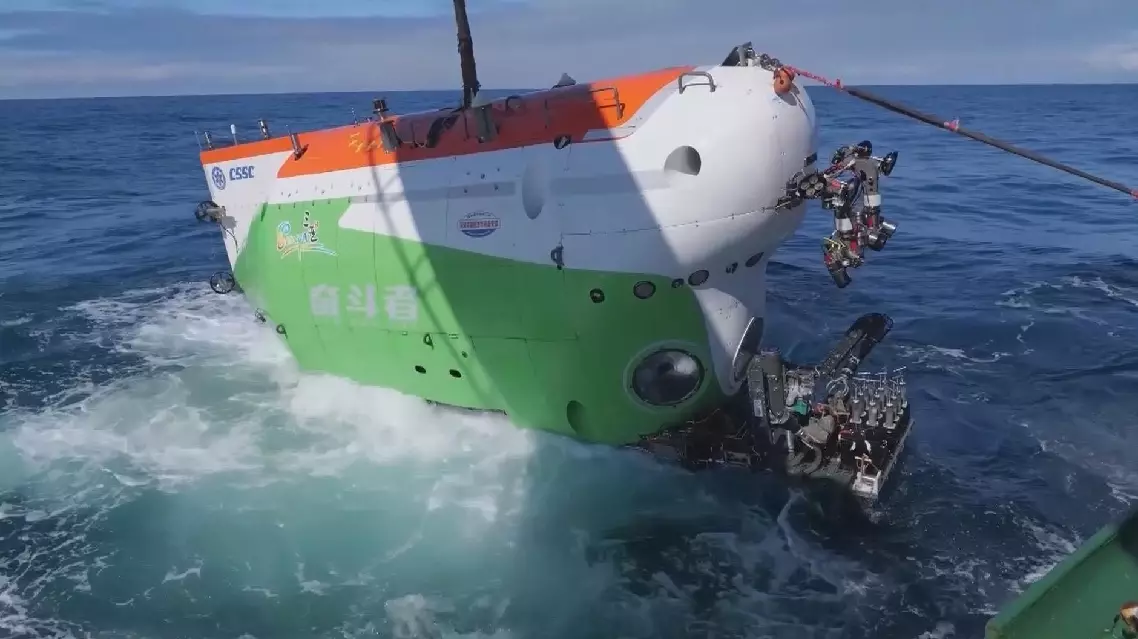
China-New Zealand deep sea expedition team discovers new marine life