Skip to Content Facebook Feature Image

Mercedes-Benz pledges continued investment in China: board chairman

China

China

China

Mercedes-Benz pledges continued investment in China: board chairman

2025-03-23 19:47 Last Updated At:20:07

Iconic German automaker Mercedes-Benz is confident in China's future and pledges to continue investment as the company seeks to build on the market integration of the past decades, said the company's CEO on Saturday.

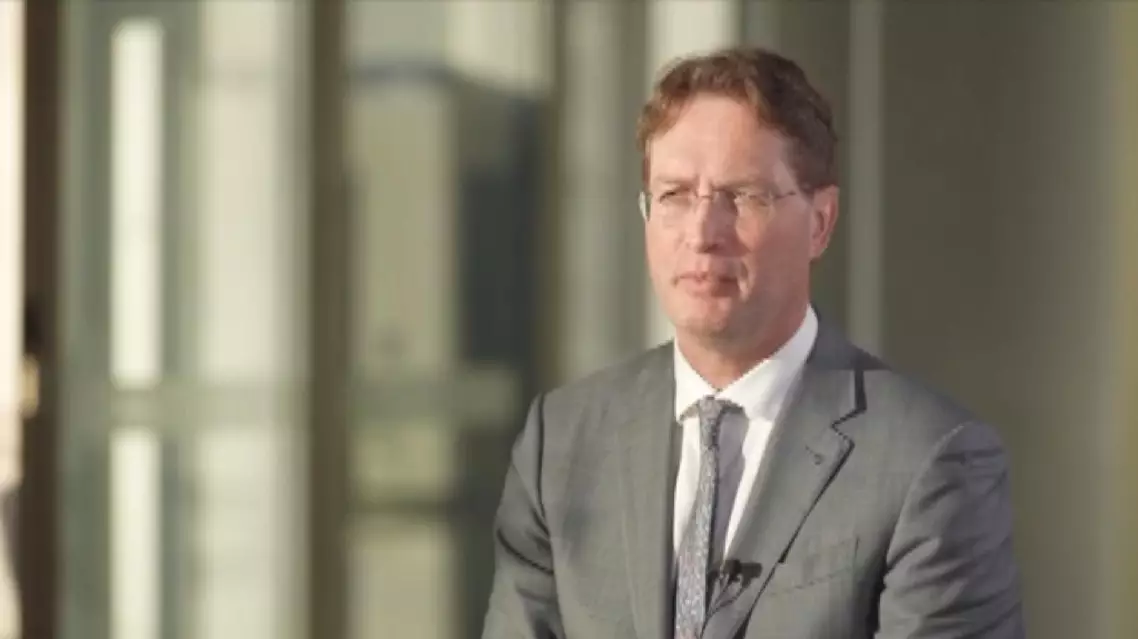
Ola Kallenius, chairman of the Board of Management and CEO of Mercedes-Benz Group, is in China to attend the China Development Forum 2025, which kicked off on Sunday in Beijing.

In an exclusive interview with China Global Television Network (CGTN) on Saturday, Kallenius reaffirmed China's significance as the biggest car market in the world.

"I think this is a big milestone, 50 years of working together. And if you look at where we were 50 years ago and you compare today, our economies are very, very closely linked together. So I think we should use that as a platform to think about how do we develop this into the future, how do we create economic win-wins? And it's already so connected that the auto industry and especially global companies like Mercedes-Benz, we are in all the big economies. Mercedes operates in 150 countries. China is our biggest and most important market. So, let's use this anniversary to see how can we work closer and stronger together in the future," he said.

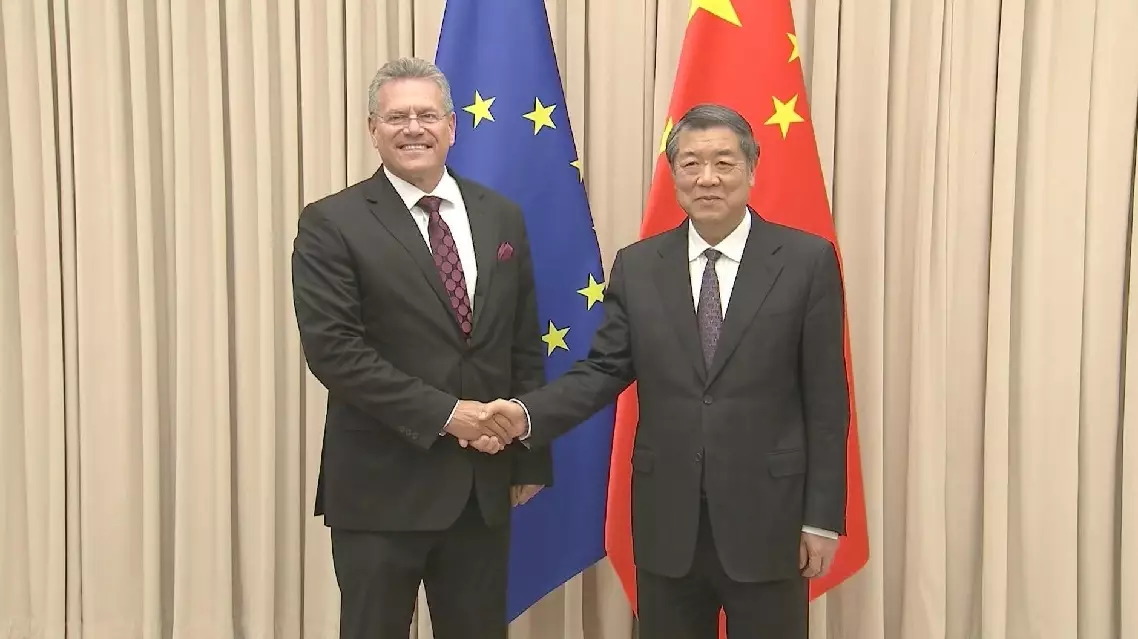
During Kallenius' meeting on Friday with Chinese Commerce Minister Wang Wentao, the two sides exchanged views on Mercedes-Benz's cooperation with China and the EU's anti-subsidy investigation into Chinese electric vehicles.

Kallenius said the Chinese market is of strategic significance to Mercedes-Benz Group and that the company is willing to further expand investment in China, deepen cooperation with Chinese partners, and jointly cope with global economic and trade challenges.

"We're investing 14 billion [yuan] (about 1.93 billion U.S. dollars) into new products, new technologies, with partners also here in China. We're going to industrialize more vehicles also in China and it's not just our passenger car division. We have an operation for our vans also in Fujian Province. And we're in the process of introducing a complete new vehicle architecture for the vans that we will industrialize also here in China. So it is a very, very broad strategy for Mercedes-Benz in China and also China for the world," he said.

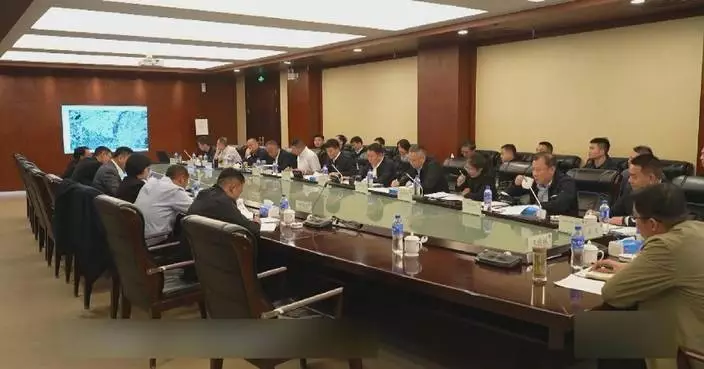
"I had the chance last night to meet Minister Wang from MOFCOM and also today to meet Party secretary Yin from Beijing, which is our home here, our main home here in China, and they sent a very strong message. They said China is open for business, China is opening up, you can count on China, invest in China, and you have a chance if you are competitive to get the return," added Kallenius, referring to Yin Li, secretary of the Communist Party of China Beijing Municipal Committee.

Kallenius is among 86 official delegates of multinationals from 21 countries participating in this year's forum, which is slated to conclude on Monday.
Mercedes-Benz pledges continued investment in China: board chairman
Mercedes-Benz pledges continued investment in China: board chairman
Thailand's rural tradition of elephant stewardship is rapidly vanishing as livelihoods change and younger people pursue opportunities elsewhere, threatening centuries of irreplaceable elephant-care knowledge.

For generations, mahouts in the region have passed on their tradition of closely bonding with the elephants they care for. Taweesuk Lapsan is one of a dwindling number of mahouts who diligently carry on the practice.

Long before the sun rises over the fields, he was already at work, gathering bundles of food for an animal that had been part of his family for generations.

"We've had elephants since our grandparents' and great-grandparents' generations. We've been around elephants our whole lives, so we have a strong connection and experience in raising them. That's how we've been able to live with them like this," the mahout said.

Caring for his elephant was not merely a job, but an inherited way of life. Years of daily coexistence forged an intimate bond defined by an intuitive understanding of subtle movements, sounds, and hesitations that take a lifetime to master.

"We live together like this. It's like a family. We're like family; we always go through things together. Until we breathe our last, it just depends on who lives longer," said Taweesuk.

Mahouts and elephants have been woven into parts of Thailand's cultural landscape, from rural livelihoods and traditional practices. However, the tradition has been upended by the collapse of the commercial logging industry and the rapid expansion of tourism.

As fewer young people follow in their families' footsteps, conservationists warned that an intricate system of animal care, refined over centuries, faces gradual extinction.

"When a mahout disappears, they are replaced by people who simply come in to take care of the elephants, essentially, elephant keepers. There are differences in terms of the bond between the keeper and the elephant, the cultural aspects, and the passing down of knowledge and traditions from one generation to the next. So we are concerned about the quality," said Parntep Ratanakorn, Secretary General of the Asian Elephant Foundation of Thailand.

Taweesuk said that his daughters may choose paths far removed from the stables, a decision he fully respects. As the practice fades, experts warn the loss extends far beyond a vanishing cultural heritage, threatening the daily welfare safety nets upon which captive elephants rely.

Thailand's centuries-old elephant care tradition face extinction as livelihoods change

Thailand's centuries-old elephant care tradition face extinction as livelihoods change

Recommended Articles