Chinese companies have emerged as key players in global submarine cable equipment manufacturing, construction, and maintenance after years of development with more cost-effective and capable solutions, an official industry research academy report said on Tuesday.
The China Academy of Information and Communications Technology (CAICT) published the "2025 Report on China's Participation in the Construction and Protection of International Communication Submarine Cables."
The involvement of Chinese enterprises has effectively reduced the cost of network access, ensured smooth global connectivity, and accelerated the growth of the digital economy, said the report.
The international communication submarine cable is the undersea fiber-optic cable for transnational communication and data transmission.
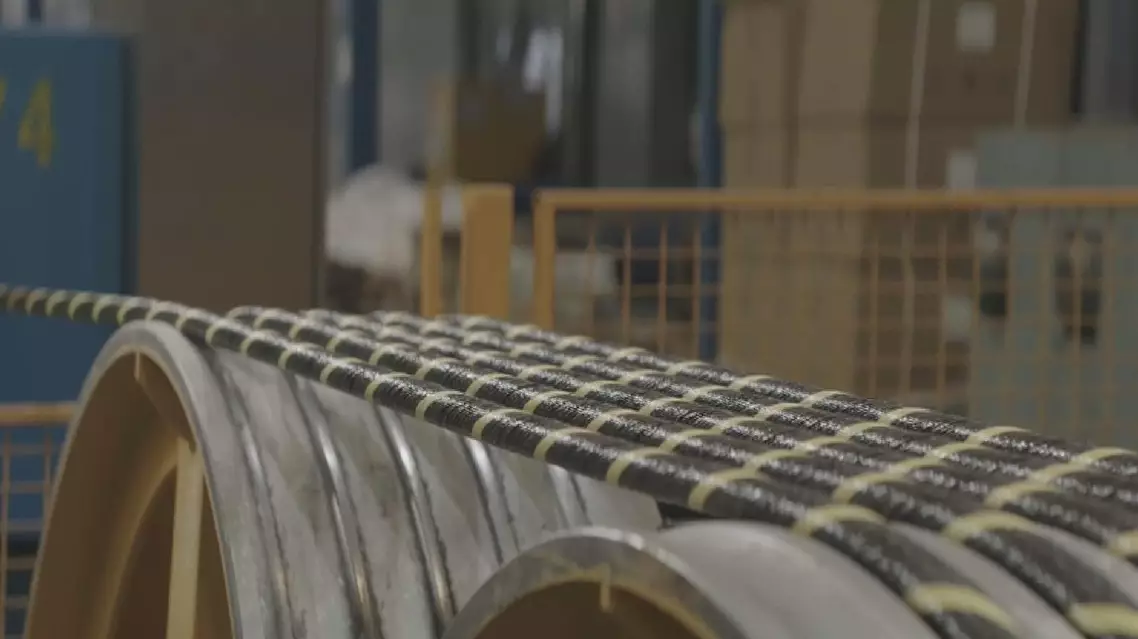
To better meet the rising demand for international bandwidth brought by rapid digital development, Chinese companies have taken the lead and launched 32 core pairs of submarine cable solutions and related products, significantly increasing the transmission capacity.
"China’s submarine cables can work 25 years in water depths of eight kilometers. They are also the first power supply unit that can provide 18 kilovolts, with more core pairs and longer transmission distance," said Mou Chunbo, chief engineer of CAICT's industrial planning institute.
While putting more effort into research and development, China has achieved significant breakthroughs in submarine cable technology and actively participated in setting international standards in the submarine cable sector.
As of the end of 2024, Chinese enterprises have invested in 17 in-service international submarine cable systems and are participating in several ongoing submarine cable projects, according to the report.
Among these, HMN Tech of China has emerged as one of the four major global contractors capable of delivering intercontinental submarine cable systems. The report said that the company has cumulatively delivered over 100,000 kilometers of submarine cable systems worldwide, with its operations spanning more than 70 countries and regions.
"Previously, the submarine cable system was relatively closed. But now, devices from different manufacturers are in compatibility," Mou said
China has become a key player in global communication submarine cable construction, protection
China has become a key player in global communication submarine cable construction, protection