U.S. economic growth in the first quarter was significantly slower than initially estimated, while consumer inflation remained elevated in April, official data showed Thursday.
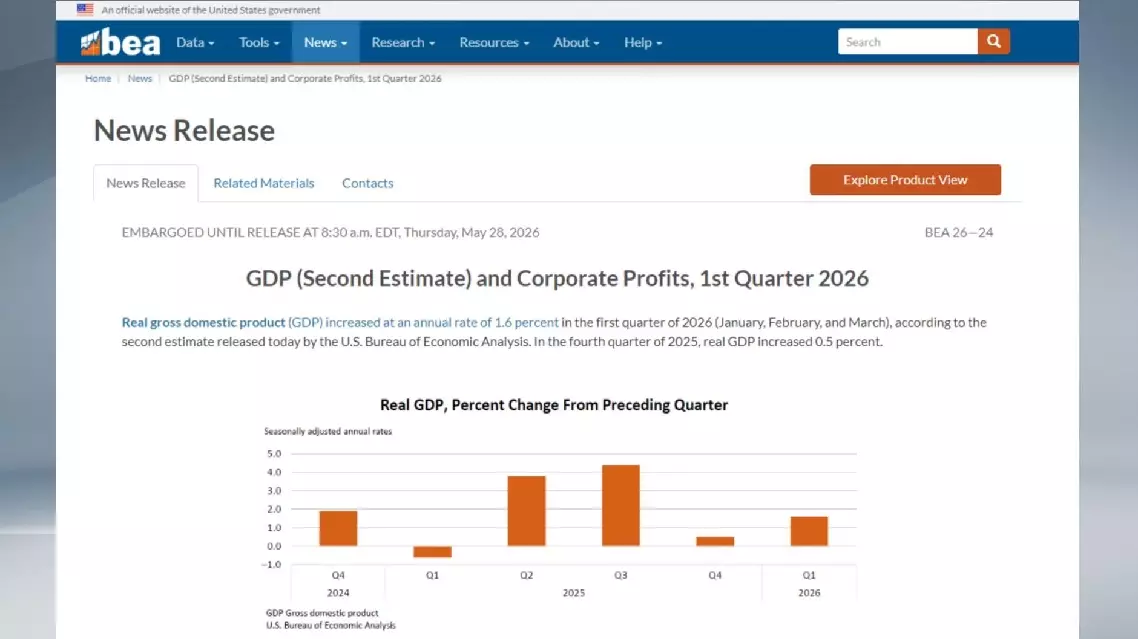
GDP expanded at an annual rate of just 1.6 percent in the first quarter, according to a revised reading from the U.S. Department of Commerce's Bureau of Economic Analysis (BEA). The figure represents a sharp downgrade from the initial estimate of 2.0 percent, missing market consensus expectations that the earlier estimate would hold.
Meanwhile, inflation continued to hit consumer wallets. The personal consumption expenditures price index, which serves as the Federal Reserve's preferred inflation gauge, increased by a seasonally adjusted 0.4 percent in April month on month. This puts the 12-month inflation rate at 3.8 percent, the department reported.
When excluding volatile food and energy costs, the core PCE price index rose 0.2 percent for the month and 3.3 percent annually. The monthly figure came in slightly below economists' estimate of 0.3 percent.
Despite the softer GDP reading and persistent inflation, U.S. consumer spending increased by 0.5 percent in April, meeting market forecasts. However, personal income remained flat, missing estimates for a 0.4 percent rise and signaling continued strain on household finances.
The fresh pricing data is expected to keep the Fed on the sidelines until the current wave of inflation subsides. Traders currently expect the central bank to remain on hold until at least late 2026, with markets pricing in the likelihood that the Fed's next policy move will be an interest rate increase, possibly in early 2027.
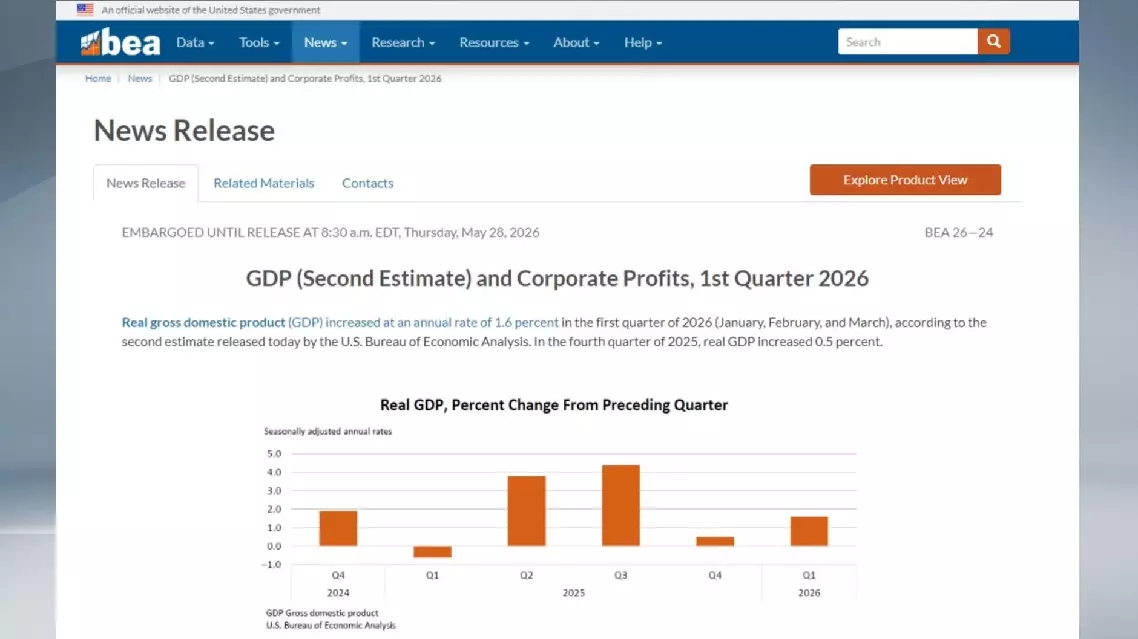
U.S. first-quarter GDP growth revised down to 1.6 pct annual rate
U.S. first-quarter GDP growth revised down to 1.6 pct annual rate
Hundreds of robots will be tested for real-world roles at an upcoming expo in Hangzhou, east China's Zhejiang Province, as the industry shifts from eye-catching demos to practical applications
The organizer, China Media Group, will host this Zhejiang leg of the 1st Intelligent Robot Application Skills Exhibition on Sunday, with more than 60 companies showcasing over 300 robots spanning special operations, smart commerce and public services.
Rather than showing off dazzling moves, the machines will recreate real work scenarios and demonstrate what they can do on the job. Ahead of the opening, robot squads are drilling hard at the rehearsal site.
Among them is a team that simulates an air-ground collaborative patrol. A drone drops supplies at a target location before a robot dog takes over. That dog is no rookie. It has already been deployed in chemical plants and industrial parks across the country, handling inspection and security duties, and is equipped with infrared cameras and gas sensors that let it sense its environment on its own.
Next comes a more unusual four-legged machine with a robotic arm. As the rehearsal shows, it can grab obstacles in its path. Though small, it handles objects weighing around two kilograms with ease, a capability that could prove valuable in hazardous settings such as nuclear power plants and chemical facilities.
Another machine on display is a spray painting robot. Its arm extends up to 3.2 meters, and it can build parametric maps on site and automatically plan its own painting routes for walls and ceilings. It is built for large, high-altitude spraying jobs, taking on the complex and grueling work that would otherwise fall to people.
China Media Group launched its first Intelligent Robot Application Skills Exhibition in Beijing in July, aiming to help smart robots find practical use across more fields and inject fresh momentum into economic and social development.
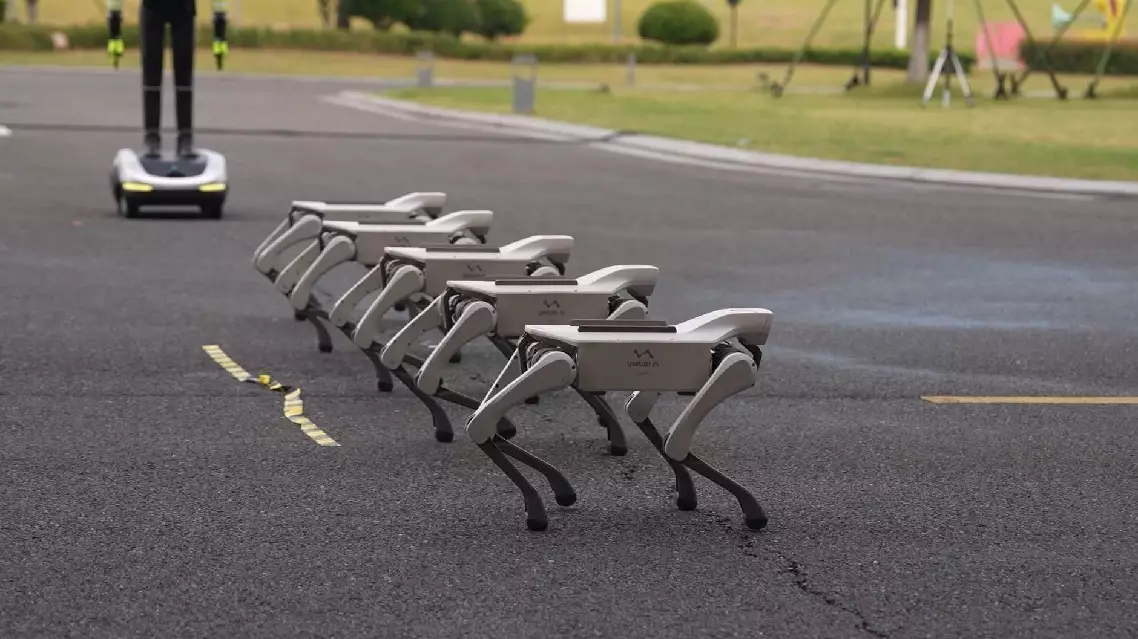
Robots to take on real-world jobs at application skills expo in Hangzhou