For more than two decades, the city of Yiwu in east China's Zhejiang Province has leveraged its world-renowned small commodities market to promote urban-rural integration, creating a development model that has improved livelihoods and advanced common prosperity.
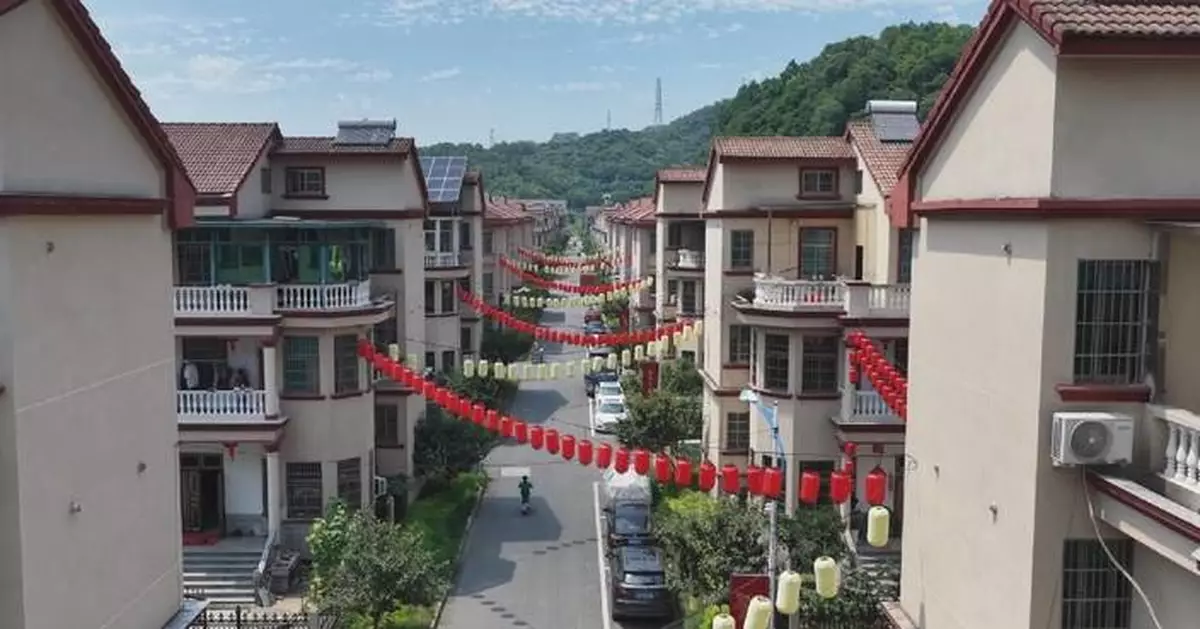
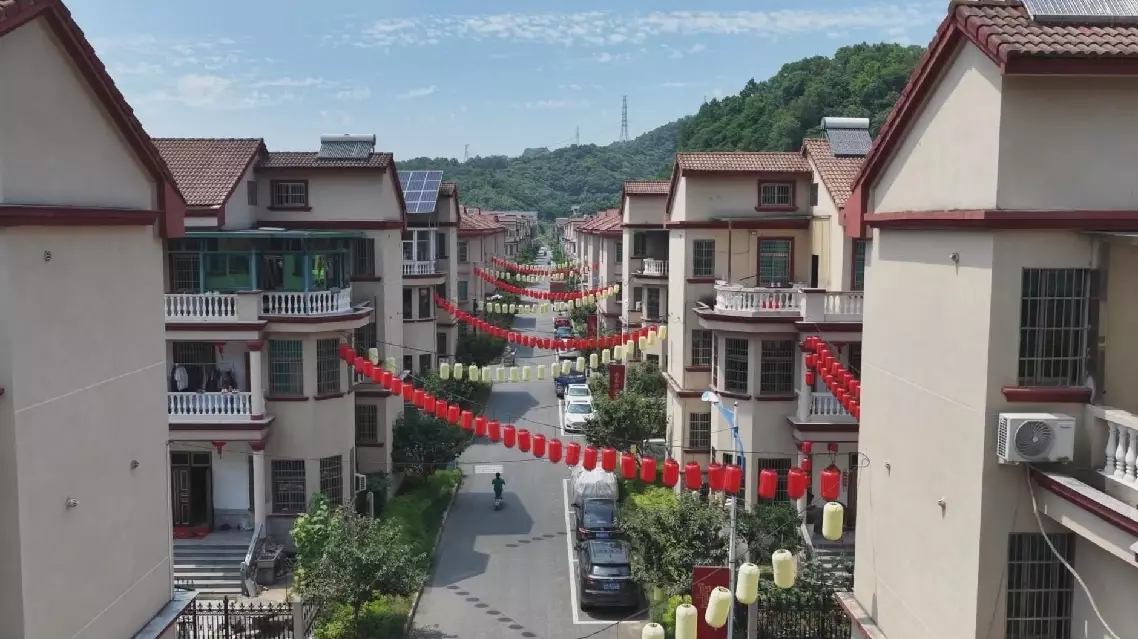
The transformation is evident in Dachen Er Village, where villagers now enjoy a wide range of cultural and recreational activities that reflect the improved quality of rural life.
The village's development has been closely tied to Yiwu's role as the world's leading small commodities market.
Since the 1980s, the village has grown from being a shirt producer to possessing a thriving rural industry by linking village production with market demand.
When Xi Jinping visited the village in 2002 while working in Zhejiang, he toured housing built for disadvantaged families and stressed that the needs of low-income residents should never be overlooked on the country's path toward building a moderately prosperous society.
"We showed him apartments built for disadvantaged families. Villagers in the vulnerable group could exchange their old homes for these new ones with little or no additional cost. Comrade Xi Jinping fully affirmed the practice and urged us to pay close attention to the lives of low-income families, help solve their practical difficulties, and ensure that no one is left behind on the road toward a moderately prosperous society," said Bian Xingwen, an official of the village.
At the time, Zhejiang's rapid economic growth had also exposed widening disparities between urban and rural areas.
In July 2003, Xi, then secretary of Zhejiang Provincial Committee of the Communist Party of China (CPC), stressed that rural development was essential to the province's modernization drive while addressing a plenary session of the provincial Party committee.
"We aim to achieve modernization ahead of schedule and build a moderately prosperous society in all aspects. 'All respects' includes the countryside, and the foundation lies in the countryside. Without rural modernization, there can be no modernization at all," he said.
Guided by that vision, Yiwu launched one of China's earliest urban-rural integration initiatives.
Over the past two decades, the city has integrated industrial development with rural revitalization, investing heavily in village infrastructure, public services and environmental improvements. It has annually allocated 200 million yuan (some 29.53 million U.S. dollars) to upgrade 800 villages across the city.
Lizu Village is one of the best examples of Yiwu's urban-rural integration efforts.
In 2017, the village positioned itself as a hub for entrepreneurs while preserving its rural landscape, combing innovation with rural tourism.
When Xi, general secretary of the CPC Central Committee, visited the village in September 2023, he encouraged local residents to advance rural revitalization and work together toward common prosperity.
Today, the village is home to more than 340 young entrepreneurs and over 100 new businesses, receiving over one million tourist arrivals each year. It also works with neighboring villages through a joint development initiative that shares both investment returns and risks.
"We will keep General Secretary Xi Jinping's instructions firmly in mind, and work together as one family with the other eight villages to build the Greater Lizu area into a new model of common prosperity featuring strong agriculture, beautiful countryside and prosperous farmers," said Fang Haolong, Party secretary of Lizu Village.
Yiwu's experience extends well beyond the city itself.
After more than two decades of development, Yiwu's urban built-up area has expanded from 56 square km in 2006 to 116 square km. Its urbanization rate has reached 83.7 percent, while rural residents' per capita disposable income climbed to 57,965 yuan, compared with the national average of 24,456 yuan in 2025.
Its marketplace now supports 110 industrial clusters across China, linking more than 2.1 million small and medium-sized enterprises and supporting some 32 million industrial workers.
One popular plush toy, for example, brings together accessories produced in provinces including Anhui, Henan, Jiangsu and Hebei before being sold through Yiwu's global marketplace.
"The bows, straps and other accessories are produced in provinces including Anhui, Henan, Jiangsu and Hebei. As orders increase, our production capacity across the supply chain has also grown," said Wu Liang, a merchant.
Experts say Yiwu's development experience demonstrates how the integration of industry, cities and the countryside can create new opportunities for balanced regional development.
"Over the past two decades, Yiwu has planned industry, urban development and the countryside as an integrated whole, extending industrial chains into rural areas and across regions. Urban-rural integration is an essential requirement of Chinese modernization. Guided by General Secretary Xi Jinping's important instructions, we should adopt an integrated approach to advancing new urbanization and all-round rural revitalization, make continued efforts to strengthen rural industries and public services, build on local strengths to develop distinctive industries, create more jobs in both urban and rural areas, and explore development paths toward common prosperity suited to local conditions," said Song Yuehong, deputy director with the Institute of Contemporary China Studies under the Chinese Academy of Social Sciences.
Yiwu pursues market-driven path to integrated urban-rural development