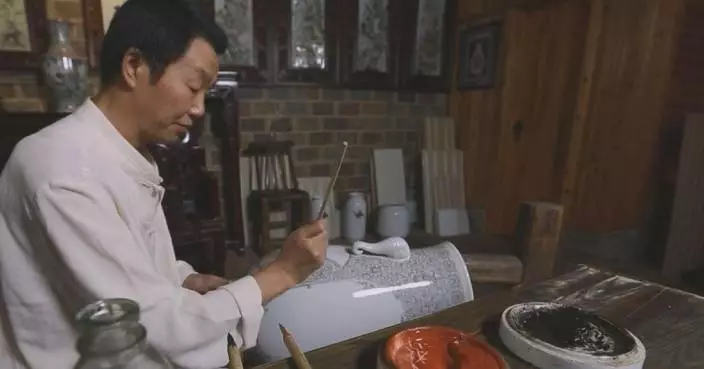
The Jingdezhen Handicraft Porcelain Industry Sites were inscribed on UNESCO's World Heritage List on Saturday, filling a long-standing gap in the list for porcelain heritage.
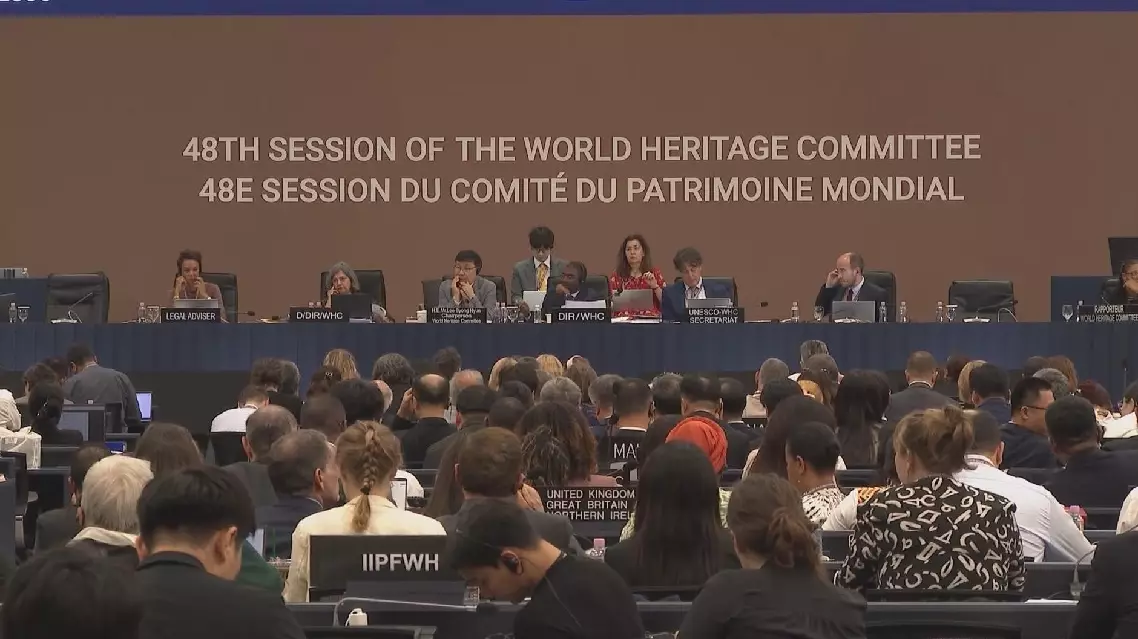
The decision was announced at the 48th session of the World Heritage Committee held in Busan, the Republic of Korea.
With the drop of a gavel, a millennium of continuous fire and craftsmanship received the ultimate global validation.
"I, therefore, declare Draft Decision 48 COM 8B.16 adopted!" recited Lee Byong Hyun, Chairperson of World Heritage Committee, officially inscribing the sites onto the World Heritage List.
Located in east China's Jiangxi Province, the sites consist of five component areas that together showcase the evolution of Jingdezhen's handcrafted porcelain industry from the 10th to 19th centuries.
"This inscription will further enhance the representativeness of the World Heritage List and inject new vitality into promoting mutual understanding and trust among civilizations," said Rao Quan, Chinese Vice Minister of Culture and Tourism and head of the National Cultural Heritage Administration.
He also noted that the Chinese government will take the inscription as a new starting point, continue to uphold the spirit of the World Heritage Convention, as well as work together with international organizations and all States Parties to deepen cooperation and continuously strengthen the systematic protection of heritage for better protection on the precious treasures of human civilization.
What sets the sites apart is their comprehensive representation of the entire porcelain-making chain. These heritage components cover the full spectrum of production, ranging from raw materials and fuel to manufacturing centers and waterway transport networks, thus offering a complete picture of the traditional handcrafted porcelain industry.
"I think for the local people, this nomination helps them recognize their generations in history who create and sustain the porcelain production industry, the culture. And I think this can bring them pride and also cultural identity but also gives them greater responsibility," said Wei Qing, executive director of the Chinese National Committee for the International Council on Monuments and Sites.
From imperial court commissions to everyday ceramics used across the globe, Jingdezhen's story has always belonged to humanity. Now, with its status officially sealed in Busan, China's historical porcelain capital steps onto the world stage with a brand-new promise of international protection and legacy.
Jingdezhen inscription fills gap in World Heritage List for porcelain