China calls for strict and long-term international supervision over Japan's discharge of nuclear-contaminated wastewater from the crippled Fukushima Daiichi Nuclear Power Plant into the ocean, Chinese Foreign Ministry spokesman Guo Jiakun said on Wednesday.
Guo made the statement at a press conference in Beijing in response to a media query about Japan's wastewater discharge.
"I would like to emphasize that China opposes Japan's unilateral discharge of nuclear-contaminated wastewater into the ocean, and this position remains unchanged. Since last year, Chinese experts have visited Japan twice to independently collect samples and announced the relevant test results in a timely manner. On the basis that Japan has fulfilled its commitments and the test results haven't shown any abnormalities, the General Administration of Customs of China held in Beijing on March 12 technical exchanges with Japan over the safety of Japanese aquatic products," Guo said.
"China will continue to work with the rest of the international community to urge Japan to earnestly fulfill its commitments and ensure that the discharge of Fukushima nuclear-contaminated wastewater into the sea is always under strict international supervision," said the spokesman.
Hit by a magnitude-9.0 earthquake and an ensuing tsunami on March 11, 2011, the Fukushima Daiichi nuclear power plant suffered core meltdowns in three reactors that released radiation, resulting in a level-7 nuclear accident, the highest on the International Nuclear and Radiological Event Scale.
The plant then generated a massive amount of wastewater tainted with radioactive substances from cooling down the nuclear fuel in the reactor buildings.
Disregarding domestic and foreign questioning and protests, the Japanese government decided in April 2021 to "filter and dilute" the nuclear contaminated wastewater from the plant and started the ocean discharge of the radioactive wastewater on August 24, 2023. This process is expected to last 20 to 30 years, until the nuclear power plant is scrapped.
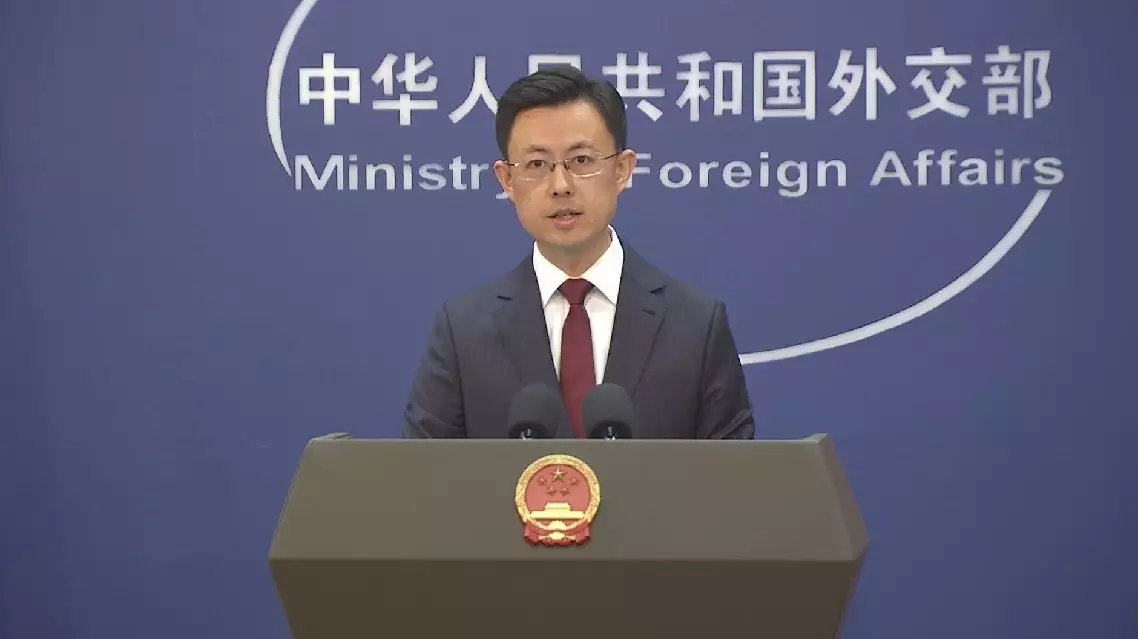
China calls for strict, long-term international supervision over Fukushima wastewater discharge: spokesman
Beijing resident Wang Zhigang lost his vision five years ago to retinitis pigmentosa, a group of rare, inherited genetic eye disorders.
He had suffered from the disease for years, and gradually lost all sight at the age of 50.
"It wasn't just a small change. It was a complete change in my life. At first, I simply couldn't accept it. Luckily, I had some time to prepare. But the biggest problem was, I didn't know how to live in the society anymore. How should I position myself? How could I even go outside?" he said.
At first, going outside was next to impossible. But things picked up after he turned to the city's hotline services to help navigate his daily walks, an action that prompted a series of accessibility upgrades in his neighborhood.
In 2019, Beijing, home to over 20 million residents, launched an innovative "swift response to public complaints" initiative aimed at addressing public concerns promptly and resolving everyday challenges efficiently.
The initiative has integrated more than 60 hotline services into a single unified hotline number -- 12345 -- which serves as the primary channel for residents to voice their concerns.
Operating 24/7, the hotline is staffed by over 1,700 operators who work in shifts to address calls and handle requests covering nearly every aspect of urban life, including transportation, housing, education, healthcare, employment and business services.
Once a complaint is filed through Beijing's 12345 hotline, it is promptly forwarded to relevant government departments and public service companies for resolution. The outcome is then evaluated by the complainants, ensuring active engagement, assessment and oversight in the city's governance by the public.
It is this service that helped Wang reconnect with the world. Through this, he successfully applied to the local government for a guide dog named Juan'er.
"It was the Spring Festival, so there were fewer people and cars. I thought this was a rare chance to go out in Beijing on my own. So Juan'er and I went out together. It was freezing that day. When I got home, I was sweating from fear. But I ran into all kinds of problems. So I thought, why not give it a try? I called the 12345 hotline and explained my situation," he said.
Meng Lin, deputy director of the Infrastructure Coordination Center in Beijing's Chaoyang District, handles residents' concerns about local roads and traffic. Wang's complaint landed on her desk two years ago in her first case involving a visually impaired resident.
Wang walks a fixed route of about 1.7 kilometers each day that includes several busy intersections. While his guide dog helps him navigate, it cannot read traffic lights, and the audible signals along the route were also too faint for him to hear clearly.
With few pedestrians around during the Spring Festival, Wang found himself stranded at a crossing, unable to tell whether the light was green or red. He stood there for minutes, feeling completely helpless.
Meng decided to walk the route with him to see the problems firsthand. During the walk, she checked the audio signal at a key intersection, which Wang noted was much clearer and safer than before.
"His experience helped me better understand visually impaired people. It also showed me where we need to improve accessibility," said Meng.
Meng found several accessibility issues along the route, including disconnected tactile paving, uneven surfaces, and a height gap between the paving and the crosswalk. All have been repaired.
At one intersection, the tactile paving was moved back from the road edge to create more space between pedestrians and traffic, a change Wang said makes the crossing much safer for him and his guide dog.
Wang said he hopes visually impaired people can enjoy greater freedom of movement within society, adding that with the right facilities and laws in place, he feels fortunate today.
Meng said the approach to infrastructure is changing.
"In the past, the focus was simply on having roads and making them wide enough. Now, we are moving toward more detailed improvements. It's like embroidery. We need to make every detail more precise. As we move forward, accessibility will be an essential area of our work," said Meng.
According to official data, in the past seven years, Beijing has processed approximately 180 million public complaints, with both the resolution and satisfaction rates surpassing 97 percent.

Local gov't improves accessibility for visually impaired individuals