Marc Horn, executive vice president of German pharmaceutical giant Merck Group and president of Merck China, has expressed optimism about China's long-term investment prospects, highlighting advances in innovation, consumption trends, and market accessibility.
Horn is attending the Boao Forum for Asia (BFA) 2025 Annual Conference in Boao, Qionghai City, in China's southern island province of Hainan.
In an interview with China Global Television Network (CGTN) on Thursday on the sidelines of the event, Horn shared insights on Merck's development strategy in China and other markets.
"As a truly global company, as Merck, we are really following a diversification approach. So, we really have regionalized our supply chain to really be following footprints locally for patients and customers. So, we are really leveraging at the moment the competitive advantages we see in North America, Europe, and China, and Asia Pacific individually. So, we truly believe, you need to be agile. As a global player, we do think we can play also a role in the cooperation and dialog so that we can all work together," said Horn.
The executive weighed in on China's ambitious 5-percent GDP growth target for this year, which he believes will unleash abundant opportunities for many companies, including Merck.
"I think the "two sessions" has clearly shown that there is a strong confidence in the future growth, with reiteration of 5-percent growth, focusing again on innovation, in particular in the space of digitalization, green energy, life science and health care. But also really focusing on consumption and the well-being of the society. I think all those points in combination with the opening up, so further deepening market access, providing equitable competition. I think you will see that there is a long-term investment growth in China," he said.
The "two sessions" refer to the annual meetings of China's top legislature, the National People's Congress (NPC), and the country's top political advisory body, the National Committee of the Chinese People's Political Consultative Conference (CPPCC), which took place in Beijing earlier this month.
Horn views China's innovation ecosystem as a key factor in future growth, which is driven by strong government support, fast-growing startups, academic collaboration, and customer focus. He emphasized that Merck is particularly excited about opportunities in areas like sustainability, precision medicine, new materials, and elderly care.
"The innovation system here is really unique, when you're looking at very strong government policy support. A lot of new companies emerging, which are scaling very fast, in combination with academia and a very strong customer focus. So, in obvious areas where we just talked about like sustainability, precision medicine, really looking at new materials, thinking about elderly care. So, these are all areas which will become more greener, more digital, more healthier. We do believe as Merck, we can really contribute and then see a long-term perspective here," said Horn.
Founded in 2001, the BFA is a non-governmental and non-profit international organization committed to promoting regional economic integration and bringing Asian countries closer to their development goals.
Running from March 25 to 28, this year's BFA Annual Conference is themed "Asia in the Changing World: Towards a Shared Future."
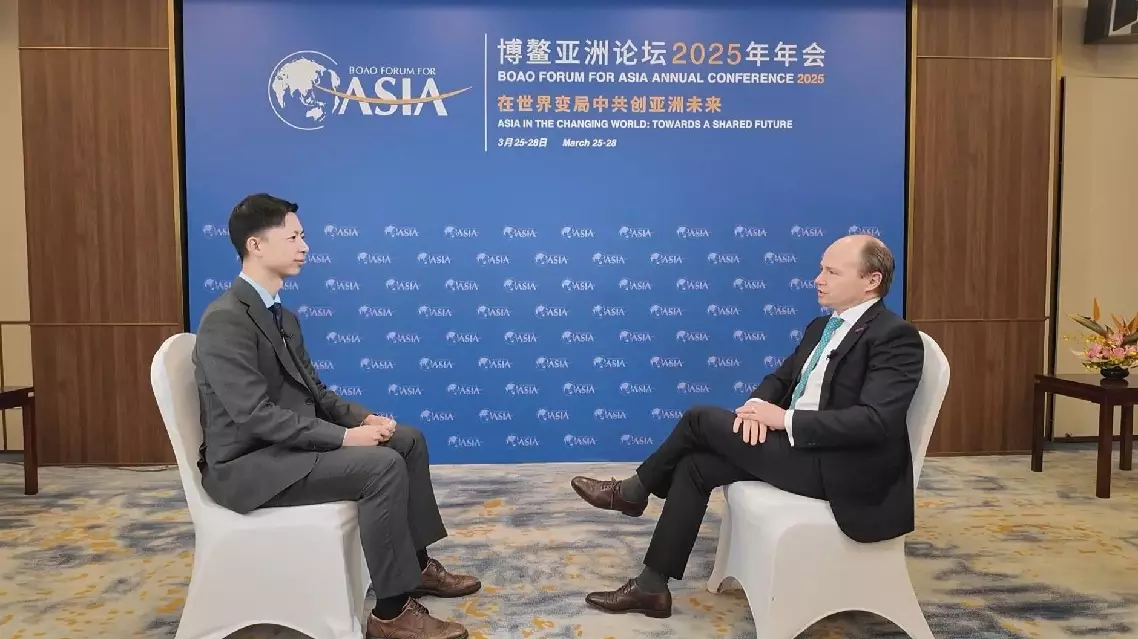
German pharma giant Merck optimistic about China's investment growth potential