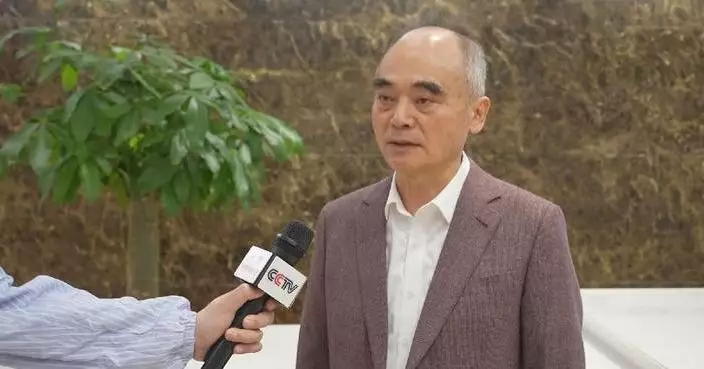
China's Commerce Minister Wang Wentao met with Baker Hughes CEO Lorenzo Simonelli in Beijing on Thursday, reinforcing China's commitment to fostering international business ties despite global uncertainties.
Baker Hughes, a U.S. energy technology giant with over 40 years in China, plays a key role in gas infrastructure and green transition. During the meeting, Wang emphasized China's openness to deeper cooperation in energy and trade.
"Today is a great opportunity. I would like to engage in discussions with you regarding Baker Hughes' development in China, as well as China-U.S. economic and trade relations and the global energy development, including in the field of new energy," said Wang.
Simonelli highlighted the company's long-standing presence in China and its participation in key projects, including the China-proposed Belt and Road Initiative.
"We have multiple facilities and we have also been providing technology to many of the state-owned enterprises. And also with the Belt and Road Initiative, we are continuing to see China grow its presence internationally. And also for Baker Hughes, to be able to participate in that growth," said Simonelli, also the chairman of Baker Hughes.
This meeting is part of a broader trend, as China's Ministry of Commerce (MOFCOM) has engaged with executives from over 20 multinational corporations this month alone.
Recent high-profile visitors include Apple's Tim Cook, Qualcomm, and Boeing executives, as well as European industry leaders like BMW and Airbus.
MOFCOM's policies on market access and regulation make these face-to-face meetings vital for global businesses navigating China's economic landscape.
Despite geopolitical challenges, China remains a crucial market, and its doors continue to stay open for global investors.
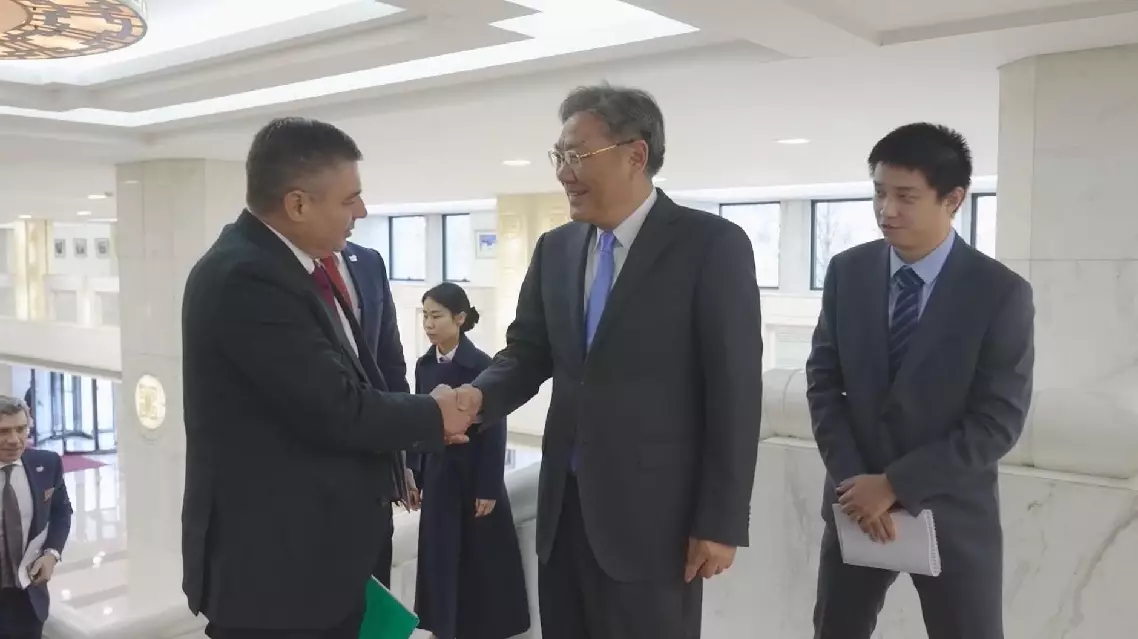
Chinese commerce minister meets CEO of Baker Hughes
African officials on Wednesday pledged to scale up investment to accelerate development across the member states of the Economic Community of West African States (ECOWAS) at a meeting in Accra, Ghana's capital.
They made the commitment during the 24th Annual General Meeting of the ECOWAS Bank for Investment and Development (EBID), where leaders highlighted the need to expand the bank's capital base to finance transformative projects.
Ghanaian Finance Minister Cassiel Ato Forson stressed that timely capital payments would strengthen EBID's leverage and sustain its growth, enabling the institution to stimulate inclusive economic expansion across the region.
"Timely capital payments are critical. It strengthens EBID leverage and sustains its growth and impact across our region. Expanding our capital base is essential to strengthen our ability to finance transformative development projects and stimulate inclusive economic growth among our member states," said Forson.
EBID recorded strong achievements in 2025, with total disbursements of about 722 million U.S. dollars, up 47.7 percent from 2024. Building on that momentum, President George Agyekum Donkor said the bank remains committed to helping member states tackle poverty and close infrastructure gaps across the region.
"We aim to direct at least 63 percent of new commitments towards the private enterprises to catalyze job creation and innovation. Simultaneously, the bank would embed environmental, social and governance principles across its operations, dedicating over 41 percent of resources to climate mitigation and social inclusion projects," said Donkor.
With disbursements surging nearly 48 percent last year, EBID officials said the bank is positioned to channel more resources into private-sector growth and climate-focused projects, reinforcing its role as a driver of inclusive development across West Africa.
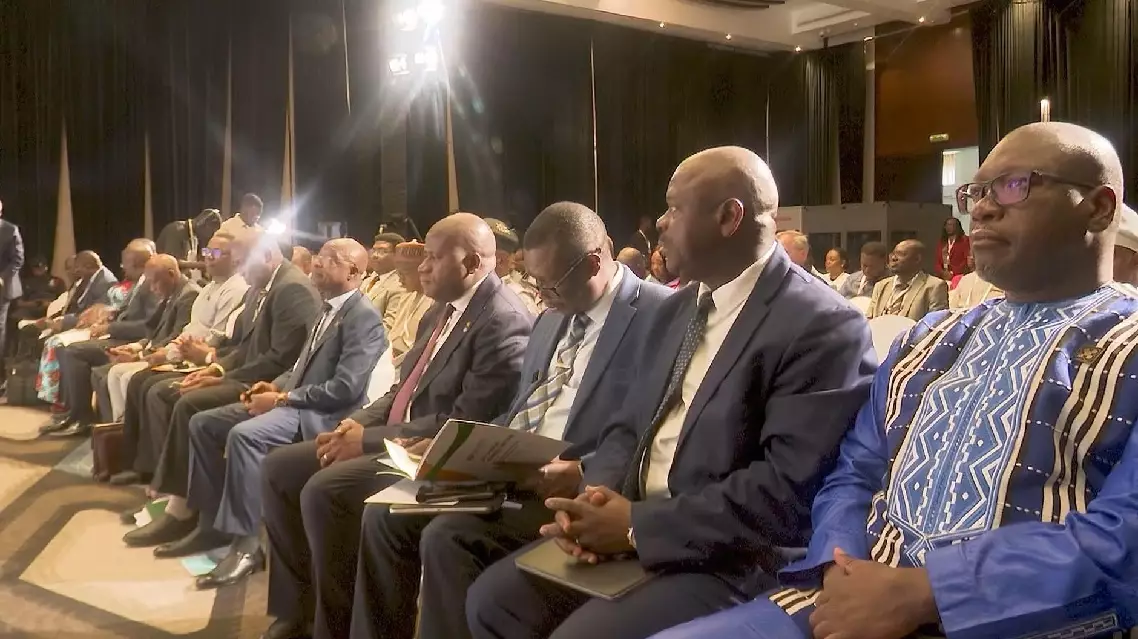
African officials vow stronger investment push at ECOWAS bank meeting in Accra