CAPE TOWN, South Africa (AP) — Rural farming communities on the border between the southern African countries of Malawi and Zambia are seeking damages and threatening to sue an international animal conservation group over the relocation of more than 260 elephants to their area, which their lawyers say have killed at least 12 people and injured others, destroyed crops and property, and left thousands living in fear.
British law firm Leigh Day said it is representing 10 people living near the Kasungu National Park on the Malawi-Zambia border, who say their lives have been ruined by the arrival of the elephants in 2022.
The elephants were meant to be contained in the park, but the world's largest land animals rarely respect man-made borders and have broken through fences to raid nearby small-scale farming communities in both countries for food and water, causing death and damage, according to the lawyers.
A local non-profit organisation recorded more than 11,000 people who had suffered crop or property damage, personal injury or the death of a family member due to elephants and estimated the damage was millions of dollars, the lawyers said. Some of the community members were struggling to feed their families as a result of their livelihoods being destroyed, the lawyers said.
“They say the action placed the wellbeing of the elephants above that of local communities,” Leigh Day said.
Leigh Day said the communities want the International Fund for Animal Welfare, a renowned United States-based conservation charity that was involved in the elephant relocation, to “resolve the harms” they have allegedly suffered.
The lawyers sent letters to the IFAW's business entities in the U.K., Malawi and Zambia, they said, and if there was no engagement they would file a claim against the conservation group in a British court.
The IFAW said it was deeply saddened by any human-wildlife conflict in and around Kasungu, but rejected any wrongdoing.
The wildlife group said its role in the relocation project was to provide financial and technical support and the government of Malawi through its Department of National Parks and Wildlife “has overall jurisdiction and responsibility for all national parks and wildlife in Malawi.”
The relocation was performed by experts from various organizations, the IFAW told The Associated Press in a statement.
Malawi's parks department did not reply to emailed questions on the problems with the elephants in Kasungu.
The case reflects the difficulties many African countries are faced with when balancing the need to conserve wildlife with the impact wild animals have on the people who share their habitat. Elephant numbers have increased in parts of the continent because of decades of successful conservation work, and a new challenge is ensuring the growing numbers are able to co-exist with people.
Climate change has meant more competition between humans and animals for resources like food and water and elephants can be especially destructive. Adult elephants can eat 150 kilograms (330 pounds) of vegetation and drink 200 liters of water a day and have no problem pulling down trees, destroying fields of crops and boreholes and ransacking stores to get food and water.
Some African countries cull elephants to control their numbers or allow them to be hunted to raise money.
They have sometimes been criticized for that, and the issue was best vocalized last year when then-Botswana President Mokgweetsi Masisi threatened to send 20,000 elephants to Germany in response to its criticism of Botswana's hunting and elephant trophy businesses. Germans should “live together with the animals in the way you are trying to tell us to," Masisi told the German newspaper Bild. “This is no joke.”
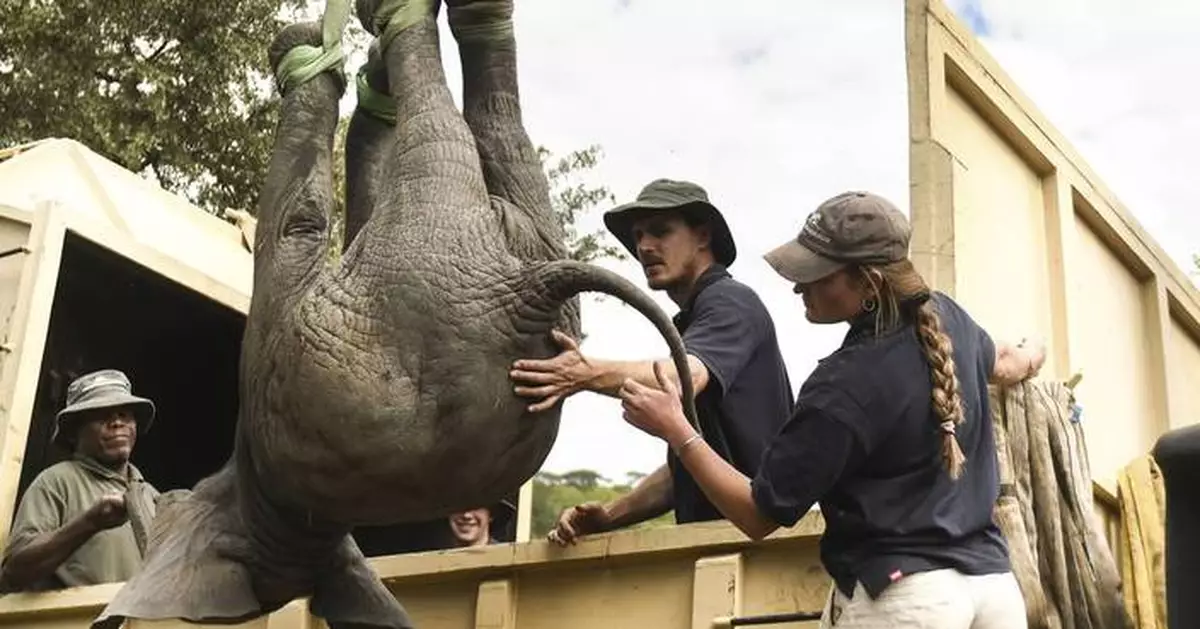
The animal relocation project in Malawi in July 2022 was initially seen as a major success by taking 263 elephants from an overpopulated smaller park to Kasungu, where elephant numbers had dwindled years ago because of poaching. It was one of the largest elephant relocation projects undertaken as hundreds of the beasts were darted and hauled onto trucks by crane to be transported while sedated.
But the lawyers for people living near Kasungu said the problems were almost immediate and alleged two people were killed days after the elephants arrived.
Leigh Day said its clients recognize IFAW as a wildlife charity that aims to have a positive impact on conservation, but they want to “live safely in their communities again.”
AP Africa news: https://apnews.com/hub/africa
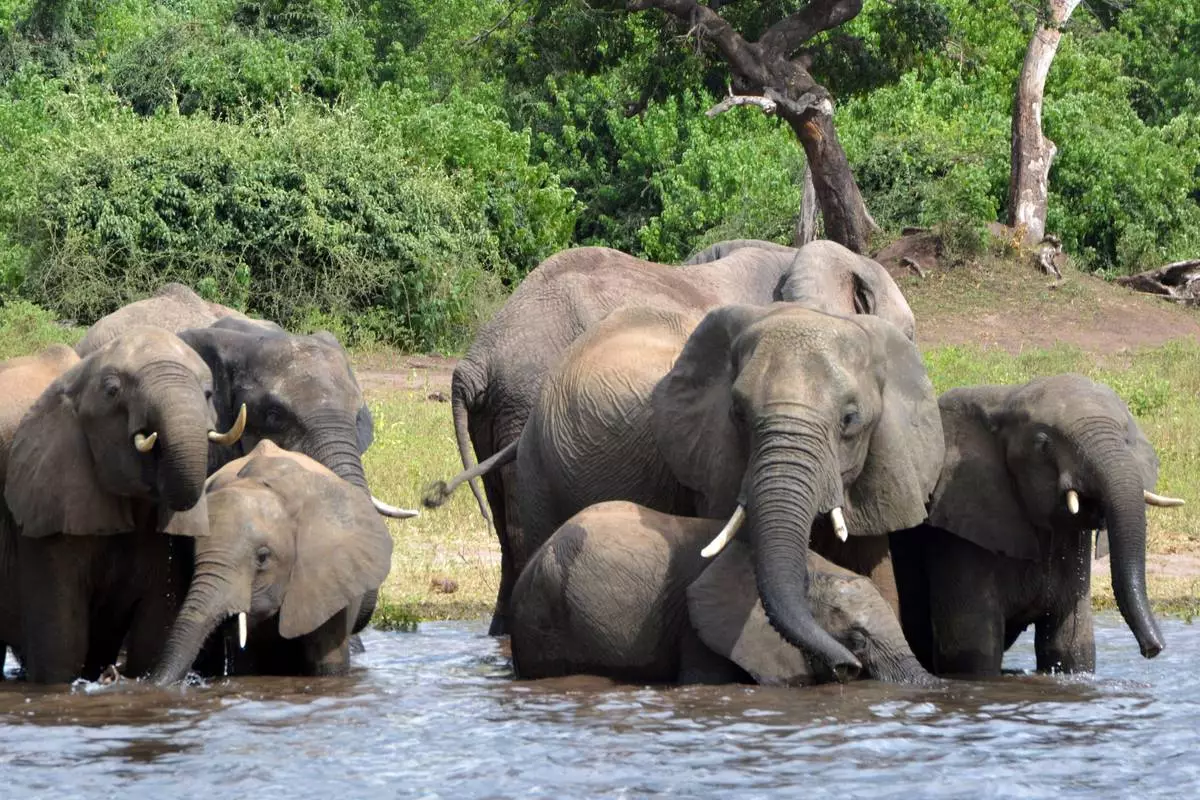
FILE - Elephants drink water in the Chobe National Park in Botswana, March 3, 2013. (AP Photo/Charmaine Noronha/File)
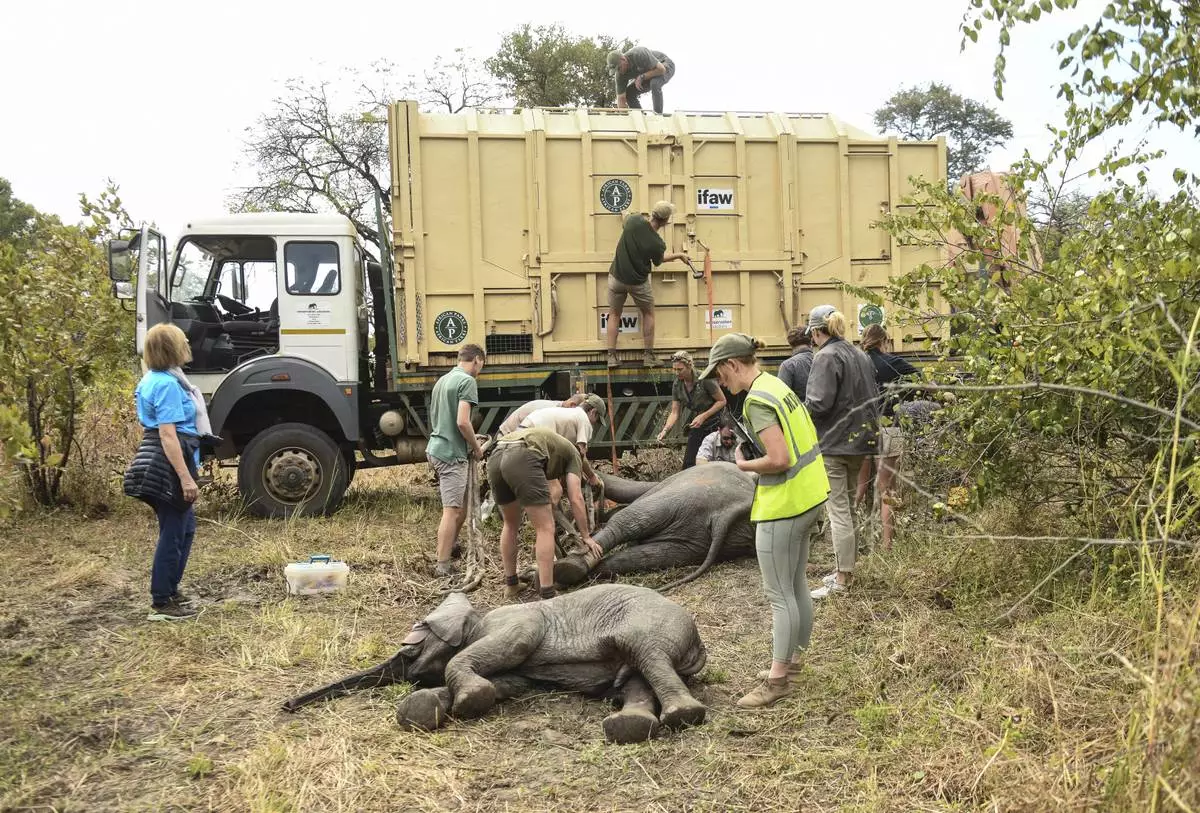
FILE - Elephants are prepared to be hoisted into a transport vehicle at the Liwonde National Park southern Malawi, July 10 2022. (AP Photo/Thoko Chikondo, File)
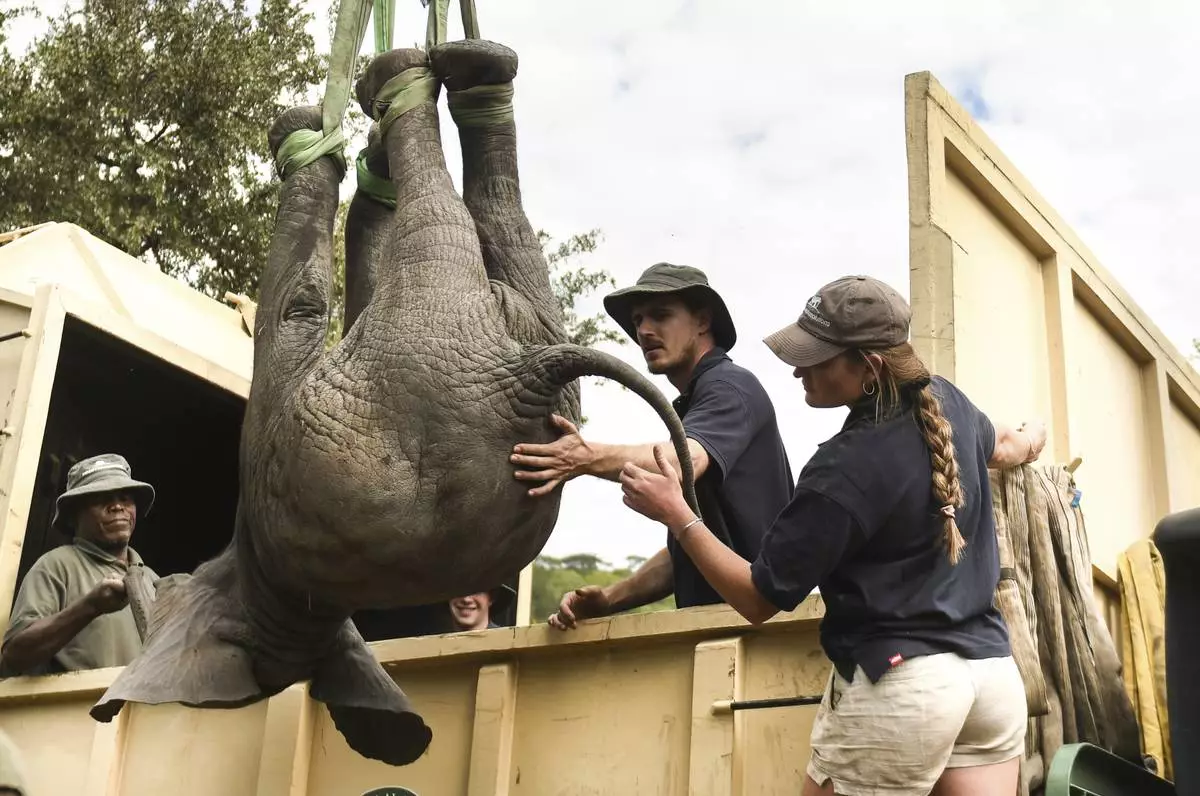
FILE - An elephant, one of more than 200 that is being moved to another park due to overcrowding, is hoisted into a transport vehicle at the Liwonde National Park, in southern Malawi, Sunday, July 10, 2022. (AP Photo/Thoko Chikondi, file)