Rescue operations continued in Mandalay on Sunday after a powerful earthquake struck Myanmar's second-largest city, causing widespread destruction and triggering aftershocks that sent residents fleeing from damaged buildings.
The initial 7.7-magnitude quake hit central Myanmar on Friday afternoon, leaving at least 1,700 people dead, 3,400 injured, and about 300 missing nationwide as of Sunday noon, according to the Information Team of Myanmar's State Administration Council. Authorities warn that the toll is likely to rise as search efforts continue.
In Mandalay's city center, many buildings were completely flattened or severely damaged. On Sunday, rescue teams were still trying to reach people trapped in one of the hardest-hit structures, with both Myanmar and Chinese emergency crews deployed on site.
While China Media Group (CMG) filmed near the scene, a strong aftershock struck, triggering panic and forcing journalists and nearby residents to evacuate the area.
According to the Chinese Embassy in Myanmar, a Chinese rescue team has reached the worst-hit zones. Thirteen Chinese nationals were among the injured, and emergency medical assistance is underway.
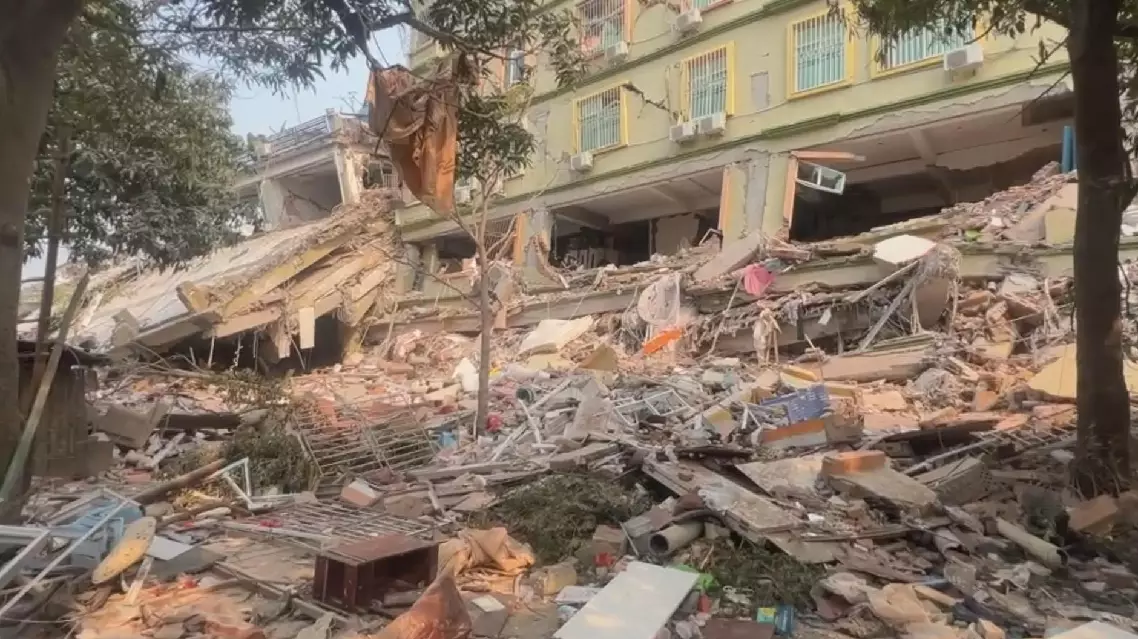
Earthquake devastates Myanmar's Mandalay, rescue efforts continue amid aftershocks
Earthquake devastates Myanmar's Mandalay, rescue efforts continue amid aftershocks
Earthquake devastates Myanmar's Mandalay, rescue efforts continue amid aftershocks
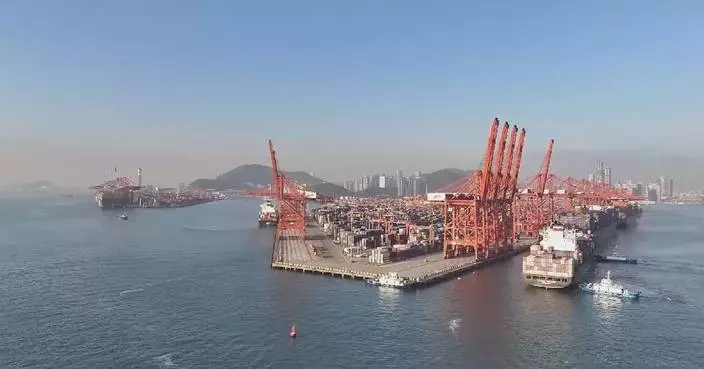
China's development has never been a "threat" to anyone but the source of growth advancing common development of all countries, Foreign Ministry spokesman Lin Jian said at a regular press conference in Beijing on Friday.
Some Western media and think tanks are peddling so-called "China Shock 2.0," saying that "China is achieving fast development in high-tech sectors such as renewable energy and AI and relies on foreign markets to absorb its overcapacity, thus reducing the market share of developed countries and sending more serious shock waves to the global economy compared with the era of traditional manufacture industry," while there are foreign commentators saying that the "China Shock 2.0" argument ignores the genuine innovation occurring within the Chinese industrial ecosystem and that Chinese export is the exact booster of the global economy that is needed in the turbulent period and more indispensable than ever.
Commenting on that, Lin said: "From the world's factory to the world's market and innovation powerhouse, China's development is achieved through strong performance driven by innovation and brings tangible cooperation opportunities and space to the world. High-quality Chinese products represented by the 'old three' of textiles, furniture and home appliances have stabilized the global industrial and supply chain, lowered the living cost of global consumers and eased the inflationary pressure worldwide. China's green production capacity represented by the 'new three' of electric vehicles, batteries and solar panels has bridged the gap between supply and demand in global green development and bolstered the global energy transition and low-carbon development. Moreover, China's high-tech products represented by the 'new new three' of robots, AI and innovative drugs have broken high-tech barriers and monopoly and enabled people in more countries to access affordable new technologies," said the spokesman.
"Openness and cooperation bring about progress and win-win result. China's development has never been a 'threat' to anyone but the source of growth advancing common development of all countries. What really creates 'shocks' to the world has never been the innovation of Chinese companies and efficiency of Chinese industrial capacity, but protectionist moves of setting up barriers, decoupling and severing industrial and supply chains. China will stay committed to high-standard opening up, defend the multilateral trading system and provide more certainty and new impetus to the world economy with its own steady development," said Lin.
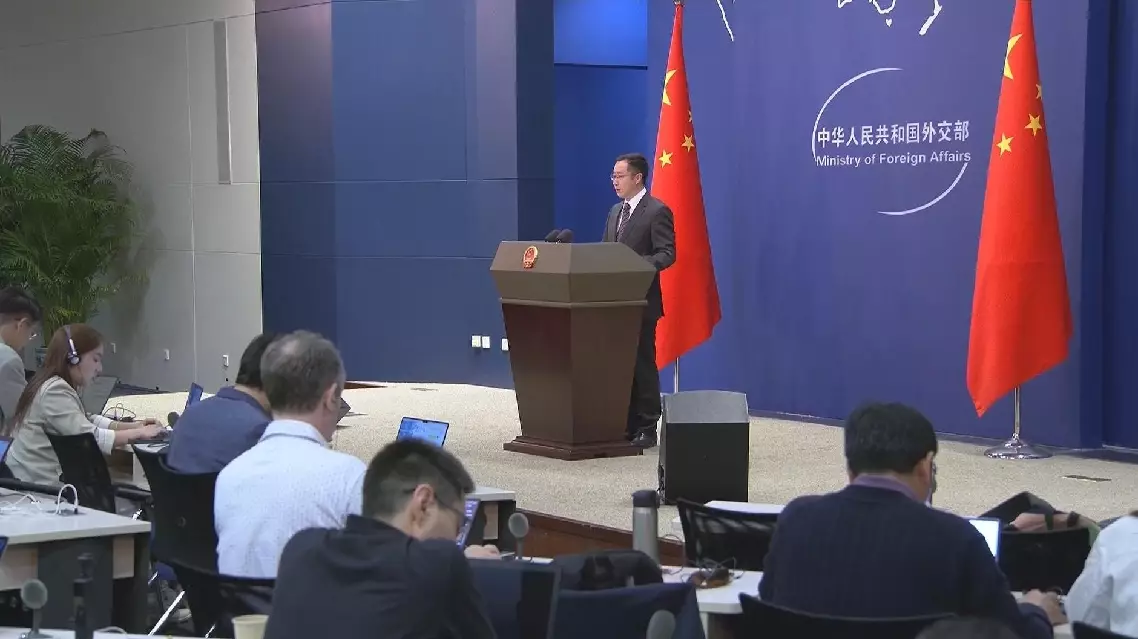
China's development never a threat: FM spokesman