The global video game industry is highly competitive, requiring effective marketing for success. The Hong Kong Game Enhancement & Promotion Scheme supports local startups, some achieving over $10 million in revenue, leading to impressive outcomes.
Gaming dreams
From a young age, Chris Choi has had a passion for programming and dedicated himself to developing a mobile music game while studying.
His first game is a mobile rhythm experience where players tap along to the beat. However, unlike most traditional mobile rhythm games, this one is motion-based, requiring players to spin their phones in the air to play. This innovative approach adds a physical element to the gameplay, making it more engaging and dynamic.
By chance, the game's promotional video was uploaded to a Mainland video platform. Within a week, it had garnered 500,000 views and received positive feedback.
Inspired by this success, he decided to pursue a career in the electronic gaming industry.
With little work and business experience under his belt, Mr Choi ultimately leveraged his strengths in game design to secure a grant of $550,000 from the Hong Kong Game Enhancement & Promotion Scheme for marketing purposes. He used the funding to collaborate with various music labels, resulting in great success.

Indie video game developer Chris Choi’s game downloads surpass one million with revenue exceeding $10 million.
Global sensation
The game has attracted a significant number of players from the Mainland, Hong Kong, as well as Japan, Europe and the US, with downloads exceeding one million and revenue surpassing $10 million.
Mr Choi pointed out that the scheme helped him to grow his business. At the company's inception, he had limited startup capital and experience. Through the programme, not only did he secure funding, but also gained valuable knowledge in marketing and promotion, which increased the likelihood of his game's success.
Lucrative market
As the Chinese gaming industry continues to mature, some local game developers are also seizing the opportunity to tap into this booming market.
One of them, video game producer Jacky Chou, whose game is also subsidised by the scheme, is creating a comedy-adventure computer game that showcases the unique elements of Hong Kong's culture.
“It is actually an adventure game that is heavily inspired by pop culture. It is a very funny, nonsense adventure game with a lot of different game plays and mechanics,” he explained.

Video game producer Jacky Chou says the scheme not only involves arranging game testers to provide feedback on how they can improve the game, but also offers a diverse range of training, which benefits small and medium-sized companies.
Mr Chou added that the scheme not only helped with arranging game testers to provide feedback on how they could improve the game but also offered a diverse range of training, including guidance on marketing strategies and attracting investors.
He also utilised the funding to collaborate with key opinion leaders for extensive advertising campaigns, as well as to promote the game offline at various exhibitions.
Supporting startups
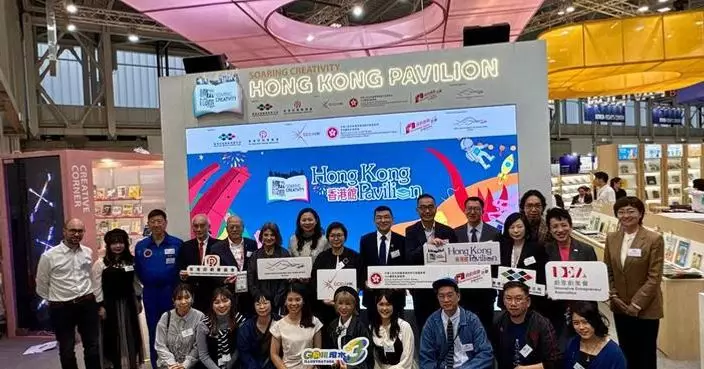
The 4th Hong Kong Game Enhancement & Promotion Scheme, sponsored by the Cultural & Creative Industries Development Agency, recently held its awards ceremony.
The organiser, Hong Kong Digital Entertainment Association, announced that 12 local startup game companies had been awarded reimbursement grants ranging from $450,000 to $550,000.
The association’s Chairman Gabriel Pang noted that each year the scheme has seen good results, with about one-third of the companies being profitable and one out of 12 companies usually getting over $10 million in revenue, most of the time with 500,000 to one million downloads.
“The game industry is actually a huge industry. That is why we are doing the Hong Kong Game Enhancement & Promotion Scheme. We need to help them to market their games.
“Usually in Hong Kong, we have a more diverse style. We can cope with different countries and cultures. That is one of our strengths.”

Hong Kong Digital Entertainment Association Chairman Gabriel Pang highlights that each year, the scheme sees good results, with about one-third of the companies being profitable and one out of 12 companies usually getting over $10 million in revenue.
Special traffic arrangements for race meeting in Happy Valley
The Police will implement special traffic arrangements in Happy Valley today (April 15). These arrangements will remain in effect until the race meeting has concluded, spectators have dispersed, and traffic conditions return to normal.
A. Traffic arrangements before the commencement of the first race
The following road closure and traffic diversions will be implemented from 50 minutes before the start of the first race for day racing, or from 6pm onwards for night racing:
1. Road closure
Southbound Wong Nai Chung Road between Queen’s Road East and the up-ramp outside the Hong Kong Jockey Club (HKJC) will be closed, except for vehicles heading for Aberdeen Tunnel.
2. Traffic diversions
- Southbound Wong Nai Chung Road between Village Road and the up-ramp outside the HKJC will be rerouted one way northbound;
- Traffic along eastbound Queen's Road East heading for Wan Chai and Happy Valley will be diverted to turn left to Morrison Hill Road;
- Traffic along southbound Morrison Hill Road heading for Happy Valley will be diverted via Sports Road and Wong Nai Chung Road;
- Traffic along Queen's Road East cannot turn right to Wong Nai Chung Road, except for vehicles heading for Aberdeen Tunnel;
- Traffic from Cross Harbour Tunnel heading for Queen's Road East will be diverted via the down-ramp leading from southbound Canal Road flyover to Morrison Hill Road to turn right at the junction of Wong Nai Chung Road and Queen's Road East; and
- Traffic from Cross Harbour Tunnel heading for Happy Valley or Racecourse will be diverted via the down-ramp leading from southbound Canal Road flyover to Canal Road East, southbound Morrison Hill Road, Sports Road and Wong Nai Chung Road.
B. Traffic arrangements before the conclusion of race meeting
The following road closure and traffic diversions will be implemented from about 35 minutes before the start of the last race:
1. Road closure
- The up-ramp on Wong Nai Chung Road outside the HKJC leading to Aberdeen Tunnel;
- Southbound Wong Nai Chung Road between Queen's Road East and the up-ramp leading to Aberdeen Tunnel;
- Southbound Wong Nai Chung Road between Village Road and the Public Stands of the HKJC;
- Westbound Leighton Road between Wong Nai Chung Road and Canal Road East; and
- Southbound Morrison Hill Road between Leighton Road and Queen's Road East.
In addition, southbound Wong Nai Chung Road between the up-ramp leading to Aberdeen Tunnel and the Public Stands of the HKJC will be closed from about 10 minutes before the start of the last race.
2. Traffic diversions
- Eastbound Queen's Road East at its junction with Morrison Hill Road will be reduced to one-lane traffic heading for northbound Canal Road flyover;
- Traffic from Cross Harbour Tunnel heading for Wan Chai will be diverted via the down-ramp leading from southbound Canal Road flyover to Canal Road East, U-turn slip road beneath Canal Road flyover, Canal Road West and Hennessy Road;
- Traffic from Cross Harbour Tunnel heading for Happy Valley will be diverted via the down-ramp leading from southbound Canal Road flyover to Canal Road East, eastbound Leighton Road and Wong Nai Chung Road;
- Traffic along southbound Morrison Hill Road will be diverted to turn left to eastbound Leighton Road;
- Traffic along southbound Morrison Hill Road heading for Happy Valley will be diverted via eastbound Leighton Road and Wong Nai Chung Road; and
- Traffic along westbound Leighton Road will be diverted to Wong Nai Chung Road.
C. Prohibition for learner drivers
Learner drivers will be prohibited to turn left from Caroline Hill Road to Leighton Road between one and a half hours before the start of the first race and one hour after the last race. In addition, learner drivers will be prohibited from accessing the following roads within the above period of time:
- Shan Kwong Road between Yik Yam Street and Wong Nai Chung Road;
- Village Road between its upper and lower junctions with Shan Kwong Road;
- Percival Street between Hennessy Road and Leighton Road;
- Canal Road East; and
- The service road leading from Gloucester Road to Canal Road flyover.
D. Suspension of parking spaces
Parking spaces on southbound Wong Nai Chung Road between Sports Road and Blue Pool Road will be suspended from 11am to 7pm for day racing, and from 5pm to 11.59pm for night racing respectively.
All vehicles parked illegally during the implementation of the above special traffic arrangements will be towed away without prior warning, and may be subject to multiple ticketing.
Actual implementation of road closure and traffic diversion will be made by the Police at the time depending on traffic conditions in the areas. Motorists should exercise tolerance and patience, and follow the instructions of police officers on site.

Source: AI-found images