Exclusive footage from China Global Television Network (CGTN) on Sunday revealed the devastating impact of the 7.7-magnitude quake in Myanmar, with widespread destruction seen in Mandalay, the country's second largest city located near the epicenter.
Friday's violent quake reduced many buildings in Mandalay to rubble, forcing the affected locals to sleep in open air.
The death toll had risen to 1,700, with 3,400 people injured and approximately 300 people missing, said the country's State Administration Council on Sunday.
A total of 25 aftershocks had been recorded as of Sunday morning, with the magnitude ranging from 2.8 to 7.5.
Official media outlets including Myanmar Radio and Television (MRTV) reported that rescue teams and relief supplies from China, India, Singapore, Russia and Thailand arrived in Myanmar between March 29 and March 30.
Nurses, doctors and other medical personnel from foreign countries have been involved in the search and rescue mission, MRTV reported.

Footage reveals scope of devastation in Mandalay as quake death toll rises to 1,700
With the May Day holiday coinciding with spring breaks in various regions, China's railway tourism market is heating up earlier than usual, as passenger-friendly measures are rolled out to boost cultural and tourism consumption.
"My family booked this trip for me. I'm just happy to travel with my husband," said a passenger.
In time for the May Day holiday, a new batch of branded tourist trains will be launched to cater to diverse passenger needs. China State Railway Group Co., Ltd. (China Railway) is also rolling out discount policies on tourist special trains as part of broader efforts to revitalize cultural tourism spending.
Meanwhile, accommodation along tourist train routes has begun offering coupon-based discounts.
According to data, the number of tourist trains operating nationwide in the first quarter increased by 440 compared to the same period last year. Moving forward, the integration of railway and tourism will continue to deepen.
"We plan to operate over 2,500 tourist trains this year and develop 50 premium railway tourist routes, so as to continuously energize the railway tourism market and foster new growth drivers in railway-backed consumer services," said Zhang Tao, deputy marketing director of the Passenger Transport Center of China Railway.
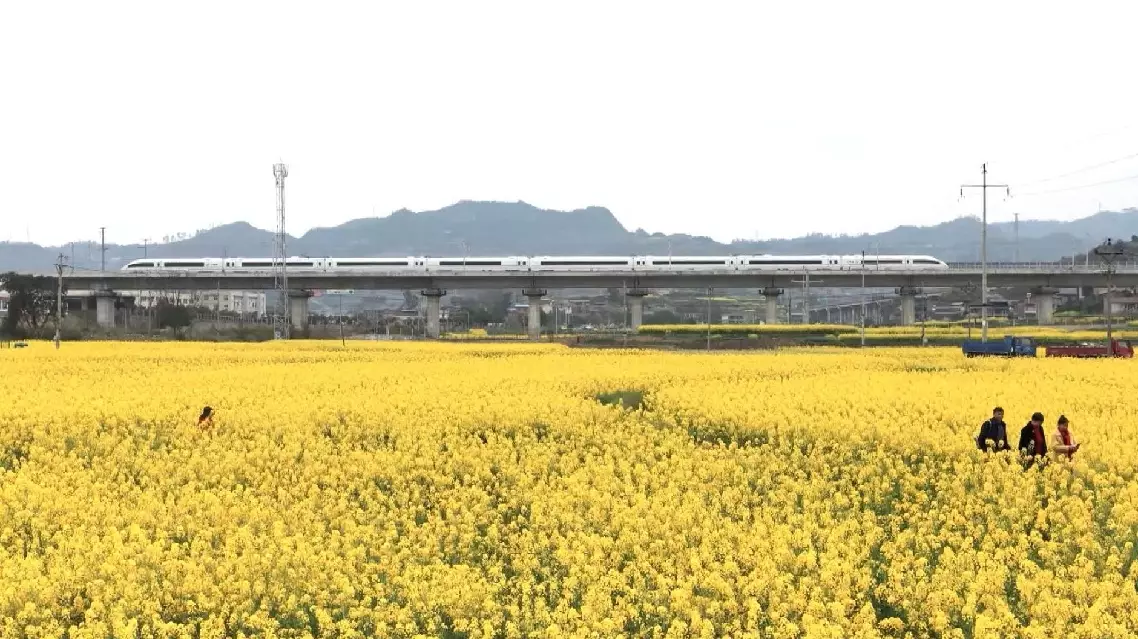
China rolls out passenger-friendly railway services ahead of May Day travel rush