Skip to Content Facebook Feature Image

Hong Kong’s Health Department Launches 1+ Mechanism for Faster Drug Registration and Improved Industry Collaboration

HK

Hong Kong’s Health Department Launches 1+ Mechanism for Faster Drug Registration and Improved Industry Collaboration
HK

HK

Hong Kong’s Health Department Launches 1+ Mechanism for Faster Drug Registration and Improved Industry Collaboration

2025-04-01 12:15 Last Updated At:12:38

DH's first briefing seminar on "1+" mechanism for new drugs well received

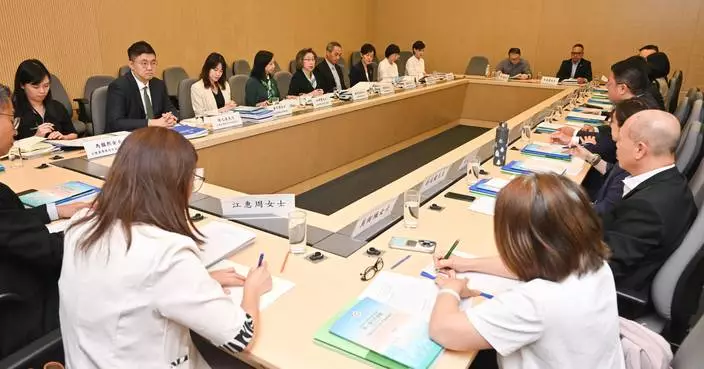
The Department of Health (DH) yesterday (March 31) held the first briefing seminar on the "1+" mechanism for new drugs with an introduction of the requirements for registration of pharmaceutical products under this mechanism, as well as the upcoming workshops on good regulatory practices and pre-new drug application (NDA) meetings. The DH aims to work with the pharmaceutical industry to achieve the goals of early consultation to enhance quality and efficiency throughout the process so that registration approval can be expedited, thereby bringing more good drugs for use in Hong Kong.

"The Chief Executive's 2024 Policy Address" announced that a consultation service for NDAs under the "1+" mechanism will be introduced to enhance the efficiency of processing relevant applications. The consultation service comprises briefing seminars, workshops and pre-NDA meetings. Yesterday's seminar was well received and was attended by 76 representatives from pharmaceutical and consultation companies inside or outside Hong Kong, as well as scientific research institutions. This marks the beginning of the consultation service. The DH will organise two more seminars on April 21 and May 16 this year. For further details and to register for future seminars, please visit the Drug Office's thematic webpage on the "1+" mechanism.

The DH will also organise workshops starting from June this year to provide guidance and sharing of good practices and real-life experiences on submitting applications through the "1+" mechanism. The DH will also offer to hold pre-NDA meetings with potential "1+" registration applicants starting from the second half of this year, providing specific guidance to assist in their planning of the NDA approval process and improve the quality of application documents to enhance the efficiency of the whole process. Details of the arrangements of the workshops and meetings will be announced in due course.

The Hong Kong Special Administrative Region (HKSAR) Government has implemented the "1+" mechanism since November 1, 2023, to facilitate the registration of new drugs for treating life-threatening or severely debilitating diseases in Hong Kong. The HKSAR Government has extended the "1+" mechanism to all new drugs from November 1, 2024, including all new chemical or biological entities and new indications, and vaccines and advanced therapy products. Under the "1+" mechanism, new drugs which are supported by local clinical data and recognised by local relevant experts can be applied for registration in Hong Kong by submitting approval from the drug regulatory authority of one of the reference places (instead of two in the past).

The "1+" mechanism serves to attract more new drugs from different parts of the world seeking approval for registration in Hong Kong, giving patients more choices and further strengthening the local capacity for drug evaluation while enhancing the development of relevant software, hardware and expertise with a view to progressing towards "primary evaluation". Since the implementation of the "1+" mechanism, a total of 11 new drugs have been approved under this mechanism. The DH has been promoting the "1+" mechanism through different channels, and so far, has received 460 enquiries from 120 pharmaceutical companies, including those from overseas and the Mainland.

Meanwhile, the Government will continue its efforts to reform the approval mechanism for drugs and medical devices. These include putting forward a timetable for establishing the Hong Kong Centre for Medical Products Regulation and charting a roadmap towards "primary evaluation" in the first half of this year, aiming to spur the growth of new industries in pharmaceutical and medical device research, and development and testing.
CHP announces one new melioidosis case

The Centre for Health Protection (CHP) of the Department of Health today (January 16) announced that one new melioidosis case was recorded in the past week (January 9 to 15). The CHP appealed to members of the public to maintain personal and environmental hygiene to prevent melioidosis. The CHP also specifically reminded high-risk groups, including the elderly and people with underlying diseases, to avoid contact with soil or muddy water after typhoons or storms with a view to lowering infection risk.

The case involves a 58-year-old male with underlying illnesses living in Kwai Tsing District. He presented with a fever and vomiting since January 10, followed by confusion on the next day (January 11). He was then sent to the Accident and Emergency Department of Yan Chai Hospital and is currently in the intensive care unit in critical condition. The clinical diagnosis was pneumonia. His clinical sample was confirmed to be positive for Burkholderia pseudomallei upon testing.

The CHP is investigating the infection source of the case. Initial epidemiological investigations revealed that the case is sporadic. No epidemiological linkages have been established between this case and other confirmed cases previously recorded in Hong Kong.

As of yesterday (January 15), one melioidosis case has been recorded in Hong Kong this year. In 2025, 21 melioidosis cases were recorded.

Person-to-person transmission and animal-to-human transmission are rare, but the bacteria causing melioidosis can survive in the local environment. Melioidosis is an endemic disease in Hong Kong, and melioidosis cases have been recorded in Hong Kong each year.

According to literature, melioidosis cases are more common after typhoons or rainstorms. The bacterium Burkholderia pseudomallei in soil and muddy water may become exposed to the ground after typhoons or rainstorms, and the bacteria could spread more easily with strong winds or rainstorms. As such, the number of melioidosis cases may increase.

With this in mind, where practicable, members of the public should stay indoors during typhoons and rainstorms, avoid travelling to areas with potential flooding, and not wade in or have contact with muddy water and soil. In addition, high-risk individuals should avoid paths near stormwater drains where aerosols may be generated from contaminated water.

Members of the public should also take the following preventive measures against infection:

  • Avoid contact with contaminated soil;
  • Wear appropriate protective clothing or footwear when participating in activities with possible contact with soil or water, e.g. using gloves and wearing boots. High-risk individuals may also consider wearing a surgical mask;
  • Wash or shower after exposure to contaminated water or soil;
  • Always clean any wounds as soon as possible and cover them with waterproof dressings;
  • Wash hands with liquid soap and water after handling soil or gardening;
  • Observe food hygiene and avoid drinking raw water; and
  • Travellers can contract the disease through outdoor water sports. Risk of infection can be minimised by avoiding exposure to water sources (such as rivers, ponds or lakes) that might be contaminated.
  • The CHP appealed to members of the public to seek medical advice if they develop symptoms, in particular people with diabetes or other immunocompromising conditions, in order to receive an appropriate medical diagnosis and treatment. For more information on melioidosis, please visit the website of the CHP atwww.chp.gov.hk/en/healthtopics/content/24/101110.html.

    Source: AI-found images

    Source: AI-found images

    Recommended Articles